Quick Answer: What Does Cfm Mean Leaf Blower?
CFM stands for cubic feet per minute and measures the volume of air a leaf blower moves. It is the primary specification for airflow volume and directly affects how many leaves and how much debris the blower can push at once. Higher CFM generally means stronger blowing power for clearing large areas quickly. Electric and battery blowers typically range from…
Understanding CFM: The Core Specification

What Does CFM Literally Stand For?
CFM is an acronym for cubic feet per minute. It quantifies the volume of air that passes through the blower’s nozzle in one minute. Think of it as the “amount” of air being moved, similar to how gallons per minute measures water flow from a hose. A blower rated at 400 CFM moves 400 cubic feet of air every minute it runs at that setting.
Why Is CFM Considered the Most Important Spec for Moving Leaves?
When you blow leaves, you are essentially using a wide column of air to push material across a surface. The total volume of that air column determines how much surface area you can cover and how much debris you can move simultaneously. A higher CFM rating means a wider or denser air stream, which translates to: Before finalizing equipment decisions, refer to our comprehensive jbl partybox club 120 vs sony srs xv500 comparison.
- Moving more leaves in a single pass
- Clearing larger areas faster
- Better performance on dry, light debris that responds to volume
- Less need to make multiple overlapping passes
Manufacturers and professionals often treat CFM as the headline performance number because it correlates most directly with the practical task of leaf clearing.
How Does CFM Relate to the Physical Task of Blowing Debris?
The physics of blowing debris involves two factors: the mass of air hitting the leaves (volume) and the velocity of that air (speed). CFM captures the volume component. Imagine two blowers: one produces a narrow, high-speed jet (high MPH, low CFM), the other produces a wide, moderate-speed flow (moderate MPH, high CFM). The second blower will typically clear a lawn covered in dry leaves faster because its air stream engages more leaves at once. CFM is the specification that tells you how broad and substantial that air stream is. Before finalizing equipment decisions, refer to our comprehensive jbl partybox club 120 vs sony srs xv500 comparison.
CFM vs. MPH: How They Work Together
What Does MPH Measure on a Leaf Blower?
MPH stands for miles per hour and measures the velocity or speed of the air exiting the nozzle. While CFM tells you how much air moves, MPH tells you how fast that air travels. A high MPH rating means the air stream has more force per unit area, which helps with: For broader ecosystem context, read through our operational guide on z890 vs x870e motherboard.
- Dislodging wet, matted leaves
- Breaking up compacted debris
- Moving heavier materials like wet grass clippings or small twigs
- Reaching debris in corners or under bushes
When Is High CFM More Important Than High MPH?
High CFM takes priority when your main task is clearing large volumes of dry, light debris across open areas. Examples include:
- Clearing a lawn covered in dry autumn leaves
- Pushing leaves into piles for bagging or mulching
- Cleaning driveways, sidewalks, or patios of light dust and grass clippings
- Working on larger properties where coverage speed matters
In these scenarios, the sheer volume of air does the heavy lifting. You want a wide swath of air to maximize each pass. For broader ecosystem context, read through our operational guide on z890 vs x870e motherboard.
When Is High MPH More Important Than High CFM?
High MPH becomes more valuable when dealing with stubborn, stuck, or heavier debris:
- Wet leaves that have matted down after rain
- Debris lodged in corners, against fences, or in flower beds
- Pine needles, wet grass clumps, or small twigs
- Situations where you need a concentrated, high-force stream to break things loose
A blower with very high MPH but modest CFM acts more like a precision tool—great for detail work, less efficient for broad clearing. For troubleshooting and reliability insights, consult our in-depth marshall stanmore iii vs harman kardon onyx studio 8 report.
Why Do You Need to Consider Both Numbers Together?
CFM and MPH are linked by the blower’s nozzle design and motor power. For a given motor, narrowing the nozzle increases MPH but decreases CFM; widening it does the opposite. Manufacturers balance these for the blower’s intended use. A blower advertised with an extremely high MPH but very low CFM may struggle to move piles of leaves efficiently. Conversely, a blower with massive CFM but low MPH may fail to dislodge wet debris. The most versatile blowers offer a strong combination of both, often with variable speed controls or interchangeable nozzles that let you shift the balance based on the task.
When comparing models, look at both specifications. A balanced mid-range blower might offer 450 CFM and 120 MPH, while a high-end gas model could deliver 700 CFM and 190 MPH. The ratio between them gives insight into the blower’s character: volume-focused or velocity-focused. Readers comparing setup options can review our technical analysis on dyson v8 cyclone vs bissell featherweight stick.
Typical CFM Ranges by Blower Type
Corded Electric Leaf Blowers
Corded electric blowers generally fall in the 200 to 600 CFM range. Entry-level models often sit around 200–350 CFM, suitable for small yards, patios, and light debris. Mid-range and premium corded models can reach 400–600 CFM, offering performance that rivals many battery units. The constant power supply means they maintain rated CFM without battery fade, but the cord limits mobility.
Battery-Powered Leaf Blowers
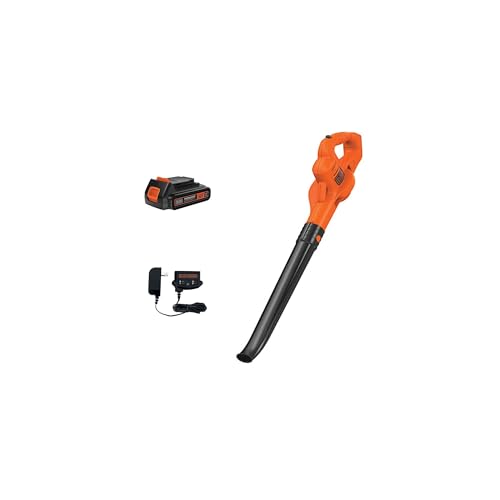
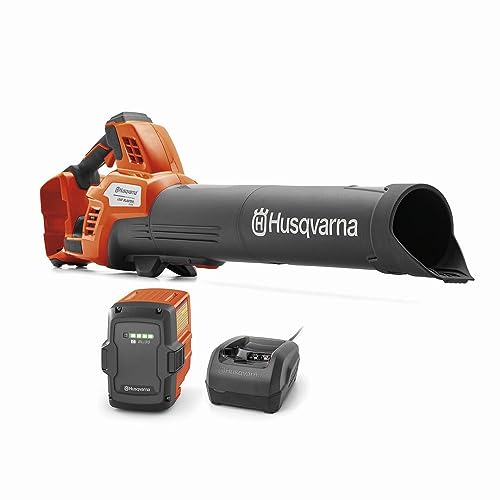
Battery blowers span a similar range, roughly 200 to 600 CFM, with most consumer models clustering between 300 and 500 CFM. Higher-voltage platforms (40V, 56V, 60V, 80V) tend to deliver higher CFM. Runtime at maximum CFM is a practical consideration—many battery blowers can only sustain peak output for 10–20 minutes before the battery depletes or thermal protection reduces power. Lower speed settings extend runtime but reduce effective CFM. For complementary field maintenance guidelines, examine our breakdown of bissell crosswave hydrosteam vs shark stainforce.
Gas-Powered Leaf Blowers
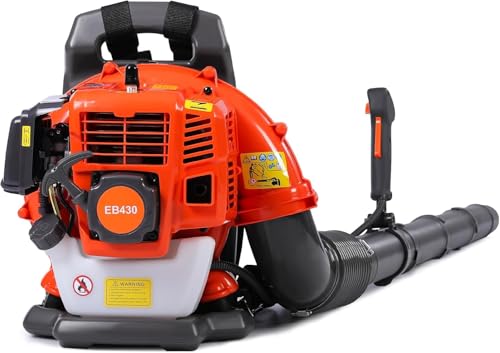
Gas blowers occupy the upper tier, typically 400 to 1,000+ CFM. Handheld gas models often range from 400 to 600 CFM. Backpack and wheeled blowers start around 500 CFM and can exceed 1,000 CFM for commercial-grade units. Gas engines sustain high output indefinitely (fuel permitting) and generally produce both high CFM and high MPH simultaneously. The trade-offs are weight, noise, emissions, and maintenance.
What Does a CFM Number Below 200 or Above 800 Generally Indicate?
- Below 200 CFM: Typically compact, lightweight blowers or sweepers designed for very light duty—clearing grass clippings off a driveway, dusting off a patio, or small balcony cleanup. Not practical for leaf piles.
- 200–350 CFM: Light-duty residential blowers. Adequate for small yards with light leaf cover.
- 350–550 CFM: Mid-range residential. Handles typical suburban leaf cleanup well.
- 550–750 CFM: High-performance residential or entry-professional. Strong clearing power for larger yards.
- Above 800 CFM: Professional/commercial territory. Backpack or wheeled blowers designed for daily heavy use on large properties.
These ranges are general guidelines. Nozzle design, motor efficiency, and real-world conditions all affect actual performance.
How to Use CFM When Choosing a Blower
How Do You Match CFM to the Size of Your Yard?
Yard size is a starting point, but leaf volume matters more than square footage. A small yard under large deciduous trees can produce more leaves than a large yard with evergreens. As a rough framework:
- Small yard (under ¼ acre) with light leaf drop: 200–350 CFM is usually sufficient.
- Medium yard (¼ to ½ acre) with moderate leaf drop: 350–550 CFM provides comfortable clearing speed.
- Large yard (½ acre+) or heavy leaf drop: 550+ CFM reduces time and effort significantly.
- Commercial or multi-acre properties: 700+ CFM, typically in a backpack or wheeled gas model.
If you’re between categories, lean toward higher CFM. The time saved on a single autumn cleanup often justifies the modest cost difference.
How Does Debris Type Affect the CFM You Need?
- Dry leaves: Respond well to volume. CFM is the dominant factor. A 400 CFM blower handles dry leaves efficiently.
- Wet leaves: Require both volume and velocity. You need enough MPH to break the surface tension and matting, plus enough CFM to move the loosened mass. Look for 500+ CFM with 150+ MPH.
- Pine needles: Light but tend to interlock. Moderate CFM (350+) with good MPH works well.
- Grass clippings (dry): Very light. Even lower CFM (250+) moves them easily.
- Grass clippings (wet) / heavy debris: Need high MPH to dislodge, then CFM to move. 500+ CFM / 160+ MPH preferred.
- Gravel or mulch beds: High CFM can displace loose material. Use lower speeds or a narrower nozzle to reduce CFM at the point of use.
Besides CFM and MPH, What Other Factors Influence Real-World Performance?
- Nozzle design: Tapered, flat, or concentrator nozzles change the air stream shape. A wide flat nozzle maximizes coverage (effective CFM at the work surface). A round concentrator maximizes MPH for stuck debris. Some blowers include interchangeable nozzles.
- Variable speed control: Allows you to dial CFM/MPH down for delicate areas (flower beds, gravel) and up for open lawn. Trigger-based variable speed is more convenient than fixed-speed settings.
- Weight and ergonomics: A 600 CFM blower that weighs 12 lbs and balances poorly will fatigue you faster than a well-balanced 500 CFM model. Handheld vs. backpack form factor matters for sessions longer than 20–30 minutes.
- Air intake placement: Poorly placed intakes can pull in clothing or restrict flow when held against the body. Side or rear intakes with protective grilles work better.
- Motor/engine efficiency: Two blowers with the same rated CFM may feel different if one maintains output better under load. Brushless motors (electric) and larger displacement engines (gas) tend to sustain rated output more consistently.
- Battery platform (for cordless): Higher voltage and amp-hour ratings generally support higher sustained CFM. A 2.5 Ah battery on a 40V tool will sag faster than a 5.0 Ah battery on the same tool.
- Noise level: Measured in decibels (dB). Higher CFM blowers are often louder. Check local noise ordinances if relevant.
Putting It All Together: A Practical Buying Checklist
- Identify your primary debris type. Dry leaves → prioritize CFM. Wet/matted debris → balance CFM and MPH.
- Estimate your leaf volume. More trees = higher CFM needed.
- Choose a power source. Corded (unlimited runtime, tethered), battery (portable, runtime limits), gas (maximum power, maintenance/noise).
- Target a CFM range. Use the yard-size and debris-type guides above.
- Check MPH. Ensure it’s not extremely low relative to CFM (below ~100 MPH may struggle with stuck debris).
- Evaluate ergonomics. Weight, balance, handle design, vibration.
- Consider nozzle options. Interchangeable or adjustable nozzles add versatility.
- Read reviews for sustained performance. Look for comments on whether rated CFM holds up during actual use.
CFM is the single most useful number for comparing leaf blower airflow capacity, but it works in concert with MPH, nozzle design, and ergonomics. Understanding what CFM measures—and what it doesn’t—lets you read specifications with confidence and choose a blower that matches your actual cleanup tasks.
For more hands-on benchmarks and buying recommendations, consult our guides on residential zero-turn lawn mower guide, as well as heavy-duty chainsaw buyer guide.
Mechanical safety standards, operational tolerances, and protective gear guidelines align with benchmark specifications established by the American National Standards Institute (ANSI).