What Does CFM Stand For?
CFM is the acronym for Cubic Feet per Minute, a standardized measurement used across the leaf blower industry to quantify air volume. When you see a CFM rating on a leaf blower, it tells you exactly how many cubic feet of air the blower can move in a single minute of operation.
Think of CFM as the amount of air being pushed out, not the speed at which it travels. A leaf blower with a 200 CFM rating moves 200 cubic feet of air per minute, while a 400 CFM blower moves twice that volume. This measurement is crucial because it directly determines what tasks the blower can handle effectively.
CFM ratings are determined through standardized testing procedures that measure the volume of air at the blower’s discharge point. This measurement allows consumers to compare performance across different brands and models objectively. Whether you’re using a handheld, backpack, or walk-behind leaf blower, CFM remains the primary specification for understanding blowing power and capability.
CFM vs. MPH: Understanding the Critical Difference
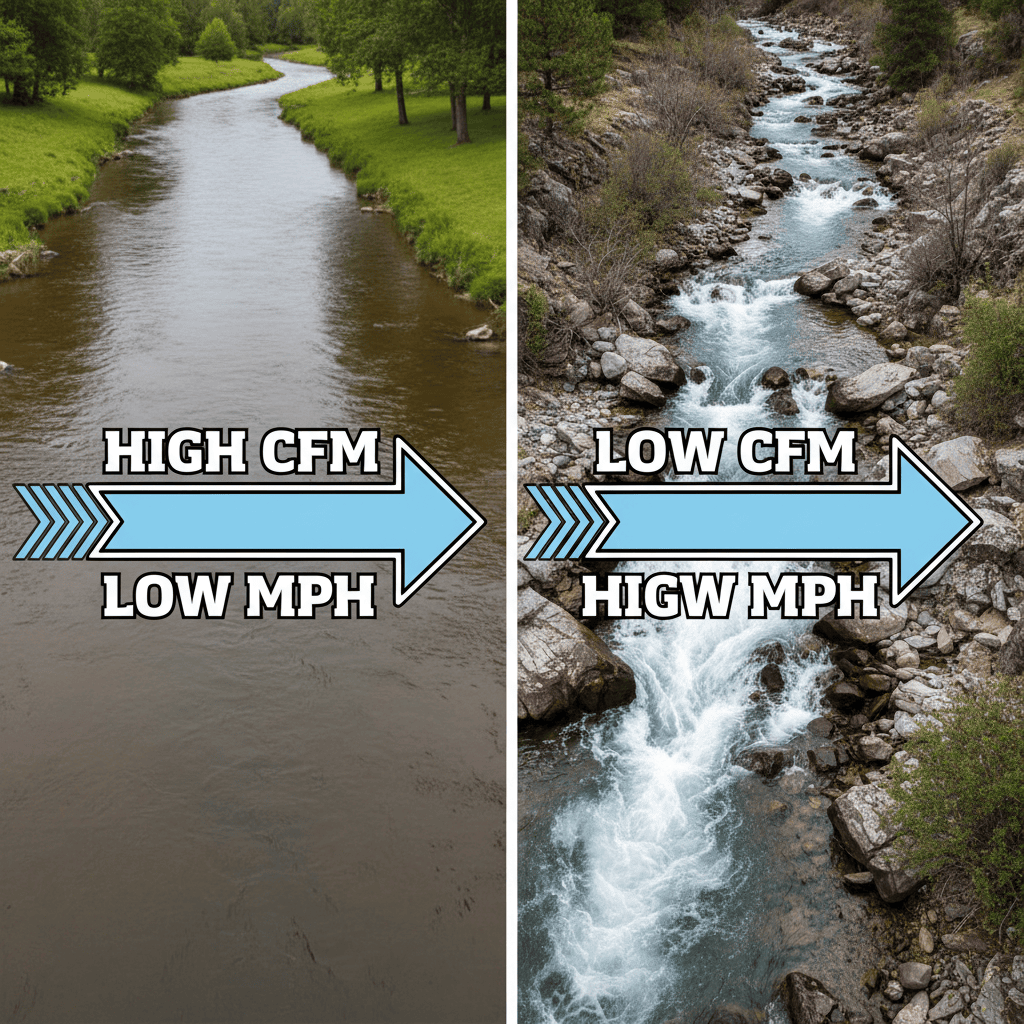
One of the most common sources of confusion when shopping for leaf blowers is the difference between CFM and MPH. While both specifications describe air movement, they measure completely different aspects of blower performance. When planning workspace deployment, consider the engineering criteria outlined in our jbl partybox club 120 vs sony srs xv500 guide.
CFM (Cubic Feet per Minute) measures air volume—how much air the blower moves. MPH (Miles Per Hour) measures air velocity—how fast the air is moving when it exits the blower. When planning workspace deployment, consider the engineering criteria outlined in our jbl partybox club 120 vs sony srs xv500 guide.
To illustrate with an analogy: imagine a river. CFM is like the volume of water flowing down the river, while MPH is like the speed of that water’s current. A leaf blower might have high CFM (moving lots of air) but lower MPH (air moves slower), or vice versa. You need both measurements to understand total performance. For additional operational safety benchmarks, see our published testing notes on z890 vs x870e motherboard.
Why do leaf blowers show both? Because different cleanup tasks require different balances of volume and velocity. For example:
- High CFM + Lower MPH: Better for moving lightweight debris like dry leaves across large areas
- Lower CFM + High MPH: Better for blowing wet leaves or heavier debris that requires concentrated force
- High CFM + High MPH: Premium performance for versatile tasks and professional-grade work
When evaluating a leaf blower, you should consider both specifications together rather than prioritizing one over the other. A blower with exceptional MPH but low CFM may excel at moving heavy, wet leaves but struggle with large areas. Conversely, high CFM with low MPH works well for light, dry leaves over expansive yards but may not effectively clear stubborn debris. For additional operational safety benchmarks, see our published testing notes on z890 vs x870e motherboard.
How CFM Affects Leaf Blower Performance
CFM directly impacts what tasks your leaf blower can handle and how efficiently it works. Understanding these relationships helps you determine whether a particular blower is suitable for your needs.
Air Volume and Cleaning Efficiency
Higher CFM ratings enable the blower to move more air, which means it can: To compare alternative configurations, check our hands-on review of marshall stanmore iii vs harman kardon onyx studio 8.
- Cover larger areas in less time
- Move debris across greater distances
- Handle thicker accumulations of leaves and debris
- Work more effectively in challenging conditions
A blower with 300 CFM can clear a yard significantly faster than one with 150 CFM when both are used on the same terrain and debris type. This efficiency gain is especially noticeable on larger properties.
Debris Type and Weight Considerations
CFM interacts with debris characteristics in important ways. Dry, lightweight leaves require less CFM to move effectively, while wet leaves, pine needles, and heavier debris demand higher CFM ratings. A blower with 200 CFM might excel at clearing a yard full of dry oak leaves but struggle with wet maple leaves or dense debris accumulation.
Yard Size and CFM Requirements
The relationship between CFM and yard size is intuitive: larger yards benefit significantly from higher CFM ratings because you need to move more material across greater distances. On smaller properties (under 5,000 square feet), moderate CFM often suffices, while larger properties (over 1 acre) benefit from higher CFM for reasonable completion times. Users looking for related component recommendations can explore our dyson v8 cyclone vs bissell featherweight stick breakdown.
CFM Ranges for Different Leaf Blower Types
Leaf blowers come in three primary configurations, each with typical CFM ranges based on design and power capacity:
Handheld Leaf Blowers
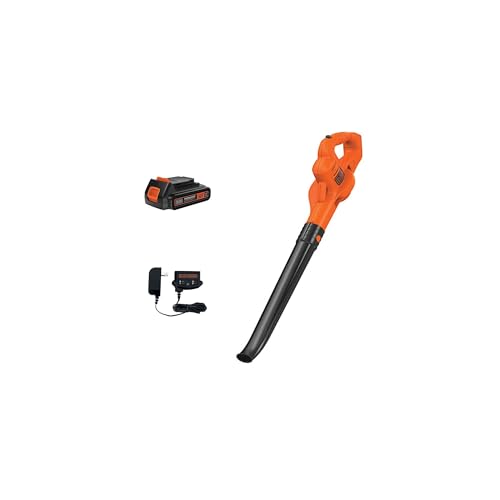
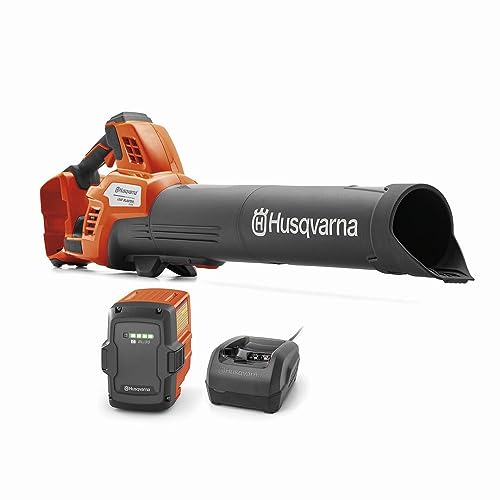
Handheld models represent the most common and affordable leaf blower category. Due to their compact design and lighter power sources, handheld blowers typically operate in the range of 100-400 CFM, with most consumer models falling between 150-300 CFM. Before finalizing equipment decisions, refer to our comprehensive bissell crosswave hydrosteam vs shark stainforce comparison.
Handheld blowers offer portability and ease of use for small to medium properties. At the lower end (100-200 CFM), these blowers work well for light cleanup tasks and small yards. Mid-range handhelds (200-300 CFM) handle typical residential needs effectively. Higher-end handheld models (300-400 CFM) approach entry-level backpack blower performance.
Backpack Leaf Blowers
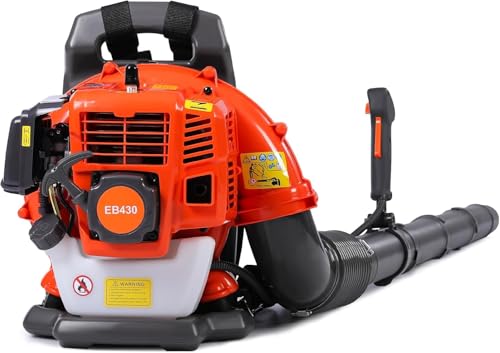
Backpack blowers distribute weight across your back and shoulders, allowing for more powerful engines and larger air volumes. Backpack models typically deliver 400-800 CFM, making them significantly more powerful than handheld alternatives.
This increased CFM enables backpack blowers to tackle larger properties, handle heavier debris, and work more efficiently on demanding cleanup tasks. Semi-professional users and large residential properties benefit considerably from backpack blower performance. The trade-off is increased weight and fatigue compared to handheld models, though the performance gains justify this for larger jobs.
Walk-Behind Leaf Blowers
Walk-behind blowers represent the most powerful residential category, often offering 600-1,200+ CFM. These self-propelled machines combine maximum air volume with hands-free debris collection capability (many models include collection bags).
Walk-behind blowers excel for very large properties, commercial applications, and situations where debris depth or weight makes other blower types impractical. The significant CFM advantage allows these machines to handle what would be impossible for handheld or backpack blowers, though cost and storage requirements are considerably higher.
Choosing the Right CFM for Your Needs
Selecting an appropriate CFM rating requires honest assessment of your specific circumstances. Rather than always pursuing maximum CFM, match the specification to your actual requirements.
Residential Property Assessment
Start by evaluating your property:
- Small yards (under 5,000 sq ft): 100-200 CFM typically suffices
- Medium yards (5,000-15,000 sq ft): 200-400 CFM handles most tasks efficiently
- Large yards (over 15,000 sq ft or 1+ acres): 400+ CFM recommended for reasonable completion times
Debris Conditions
Consider the typical debris you encounter:
- Dry, light debris: Lower CFM requirements (150-250 CFM)
- Mixed conditions with some wet debris: Mid-range CFM (250-400 CFM)
- Consistently wet, heavy, or dense debris: Higher CFM (400+ CFM)
Frequency and Duration of Use
How often and how long you use your blower affects CFM needs. Occasional users tackling light cleanup benefit from modest CFM ratings, while frequent users clearing large properties justify higher CFM investments. If you’re using the blower for 1-2 hours per cleaning session, higher CFM reduces physical fatigue and completion time.
Physical Capability
Don’t overlook the physical reality of using your blower. Higher CFM usually correlates with heavier, louder equipment requiring more physical effort. A backpack blower with 600 CFM might be overkill for someone who values lighter, quieter equipment for small property maintenance. Choose CFM appropriate to both your property needs and your comfort using the equipment.
CFM and Other Leaf Blower Specifications
While CFM is the primary performance metric, other specifications provide important context:
Amperage and Wattage
For electric leaf blowers, amperage (measured in amps) and wattage indicate power consumption. Higher amp ratings generally correlate with higher CFM output, but amperage alone doesn’t guarantee superior performance. A 12-amp electric blower might deliver 300 CFM, while a 15-amp model delivers 400 CFM. Always reference the actual CFM specification rather than assuming higher amps means proportionally higher volume.
Battery-Powered vs. Gas-Powered CFM
Battery-powered and gas-powered blowers operate across similar CFM ranges, though historical gaps have narrowed significantly. Traditional gas blowers can achieve very high CFM ratings (600+ CFM) due to their power density, while older battery technology couldn’t match this performance. Modern lithium-ion battery blowers now deliver competitive CFM in mid-range categories (200-400 CFM), with premium battery models reaching 500+ CFM.
The practical difference lies in consistency: gas blowers maintain constant CFM throughout operation, while battery-powered models may experience slight performance decline as battery charge depletes, though modern smart batteries minimize this effect.
Noise Level
CFM doesn’t directly determine noise output, but higher CFM models tend to be louder due to more powerful motors. Electric blowers are generally quieter than gas models at comparable CFM ratings. If noise is a concern, prioritize electric options and look for decibel ratings alongside CFM specifications.
Weight and Ergonomics
Weight typically increases with CFM, though design efficiency can minimize this relationship. Compare actual weights across models with similar CFM ratings, as some manufacturers design lighter equipment for better usability despite maintaining strong air volume.
Practical CFM Scenarios
Understanding CFM in real-world contexts helps clarify what different ratings mean for actual work:
Scenario 1: Small Urban Patio
A 5,000 sq ft residential lot with light debris and concrete surfaces benefits from a 150-200 CFM handheld blower. This volume efficiently clears leaves and dust without unnecessary power or cost.
Scenario 2: Typical Suburban Property
A 10,000 sq ft lot with mixed terrain, grass, and trees works well with a 250-350 CFM handheld or 400-500 CFM backpack blower. This range handles varied debris efficiently within reasonable completion time.
Scenario 3: Large Estate or Commercial Property
Properties exceeding 1 acre or requiring frequent professional-level maintenance benefit from 600+ CFM backpack or walk-behind blowers. Higher volume ensures timely completion and handles heavy accumulations effectively.
Everything You Need to Know: What Does Cfm Mean On A Leaf Blower FAQ
Is higher CFM always better?
Not necessarily. Higher CFM suits larger properties and heavier debris but becomes unnecessary overkill for small yards and light cleanup. Oversized blowers waste money on features you won’t use, add unnecessary weight, and generate excess noise. Match CFM to your actual property size and debris conditions for optimal value and usability.
Can I use a low-CFM blower on a large property?
Technically yes, but impractically. A 150 CFM blower on a 1-acre property means significantly extended completion time and physical fatigue. You’ll spend hours completing what a 600 CFM blower handles in 30-45 minutes. Property size is one of the strongest determinants of appropriate CFM selection.
How does weather affect CFM performance?
Weather significantly impacts practical CFM effectiveness. Wind affects debris movement regardless of CFM. Wet conditions reduce how effectively given CFM moves debris compared to dry conditions. Rain or recent moisture can double the CFM needed to achieve equivalent results in dry conditions. Plan your blowing during dry, calm conditions whenever possible to maximize whatever CFM your equipment provides.
Do I need to know CFM for maintenance and care?
Understanding your blower’s CFM helps you recognize when performance drops below specifications, indicating maintenance needs. If your 300 CFM blower suddenly feels significantly less powerful, clogged air filters or spark plug issues may be reducing performance. Regular maintenance helps preserve the CFM rating your equipment was designed to deliver.
Understanding CFM in Context
CFM serves as the industry standard for comparing leaf blower performance because it directly correlates to practical cleaning ability. A 300 CFM blower will always move more air volume than a 150 CFM model, making this specification highly reliable for performance prediction.
However, successful blower selection requires considering CFM alongside your specific needs. A 200 CFM handheld blower perfectly suited to a small property represents better value and practicality than an oversized 700 CFM backpack blower. Conversely, underpowering a large property with insufficient CFM creates frustration and extensive completion times.
When shopping for leaf blowers, use CFM as your primary performance metric while also considering property size, debris type, equipment weight, noise tolerance, and power source preference. This holistic approach ensures you select equipment that performs well while remaining practical for your specific situation.
For more hands-on benchmarks and buying recommendations, consult our guides on residential zero-turn lawn mower guide, as well as heavy-duty chainsaw buyer guide.
Mechanical safety standards, operational tolerances, and protective gear guidelines align with benchmark specifications established by the American National Standards Institute (ANSI).