
What Is a Sawzall Used For?
A sawzall, or reciprocating saw, is a handheld power tool designed to cut through various materials—wood, metal, drywall, plastic, and more—using a rapid back-and-forth blade motion. The tool excels in demolition work, construction rough-ins, plumbing and electrical installations, and general trimming tasks where maneuverability and access to tight spaces matter more than raw cutting speed. Its versatility, ease of handling, and ability to work in confined areas make it a standard choice for contractors, remodelers, and DIY enthusiasts across residential and commercial projects.
What Is a Sawzall and How Does It Work?
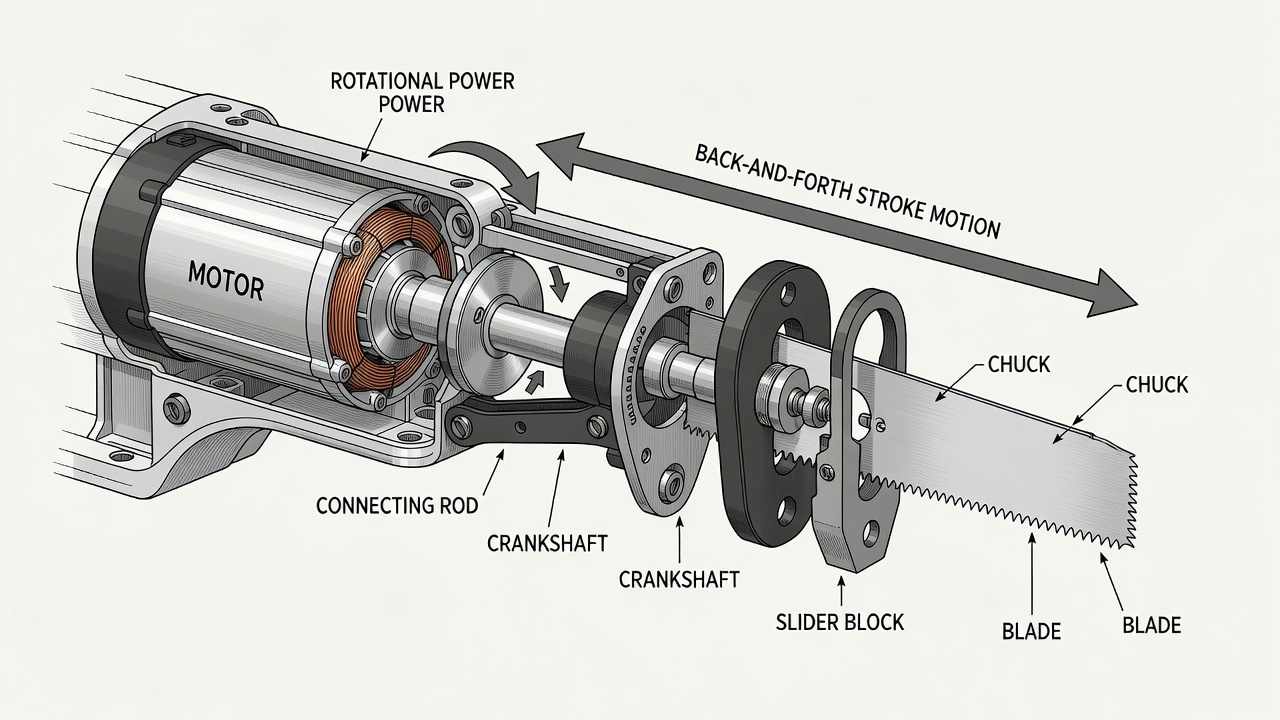
Sawzall is a brand name owned by Milwaukee Tool, but the term is commonly used generically to describe any reciprocating saw. The tool gets its name from the rapid sawing motion—the blade literally “saws all” types of materials. A reciprocating saw operates by converting rotational motor power into linear back-and-forth motion, moving a blade at speeds typically ranging from 0 to 3,000 strokes per minute (SPM), depending on the model and material being cut.
The blade is held in a chuck at the front of the tool and extends forward, allowing users to make both push cuts (on the forward stroke) and pull cuts (on the return stroke). This dual-action cutting, combined with the tool’s lightweight design and one-handed or two-handed grip options, enables operators to work in awkward positions and confined spaces where other saws cannot reach.
By swapping different blade types—each designed for specific materials and cut types—a single reciprocating saw can transition from cutting through wood framing to slicing metal pipes to removing drywall sections. This versatility is the key reason reciprocating saws have become indispensable on job sites and in home workshops.
Primary Uses for a Sawzall
Demolition and Material Removal
The most common application for a sawzall is demolition work. Its aggressive cutting motion and maneuverability make it ideal for tearing out walls, removing old fixtures, and stripping away materials during remodeling projects. A reciprocating saw excels at breaking apart walls with drywall and studs, removing kitchen cabinets, cutting out old windows or doors, and demolishing bathroom tiles or fixtures. The ability to cut at various angles—overhead, horizontal, or at awkward angles—gives operators control in tight or messy demolition scenarios.
Construction and Rough-In Work
During the framing and rough-in phases of construction, sawzalls are used to cut lumber, notch framing members, and make openings for plumbing and electrical runs. Contractors rely on reciprocating saws to quickly cut through wooden joists, headers, and studs, especially when precision tolerances are loose and speed is more important than accuracy. The tool is also used to trim door and window frames during installation.
Plumbing and Electrical Applications
Plumbers and electricians frequently use sawzalls to cut through PVC and copper pipes, as well as metal conduit. A reciprocating saw can slice through both rigid and flexible materials, making it essential for running new supply lines, drain lines, or electrical runs through existing structures. The tool’s ability to access tight spaces behind walls and under floors makes it invaluable for rough-in work in confined areas.
Trimming and Cutting Irregular Shapes
Unlike circular saws or jigsaws, reciprocating saws can cut in any direction and access hard-to-reach areas. They’re used for trimming tree branches, cutting metal flashing, removing rusted fasteners or bolts, and making irregular or freehand cuts where a straight blade guided by a fence isn’t practical.
Specific Applications and Materials
Cutting Drywall
Drywall removal is one of the most frequent uses for a reciprocating saw. With a metal-cutting or general-purpose blade, a sawzall can quickly remove large sections of drywall, allowing crews to access studs, pipes, and wiring behind walls. The tool is also used to cut openings for electrical outlets, vents, or new windows in existing drywall without the mess and dust of a drywall saw.
Metal Cutting
Reciprocating saws are effective for cutting ferrous metals (steel, iron), aluminum, copper, and brass when fitted with the appropriate metal-cutting blade. Common applications include cutting rebar, angle iron, steel studs, metal pipes, and old metal fasteners. Metal-cutting blades have finer teeth and specialized geometry to handle the hardness of metal without binding or breaking. The tool’s one-handed operation and access capabilities make it superior to band saws or angle grinders in confined spaces.
Wood Cutting
While a circular saw or miter saw is faster for straight cuts through lumber, a reciprocating saw excels at cutting awkwardly positioned wood, notching beams, and making cuts in wood that’s already installed in a structure. Wood-cutting blades have larger teeth and are designed to remove material quickly without binding. Sawzalls are preferred for demolition or salvage cuts where precision is secondary to speed and access.
Pipe and Conduit Cutting
PVC, copper, and metal conduit can all be cut quickly with a reciprocating saw. A metal-cutting or plastic-cutting blade will slice through pipes without crushing or deforming them, provided the stroke length and feed rate are controlled. Plumbers and electricians use sawzalls for in-place cuts where a pipe cutter or hacksaw cannot fit.
Plastic and Composite Materials
Reciprocating saws equipped with plastic-cutting blades can cut through PVC, composite decking, fiberglass, and vinyl materials. These blades have finer teeth than wood blades and reduce chipping and melting at the cut edge.
Advantages Over Other Cutting Tools
Versus Circular Saws
Circular saws are faster and more precise for straight cuts through lumber or sheet materials. However, reciprocating saws offer superior maneuverability in confined spaces, the ability to cut at any angle, and the capacity to cut in any direction (not just along a straight line). A reciprocating saw doesn’t require a guide or fence and can make freehand cuts or access areas a circular saw cannot reach.
Versus Jigsaws
Jigsaws excel at curved, intricate cuts and are better for detailed work and thin materials. Reciprocating saws, however, are more powerful and faster for rough, straight cuts through thick materials. A sawzall can also cut thicker stock (up to 6 inches or more, depending on the blade) and handle denser materials like metal and masonry, whereas jigsaws are limited to lighter materials and intricate patterns.
Versus Band Saws and Hacksaw
Band saws and hacksaws are stationary tools or require two-handed operation and precise material positioning. A reciprocating saw is portable, can work on materials in place (walls, pipes, beams), and requires only one hand to operate, freeing the other hand to steady the workpiece or brace the tool against a surface. This makes it far more practical for job-site work and demolition.
Versus Angle Grinders
Angle grinders are faster for metal cutting and create a finer finish, but they generate significant sparks, heat, and noise. They also require two hands and careful control due to kickback risk. Reciprocating saws are slower but safer, quieter, and more practical for making controlled cuts in confined spaces where sparks pose a fire hazard or injury risk.
Safety Considerations and Limitations
Safety Precautions
Operating a reciprocating saw safely requires attention to several key practices. Always wear safety glasses or a face shield to protect against flying debris and material fragments. Use hearing protection, as reciprocating saws generate noise levels typically between 80–90 decibels. Wear work gloves to protect hands from sharp blade edges and material fragments, and consider using a dust mask or respirator, especially during demolition work that generates fine dust.
Secure the workpiece or material being cut to prevent it from shifting or rotating unexpectedly. Never reach underneath or behind the blade while the tool is running. Keep both hands on the tool when practical, and maintain a firm grip to control the tool if the blade binds or kicks. Be aware of what lies behind the material you’re cutting—pipes, wires, or other hidden materials can cause the blade to bind suddenly, creating a sudden jerk or kickback.
Always unplug or remove the battery before changing blades, and inspect blades for damage or dullness before use. A dull blade requires more pressure and generates more heat, increasing the risk of blade breakage and operator fatigue.
Materials and Limitations
While reciprocating saws are versatile, they are not ideal for every cutting task. Masonry and concrete require specialized masonry blades and are slow to cut with a reciprocating saw; angle grinders or specialized masonry saws are more efficient. Tile cutting with a sawzall is messy and slow; wet saws are better suited for this task.
Reciprocating saws are not precision tools. Blade flex and vibration can cause wavy or jagged cuts, and they are not suitable for fine woodworking, cabinetry, or detailed trim work where straight, smooth edges are required. The tool also generates significant vibration and noise, which can be fatiguing during extended use and may not be appropriate in sensitive environments.
Materials that are very thin or prone to binding—such as sheet metal or veneer—should be cut with better-suited tools. Similarly, materials that must remain undamaged (like active electrical lines or gas pipes) should not be cut with a sawzall unless the user is absolutely certain of what lies behind the cut.
Frequently Asked Questions
Can a sawzall cut through metal?
Yes, a reciprocating saw can cut through metal when fitted with a metal-cutting blade. These blades have finer teeth and are designed specifically for ferrous metals (steel, iron), aluminum, copper, and brass. Stroke speed should be reduced when cutting metal, and the tool should be allowed to do the work without forcing the blade, which can cause binding or breakage.
What’s the difference between a sawzall and a reciprocating saw?
There is no technical difference—they are the same tool. “Sawzall” is a trademarked brand name owned by Milwaukee Tool that has become synonymous with the tool category, similar to how “Kleenex” refers to facial tissues. All reciprocating saws operate on the same back-and-forth blade motion principle, regardless of brand.
Is a sawzall good for demolition?
A reciprocating saw is one of the best tools for demolition work. Its rapid cutting motion, maneuverability, and ability to access confined spaces make it ideal for tearing out walls, removing fixtures, cutting drywall, and stripping materials during remodeling. The variety of blade types available allows a single tool to handle drywall, wood framing, metal pipes, and other materials commonly encountered in demolition projects.
What blade should I use for cutting wood versus metal?
Wood-cutting blades have larger, wider teeth spaced further apart, designed to remove material quickly and prevent clogging with wood fibers. Metal-cutting blades have finer, closer teeth to handle the hardness of metal without binding or jumping. Using the correct blade for the material is essential for both cutting efficiency and blade longevity; forcing a wood blade through metal will quickly dull or break it.