

Quick Answer: What Makes A Good Circular Saw?
A good circular saw combines adequate motor power, a sharp carbide-tipped blade, precise depth and bevel adjustment capabilities, a sturdy base plate, and ergonomic design with safety features including a blade guard and electric brake. These qualities determine the tool’s ability to make straight, accurate cuts in various materials while remaining safe and comfortable to use. Whether you choose a…

Pros
- Electric brake adds a clear safety advantage and reduces wait time between cuts.
- LED light improves cut-line visibility in low-light conditions.
- Integrated rafter hook makes storage and jobsite placement more convenient.
Cons
- Bare-tool format means buyers still need compatible M18 batteries and a charger.
- The manufacturer listing does not list detailed specs such as weight, cutting depth, or blade type.
- It is a specialized tool, so users who only need occasional light-duty cuts may not need this level of saw.
Overview: The Milwaukee M18 Brushless 7-1/4" Circular Saw is a bare tool designed for users who want a cordless saw with practical jobsite features. Its magnesium upper and lower guards, integrated rafter hook, and compact circular saw format give it a professional, work-ready feel.
Performance & Features: The brushless design is intended to support efficient operation, while the electric brake helps stop the blade quickly after the trigger is released. An LED light improves visibility at the cut line, and the integrated dust port on the guard can help keep the workspace cleaner during cutting tasks.
Drawbacks & Considerations: This is a bare tool, so buyers need compatible M18 batteries and a charger if they do not already own them. The manufacturer listing also leaves out several detailed specs, so shoppers looking for weight, cutting depth, or other exact measurements may need to verify those separately.
Verdict: This saw is a solid option for contractors and serious DIY users who already use Milwaukee M18 tools and want a feature-focused circular saw. It stands out more for convenience, safety, and jobsite practicality than for flashy extras.

Pros
- Strong cutting specs for a cordless 20V MAX saw, including up to 1,700 MWO.
- Brushless motor and high no-load speed support efficient, fast cutting.
- Electric brake adds a useful control and safety benefit during repeated cuts.
- Compatible with the DEWALT 20V MAX platform for users who already own batteries.
Cons
- Battery and charger are not included, so first-time buyers need to budget for those separately.
- Published performance figures such as cuts per charge are based on ideal conditions and may vary in real use.
- As a cordless saw, runtime depends on the battery you pair with it.
Overview: The DEWALT DCS590B is a 20V MAX XR brushless cordless 7-1/4 in. circular saw built for users who want portable cutting power without a cord. As a tool-only model, it is meant for people already using the DEWALT 20V MAX battery system.
Performance: DEWALT rates this saw at up to 1,700 MWO and up to 5,500 RPM no-load, with a maximum depth of cut of 2-9/16 in. at 90° and 2 in. at 45°. It also includes an electric brake, which helps stop blade coast after trigger release and can improve control during repetitive cutting.
Drawbacks: The main limitation is that battery and charger are not included, so new users will need to buy those separately. Real-world cuts per charge can also vary by material, blade selection, and battery condition, so the published performance figures should be treated as best-case estimates.
Verdict: This saw is a good fit for contractors, remodelers, and DIY users who want a powerful cordless circular saw with strong depth capacity and the convenience of DEWALT battery compatibility. It makes the most sense for buyers already invested in the 20V MAX platform.
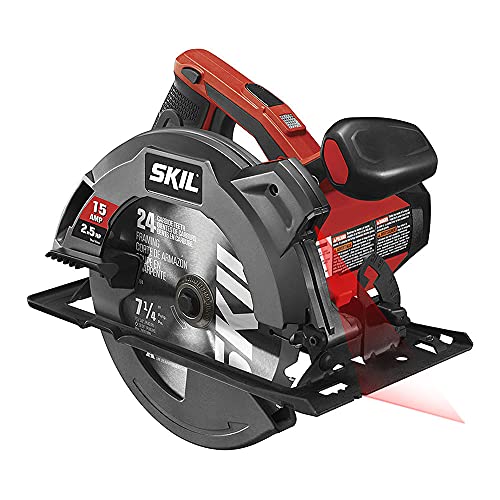
Pros
- High-speed 15-amp motor is well suited to everyday cutting tasks
- Laser guide and dust blower both help improve cut-line visibility
- Bevel range is wide enough for a variety of angle cuts
- Blade is included, which adds convenience for first-time setup
Cons
- Corded design limits mobility compared with cordless circular saws
- No detailed review data was provided, so long-term user feedback is limited here
- The product data does not include weight, depth-of-cut, or accessory details
Overview: The SKIL 5280-01 is a corded 15-amp circular saw with a 7-1/4-inch carbide-tipped blade, designed for fast cutting and general-purpose jobsite or home workshop use. Its built-in laser guide gives it a more guided feel than a basic entry-level saw.
Performance: With 5,300 RPM, this saw is built to move quickly through common cutting tasks. The dust blower helps keep the cut line visible, while the 51-degree bevel capacity and 45-degree positive stop make angled cuts more practical for framing, trimming, and other routine projects.
Drawbacks: This is a corded tool, so it is best for users who can work near an outlet. The manufacturer listing does not include weight, depth-of-cut, or detailed customer feedback, so buyers looking for highly portable or fully documented specs may want to compare alternatives first.
Verdict: The SKIL 5280-01 is a solid value-oriented option for DIY users, homeowners, and light workshop work that benefit from speed, a guide laser, and simple safety features. It is most appealing to buyers who want a straightforward circular saw with useful visibility and angle-cut support.
Motor Power and Performance
Motor power is a primary indicator of a circular saw’s capability. Corded circular saws are typically rated between 10 and 15 amps, with 15 amps representing a standard for full-featured professional and contractor-grade models. Higher amperage provides greater torque, allowing the saw to cut through dense materials like hardwood or multiple layers of material without bogging down or stalling.
Cordless models use voltage as their power measure, 18V, 20V, and higher, with larger batteries delivering sustained performance across longer cutting sessions. A powerful motor maintains consistent blade speed under load, preventing the saw from slowing down mid-cut, which would result in rough or uneven edges. Motor power also affects the saw’s ability to start and maintain operation when the blade encounters knots, grain changes, or harder material zones. When evaluating motor performance, consider both the rated amperage or voltage and the saw’s real-world performance in the types of cutting tasks you plan to do.
Blade Quality and Selection
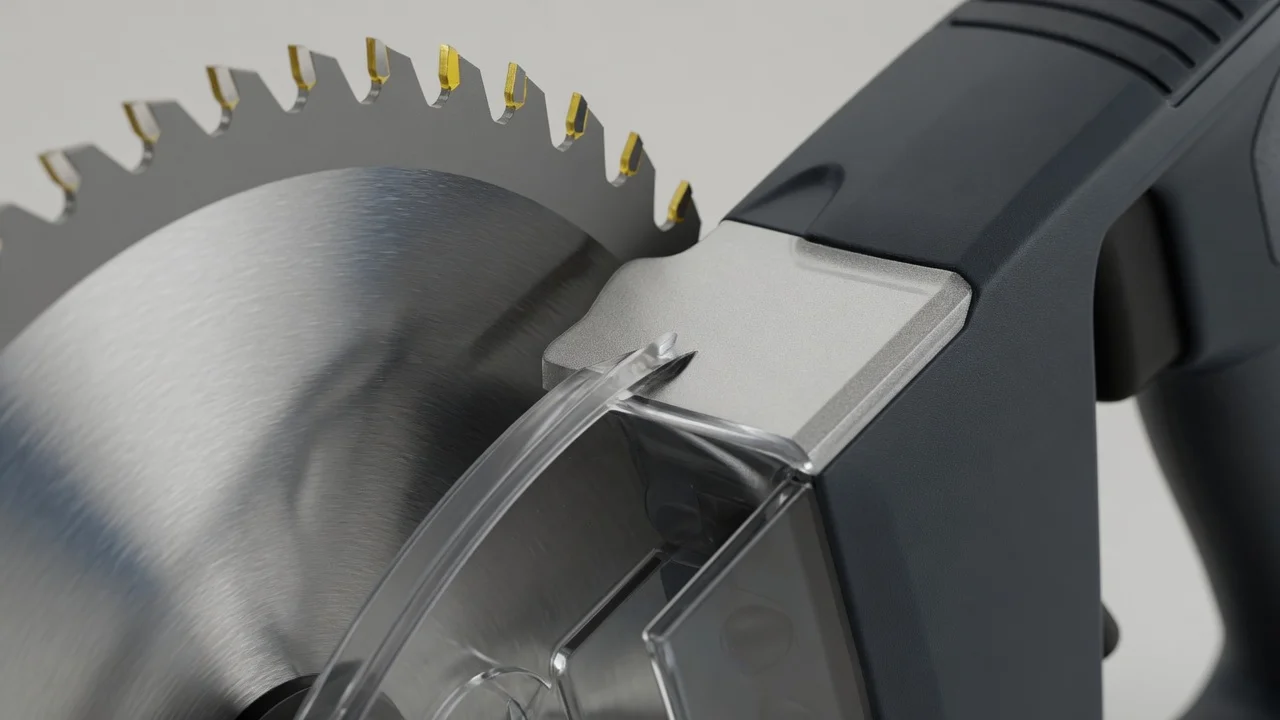
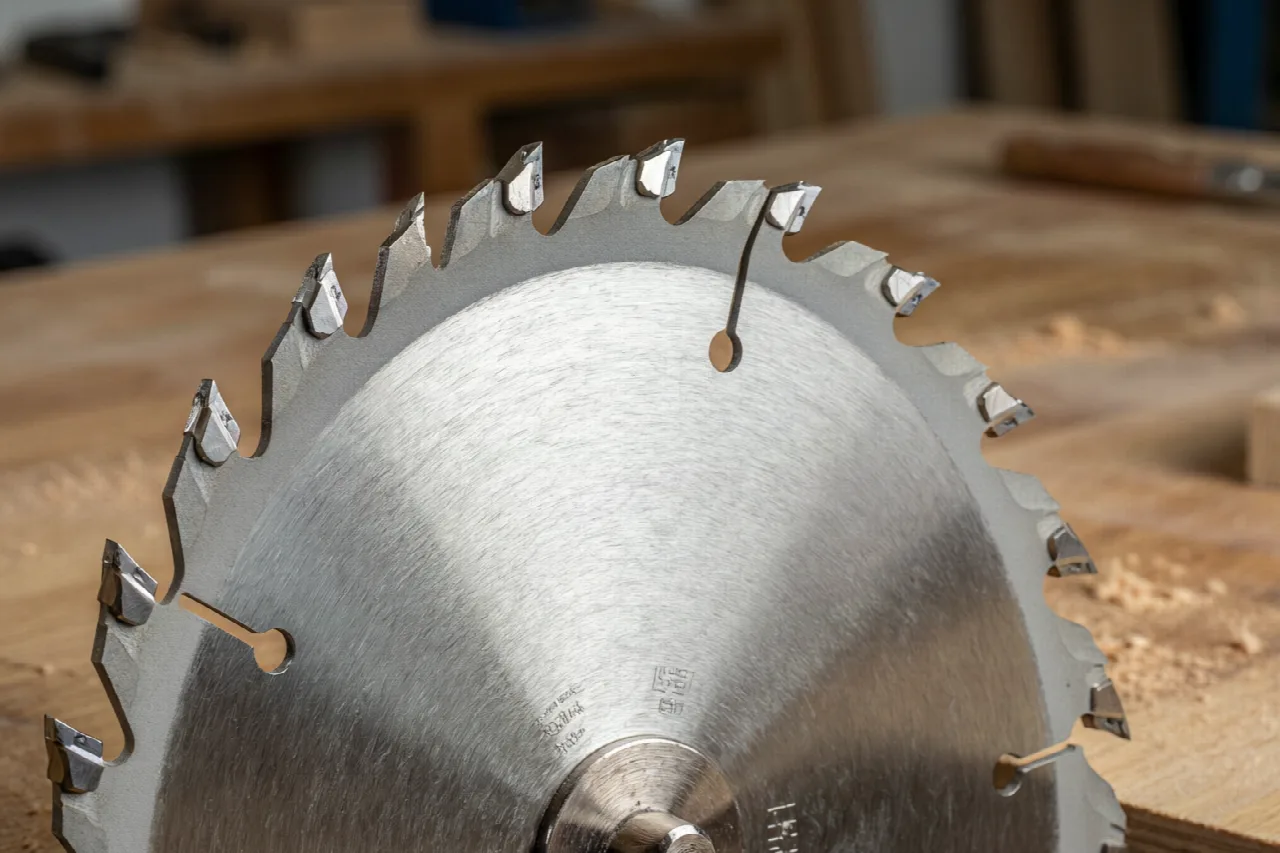
The blade is where the cutting actually happens, making blade quality essential to overall saw performance. Carbide-tipped blades outlast steel blades significantly and maintain sharpness longer, reducing the frequency of blade replacement. Carbide tips withstand the heat generated by friction and resist dulling from contact with materials like pressure-treated lumber or plywood with glue.
Tooth count affects cut quality and material compatibility. Blades with fewer teeth (24-40 teeth) remove material quickly and are suited for rough cutting and demolition work. Blades with more teeth (60-80 teeth) produce smoother, finer cuts ideal for finish work and crosscutting. Specialized blades exist for specific materials: metal-cutting blades have fine teeth and different gullet design to handle steel and aluminum, while plywood blades are optimized for clean crosscuts with minimal tearout. A good circular saw performs best with a quality blade matched to your intended task. Dull blades force the motor to work harder, generating excessive heat and producing poor cuts, so blade maintenance or timely replacement is part of owning and operating the tool effectively.
Adjustability Features
Depth and bevel adjustment capabilities allow you to set the blade to cut exactly what you need without overexposure or wasted stroke. Depth adjustment lets you set the blade to cut just through your material without protruding excessively below, which is safer and reduces unnecessary wear. Most quality saws allow quick depth adjustment without tools, using a lever or knob mechanism.
Bevel adjustment tilts the blade base plate from 0 to 45 degrees (or sometimes beyond), enabling angled cuts for roofing, trim work, and other specialized applications. A precise bevel mechanism with positive stops at common angles like 45 degrees improves repeatability and accuracy. The adjustment should be smooth and hold its setting without drifting during operation. Good adjustability features reduce the time spent setting up each cut and allow you to work more efficiently. Quality saws feature adjustment mechanisms that are accessible and intuitive, not requiring excessive force or multiple steps to change settings.
Base Plate and Stability
The base plate, the flat surface that rests against the workpiece, is critical to cut accuracy and saw stability. A rigid, flat base plate is typically made from aluminum or magnesium alloy, materials that resist warping while remaining lightweight. A bent or warped base plate causes the blade to angle incorrectly, resulting in non-perpendicular cuts or bevels that do not match your intended angle.
Base plate design influences how smoothly the saw glides across the workpiece and how securely it sits against the cutting surface. Quality saws feature base plates with generous size for stability and often include features like edge guides or notches that help align the blade with marked cut lines. The plate should have smooth surfaces and edges that do not catch or snag on the workpiece. The connection between the base plate and the motor housing should be rigid and precise, with no flex or play that would allow the blade to shift during cutting. A substantial, well-designed base plate is one of the most important factors in achieving straight, accurate cuts. For additional operational safety benchmarks, see our published testing notes on marshall stanmore iii vs harman kardon onyx studio 8.
Ergonomics and Safety
Extended use of a circular saw requires comfortable ergonomic design to reduce fatigue and maintain control. Handle placement, grip texture, and overall weight distribution affect how tiring the tool is to use. A well-balanced saw does not require excessive force to hold steady, and grip surfaces should provide secure purchase even when hands are sweaty or wearing gloves.
Safety features are integral to a quality circular saw. A blade guard should automatically retract when the blade contacts the workpiece and spring back into position when the saw is lifted away, protecting your hands from accidental contact. An electric brake stops the blade quickly after the trigger is released, reducing the risk of cutting yourself if your hand slips or you lose balance. A lower guard also shields your hand from the underside of the blade. Cord or battery management that does not interfere with operation and proper weight balance all contribute to safe, controlled operation. Good circular saws combine these safety features with intuitive controls so operators can focus on the task rather than managing the tool itself. To compare alternative configurations, check our hands-on review of dyson v8 cyclone vs bissell featherweight stick.
Related Maintenance and Operating Guides
To keep your equipment running at peak operating efficiency, explore our related technical walkthroughs and maintenance tutorials:
- Consult our detailed breakdown on cordless stick vacuum buyer guide.
- Consult our detailed breakdown on robotic pool cleaner comparison guide.
- Consult our detailed breakdown on deep carpet cleaning machine reviews.
Safety Reading for Circular Saws
A good circular saw balances power, guard design and comfortable handling, and each feature affects how safely you can cut. For broader guidance on portable power tools, the material from American National Standards Institute (ANSI) is worth a look before your first project.









