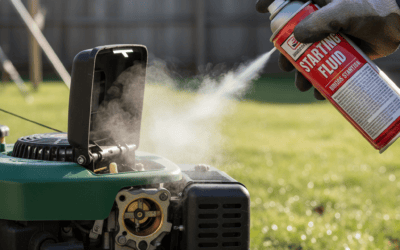
What Oil Should You Use in Your Lawn Mower?
Most lawn mowers use SAE 30 or 10W-30 oil. SAE 30 is the standard specification for four-stroke engines in typical warm-season mowing conditions. If you live in a cold climate or mow during spring and fall, 10W-30 provides better cold-weather performance and easier cold starts. Two-stroke engines are fundamentally different and require pre-mixed oil-fuel blends, not straight oil poured into the crankcase. Always check your mower’s owner manual for the manufacturer’s exact requirements, as some commercial or specialty models may specify synthetic oil or other viscosity grades.
Understanding Oil Viscosity: SAE Ratings Explained
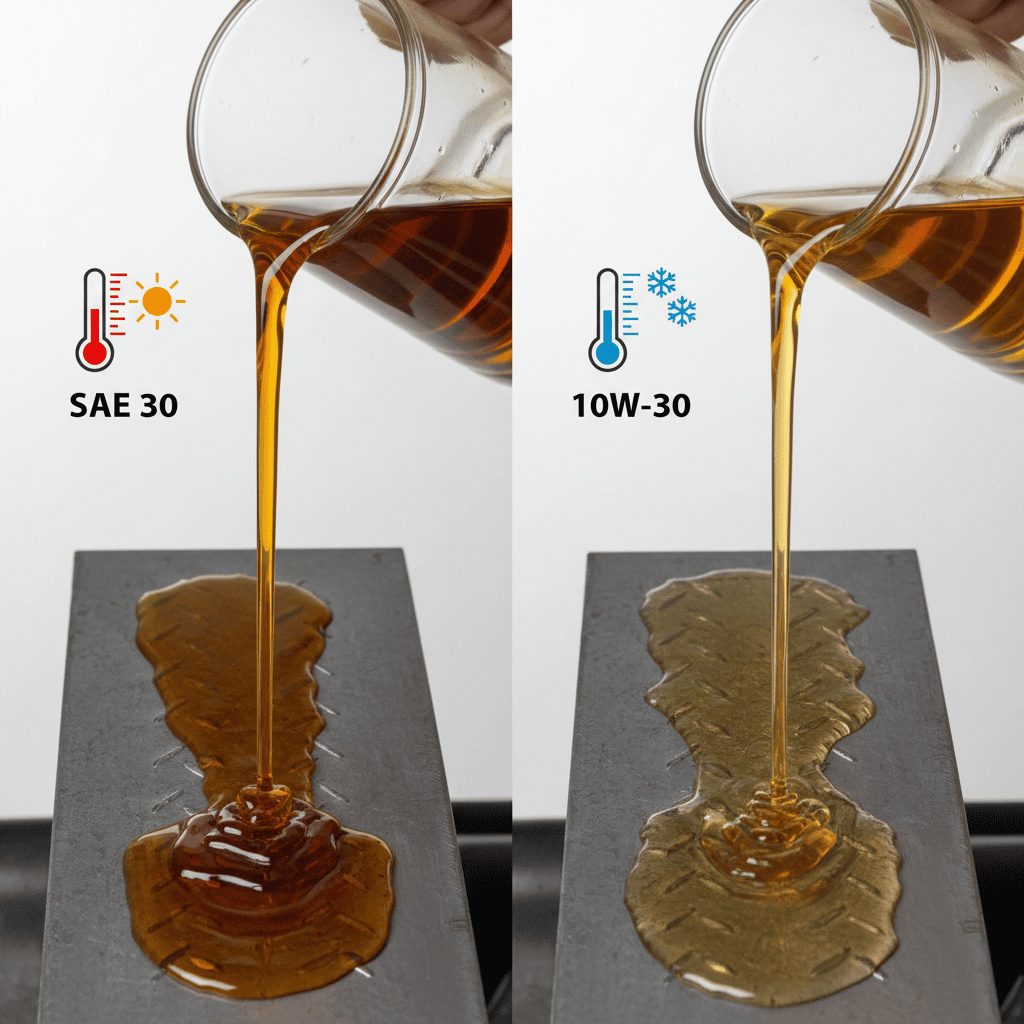
Oil viscosity refers to how thick or thin the oil is. The SAE (Society of Automotive Engineers) rating tells you this thickness. For lawn mowers, you’ll encounter two main types:
- SAE 30: A straight-weight oil with consistent viscosity. The number 30 indicates the oil’s thickness at operating temperature. SAE 30 works well in temperatures above 50°F and is the default for most mowers during the typical mowing season (spring through fall).
- 10W-30: A multi-grade oil where 10W refers to winter performance (how easily it flows in cold temperatures) and 30 refers to its thickness at operating temperature. The “W” stands for winter. This oil flows better at startup in cold weather, reducing engine strain and improving fuel efficiency during shoulder seasons.
The difference matters because oil that’s too thick won’t circulate properly in cold temperatures, making engine startup harder and reducing lubrication. Oil that’s too thin won’t protect engine components adequately in hot conditions, increasing wear and potential damage.
Four-Stroke vs. Two-Stroke Engines: Critical Oil Differences
Your mower’s engine type determines how you use oil, so identify which you have:
Four-Stroke Engines
Most modern lawn mowers—push mowers, riding mowers, and zero-turn mowers—use four-stroke engines. These have a separate oil reservoir (like a car) where you pour oil directly into the crankcase. You check the oil level with a dipstick before mowing and change it according to the manual’s schedule (typically every 50-100 hours of operation or once per season). Use SAE 30 or 10W-30 straight oil for four-stroke engines. No mixing required.
Two-Stroke Engines
Older push mowers, some small utility engines, and handheld equipment like string trimmers use two-stroke engines. These engines have no oil reservoir. Instead, oil is mixed directly into the fuel tank before each use. The oil-fuel mixture lubricates the engine as it burns. Two-stroke engines require 2-cycle oil, which is specifically formulated to burn cleanly with fuel.
Common mixing ratios are:
- 50:1 (fuel to oil) – typical for most modern two-stroke mowers
- 40:1 – some older models or commercial equipment
- 32:1 – certain high-performance engines
Always check your manual for the exact ratio. Mixing incorrectly can cause engine damage. If your mower is two-stroke and you’re unsure of the ratio, contact the manufacturer before operating it.
Seasonal Oil Selection: Temperature and Climate Considerations
Your local climate significantly influences which oil works best:
Warm Climates (Above 50°F)
If you mow primarily in spring, summer, and early fall with temperatures typically above 50°F, SAE 30 is the standard choice. It provides adequate lubrication and protection during warm-season operation. Most mower manufacturers recommend SAE 30 as the baseline specification.
Cold Climates and Shoulder Seasons
In regions where spring and fall mowing occurs at temperatures below 50°F, or if you live in a cold climate year-round, 10W-30 is the better choice. The lower winter rating (10W) allows the oil to flow more freely at cold temperatures, making cold starts easier and reducing initial engine wear. The 30 rating still provides adequate protection once the engine reaches operating temperature.
Year-Round Mowing
If you mow across multiple seasons with temperature swings, use 10W-30 year-round. It performs adequately in both cold starts and warm operating conditions, eliminating the need to change oil seasonally.
Conventional vs. Synthetic Lawn Mower Oil
You’ll see both conventional and synthetic oils available for lawn mowers:
Conventional Oil
Traditional mineral-based oil refined from crude petroleum. It’s widely available, affordable, and meets the needs of most lawn mower engines. Conventional oil requires more frequent changes—typically every 50 hours of operation or once per season. It’s the standard choice for residential push and riding mowers.
Synthetic Oil
Laboratory-formulated oil designed for superior performance. Synthetic oil offers several advantages: it flows better in cold temperatures, resists breakdown in hot conditions, and maintains viscosity longer under stress. Drain intervals can extend to 100+ hours before changing. However, synthetic oil costs more than conventional oil.
Can you use synthetic in an older mower? Yes, synthetic oil is backward-compatible with older engines, though the benefit is minimal if you’re already changing oil regularly. Check your manual—some vintage mowers specify mineral oil only, though this is rare.
For most homeowners with residential mowers used seasonally, conventional SAE 30 or 10W-30 is sufficient and economical. Synthetic makes more sense for commercial equipment, high-hour seasonal use, or if you prefer longer intervals between changes.
How to Check and Change Your Lawn Mower’s Oil
Checking Oil Level
- Park the mower on level ground and allow the engine to cool (at least 5 minutes after running).
- Locate the dipstick (usually on the side of the engine near the crankcase).
- Pull the dipstick straight out and wipe it clean with a lint-free cloth.
- Reinsert the dipstick fully until it seats, then pull it out again to get an accurate reading.
- The oil level should reach the “full” mark on the stick. If low, add the recommended oil type slowly and recheck.
Check oil before each mowing session or at minimum once per week during mowing season. Low oil reduces lubrication and can cause severe engine damage.
Changing Oil
- Run the engine for 1-2 minutes to warm the oil, then turn off and cool for 5 minutes (warm oil drains better).
- Locate the drain plug on the underside of the engine or crankcase.
- Place a drain pan underneath and remove the drain plug by hand or with a wrench.
- Allow all old oil to drain fully (5-10 minutes).
- Reinstall and tighten the drain plug snugly (not over-tight).
- Remove the old oil filter (if equipped) and install a new one, or skip if your mower has no filter.
- Pour in the recommended amount of fresh oil (check the manual for capacity, typically 0.5-2 quarts for push mowers, more for riding mowers).
- Reinstall the dipstick, check the level, and adjust as needed.
- Run the engine for 30 seconds and recheck the level after cooling.
Most residential mowers need an oil change once per season. Commercial or heavily used mowers may need changes every 50 hours of operation.
Finding Your Mower’s Specific Oil Requirements
Different mower brands and models may have unique specifications. Here’s where to find them:
- Owner’s Manual: The authoritative source. Check the maintenance section for oil type, viscosity, and capacity. If you have the manual, follow it exactly.
- Engine Label: Many mowers have an oil specification sticker on the engine block or in the fuel door.
- Manufacturer Website: Search the mower brand and model number to download the manual or find specifications.
- Dealer Support: Your mower’s dealer can provide specific guidance based on model and age.
- Engine Manufacturer: If you know the engine brand (Briggs & Stratton, Honda, Kohler, etc.), visit their website for guidance on your specific engine model.
If the manual is unavailable and you’re unsure, use SAE 30 for warm climates or 10W-30 for cold climates as a safe starting point—these cover the vast majority of lawn mower engines. However, verify before performing an oil change if possible.
Frequently Asked Questions
Can I use car oil in my lawn mower?
Not recommended. While car oil and lawn mower oil are both motor oils, car oil often contains detergents and additives designed for cars’ higher temperatures and longer drain intervals. Lawn mower engines are simpler and less tolerant of these additives. Additionally, car oil is typically 5W-30 or similar, which may not match your mower’s specification. Use oil labeled for small engines or lawn mowers.
What happens if I use the wrong oil viscosity?
Using oil that’s too thick (higher viscosity) makes cold starts difficult and reduces lubrication until the engine warms. Using oil that’s too thin (lower viscosity) won’t protect engine components adequately in normal operating temperatures, leading to increased wear, overheating, and potential engine failure. Always use the viscosity your manual specifies.
How often should I change the oil in my lawn mower?
Most residential lawn mowers need an oil change once per season (spring before heavy use or fall after the season ends). If you use your mower frequently or for commercial purposes, change oil every 50 hours of operation. Check the level before each use regardless of how recently you changed it.
Is synthetic oil worth the extra cost for a lawn mower?
For casual homeowners mowing a residential yard seasonally, conventional oil is adequate and more economical. Synthetic oil makes sense if you run your mower 100+ hours per season, want longer intervals between changes, or operate in extreme cold climates. For typical use, conventional SAE 30 or 10W-30 provides all the protection needed at a lower cost.