
Quick Answer
Spray carb cleaner into the air intake opening and directly onto the throttle butterfly valve, also called the throttle plate. With the engine off, you can also spray into the fuel inlet or the main jet passage if accessible. The spray helps dissolve varnish and fuel residue that restrict fuel and air flow.

Pros
- Electric start technology simplifies operation by eliminating pull-cord starting.
- 6-speed CVT offers superior speed variability for comfortable self-propelled mowing.
- Integrated blower with 150 CFM and 130 MPH airflow adds multi-season utility.
- High-wheel RWD configuration enhances stability and control on varied terrain.
- Automatic choke system supports easy cold starts without extra steps.
Cons
- Gas-powered engine requires regular fueling, oil changes, and routine maintenance.
- High-wheel design may require more storage space than compact low-wheel models.
- Available data lacks specifics on weight, cutting height range, and bag capacity.
The YARDMAX 24 in. 201cc Electric Start Select PACE 6 Speed CVT High Wheel RWD 3-in-1 Gas Walk Behind Self Propelled Lawn Mower w/Blower is a feature-focused walk-behind mower aimed at residential users who want convenience and versatility. Its high-wheel self-propelled layout and rear-wheel drive give an immediate impression of stability and ease of use for medium to large yards.
Performance centers on the electric start and automatic choke for push-button, no-prime ignition, while the exclusive Select PACE CVT with 6-speed lever lets operators fine-tune speed to match their walking pace. The self-propelled RWD high wheels improve traction on uneven ground, and the advanced airflow blower delivers 150 CFM and up to 130 MPH for effective leaf and debris clearing alongside the 3-in-1 cutting system powered by the 201cc engine.
Considerations include the ongoing need for gasoline fuel and standard gas-engine maintenance such as oil and filter changes. The high-wheel configuration, while helpful for terrain, can make the unit bulkier to store or transport in tighter spaces. Specifics such as exact weight, cutting-height range, and bag capacity are not detailed in available information.
This YARDMAX model delivers the most value to homeowners who prioritize easy starting, variable self-propelled speeds, and multi-function capability including leaf blowing, especially those maintaining medium to large lawns who prefer gas power over battery alternatives.

Pros
- Self-propelled 21-inch mower with six height settings
- 3-in-1 steel deck for mulching, side discharge or bagging
- Includes a 1.7-bushel bagger, per the listing
- 4-cycle trimmer and blower listed to run on regular gas
- Trimmer and leaf blower included in one kit
Cons
- Mower listed at 61.7 pounds, which is heavy to maneuver
- Ships as three separate packages
- Engine and airflow ratings are manufacturer-stated

Pros
- Reliable 150cc Briggs and Stratton engine with ReadyStart for easy starting
- Self-propelled rear-wheel drive enhances performance on slopes and rough ground
- Versatile 3-in-1 system for mulching, bagging, or discharging
- Convenient single-lever 6-position cutting height adjustment on steel deck
- Heavy-duty blade designed for ultra-fine cuts that support lawn health
Cons
- Gas engine requires ongoing fuel, oil, and maintenance unlike electric alternatives
- Rear-wheel drive may provide less overall traction than all-wheel systems on steep terrain
- Maximum cutting height of 3.9 inches limits suitability for very tall or overgrown grass
The PowerSmart 22-Inch Gas Lawn Mower is a walk-behind model built around a durable steel deck and self-propelled design. It centers on a USA-made Briggs and Stratton EX625 150cc engine, creating a solid first impression of reliability and straightforward residential construction.
Performance benefits from ReadyStart technology for easy starting along with a heavy-duty blade that produces ultra-fine cuts. The rear-wheel drive self-propelled system handles inclines and uneven ground effectively, while the 3-in-1 mulching, rear-discharging, or bagging options with a 1.4-bushel bag add flexibility. A single-lever control adjusts cutting height across six positions from 1.5 to 3.9 inches to suit varying lawn conditions.
Considerations include the routine fuel and maintenance demands of a gas engine as well as the rear-wheel drive focus, which prioritizes certain terrains but may feel less stable than multi-drive setups on extreme slopes. The bag capacity works well for moderate jobs yet needs more frequent emptying on larger properties.
This mower delivers the most value to homeowners with medium-sized lawns who prefer gas power, self-propulsion, and multi-mode cutting versatility for regular upkeep.
Carburetor cleaner is a powerful solvent designed to break down fuel residue and varnish deposits that accumulate over time. When your lawn mower starts running poorly, a targeted application of carb cleaner to the right spots can often restore smooth operation without requiring a complete disassembly. However, knowing exactly where to spray is crucial for both effectiveness and safety.
Safety First: Prepare Your Lawn Mower
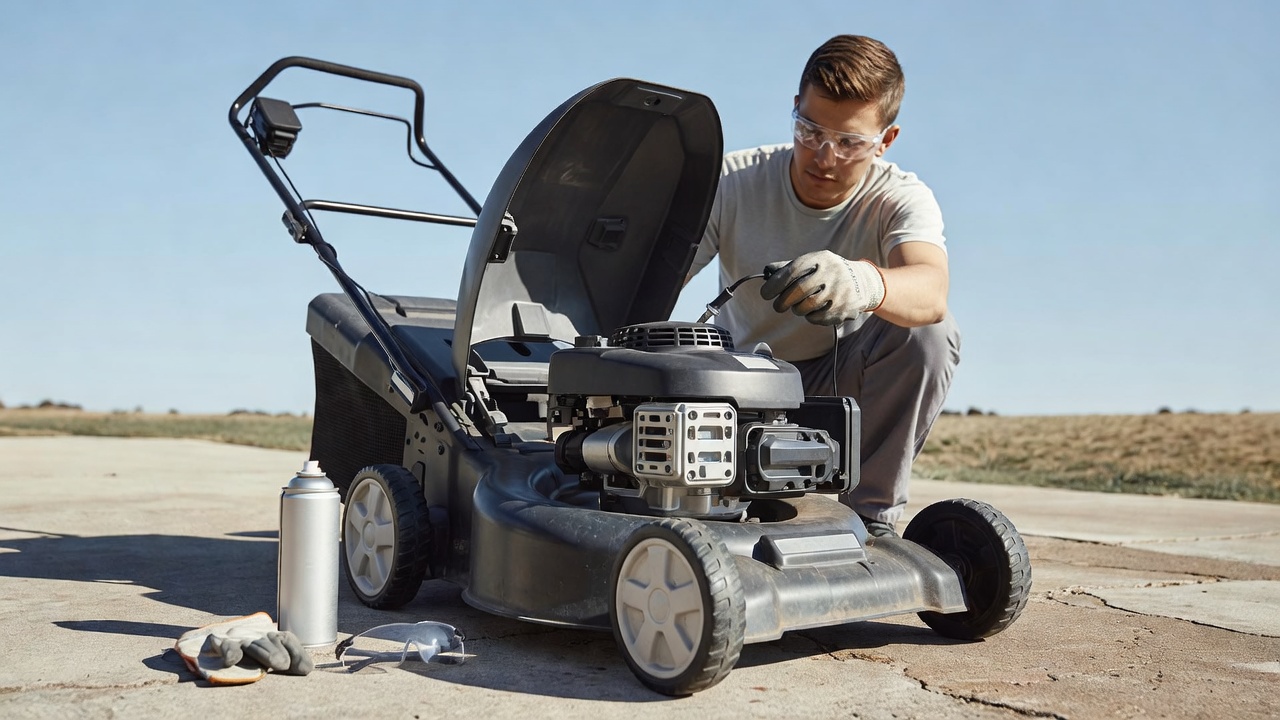
Before you begin any work on your lawn mower’s carburetor, you must follow critical safety protocols. The engine must be completely OFF and COOL to the touch. Working on a hot engine or one that could accidentally start creates serious fire and injury risks.
Always work in a well-ventilated area, away from open flames, sparks, or ignition sources. Carb cleaner is highly flammable, and its fumes can be harmful if inhaled in enclosed spaces. Wear protective gloves and safety glasses to shield your skin and eyes from the solvent. Have a fire extinguisher nearby as an additional precaution.
Disconnect the spark plug wire to ensure the engine cannot accidentally start while you are working. This is a simple but essential step that eliminates the risk of the engine firing while your hands are near moving parts.
How to Locate Your Lawn Mower’s Carburetor
On most lawn mowers, the carburetor is located between the air filter assembly and the engine block. It connects to the throttle linkage and has a fuel line attached to it. The carburetor is typically a metal component with a bowl-shaped bottom (the float bowl) and various adjustment screws.
To find it, start by locating the air filter housing, which is usually a plastic or metal box on the side of the engine. The carburetor will be directly behind this housing, attached to the engine’s intake manifold. You may need to remove the air filter cover and filter to get clear access.
If you’re having trouble identifying the carburetor, consult your lawn mower’s owner’s manual. The manual will have diagrams showing the exact location and components specific to your model. Different manufacturers and engine types may have slightly different configurations, so model-specific guidance is always helpful.
Primary Spray Points: Where to Apply Carb Cleaner
There are several key locations where applying carb cleaner can be effective. Understanding each one helps you target your cleaning efforts properly. When planning workspace deployment, consider the engineering criteria outlined in our marshall stanmore iii vs harman kardon onyx studio 8 guide.
The Air Intake
The air intake is the opening where air enters the carburetor, usually located behind the air filter. With the air filter removed, you can see directly into the carburetor’s throat. Spraying cleaner into this opening allows the solvent to flow through the carburetor and dissolve deposits on internal surfaces. This is often the easiest and most accessible spray point for a quick cleaning.
The Throttle Butterfly Valve
The throttle butterfly valve (or throttle plate) is a metal plate inside the carburetor throat that pivots to control airflow. When you press the throttle on your lawn mower, this plate opens to allow more air into the engine. Deposits on this plate can cause it to stick or move sluggishly, leading to poor engine response. For additional operational safety benchmarks, see our published testing notes on dyson v8 cyclone vs bissell featherweight stick.
To access the throttle plate, you may need to manually operate the throttle linkage to open the valve. Once open, you can spray cleaner directly onto the plate and the surrounding area. This helps dissolve varnish that prevents smooth movement.
The Fuel Inlet and Main Jet
For a more thorough cleaning, you can spray cleaner into the fuel inlet or directly onto the main jet if it’s accessible. The fuel inlet is where the fuel line connects to the carburetor, and the main jet is a small passage that meters fuel flow. Accessing these areas may require disconnecting the fuel line, which should only be done with the engine off and the fuel shut off. To compare alternative configurations, check our hands-on review of bissell crosswave hydrosteam vs shark stainforce.
Spraying into these passages can help clear blockages that affect fuel delivery. However, this approach requires more disassembly and should be done carefully to avoid damaging delicate components.
Step-by-Step: How to Spray the Carb Cleaner
Follow this logical sequence for effective and safe application:
Step 1: Remove the air filter assembly. Take off the air filter cover and remove the filter element. Set these parts aside in a clean location. This exposes the carburetor’s air intake.
Step 2: With the engine OFF, spray cleaner into the air intake. Insert the spray nozzle into the air intake opening and apply short bursts of cleaner. Avoid continuous spraying, which can flood the engine or waste product. A few seconds of spraying is usually sufficient.
Step 3: Manually operate the throttle linkage. Locate the throttle linkage connected to the carburetor and move it by hand to open the butterfly valve. With the valve open, spray cleaner directly onto the plate and the surrounding throat area. This targets deposits on the moving parts.
Step 4: Allow the cleaner to soak briefly. Let the solvent sit for a minute or two to dissolve stubborn deposits. Do not let it sit for extended periods, as prolonged exposure can damage certain materials.
Step 5: Reassemble and attempt to start. Replace the air filter and cover, reconnect the spark plug wire, and try starting the engine. It may take a few attempts to start as the cleaner burns off. Once running, let the engine idle for a few minutes to allow any remaining solvent to evaporate.
When to Use This Method vs. a Full Cleaning
Spraying carb cleaner through the air intake and onto the throttle plate is generally effective for addressing minor performance issues. These include rough idle, hesitation during acceleration, or difficulty starting due to light varnish buildup. It’s a quick maintenance step that can restore smooth operation in many cases.
However, this method is not a substitute for a full carburetor disassembly and cleaning when more serious problems exist. If the float bowl contains visible debris, if internal passages are completely blocked, or if the carburetor has been neglected for a long time, a more thorough cleaning is necessary.
Persistent problems like surging, backfiring, or complete failure to start often indicate issues that a simple spray-through cannot resolve. In these cases, removing the carburetor and cleaning each component individually, or having a professional do so, is the appropriate course of action.
Important Caveats and Potential Risks
While spraying carb cleaner is generally safe when done correctly, there are common mistakes to avoid. Never spray cleaner on a hot engine, as this creates a serious fire risk. Avoid using excessive amounts of cleaner, which can flood the engine or damage plastic and rubber components. Some carb cleaners contain chemicals that can degrade certain materials if left in contact too long.
Remember that this method addresses symptoms, not underlying causes. If your lawn mower’s fuel is old or contaminated, the problem will likely return. Using fresh, clean fuel and adding a fuel stabilizer can help prevent future deposits.
If spraying cleaner doesn’t resolve the issue, or if you’re uncomfortable performing this maintenance, consult a qualified small engine repair professional. They can diagnose the problem accurately and perform any necessary repairs safely.
Related Maintenance and Operating Guides
To keep your equipment running at peak operating efficiency, explore our related technical walkthroughs and maintenance tutorials:
- Consult our detailed breakdown on cordless stick vacuum buyer guide.
- Consult our detailed breakdown on robotic pool cleaner comparison guide.
Carb Cleaner Safety Reading
Carburetor cleaner is flammable and can irritate skin and eyes, so spray it only in a ventilated area away from heat. For broad background on electrical and equipment safety, see the International Electrotechnical Commission (IEC).
Let the mower cool and disconnect the spark plug before you start spraying.