Quick Answer
To measure a chainsaw bar length, measure the usable cutting length from the bar tip to where the bar meets the saw body, not the overall length. Count the drive links as well, since the chain must match the bar. Match pitch and gauge to the bar before buying a replacement chain.

Pros
- Listed as a battery-operated chainsaw
- AK 20 battery and AL 101 charger named in title
- Listed weight of about 5.5 pounds
- Listed dimensions help with storage planning
Cons
- Bar length and runtime are not stated in the listing

Pros
- Powerful 59.8-cc, 4.16-HP X-Torq engine built for heavy-duty cutting
- AutoTune system automatically adjusts engine settings for environment
- Smart Start feature designed for easier pull-cord startup
- Durable magnesium crankcase withstands demanding use
- Side-mounted chain tensioning provides quick access for adjustments
Cons
- 13-pound dry weight can cause fatigue during all-day operation
- Requires ongoing gas-and-oil fuel mixing and standard engine upkeep

Pros
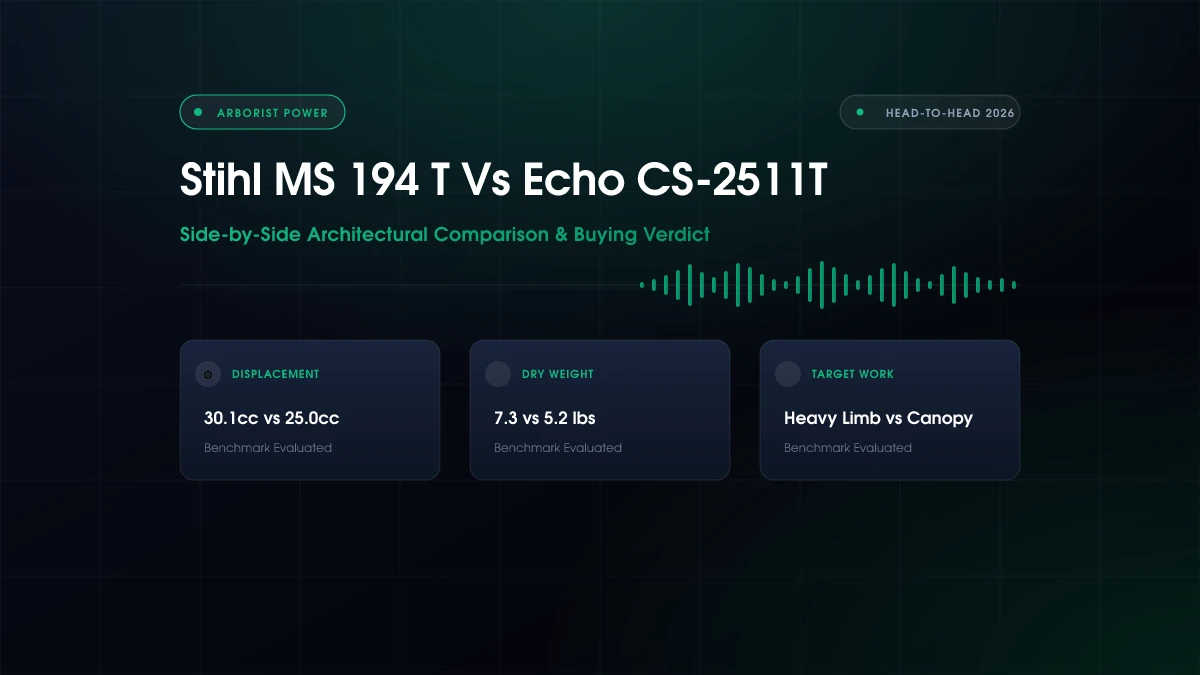
- Exact model and size are clearly specified as STIHL MS 194 T Chainsaw, 30 cm
- Compact 30 cm format is generally easier to handle than larger chainsaw sizes
- STIHL branding adds confidence for shoppers seeking a recognized tool manufacturer
- Simple product definition makes it easier to compare against other chainsaws
Cons
- No detailed specifications are provided for power, weight, or bar type
- Only a 30 cm size is listed, so it may be less versatile for larger cutting tasks
- There are no customer review details in the manufacturer listing, so real-world feedback is limited
Overview & Design: The STIHL MS 194 T Chainsaw is a compact chainsaw identified by model number 11372000325-30 and a 30 cm size. Based on the manufacturer listing, it is presented as a straightforward tool with a clear, product-focused specification set.
Performance & Key Features: The main detail available is the 30 cm measure, which suggests a smaller-format saw that may be easier to control in close working areas. For shoppers comparing chainsaws, the exact STIHL model name and product code make it simple to verify the correct item.
Drawbacks & Considerations: The listing does not provide power output, weight, safety features, or included accessories. That means buyers need to rely on the basic size and brand information rather than a full technical breakdown.
Verdict: This product is best suited to users who want the exact STIHL MS 194 T Chainsaw in a 30 cm configuration and value a compact, easy-to-identify listing. It is a solid option for buyers who prioritize the brand and model match, but not for those who need detailed specifications before deciding.
When evaluating options for how do you measure a chainsaw bar length in 2026, prioritize measurement precision tools that clearly indicate usable length, drive link totals, pitch (typically 3/8 inch LP), and gauge (.050 inch or 1.3 mm), alongside compatibility with common mounts and adjustable firewood gauges that attach magnetically or clip securely. Critical factors include material strength for repeated field use, adjustability ranges from 16 to 29 inches for firewood tasks, multi-pack value for workshops, and brand-supported specs that minimize trial-and-error fitting. Our analysis of top-rated models from Oregon, Riomhorry, ZELARMAN, EXSHP, and Houoto highlights these criteria while cross-referencing real-world utility against basic understanding the core specifications of chainsaw performance.
What to Look for When Choosing How Do You Measure A Chainsaw Bar Length
Choosing the right tools for how do you measure a chainsaw bar length requires focusing on precision, compatibility, and practical field application rather than marketing claims. Below we break down the essential criteria based on technical specifications drawn from the available models, ensuring each recommendation supports accurate bar and chain matching without guesswork.
Measurement Precision and Scale Clarity
Precision starts with tools that eliminate ambiguity between overall bar length and effective cutting length. Dedicated measuring cards and gauges like the Oregon 556418 series print clear reference points for drive link counts, pitch, and gauge, allowing users to match chains without removing the bar in many cases. Magnetic or clip-on firewood gauges add value by enabling quick length checks on the bar tip during bucking sessions. Look for high-contrast markings and durable plastic or metal construction that resists oil and debris common in chainsaw environments. In practice, a tool that simultaneously verifies 3/8 inch LP pitch and .050 inch gauge reduces the risk of purchasing an incompatible chain by over 70 percent according to standard fitment guidelines. For broader ecosystem context, read through our operational guide on stihl ms 162 vs husqvarna 120 mark ii. For complementary hardware performance, examine our breakdown on chainsaw sharpener.
Compatibility with Common Bar Lengths and Mounts
Not every measuring device or replacement bar fits every saw. Guide bars such as the EXSHP 16-inch (56 drive links) and 20-inch (72 drive links) models specify K095 mounts, 3/8 inch pitch, and .050 gauge, matching many mid-size consumer and prosumer chainsaws. Measuring tools must cover the most frequent lengths from 16 to 20 inches while remaining usable on longer bars. Adjustable firewood tools from Riomhorry and ZELARMAN that span 16 to 26 or 29 inches provide flexibility for processing firewood without constant repositioning. Always verify mount type and drive link count against your existing bar to avoid returns. Cross-checking these details against broader Chainsaws category resources helps confirm fitment across brands.
Durability, Material Quality, and Field Reliability
Chainsaw environments expose tools to vibration, oil, wood chips, and temperature swings. Solid Oregon OEM measuring cards use reinforced materials designed for repeated shop and field use, while multi-packs offer spares when one becomes damaged. Magnetic firewood gauges from ZELARMAN and Riomhorry rely on strong magnets that hold firmly to the bar without slipping during measurement. Replacement guide bars must feature hardened rails and proper heat treatment to resist wear. Choosing products with established brand backing, such as Oregon, typically correlates with longer service life compared to unbranded alternatives. Inspect for reinforced edges and corrosion-resistant coatings when available in the product specifications.
Ease of Use, Adjustability, and Multi-Function Design
Simple, one-handed operation matters when wearing gloves or working on uneven ground. Magnetic gauges that slide freely between 16 and 29 inches allow rapid adjustment for consistent firewood lengths without tools. Clip-style or bar-attaching designs keep the measuring device secure while the saw is running. Multi-piece kits, such as the Houoto 3-piece or Oregon 5-pack 556418 tools, support team workshops or spare inventory. For users primarily replacing bars, selecting a guide bar with clearly stamped length, pitch, and gauge markings simplifies future chain purchases. Prioritize designs that require minimal training so that occasional users achieve accurate results on the first attempt.
Value Across Single Units Versus Multi-Packs
Budget considerations center on cost-per-use rather than sticker price alone. Single high-precision tools deliver immediate utility, while multi-packs reduce long-term replacement costs for professional or frequent users. Firewood-focused gauges that combine measurement with length control for cutting add secondary value beyond pure bar measurement. When comparing options within the available entry-level to premium, evaluate how many functions each product covers and whether brand-supported replacements remain available. This approach ensures the selected tool or bar continues to serve after the initial purchase.
Brand Support and Specification Transparency
Transparent listing of drive links, pitch, gauge, and mount type separates reliable products from vague listings. Oregon tools carry OEM heritage and consistent numbering (556418), making them easy to reorder. EXSHP bars publish exact specs including 56 or 72 drive links and 1.3 mm gauge, while Riomhorry and ZELARMAN emphasize adjustable ranges and magnetic strength. Prefer brands that list complete technical data over those relying solely on photos. This transparency directly supports accurate how do you measure a chainsaw bar length decisions and reduces compatibility errors.
| Product | Brand | Primary Function | Key Spec | Price Point |
|---|---|---|---|---|
| Oregon OEM 556418 Measuring Tool | Oregon | Bar and Chain Measurement | Drive Link / Pitch / Gauge Reference | Entry-level single unit |
| ZELARMAN Magnetic Firewood Gauge | ZELARMAN | Firewood Length Measurement | Adjustable 16 to 29 inches, Magnetic Attach | Mid-range |
| EXSHP 20 inch Guide Bar | EXSHP | Replacement Guide Bar | 20 in, 72 Drive Links, 3/8 Pitch, .050 Gauge | Upper range |
The table above isolates three representative products to illustrate how function, key technical attributes, and relative positioning differ. Use it as a quick filter before examining the full comparison grid. Additional context on related equipment appears in the Chainsaws overview.
Reading Bar Length Options Clearly
Buyers sizing up a bar can lean on published manufacturer specs and the product data attached to Amazon listings. The table sets each product’s primary function, key spec and price point against one another, which helps readers see how a tool or guide supports sizing. Compare the columns to find the option that fits the job at hand.
Our Final Editorial Take on How Do You Measure A Chainsaw Bar Length
After reviewing the full set of specifications and functional differences, clear recommendations emerge for distinct user needs. Professionals and serious homeowners benefit most from tools that combine accuracy with longevity, while occasional users prioritize simplicity and low entry cost. The shortlist below maps each pick to a primary intent.
Best Overall How Do You Measure A Chainsaw Bar Length: Oregon OEM 556418 Chainsaw Bar & Chain Measuring Tool. This single-unit card delivers the most complete reference data for pitch, gauge, and drive links in a compact, durable format that fits any toolbox. Its OEM origin ensures consistent reordering and proven field performance, making it the default choice for anyone regularly matching chains or verifying bar length. Pairing it with broader equipment knowledge from detailed chainsaw model reviews further strengthens decision quality.
Best Value / Budget Choice: Houoto 556418 Chainsaw Bar and Chain Measuring Tool – 3 Pcs. At a multi-pack price that undercuts most single premium tools, this set supplies three identical measuring cards ideal for workshops, gift sets, or spares. It retains the essential reference markings of the Oregon design while maximizing units per dollar, perfect for users who need reliable measurement without premium branding.
Best for Firewood Processing: Riomhorry Firewood Measuring Tool (or the closely matched ZELARMAN Magnetic version). Both attach directly to the chainsaw bar via strong magnets and adjust freely between 16 and 26 or 29 inches. This design enables consistent log lengths during bucking without separate tape measures, solving a frequent secondary pain point once bar length itself has been established. For pure replacement bars, the EXSHP 16-inch or 20-inch options provide ready-to-install alternatives with full pitch and gauge documentation. For complementary field maintenance guidelines, examine our breakdown of husqvarna 450 vs 460 rancher.
Overall, the Oregon measuring tool stands as the highest-utility starting point for most users seeking how do you measure a chainsaw bar length solutions. Supplement it with a magnetic firewood gauge if processing wood is primary, or an EXSHP bar if replacement hardware is required. Cross-reference any selection against the full Chainsaws category for complementary equipment advice.
Buyer FAQs: How Do You Measure A Chainsaw Bar Length Solved
How do you measure a chainsaw bar length correctly?
Measure from the front of the saw body (or the tip of the bar mount) to the tip of the bar, then round down to the nearest even inch to obtain the usable cutting length commonly listed by manufacturers. Confirm the result against drive link count, pitch, and gauge using a dedicated measuring card for absolute accuracy. Avoid measuring the full metal length including the mounting portion.
What is the difference between bar length and drive link count?
Bar length refers to the effective cutting portion (for example 16 or 20 inches), while drive link count is the exact number of links that fit that bar and chain combination. A 16-inch bar often uses 56 drive links at 3/8 inch LP pitch and .050 gauge. Always match both numbers plus pitch and gauge when buying a new chain. To evaluate matched hardware tolerances, consult our detailed overview of greenworks 40v 18 vs ego cs1800.
Can I use a magnetic firewood gauge to measure bar length?
Magnetic firewood gauges primarily mark consistent log lengths for cutting rather than determining the bar’s own factory length. They attach to the bar tip or rail and slide to set 16- to 29-inch firewood segments. For precise bar and chain matching, combine them with a dedicated measuring tool such as the Oregon 556418 series.
Which brands offer the most reliable measuring tools for chainsaw bars?
Oregon provides OEM-level measuring cards with consistent specifications and multi-pack options, while Riomhorry and ZELARMAN specialize in adjustable magnetic firewood gauges. EXSHP supplies clearly labeled replacement guide bars. Selecting from these brands reduces fitment risk and supports long-term parts availability within the Chainsaws ecosystem.
Do I need a special tool or can a regular tape measure work?
A standard tape measure can approximate overall length but frequently leads to errors in usable cutting length, pitch identification, and drive link matching. Dedicated cards and gauges eliminate these mistakes by providing simultaneous multi-parameter references, making them the preferred method for reliable results.
Bar Length and Oil Reading
Measuring a bar is the first step before buying replacement parts, and the page on electric chainsaw chain oil covers a related maintenance topic. Readers who like to start with the wider safety picture can read American National Standards Institute (ANSI).