Understanding Hand Sharpening: Why It Matters and When to Do It
Hand sharpening a chainsaw is a fundamental maintenance skill that ensures your tool cuts efficiently and safely. A sharp chain requires less effort, produces cleaner cuts, and significantly reduces the risk of dangerous kickback. Recognizing when your chain needs sharpening is the first step. Signs include the saw pulling to one side, producing fine sawdust instead of square, curled wood chips, or requiring excessive pressure to make a cut.
Hand filing offers several advantages over electric sharpeners or professional services. It is cost-effective, allows for precise control, and can be done in the field. While electric sharpeners are faster, they can remove excessive material if not used correctly. Hand sharpening, when done properly, preserves the chain’s life and maintains the manufacturer’s specified angles. For typical cutting work, it’s advisable to sharpen the chain after every few tanks of fuel or whenever you notice a decline in cutting performance.
Tools and Setup: What You Need Before You Start
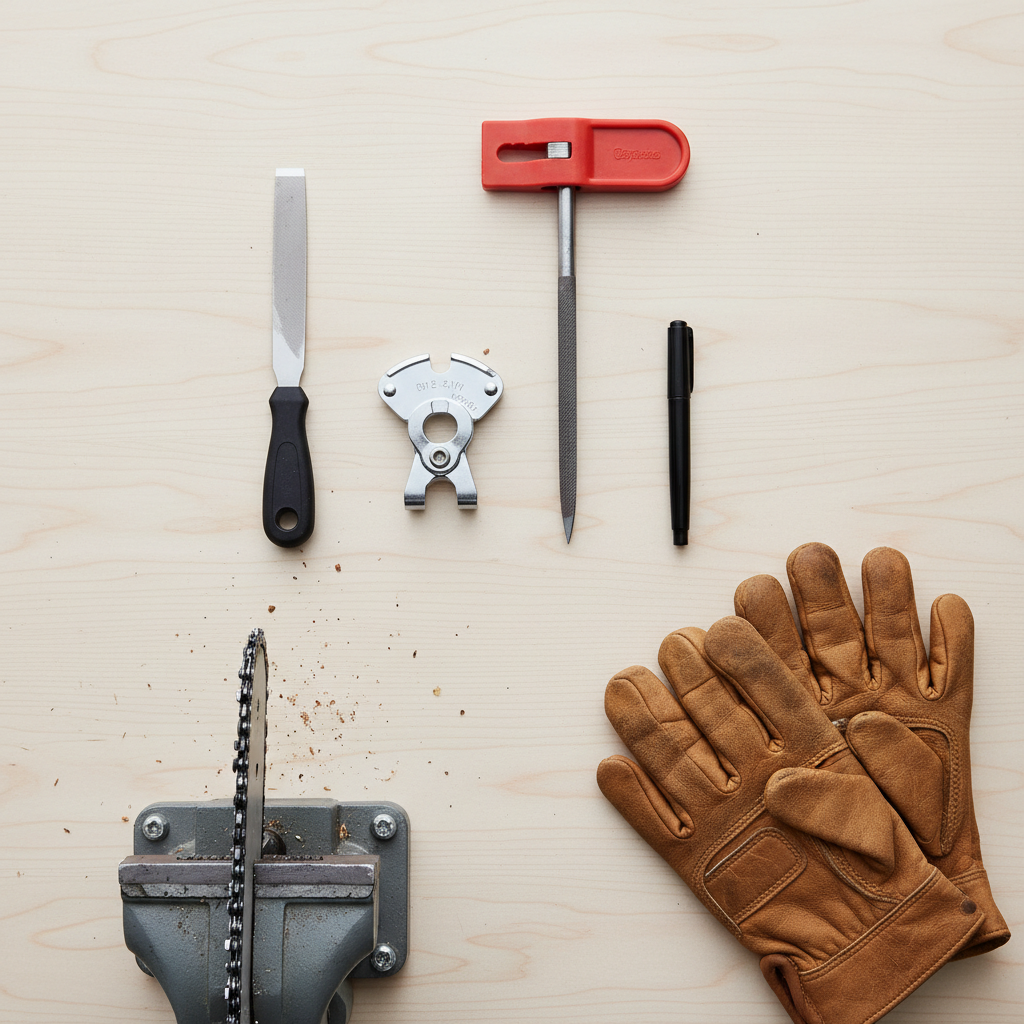
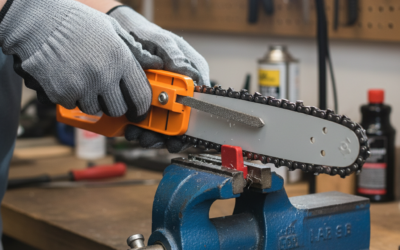
Before you begin, gather the essential tools and prepare your workspace safely. The primary tool is a round file whose diameter must match your chain’s pitch. Common sizes are 5/32 inch for 3/8 inch low-profile pitch chains and 3/16 inch for standard 3/8 inch pitch chains. A file guide is a critical accessory that clamps onto the file and rests on the chain’s cutter and depth gauge, ensuring a consistent filing angle and depth.
Additional tools include a flat file for depth gauges, a depth gauge tool or a simple gauge, and a permanent marker. For safety and stability, secure the chainsaw in a vise or on a flat, stable surface with the bar clamped. Always wear protective gloves and ensure the chain brake is engaged before you start filing.
Key Factors to Consider: Angles, File Size, and Chain Types
The filing angle is the angle at which you hold the file relative to the cutter tooth. For most chainsaw chains, this is between 25° and 35°, as specified by the chain manufacturer. Using a file guide helps maintain this angle consistently. The chain pitch determines the correct file diameter; using the wrong size will damage the cutter’s geometry.
Chain types also matter. Standard chains and low-kickback chains have different cutter designs. Low-kickback chains have more rounded cutters and smaller depth gauges, requiring careful filing to maintain their safety features. Always refer to your chainsaw or chain manual for specific recommendations on angles and file sizes for your particular model.
Step-by-Step Guide: How to Hand Sharpen a Chainsaw Chain
Follow this methodical process to achieve a sharp, balanced chain:
- Secure and Mark: Clamp the chainsaw bar firmly. Use a permanent marker to mark the first cutter tooth you will sharpen. This helps you track your progress and ensures you sharpen every tooth.
- File the First Set of Cutters: Place the round file with the file guide into the gullet of the marked cutter. The guide should rest on the top plate of the cutter and the depth gauge. Using steady, forward strokes, file each cutter tooth in the same direction (e.g., all left-facing cutters). Use the same number of strokes for each tooth to maintain even length.
- Rotate and Repeat: After filing every other cutter in one direction, rotate the chainsaw 180 degrees. Now, file the remaining cutters (the right-facing ones) using the same number of strokes and technique.
- Check and File Depth Gauges (Rakers): The depth gauges, or rakers, control how deep the cutter bites into the wood. Use a depth gauge tool to check their height. They should typically be about 0.025 inches (0.65 mm) lower than the cutter’s top plate. If they are too high, file them down gently with a flat file.
- Final Inspection: Visually inspect the chain. All cutters should look uniform in length and sharpness. A properly sharpened chain will produce square, curled wood chips when test-cut.
Common Mistakes, Safety, and Knowing When to Replace the Chain
Common mistakes include using the wrong file size, inconsistent filing angles, and uneven strokes, which lead to a poorly sharpened chain that cuts inefficiently and may vibrate excessively. Always follow the manufacturer’s specifications.
Safety is paramount. Wear gloves, ensure the chain brake is on, and work in a well-lit area. Handle the sharpened chain carefully, as the cutters are now very sharp.
Know when to replace the chain. If cutters are worn down to the rivets, the chain is excessively stretched, or the depth gauges cannot be filed down any further without compromising the cutter, it’s time for a new chain. A chain that has been sharpened many times will eventually become too short and unsafe.
Frequently Asked Questions
How do I know the correct filing angle for my chainsaw chain?
The correct filing angle is specified by the chain manufacturer and is typically printed on the packaging or in the chainsaw’s manual. It is usually between 25° and 35°. A file guide is designed to hold this angle automatically, making it easier for beginners to maintain consistency.
What is the difference between filing the cutter tooth and the depth gauge?
The cutter tooth is the sharp, angled part that slices the wood. It is filed with a round file to restore its sharp edge. The depth gauge (raker) is the small, flat-topped projection in front of each cutter. It controls how deep the cutter can bite. It is filed with a flat file to ensure it is slightly lower than the cutter, allowing for proper chip clearance.
Can I sharpen a chainsaw chain without a file guide?
While possible for experienced users, it is not recommended. A file guide ensures the correct filing angle and depth, which is crucial for even sharpening and safe chain operation. Without a guide, it’s easy to create inconsistent angles, leading to poor cutting performance and increased vibration.
How many strokes should I use per cutter tooth?
There is no universal number. The key is consistency. Use the same number of light, steady strokes for every cutter tooth. Typically, 3 to 5 strokes are sufficient if the chain is only slightly dull. If the chain is very dull, you may need more, but always match the count across all teeth to keep the chain balanced.