Understanding the Carburetor’s Role
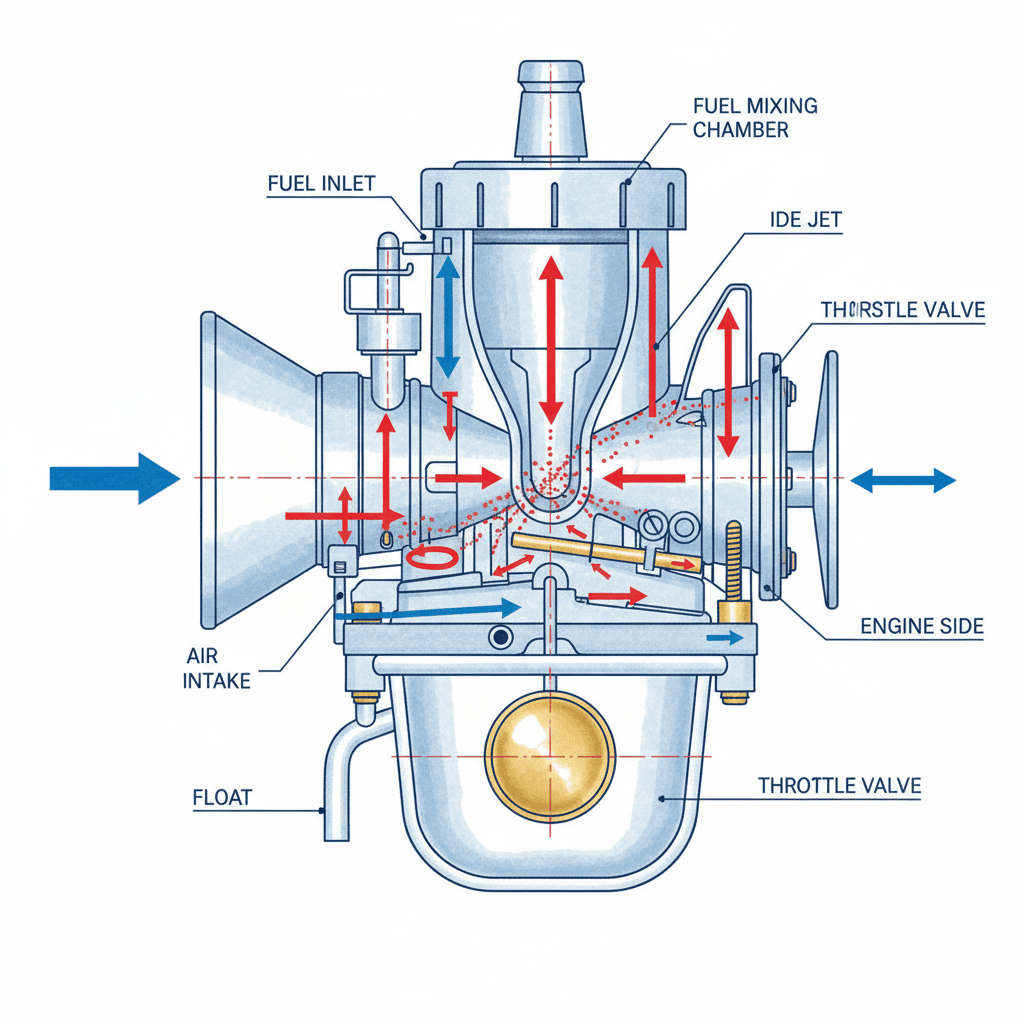
Before locating your lawn mower’s carburetor, it helps to understand what it does. The carburetor is a critical fuel system component that mixes air and gasoline in the correct proportion for engine combustion. It regulates fuel flow, manages air intake, and ensures your mower starts and runs smoothly.
You might need to locate your carburetor for several reasons: cleaning it to restore engine performance, diagnosing starting problems, performing routine maintenance, or replacing a faulty component. Understanding where it sits on your specific mower makes these tasks more manageable.
Carburetor Location on Push Mowers
Push mowers—the most common residential lawn mower type—typically have their carburetors mounted on the side of the engine block. To locate yours:
- Start by identifying the engine: The engine is the motor mounted on the mower deck, usually near the rear wheels or center of the chassis.
- Look for the air filter: The carburetor sits directly adjacent to the air filter housing. The air filter is a black or tan plastic or foam component that covers the top or side of the engine.
- Follow the fuel line: Trace the rubber or plastic fuel line from the fuel tank (typically mounted on the mower frame). This line connects directly to the carburetor.
- Identify the choke lever: The choke control cable runs from the mower’s handle down to the carburetor. Following this cable downward will lead you directly to the carb.
On most Briggs & Stratton and Tecumseh engines found in push mowers, the carburetor is a cylindrical or rectangular component approximately 2–4 inches in length, typically brass or aluminum colored.
Carburetor Location on Riding Mowers
Riding mowers have larger engines mounted horizontally beneath the operator seat or in the rear engine compartment. The carburetor positioning differs slightly:
- Top-mounted carburetors: On many riding mowers with vertical-shaft engines (like Kohler or Honda models), the carburetor sits directly on top of the engine, often visible when you lift the hood or access the engine compartment.
- Side-mounted carburetors: Some riding mower engines position the carburetor to the side of the engine block, similar to push mowers but on a larger scale.
- Air filter proximity: The air filter on riding mowers is typically a large, round or rectangular housing located directly above or beside the carburetor.
- Fuel line connections: Multiple fuel lines connect to the carburetor—one from the fuel tank and one or more returning fuel to the tank on models with fuel pumps.
Riding mower carburetors are generally larger and more complex than push mower versions, reflecting the increased engine size and horsepower.
How to Identify Your Mower’s Carburetor
If you’re unsure whether you’ve located the carburetor, look for these identifying features:
| Feature | Description |
|---|---|
| Connections | Multiple fuel and air lines connect to it. At minimum, one fuel line enters and one air intake connects. |
| Material and Appearance | Usually brass, aluminum, or cast iron with visible bolts, screws, and a metal or plastic bowl at the base (the float bowl). |
| Location on Engine | Always mounted directly to the engine block, never floating freely or mounted to the frame alone. |
| Overflow Tube | A small rubber tube often hangs from the bottom of the carburetor—this is the overflow or drain line. |
| Size | Typically 2–6 inches in length depending on engine size; smaller than most other engine components. |
The float bowl—the cup-shaped chamber at the bottom of the carburetor—is the most distinctive feature. It holds a small amount of fuel and contains the float mechanism that regulates fuel level.
Common Carburetor Maintenance and Issues
Knowing where your carburetor is located becomes practical when addressing common problems. Understanding why you need to access it can help you determine if it’s the source of your mower’s issues:
Why You Might Need to Access the Carburetor
- Starting problems: A clogged or dirty carburetor is one of the most common reasons a mower won’t start, especially after sitting unused for a season.
- Poor performance: If your mower sputters, stalls, or lacks power, carburetor cleaning often restores normal operation.
- Rough idling: An improperly tuned carburetor causes inconsistent idle speed.
- Seasonal maintenance: Draining or stabilizing fuel in the carburetor is recommended before storing a mower for winter.
- Component replacement: Gaskets, seals, or the float mechanism may require replacement after years of use.
Signs Your Carburetor Needs Attention
Before taking your mower to a technician, check whether carburetor issues might be the culprit. Common warning signs include fuel leaking from the carburetor, black smoke from the exhaust (indicating too-rich fuel mixture), difficulty starting after the mower has sat idle, and visible dirt or debris around the air intake area.
Frequently Asked Questions
What does a carburetor look like on a lawn mower?
A lawn mower carburetor typically appears as a small, cylindrical or rectangular metal component 2–6 inches long. It’s usually brass or aluminum colored with visible bolts, screws, and a cup-shaped float bowl at the bottom. Multiple fuel and air lines connect to it, making it distinct from other engine components. The overflow tube (a small rubber line) often hangs from the bottom.
Can I identify the carburetor without opening the mower’s compartment?
Partially. On many push mowers, you can trace the fuel line from the tank or follow the choke cable from the handle down to the carburetor without disassembling anything. On riding mowers, you’ll typically need to open the hood or engine cover to see it clearly, though you can locate it by following fuel lines and air intake hoses.
Are carburetors located in the same place on all lawn mower brands?
No. While the carburetor is always mounted directly to the engine block and always adjacent to the air filter, the exact position varies by engine manufacturer. Briggs & Stratton, Honda, Kohler, and Tecumseh engines position carburetors differently. Your mower’s manual provides the most accurate location diagram for your specific model.
Do newer lawn mowers have carburetors?
Most gasoline-powered mowers still use traditional carburetors, though some newer models use fuel injection systems. Battery-powered electric mowers have no carburetor. If your mower is recent and fuel-powered, it almost certainly has a carburetor.
Finding Your Mower’s Manual
The most reliable way to locate your specific mower’s carburetor is through the owner’s manual, which typically includes a diagram labeling all engine components. Manuals are often available online through the manufacturer’s website if you can provide your mower’s model number (usually found on a metal plate on the frame or engine).