

Quick Answer: Choosing the Best Zero Turn Mower
The best zero-turn mower is a mid-range residential model with a 42 to 48″ cutting deck, 18 to 23 HP engine, and proven durability from brands like John Deere, Hustler, or Cub Cadet if you own 1 to 3 acres and prioritize value and reliability. For larger residential properties (3+ acres) or small commercial operations, commercial-grade zero-turns with 48 to 60″ decks, 23+ HP engines, and reinforced frames…

Pros
- Brushless motor system delivers gas-equivalent power without emissions or excessive noise
- High-capacity battery kit enables cutting coverage of up to 4.4 acres per charge set
- Durable 10-gauge steel deck and constant high blade tip speed handle dense grass effectively
- Premium seating and lighting features support comfortable extended operation
- 4-year warranty provides strong protection for the investment
Cons
- Runtime tops out around 4.4 acres depending on conditions, requiring recharges for bigger properties
- Electric design depends on charging infrastructure and battery management rather than simple refueling
- Height adjustment is noted only basically without extensive position details in available specs
The Greenworks 60V MaximusZ Zero Turn Riding Lawn Mower is a commercial-grade electric machine built for large lawns. Its primary construction centers on a heavy-duty 60-inch 10-gauge fabricated steel deck that prioritizes durability and airflow, paired with premium comfort elements including an adjustable suspension seat with lumbar support and foldable armrests for a solid first impression of quality and user focus.
Performance shines through an intelligent brushless motor system offering power equivalent to a 31HP gas engine with zero emissions. Three high-torque brushless hub motors sustain a constant 17,900 FPM blade speed, while SmartCut Technology auto-adapts to prevent bogging in thick or wet grass. The complete kit supplies (2) 20.0Ah suitcase batteries plus (4) 8.0Ah batteries and a 1.5kW fast charger for up to 4.4 acres of cutting. Additional capabilities include a 4-in-1 deck for mulching, bagging, rear and side discharge, 300 lb towing capacity with front/rear hitch, dual LED headlights, and an LCD display.
Drawbacks and considerations include the practical need to recharge the battery set after maximum runtime, which can interrupt work on properties exceeding 4.4 acres. Being fully electric means reliance on power sources for recharging instead of fuel, and height adjustment is referenced only in basic terms without more granular position data in the specifications.
In verdict, the Greenworks 60V MaximusZ delivers the most value to homeowners and professionals managing medium-to-large properties who want quiet, emission-free commercial power, versatile cutting options, and the security of a 4-year warranty in a comfortable zero-turn package.

Pros
- Strong stated cutting capacity for large properties, with up to 4 acres per charge.
- Zero-turn design supports fast, precise mowing around obstacles.
- Uses battery power instead of gas, reducing maintenance-related chores and emissions.
- Includes six high-capacity batteries and a charger, so it is ready for use out of the box.
Cons
- Heavy at 720 pounds, which may make transport, storage, or maneuvering by hand difficult.
- Large dimensions require substantial garage or shed space.
- The high upfront cost may put it out of reach for buyers with smaller lawns or limited budgets.
Overview & Design: The EGO Power+ ZT5207L is a 52-inch electric riding lawn mower with a zero-turn radius, built for users who need efficient coverage on larger properties. Its black finish, substantial frame, and 720-pound weight reflect a serious, full-size riding mower designed for demanding residential mowing.
Performance & Key Features: EGO says Peak Power+ technology combines up to six 56V ARC Lithium batteries, and the mower is rated at a 25 HP-equivalent output. The 52-inch deck and zero-turn steering should help reduce mowing time and improve control around landscaping, while the included six 56V 12.0Ah batteries are stated to support up to 4 acres per charge.
Drawbacks & Considerations: This model is large and heavy, so it will not suit every storage space or every user. Its premium positioning also means buyers should be confident they need this much capacity, since smaller yards may not justify the size, weight, or cost.
Verdict: The ZT5207L is best for homeowners with expansive lawns who want battery-powered convenience and zero-turn efficiency in one machine. It is a compelling option if you value gas-like performance, broad deck coverage, and compatibility with EGO's 56V battery ecosystem.
Pros
- Robust 26HP Kohler engine provides ample power for demanding mowing tasks and thick vegetation
- Large 60-inch fabricated steel deck enables faster coverage of extensive lawn areas
- Durable 3-blade fabricated construction enhances deck longevity and resistance to wear
- Zero-turn capability offers precise control and reduced mowing time in complex layouts
Cons
- Large 60-inch deck and overall zero-turn size demand significant storage space and may not suit smaller properties
- Base specifications lack details on accessories such as mulching kits or baggers, which may need separate purchase
- High-powered engine setup could increase fuel use during long sessions relative to lower-horsepower models
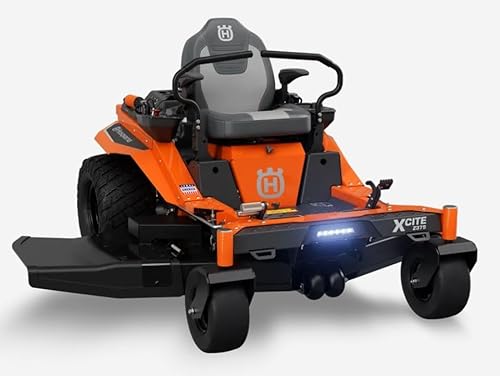
The Husqvarna Xcite Z375 is a zero-turn riding lawn mower engineered for large-scale residential and light commercial mowing. It combines a solid fabricated steel build with a capable Kohler power plant, creating an immediate impression of durability and purposeful design suited to expansive properties.
Performance centers on the 26HP 747cc Kohler V-Twin engine that supplies strong, consistent power for thick grass and varied terrain, paired with the 60-inch 3-blade fabricated steel deck. This setup delivers a wide, clean cut that covers ground efficiently and maintains quality across long sessions.
Considerations include the substantial footprint of the 60-inch deck and zero-turn frame, which requires ample storage and may feel oversized for compact yards. Available data also omits specifics on add-ons or comfort options, so buyers should confirm full feature sets independently.
The Husqvarna Xcite Z375 delivers the most value for owners of large lawns or light commercial operators who prioritize raw cutting power, deck durability, and zero-turn efficiency over compact size or extensive accessory packages.

Pros
- Offers quiet, emission-free electric operation with power matching traditional 22 HP gas mowers.
- Includes four high-capacity 56V 10.0Ah batteries for up to 2 acres of runtime right out of the box.
- Customizable LCD interface and multiple driving modes enhance user control and ride comfort.
- Versatile 10-position cutting height and 3-in-1 deck options provide flexible lawn finishing.
- Fast two-hour full recharge capability supports productive multi-session mowing days.
Cons
- Maximum single-charge coverage is limited to about 2 acres without purchasing additional batteries for bigger properties.
- Requires access to a power outlet for recharging, which may interrupt workflow on very large or remote lawns.
- Battery management and storage add extra steps compared to simple gas-powered alternatives.
The EGO Power+ ZT4204L is a premium electric zero-turn riding lawn mower built for homeowners seeking a clean alternative to gas models. It features a robust 42-inch stamped steel deck and includes four 56V 10.0Ah ARC Lithium batteries plus a charger, delivering an immediate impression of high-quality engineering focused on power and convenience.
In real-world use, this mower matches the performance of a 22 horsepower gas unit while reaching speeds up to 8 MPH. The zero-turn radius combined with three selectable driving modes via the LCD interface allows smooth navigation and efficient cutting of up to 2 acres per charge. Users can fine-tune the cut across 10 height positions from 1.5 to 4.5 inches and choose between mulching, bagging, or side discharge for complete lawn care flexibility. Full recharges take roughly two hours with the included Z6 charger.
Potential drawbacks include the 2-acre limit on the stock battery set, meaning larger properties will need extra batteries for uninterrupted operation. As a fully electric system, it also depends on regular charging access rather than quick refueling, and battery handling requires more attention than traditional gas mowers.
Overall, the EGO Power+ ZT4204L is an excellent choice for environmentally conscious homeowners with lawns up to a few acres who value quiet operation, low maintenance, and precise control. Those with extensive grounds should plan for additional battery capacity to maximize its benefits.

Pros
- Gas-equivalent power from electric Peak Power system with no emissions or fuel needs
- Long runtime covering up to 3 acres per charge with included high-capacity batteries
- Highly maneuverable 52-inch zero-turn deck with customizable blade speeds from 2300 to 3200 RPM
- User-friendly digital interface and app integration for real-time customization and monitoring
- Strong warranty coverage up to 5 years on mower and batteries with registration
Cons
- Runtime limited to approximately 3 acres per full charge, requiring recharges for larger properties
- Depends on multiple large 56V batteries which must be managed and recharged using the included charger
- No independent customer reviews available yet to confirm long-term real-world reliability
The EGO POWER+ Z6 Zero Turn Riding Lawn Mower model ZT5216L is a premium electric zero-turn rider built for efficient large-area mowing. It features a robust 52-inch 10-gauge fabricated steel deck, wide frame for slope stability, and durable IPX5-rated weather-resistant construction that creates an immediate impression of professional-grade quality without the noise or fumes of gas models.
In performance, Peak Power technology draws from up to six included 56V 10.0Ah ARC Lithium batteries to deliver power equal to a 27-horsepower gas engine while covering up to 3.0 acres per charge. The dual-blade system offers adjustable speeds from 2300 to 3200 RPM and 10 cutting heights between 1.5 and 4.5 inches. Three driving modes support speeds up to 8 MPH, and the color digital screen plus EGO Connect app allow full customization of speed, cruise control, and battery monitoring for real-world efficiency on varied terrain.
Considerations include the finite runtime of about 3 acres before recharging is needed, reliance on managing six batteries with the 880W charger, and the absence of extensive user feedback at launch that leaves long-term durability still to be proven in the field.
Overall, the EGO POWER+ Z6 ZT5216L delivers the most value to homeowners with mid-to-large lawns seeking quiet, powerful electric zero-turn performance, advanced controls, and reduced maintenance. Those with properties exceeding 3 acres or preferring simpler traditional mowers may want to evaluate battery logistics carefully.
Pros
- Powerful 24HP/726cc Kawasaki V-Twin engine for reliable high-output performance
- Wide 61-inch fabricated 3-blade deck for efficient coverage of large areas
- Commercial-grade Hydro Gear ZT-3100 transmission for durable zero-turn handling
- Generous 5-gallon fuel tank and included ROPS for practical all-day use and safety
- 4-year consumer warranty coverage on the complete machine
Cons
- Large 61-inch deck and zero-turn frame require substantial storage space and may feel oversized for small residential yards
- Commercial-oriented components can demand more maintenance knowledge than basic consumer mowers
- No bagging, mulching kit, or additional attachments listed as standard equipment
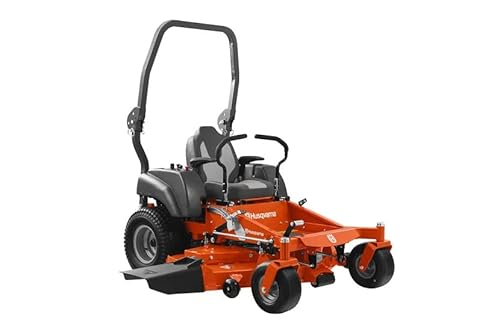
The Husqvarna MZ61 is a robust zero-turn riding lawn mower from the brand's commercial-leaning lineup, pairing a heavy-duty fabricated deck with a ROPS safety structure. Its overall build emphasizes durability and operator protection for demanding outdoor work rather than lightweight residential convenience.
Performance centers on the 24HP/726cc Kawasaki FR730V Series V-Twin engine that supplies ample torque for thick or wet grass, while the 61-inch 3-blade fabricated deck cuts wide swaths efficiently. The Hydro Gear ZT-3100 commercial hydrostatic transmission enables smooth, precise zero-turn steering that reduces time spent trimming edges and navigating landscaping. A 5-gallon fuel tank further supports longer continuous runs on expansive properties.
Potential drawbacks include the mower's substantial size, which can make storage and transport more challenging for users with limited space. The commercial-grade components also mean the machine may require more frequent or specialized maintenance compared to simpler residential models, and no bagging or mulching systems are noted as included.
Overall, the Husqvarna MZ61 delivers the strongest value for owners of large lawns, estates, or light commercial grounds who prioritize cutting speed, engine reliability, and safety features. Smaller-yard users will likely find it oversized for their needs.
Understanding Zero-Turn Mowers: What Makes Them Different?
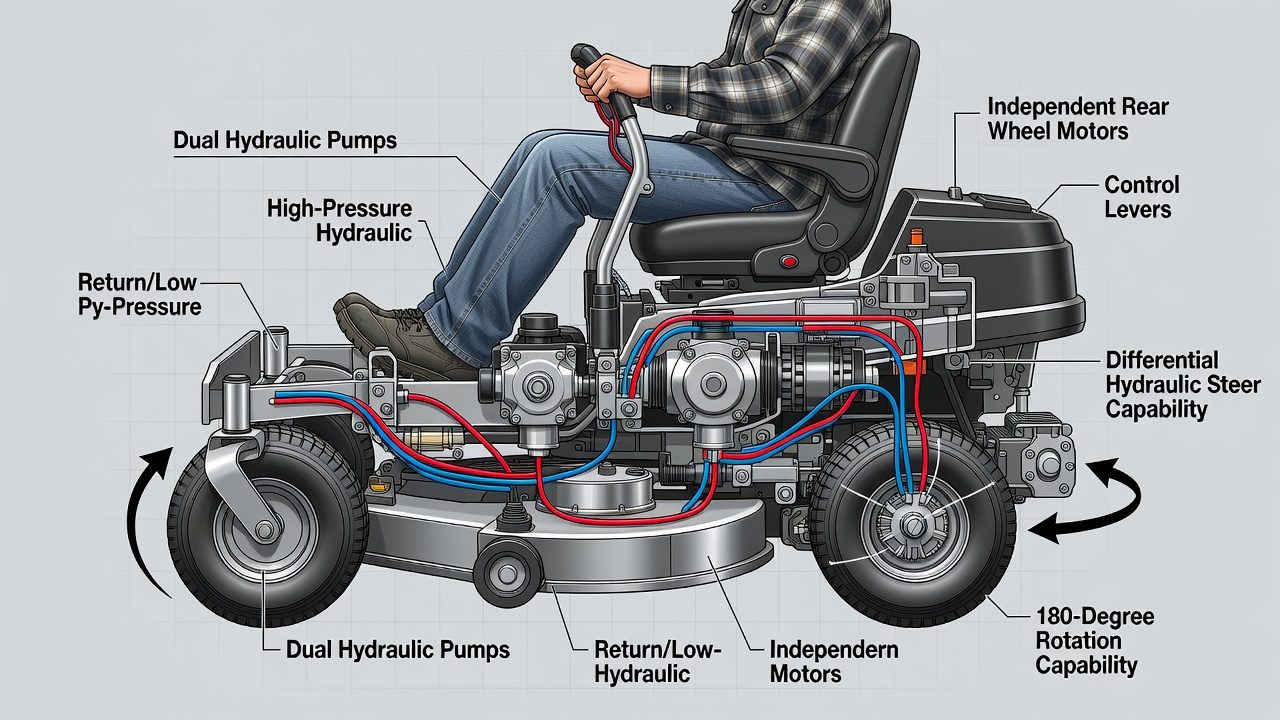
Zero-turn mowers represent a fundamental departure from traditional lawn mowers. Instead of relying on a single steering wheel or tiller bar, zero-turn mowers use dual hydraulic pumps and independent wheel motors that allow the operator to rotate 180 degrees in place, hence the name. This design enables tighter turns around obstacles, faster mowing patterns, and significantly improved maneuverability on residential and commercial properties.
Key Advantages of Zero-Turn Steering
- Efficiency: Reduced turning time translates to faster mowing and lower fuel consumption per acre.
- Precision: Ability to navigate around trees, garden beds, and structures without backtracking or making wide arcs.
- Operator Comfort: Sitting position and suspended seats reduce fatigue during extended mowing sessions.
- Scalability: Models range from compact 38″ residential units to 72″ wide commercial machines.
Zero-turn mowers are ideal for properties larger than 0.5 acres. On smaller lots, the premium cost may not justify the efficiency gains, but once you exceed 1 acre, the time savings and cutting quality become compelling.
Key Factors to Consider Before Buying
Selecting the right zero-turn mower requires honest assessment of your specific situation. The following questions will help you narrow your options:
1. Property Size and Mowing Frequency
Residential properties:
- 0.5 to 1 acre: Entry-level zero-turns (38 to 42″ deck, 15 to 18 HP) or traditional riders may suffice.
- 1 to 3 acres: Mid-range zero-turns (42 to 48″ deck, 18 to 23 HP) offer ideal balance of speed and maneuverability.
- 3+ acres: Commercial-grade zero-turns (54 to 60″ deck, 23+ HP) justify the investment through time savings.
Commercial operations: Mow frequency and acreage determine whether a 60″ commercial model or fleet of mid-size units suits your workflow. For complementary field maintenance guidelines, examine our breakdown of z890 vs x870e motherboard.
2. Budget and Total Cost of Ownership
Purchase price is only one component. Calculate your true ownership cost over 5 to 10 years:
- Fuel consumption: Mid-range zero-turns consume 0.5 to 1 gallon per hour of operation.
- Maintenance: Oil changes, air filter replacements, and blade sharpening average $200-$400 annually.
- Repairs: After 500+ hours, hydraulic seal failures or belt replacements can cost $500-$1,500.
- Resale value: Quality brands retain 40 to 50% of purchase price after 5 years.
3. Terrain and Property Layout
Sloped terrain, dense tree coverage, and ornamental landscaping influence your choice: To evaluate matched hardware tolerances, consult our detailed overview of marshall stanmore iii vs harman kardon onyx studio 8.
- Steep slopes (>15°): Avoid zero-turns entirely; use slope-rated walk-behind or compact tractors.
- Moderate slopes (8 to 15°): Confirm slope rating and select a model with suspension and traction control.
- Flat terrain with obstacles: Zero-turns excel; prioritize tight turning radius.
- Open fields: Larger deck sizes maximize efficiency.
Deck Size and Engine Power: Matching Specifications to Your Needs
Two specifications dominate zero-turn performance: cutting deck size and engine horsepower. Understanding how to interpret and balance these ensures you select a mower that handles your lawn efficiently without overpaying for unnecessary power.
Cutting Deck Size Explained
| Deck Size | Best For | Mowing Time (1 Acre) | Typical Price |
|---|---|---|---|
| 38 to 42″ | Residential, 0.5 to 1.5 acres, tight spaces | 45 to 60 minutes | $2,500-$3,500 |
| 48 to 52″ | Residential, 1 to 3 acres, standard choice | 30 to 40 minutes | $3,500-$5,500 |
| 54 to 60″ | Commercial, 3+ acres, open terrain | 20 to 30 minutes | $5,500-$9,000 |
| 72″+ (Wide) | Large commercial, 5+ acres, high-volume mowing | 15 to 20 minutes | $9,000-$15,000+ |
Key principle: Larger decks reduce mowing time but require more storage space and higher fuel consumption. A 48″ deck is the “Goldilocks” option for most residential users: it handles 1 to 3 acres comfortably in 30 to 40 minutes and fits standard garage storage.
Engine Horsepower and Real-World Impact
Engine power drives blade speed, ground speed, and fuel efficiency. More horsepower does not always mean a better mower: When planning workspace deployment, consider the engineering criteria outlined in our dyson v8 cyclone vs bissell featherweight stick guide.
- 15 to 18 HP: Entry-level models for light residential use; slower blade engagement and reduced mulching capability.
- 18 to 23 HP: Mid-range sweet spot; adequate power for dense grass, consistent blade speed, fuel-efficient.
- 23 to 30 HP: Commercial-grade; handles wet or overgrown conditions; higher fuel consumption ($1.50-$2.00 per hour).
- 30+ HP: Heavy-duty commercial; overkill for residential use unless mowing 5+ acres weekly.
Matching deck size to horsepower: A 48″ deck typically pairs with 18 to 23 HP; a 60″ deck with 25 to 30 HP. Undersized engines result in sluggish blade engagement and poor mulching; oversized engines waste fuel.
Fuel Type and Efficiency
Most zero-turns use gasoline engines, though some commercial models offer diesel:
- Gasoline (standard): $3.00-$4.00 per gallon; 0.5 to 1 gallon per hour; convenient but volatile pricing.
- Diesel (commercial): $3.50-$4.50 per gallon; 0.4 to 0.7 gallons per hour; better fuel economy, longer engine life, higher upfront cost.
- Propane (specialty): Cleaner emissions; fewer dealers; price advantage varies regionally.
For most residential owners, gasoline efficiency is sufficient. Commercial operators mowing 20+ hours weekly benefit from diesel’s lower per-hour cost.
Performance Metrics: How to Evaluate Real-World Quality
Specifications alone do not guarantee satisfaction. Real-world performance hinges on reliability, cutting quality, and operator experience.
Owner Satisfaction and Reliability Ratings
Independent platforms such as Consumer Reports, TrustRadius, and owner forums reveal which brands maintain consistent quality. Look for patterns in user feedback:
- Reliability complaints: If 30%+ of reviews mention hydraulic leaks, transmission failure, or engine problems within 3 years, avoid that model.
- Dealer support: Brands with regional service networks are worth premium pricing; hard-to-source parts create downtime and frustration.
- Warranty satisfaction: Brands that honor warranty claims without dispute inspire confidence.
Turning Radius and Maneuverability
Turning radius, the diameter required to pivot 180 degrees, directly affects mowing efficiency:
- Tight radius (6 to 8 feet): Better for properties with dense landscaping, garden beds, and tree coverage.
- Standard radius (10 to 14 feet): Suitable for open yards with sparse obstacles.
Test-drive models on your actual property if possible; tight spaces that look manageable in a dealer lot may frustrate you during real mowing sessions.
Cutting Quality and Blade Performance
A well-designed cutting deck produces clean cuts and consistent stripe patterns:
- Mulching capability: Quality decks finely chop grass clippings, returning nutrients to soil and reducing bagging time.
- Discharge patterns: Look for even clipping distribution to avoid windrows or bare patches.
- Blade life: High-quality blades maintain sharpness for 40 to 50 mowing hours; cheaper blades dull after 20 hours.
Warranty Coverage and Manufacturer Confidence
Warranty terms reveal manufacturer confidence in durability:
- Residential: 2 to 3 years or 500 hours (whichever comes first) is standard; premium brands offer 4 to 5 years.
- Commercial: 1 to 2 years, 250 hours is typical; extended warranties cost $500-$1,500 and provide peace of mind.
- Powertrain coverage: Engine and transmission warranties lasting 5+ years indicate durability confidence.
Residential vs. Commercial Use: Different Priorities for Different Buyers
A zero-turn optimized for occasional residential mowing differs fundamentally from one built for daily commercial use.
Residential Priorities
- Comfort: Suspension, armrests, and ergonomic seating for 1 to 2 hour sessions.
- Aesthetics: Attractive design; many homeowners view mowers as yard fixtures.
- Compact storage: Must fit standard garage (54″ width or smaller).
- Quiet operation: Noise concerns with neighbors; residential mowers often 80 to 85 decibels.
- Maintenance ease: User-friendly access to oil, filters, and blades.
Commercial Priorities
- Uptime: Reliability over comfort; 20+ hours weekly use demands robust hydraulics and durable seals.
- Deck durability: Reinforced frames withstand repeated impacts and dense grass conditions.
- Speed and efficiency: Ground speed, blade engagement, and fuel economy reduce labor cost per acre.
- Fleet compatibility: Standardized parts and dealer networks support multiple units.
- Extended warranties: Critical for operations with tight profit margins.
Crossover consideration: A commercial-grade zero-turn works fine for residential use but wastes money and fuel. A residential model may fail prematurely under commercial mowing schedules.
Step-by-Step Buyer’s Guide: How to Choose the Right Zero-Turn Mower
Step 1: Assess Your Property and Mowing Frequency
- Measure your lawn in acres (if unsure, estimate: 1 acre ≈ 43,560 sq. ft. or roughly a 200×200 ft. square).
- Count mowing sessions per week during growing season.
- Note terrain slopes, tree density, and major obstacles.
Step 2: Calculate Your Budget Range
- Entry-level zero-turns: $2,500-$3,500 (residential, light use).
- Mid-range (recommended for most): $3,500-$5,500 (1 to 3 acres, balanced performance).
- Commercial-grade: $5,500-$12,000+ (3+ acres, heavy use).
- Factor in fuel, maintenance, and repairs over 5 to 10 years to calculate true cost.
Step 3: Prioritize Features Important to You
- Speed: Faster ground speed reduces mowing time but increases fuel consumption.
- Comfort: Suspension, cup holders, and padded seats add cost but reduce fatigue.
- Cutting precision: Mulching decks and striping kits cost $500-$1,000 extra but improve appearance.
- Fuel efficiency: Smaller engines and lighter decks lower operating cost.
Step 4: Compare Top Brands and Read Owner Reviews
- Established brands (John Deere, Hustler, Cub Cadet, Toro) have strong dealer networks and proven reliability.
- Search owner reviews on Reddit, consumer forums, and YouTube for real-world feedback.
- Check warranty terms and dealer support availability in your area.
Step 5: Test-Drive Before Purchase
- Visit dealers and request in-person demos on your property if possible.
- Evaluate comfort, visibility, ease of controls, and noise levels.
- Ask about return policies or trial periods (some dealers offer 30-day trials).
Buyer FAQs: Best Zero-turn Mower Solved
How long do zero-turn mowers last?
With proper maintenance (oil changes every 50 hours, blade sharpening, hydraulic inspections), a mid-range residential zero-turn lasts 10 to 15 years or 1,500 to 2,500 hours. Commercial models, if well-maintained, last 5 to 7 years and 2,000 to 3,000 hours before major repairs exceed cost-benefit thresholds. Engine overhauls and hydraulic rebuilds can extend lifespan further but often cost $2,000-$4,000.
Are zero-turn mowers suitable for slopes?
Most zero-turns are rated for slopes up to 10 to 15 degrees. Slopes steeper than 15 degrees create tip-over risk and poor cutting quality. For hillside properties, consider a slope-rated compact tractor (if terrain is severe) or a walk-behind push mower for edges. Always test a model on your actual property slopes before purchasing.
Do zero-turn mowers mulch grass clippings?
Yes, if equipped with a mulching deck. Standard discharge decks blow clippings to the side; mulching kits ($500-$1,000) finely chop clippings and return them to soil, reducing bagging time and improving lawn health. Some models offer convertible decks that switch between discharge, mulching, and bagging modes.
What maintenance does a zero-turn mower require?
Essential maintenance includes: oil and filter changes every 50 to 100 hours, air filter replacement annually, blade sharpening every 8 to 10 hours of use, and visual hydraulic system inspections. Seasonal tasks include fuel system stabilization, battery care, and blade replacement every 200 to 300 hours. Budget $200-$400 annually for routine maintenance.
How much fuel does a zero-turn mower use?
Mid-range zero-turns (18 to 23 HP) consume approximately 0.5 to 1 gallon per hour of operation. Larger commercial models (25+ HP) use 1 to 1.5 gallons per hour. A typical residential mowing session (1 acre in 30 to 40 minutes) consumes 0.5 to 1 gallon at a cost of $1.50-$4.00 depending on fuel prices and engine efficiency.
Technical Standards and Compliance
Mechanical safety standards, operational tolerances, and protective gear guidelines align with benchmark specifications established by the American National Standards Institute (ANSI).









