What Are the Best Zero Turn Mowers?
The best zero turn mower balances your property size, budget, and maintenance expectations. For most residential properties under 2 acres, a mid-range model ($4,000–$6,000) with a 42–48-inch cutting deck and hydrostatic transmission delivers the best return on investment. For estates larger than 2 acres or commercial landscaping work, invest in a commercial-grade zero turn mower with a 52–60-inch deck, reinforced frame, and proven dealer support. Key decision factors include turning radius (tighter is better for obstacles), fuel efficiency, seat comfort for extended use, and manufacturer warranty coverage.
Understanding Zero Turn Mowers: How They Work and Why They Matter
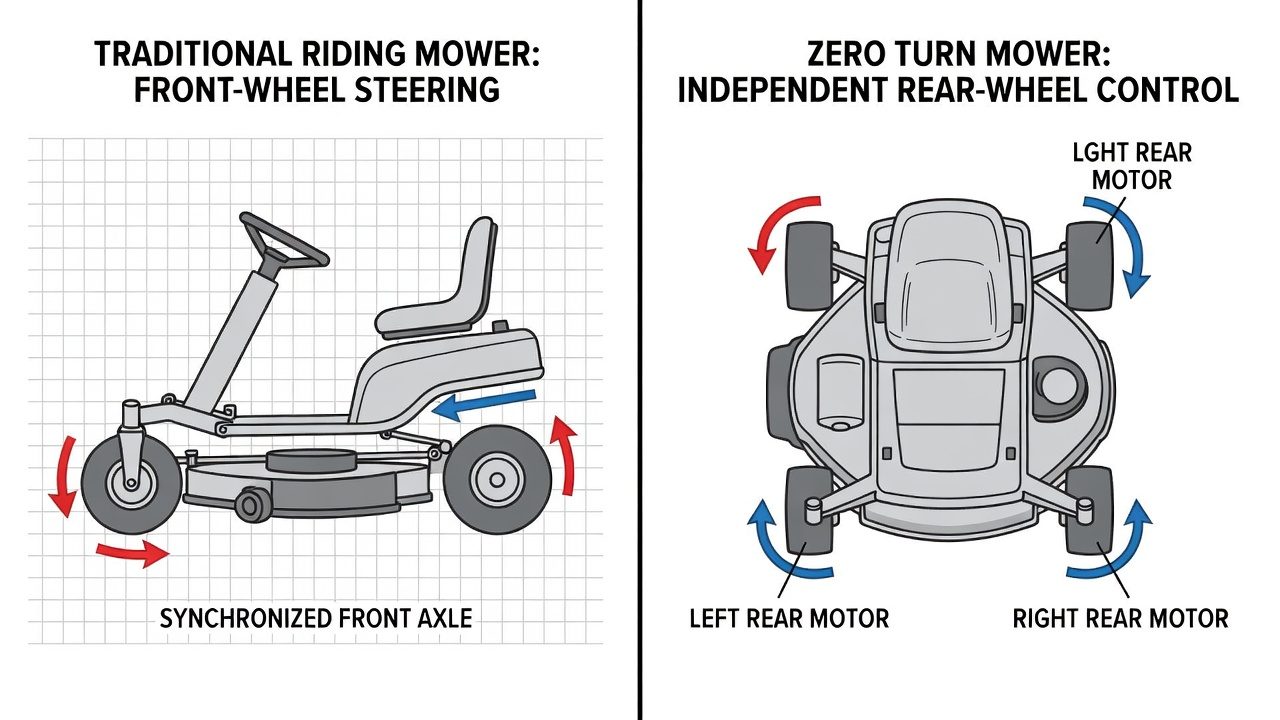
A zero turn mower is a riding lawn mower that can rotate 360 degrees in place, making it fundamentally different from traditional steering-wheel riding mowers. This capability comes from independent control of the rear wheels through dual hydraulic pumps and motors, allowing one wheel to move forward while the other moves backward or stays stationary.
How Zero Turn Steering Works
Unlike conventional mowers that use a single front axle for steering, zero turn mowers control each rear wheel independently. Operators use two joystick-style levers or a single steering wheel to command each wheel’s speed and direction. This design enables:
- 360-degree rotation in minimal space, ideal for tight landscaping areas
- Faster mowing speed (typically 6–12 mph) compared to traditional riding mowers (4–6 mph)
- Reduced compaction of the turf, since the mower pivots rather than skids
Transmission Types: Hydrostatic vs. Mechanical
Hydrostatic transmissions use pressurized fluid to control wheel speed and are the standard in modern zero turn mowers. They offer smooth acceleration, infinitely variable speed control, and lower maintenance compared to mechanical gearboxes. Most residential and commercial models use hydrostatic systems.
Mechanical transmissions (belt-driven) are rarer in zero turn mowers but appear in budget models. They are simpler but noisier and less efficient at various speeds.
Key Specifications to Compare: What Really Matters
Cutting Deck Width
The cutting deck (also called blade width) determines the swath of grass cut in a single pass. Larger decks reduce mowing time but are harder to maneuver in tight spaces:
- 42–48 inches: Ideal for residential properties under 2 acres; fits through standard gates and utility paths
- 52–60 inches: Best for estates and commercial landscapes; cuts time significantly for large open areas
- 72+ inches: Commercial-grade for landscaping businesses; requires substantial property or open terrain
Turning Radius and Maneuverability
The turning radius measures how tightly the mower can pivot. Smaller is better for properties with trees, flower beds, or landscape features. Most zero turn mowers achieve 0-inch turning radius (true zero turn), but deck width affects how close you can get to obstacles without the side-mounted blades hitting them. Tight turning radius saves time on obstacle-rich properties and reduces trimming work.
Ground Speed
Operating speed ranges from 6–12 mph on most residential models. Faster speeds reduce mowing time but require operator skill and can scalp grass on uneven terrain. Commercial models often reach 12+ mph. Match speed to your terrain: flat, open lawns tolerate higher speeds; hilly or obstacle-dense properties benefit from lower, more controlled speeds.
Engine Type and Horsepower
Residential zero turn mowers typically use single-cylinder or dual-cylinder engines rated 16–25 hp. Larger decks and commercial-grade builds require 25–35+ hp for consistent performance in thick grass or challenging terrain. Fuel type is usually gasoline, though commercial models may offer diesel options for extended runtime and lower fuel costs on high-use jobs.
Fuel Efficiency and Operating Costs
Fuel consumption varies by engine size, deck width, and usage pattern. Mid-range residential models consume approximately 0.5–1 gallon per hour under normal mowing conditions. Calculate annual fuel cost based on your property size and mowing frequency. A commercial model used 5+ days per week will justify lower per-hour fuel consumption over a residential model used weekly.
Choosing by Property Size and Use Case
Small Residential Properties (Under 1 Acre)
Properties under 1 acre typically don’t justify a zero turn mower—a traditional riding mower or walk-behind mower is often more economical. If you prefer the speed and comfort of a zero turn, a compact 42-inch model ($3,500–$4,500) is sufficient. Prioritize ease of storage and maneuverability over raw cutting speed.
Medium Residential Properties (1–3 Acres)
This is the sweet spot for zero turn mower investment. A 48–52-inch deck with 18–22 hp delivers efficient mowing in 30–45 minutes per week. Budget $4,000–$7,000 for a reliable mid-range brand. Hydrostatic transmission is essential at this level; look for cup holders, USB charging, and ergonomic seating for comfort during regular use.
Large Estates and Small Commercial Properties (3+ Acres)
Estates over 3 acres or properties with multiple buildings benefit from commercial-grade zero turn mowers with 60-inch decks and 25+ hp engines. These models cost $8,000–$15,000+ but cut mowing time substantially and withstand daily use. Dealer support and warranty coverage become critical at this investment level.
Budget Tiers and Value Considerations
Entry-Level ($3,000–$4,500)
Entry-level models offer basic zero turn capability in a compact frame, ideal for small properties or homeowners new to zero turn mowers. Expect 42-inch decks, 16–18 hp engines, and simpler controls. Warranty is typically 2–3 years. Trade-offs include less comfortable seating, fewer convenience features, and potentially higher fuel consumption.
Mid-Range ($4,500–$7,000)
Mid-range models represent the best value for most residential users. Features include 48–52-inch decks, 18–22 hp engines, hydrostatic transmissions, and more ergonomic design. Warranties extend to 3–5 years with solid dealer networks. This tier balances performance, comfort, and longevity.
Premium Commercial-Grade ($8,000–$15,000+)
Premium models feature commercial-grade components, larger decks (60–72 inches), powerful engines (25–35+ hp), reinforced frames, and comprehensive warranties (3–5 years or 500+ operating hours). These mowers are built for daily professional use and maintain resale value. Invest here if mowing is frequent or commercial.
Warranty and Long-Term Value
Manufacturer warranty typically covers 2–5 years or a set number of operating hours (often 100–500 hours). Extended warranties and maintenance plans from dealers can reduce repair costs. Factor dealer proximity into your decision; a nearby dealer with parts availability justifies a slightly higher purchase price.
Comfort, Durability, and Operator Features
Seating and Suspension
Extended mowing sessions (1–2 hours) demand ergonomic seating and suspension. Look for high-back seats with lumbar support and suspension systems that absorb vibration from rough terrain. Premium models include armrests and seat height adjustment.
Control Systems and Usability
Dual joystick controls are standard and intuitive for most operators; some premium models offer single steering wheel controls that feel more familiar to traditional mower users. Intuitive controls reduce operator fatigue and learning curve.
Build Quality and Materials
Examine frame construction (stamped vs. welded steel), blade engagement systems (belt vs. direct drive), and corrosion resistance on painted surfaces. Premium brands reinforce high-stress areas; budget models may use thinner metal or simpler attachment points that fail sooner.
Convenience Features
Cup holders, storage compartments, LED headlights, and mulching or bagging options improve usability. These features matter most if you mow regularly or in variable lighting conditions. They add $200–$800 to the price but enhance long-term satisfaction.
Mulching, Bagging, and Discharge Options
Mulching (discharge blades chop grass into fine particles and return them to the lawn) improves soil health and reduces waste but requires more powerful engines and works best with dry grass. Wet or thick grass can clog mulching systems.
Bagging collects clippings for removal or composting. It works in wet conditions and produces a neat appearance but generates significant waste and requires frequent emptying. Bagging decks add weight and reduce fuel efficiency.
Side discharge (blades throw clippings to one side) is fastest and requires minimal engine power. It works in almost any condition but creates visible discharge lines and may violate HOA rules or local ordinances in some areas.
Choose a model that offers your preferred option or allows conversion between systems. Mulching-capable mowers cost slightly more but offer flexibility.
Evaluating Brand Reputation and Dealer Networks
Brand reputation and dealer availability directly affect your ownership experience and resale value. Established brands (John Deere, Hustler, Toro, Kubota) have nationwide dealer networks and parts availability. Regional brands may offer superior local support. Research dealer locations within 30 minutes of your home and verify parts inventory before purchase.
Check online reviews on consumer sites and landscaper forums for long-term durability reports. Pay attention to transmission reliability, engine longevity, and dealer responsiveness. A slightly less familiar brand with excellent local dealer support often outperforms a major brand with distant service centers.
Frequently Asked Questions
How long do zero turn mowers typically last?
With regular maintenance (oil changes, blade sharpening, belt inspection), a quality zero turn mower lasts 10–15 years or 1,500–3,000 operating hours. Hydrostatic transmission fluid requires replacement every 200–500 hours; neglecting this significantly shortens mower lifespan. Commercial-grade models with reinforced components often last longer under heavy use than budget models used occasionally.
Can I use a zero turn mower on hilly terrain?
Zero turn mowers perform best on flat to gently sloping terrain. On hills steeper than 15 degrees, they become unstable and difficult to control, especially when turning. For properties with significant slopes, choose a model with good ground clearance and lower ground speed. Always mow hills perpendicular to the slope, never across or down.
What maintenance does a zero turn mower require?
Regular maintenance includes checking and changing oil every 50 hours, replacing air filters annually, sharpening blades every 20–30 hours of use, and replacing hydraulic fluid every 200–500 hours depending on model. Inspect belts and pulleys before each season. Store the mower in a dry location and drain fuel before winter in cold climates. Professional servicing ($150–$300 annually) extends equipment life and catches problems early.
What is the typical cost of ownership for a zero turn mower over 10 years?
Purchase price ($4,000–$8,000 for residential), fuel (approximately $500–$1,000 annually), maintenance and repairs ($200–$500 annually), and storage ($0 if you have space) total roughly $8,000–$16,000 over 10 years for a mid-range model. Commercial-grade models cost more upfront but justify investment if used professionally. Compare this to hiring a lawn service ($1,500–$3,500 annually), which totals $15,000–$35,000 over 10 years.