Direct Answer: Oil Capacity for Your Lawn Mower
Most gas-powered lawn mowers require 0.5 to 1.5 quarts of SAE 10W-30 oil, depending on engine size and model. The precise capacity is printed in your owner’s manual. Always fill until the oil reaches the full mark on the dipstick—never overfill, as excess oil can cause smoking, poor performance, and engine damage. Electric mowers require no engine oil.
Why Oil Capacity Varies Between Mower Models
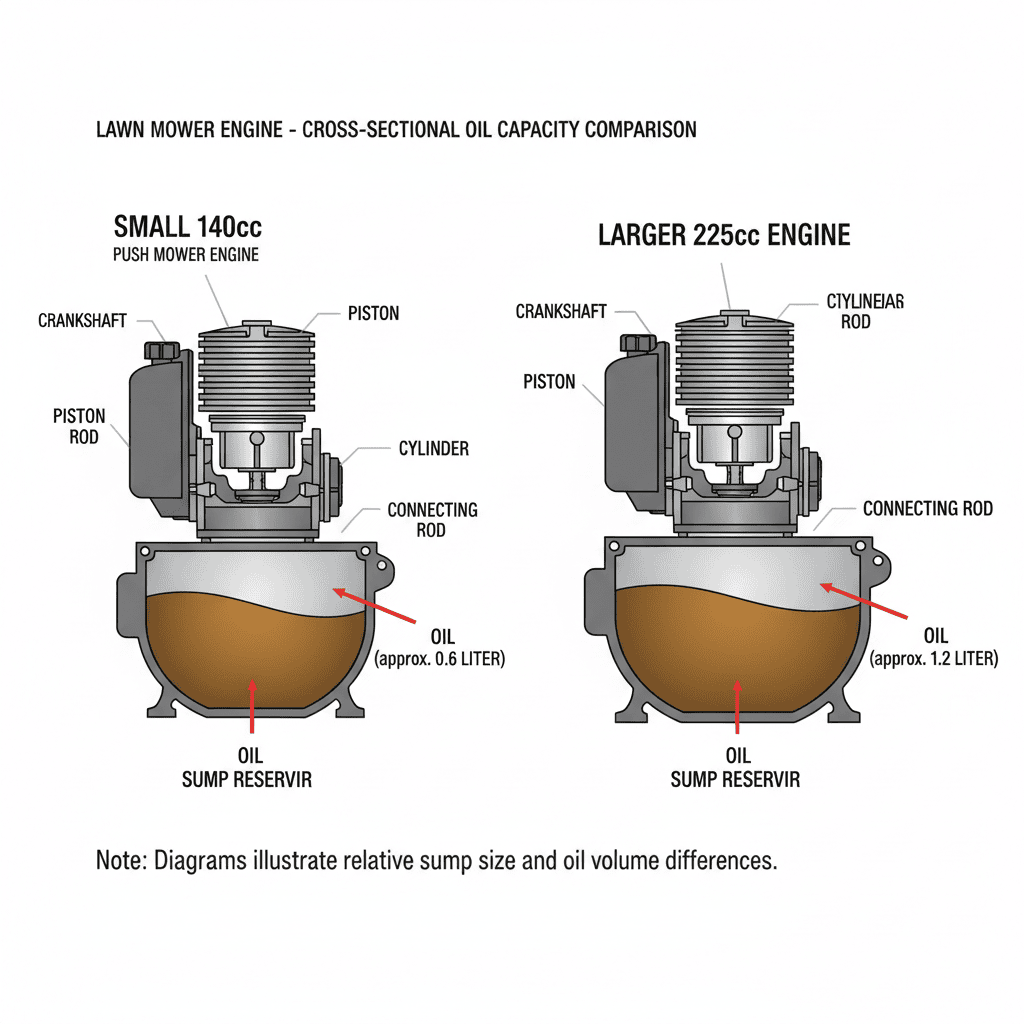
Lawn mower engines come in different sizes, from small 140cc push mowers to larger 500cc+ engines in riding mowers. A smaller engine holds less oil than a larger one, which is why there’s no single “one-size-fits-all” answer.
Additionally, manufacturers design engines with different sump capacities (the reservoir where oil collects). Two mowers with similar power outputs may have slightly different oil requirements based on internal engine design.
Why this matters: Putting too much oil creates back-pressure on gaskets and seals, forcing oil into the combustion chamber. This causes white or blue smoke, fouled spark plugs, and reduced engine life. Too little oil leaves the engine starved for lubrication, causing wear and potential seizure.
Typical Oil Capacity by Mower Type
| Mower Type | Typical Capacity | Common Engine Size |
|---|---|---|
| Small push mower | 0.5–0.75 quarts | 140–160cc |
| Standard push mower | 0.75–1.25 quarts | 160–225cc |
| Large push/self-propelled | 1–1.5 quarts | 225–350cc |
| Small riding mower | 1.5–2 quarts | 350–500cc |
| Full-size riding mower | 2–3 quarts | 500cc+ |
Note: Gas-powered mowers require engine oil maintenance. Electric mowers have no engine and need no oil (though the blade may occasionally need light lubrication).
Step-by-Step: How to Check and Fill Your Mower’s Oil
Step 1: Locate the Dipstick or Fill Cap
On most push mowers, the oil dipstick is located on the side of the engine. It typically has a yellow or orange handle. On some models, the dipstick is attached to the oil cap itself—pulling the cap removes the dipstick in one piece.
Check your manual if you can’t find it immediately. The dipstick is never buried; it’s always accessible from the outside of the engine.
Step 2: Read the Current Oil Level
Pull the dipstick completely out and wipe it clean with a dry cloth or paper towel. This removes old oil residue and gives you an accurate reading.
Reinsert the dipstick fully into its tube (you’ll hear or feel a slight click). Wait a moment, then pull it out again without twisting. The oil level should be visible as a wet line on the stick.
What you’re looking for:
- Full mark: Oil reaches the upper line or dot. Your mower is ready to use.
- Add mark: Oil is between the lower and upper marks. Top up with a small amount (typically 0.25–0.5 quarts).
- Below add mark: Oil is very low. Add oil until it reaches the full mark.
Step 3: Add Oil If Needed
If the dipstick shows the oil is low:
- Remove the dipstick/cap completely.
- Place a funnel in the opening (optional but prevents spills).
- Pour oil slowly into the tank, checking the level frequently with the dipstick.
- Stop when the oil reaches the full mark—do not overfill.
- Replace the dipstick/cap and ensure it’s tight.
Important timing: Check oil on a level surface with a cold engine. If the engine has been running, wait 5–10 minutes for the oil to settle in the sump for an accurate reading. Checking a hot engine can give false high readings.
Choosing the Right Oil Type and Viscosity
Understanding SAE Viscosity Grades
Oil viscosity describes how thick or thin the oil is. The “SAE” number (like 10W-30) tells you the oil’s thickness at different temperatures.
10W-30 breakdown:
- 10W: “W” stands for winter. The “10” means the oil flows easily at cold temperatures (good for starting in winter).
- 30: The oil thickens to a “30” grade at operating temperature, providing adequate protection during normal mowing.
SAE 10W-30 is the standard recommendation for most lawn mower engines because it balances cold-start performance and warm-running protection across temperature ranges.
Other Common Oil Grades
- SAE 10W-40: Thicker at operating temperature; better for high-heat environments or older engines with slight wear.
- SAE 30: Single-grade oil (no “W”). Use only in warm climates and warmer months; poor cold-start flow in winter.
- SAE 5W-30: Better cold-flow properties; acceptable in cold climates but less common for mowers.
Always check your owner’s manual for the recommended grade. Using the wrong viscosity can reduce engine efficiency, increase fuel consumption, and shorten engine life.
Synthetic vs. Conventional Oil
Most lawn mower manufacturers approve either conventional or synthetic small-engine oil. Synthetic oil offers longer drain intervals (up to 50–100 hours vs. 50 hours for conventional) but costs more. For casual home mowing, conventional SAE 10W-30 is typically sufficient.
Never use automotive motor oil designed for cars unless your manual explicitly approves it. Small-engine oil is formulated without certain detergents that can build up in smaller engines.
Common Mistakes and How to Fix Them
Mistake 1: Overfilling the Oil
What happens: Excess oil increases crankcase pressure, forcing oil past gaskets and seals into the combustion chamber. The engine produces white or blue smoke, spark plugs foul, and performance drops.
How to fix it: If you’ve overfilled, remove the dipstick and drain excess oil into a container until the level reaches the full mark. Use a syringe or small pump to extract oil precisely.
Mistake 2: Underfilling the Oil
What happens: Low oil starves the engine of lubrication. Friction increases, parts wear rapidly, and the engine can seize mid-mowing.
How to fix it: Top up immediately. Never run a mower on low oil, even briefly.
Mistake 3: Using the Wrong Oil Type
What happens: Wrong viscosity grades can increase fuel consumption, reduce power, cause hard starts in cold weather, or leave deposits in a warm engine.
How to fix it: If you’ve filled with the wrong oil, drain it completely using the mower’s drain plug (located on the bottom or side of the engine sump). Refill with the correct grade specified in your manual.
Mistake 4: Confusing Engine Oil with Blade Lubricant
What happens: Some mowers have a separate grease fitting on the blade assembly for lubrication. This is separate from engine oil and should only be lubricated with light machine oil or the lubricant specified in the manual—never with heavy engine oil.
How to avoid it: Read your manual to identify all lubrication points. Engine oil goes only in the engine sump; blade lubrication uses a different product.
First-Time Oil Fill vs. Routine Maintenance
For a New Mower
Most new mowers arrive with oil already in the engine—check the manual or the engine itself. Some brands include a small amount; others ship empty. Never assume. Check the dipstick before your first use.
If the manual says to fill before first use, pour oil slowly until the dipstick shows full. Run the engine briefly (2–3 minutes) to circulate the oil, then turn it off and let it settle for 10 minutes. Check the level again and top up if needed.
Routine Oil Checks
How often: Check oil level every 5–8 hours of mowing or before each use during mowing season.
Top-up procedure: Same as above—pull the dipstick, wipe it, reinsert fully, then check the level. Add small amounts of the correct oil grade until full.
When to Change Oil Completely
Most lawn mower engines require a complete oil change every 50–100 hours of operation (roughly once per season for homeowners). Check your manual for the exact interval.
To change oil:
- Run the engine for 2–3 minutes to warm the oil (easier drainage).
- Locate the drain plug on the bottom or side of the engine sump.
- Place a pan underneath and remove the plug.
- Let old oil drain completely (5–10 minutes).
- Replace the drain plug and tighten it.
- Add the correct amount of fresh oil as specified in your manual.
Frequently Asked Questions
Q: Can I use car motor oil in my lawn mower?
A: Not without checking your manual first. Most lawn mower manufacturers recommend small-engine oil formulated without certain detergents. Car oil can leave deposits in smaller engines. However, some modern mowers approve automotive SAE 10W-30 or 10W-40. Always verify your manual before substituting.
Q: What happens if I accidentally overfill my mower with oil?
A: The engine will likely produce white or blue smoke and perform poorly. Oil will leak past gaskets into the combustion chamber. Drain the excess immediately using a syringe or the drain plug. Do not run an overfilled engine longer than necessary.
Q: How often should I check the oil in my lawn mower?
A: Check before each mowing session or every 5–8 hours of operation during the season. Quick dipstick checks (2 minutes) catch low levels before they cause engine damage.
Q: Do electric mowers need oil?
A: No. Electric mowers have no engine and require no oil maintenance. Some models have a grease fitting on the blade assembly—check your manual. Cordless and corded electric mowers are essentially maintenance-free regarding oil.
Q: Is synthetic or conventional oil better for lawn mowers?
A: Either works if your manual approves it. Synthetic lasts longer (50–100 hours vs. 50 hours) but costs more. For casual home use, conventional SAE 10W-30 is economical and sufficient.
Key Takeaways
- Check your owner’s manual for your mower’s exact oil capacity—typical range is 0.5–1.5 quarts for push mowers.
- Always use the dipstick to confirm the level; do not estimate or guess.
- SAE 10W-30 is the standard grade for most lawn mowers across temperature ranges.
- Check oil every 5–8 hours of mowing or before each use during season.
- Overfilling and underfilling both damage the engine—maintain the full mark.
- Never use automotive oil unless your manual explicitly approves it.
- Electric mowers require no engine oil.