

Direct Answer: How to Change Weed Eater Line
To change the line on a weed eater, remove the spool cover (usually by twisting counterclockwise or pressing release tabs), take out the old line, measure and cut new monofilament line to the correct length (typically 15 to 20 feet depending on your model), wind it tightly around the spool in the direction indicated by arrows, thread the line ends through the eyelets, and reassemble the head. Most dual-line bump-feed models follow this general process, though single-line and automatic-feed designs vary slightly. The entire procedure takes 10 to 15 minutes and requires only trimmer line, scissors, and basic hand tools.

Pros
- Large 825-foot length offers strong value for frequent trimming jobs
- Hex shape and .095-inch diameter support a cleaner, more aggressive cut than basic round line
- Compatible with specific John Deere and Kawasaki OEM numbers
- Lightweight 1-pound package is easy to handle and store
Cons
- Only the line is included, so it is not a full trimmer accessory kit
- Compatibility is tied to specific OEM numbers, so buyers should verify fit before ordering
- The .095-inch thickness may be too light for some heavy-duty commercial applications
Overview & Design: The Stens 380-832 Silver Streak is a .095-inch edge trimmer line sold on an approximately 825-foot spool. It uses a durable co-polymer construction and a hex shape, which is designed to help produce a cleaner cut during routine trimming.
Performance & Key Features: This line is built for users who want consistent edging performance and a professional-looking finish. The hex profile can help improve cutting action compared with basic round line, while the long spool length is useful for homeowners, landscapers, and property managers who go through line quickly.
Drawbacks & Considerations: The product is line only, so buyers will need a compatible trimmer and spool setup. Compatibility is listed against John Deere 074962 and Kawasaki 99969-1828 references, so it is important to confirm fit before purchase. The .095-inch diameter is versatile, but it may not be ideal for the most demanding heavy-duty jobs.
Verdict: The Stens 380-832 is a practical choice for anyone looking for a long-lasting supply of .095-inch trimmer line with a clean-cutting hex design. It makes the most sense for users who value compatibility with specific OEM references and want dependable performance for regular lawn maintenance.
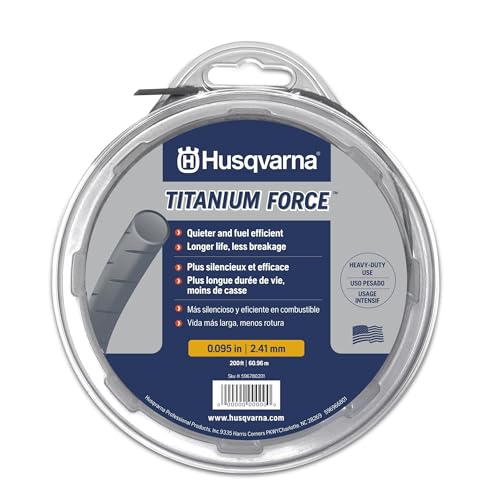
Pros
- Exceptional durability from commercial-grade co-polymer construction resists wear and breakage
- 50 percent noise reduction for quieter operation compared to standard lines
- Precise cutting performance with undulated surface for clean results
- Made in the USA ensuring quality engineering and materials
- Long 140-foot length provides extended value per spool
Cons
- Supplied as a continuous spool that requires manual winding into the trimmer head and cutting to length
- 0.095-inch diameter may not match the preferred thickness for every trimmer model
- Limited to basic cutter accessory with no pre-cut segments or extra tools included
The Husqvarna Titanium Force 0.095-Inch 140-Foot Spooled String Trimmer Line is a professional-grade copolymer weed eater line built for reliability. Its co-extruded polymer construction with a round dimpled profile offers immediate impressions of solid build quality aimed at both homeowners and those seeking gifts for men or Fathers Day. Manufactured in the USA, the continuous spool design prioritizes longevity and flexibility right out of the package.
In real-world performance this line excels through its undulated surface that cuts noise by 50 percent while delivering precise cutting and improved energy efficiency. The commercial-grade resins provide strong abrasion resistance and reduced breakage, making it suitable for tackling thick weeds and grass around standard trimmer heads. The included cutter allows easy length customization for consistent results across various landscaping tasks.
Potential drawbacks include the need to manually wind the full 140-foot spool into the head and cut segments as required, which adds a minor setup step. The fixed 0.095-inch diameter also means it may not optimally match every trimmer model that prefers thinner or thicker line options.
Overall this Husqvarna Titanium Force line is an excellent choice for homeowners and yard maintenance users who value quiet durable performance and USA-made quality. Those needing a versatile professional-grade replacement will find strong value in its design and features.

Pros
- Heavy-duty .095" nylon construction is built for tougher trimming tasks.
- Square shape can improve cutting efficiency and edging precision.
- Long 330-foot spool reduces the need for frequent replacement.
- Compatible with many trimmer types that use .095" line.
Cons
- May be less suitable for very light-duty trimming where a thinner line could be easier on smaller trimmers.
- No included trimmer head or additional accessories are listed in the product data.
- Performance can vary by trimmer power and the type of vegetation being cut.
Overview & Design: The VIABRICO .095" Weed Eater String is a square-profile trimmer line made from premium nylon-based material for general lawn care and heavier edging tasks. The orange color makes the spool easy to identify, and the 330-foot length is useful for users who go through line regularly.
Performance & Key Features: Its square shape is designed to create sharper cutting edges and a larger cutting surface than standard round line, which can help improve trimming speed and edge definition. The line is also advertised as abrasion resistant, crack resistant, and highly impact resistant, with a precision-wound spool intended to reduce tangling, misfeeds, and jams.
Drawbacks & Considerations: This is a .095" heavy-duty line, so it may be more than some lightweight trimmers need. The product data does not include accessories, and real-world results will still depend on the power of the trimmer and the type of weeds or terrain being handled.
Verdict: This VIABRICO trimmer line is a solid fit for homeowners and frequent yard-maintenance users who want a durable .095" line with better cutting performance than basic round string. It is especially relevant for edging, thicker weeds, and rougher terrain where wear resistance matters.
Understanding Your Trimmer Head Type
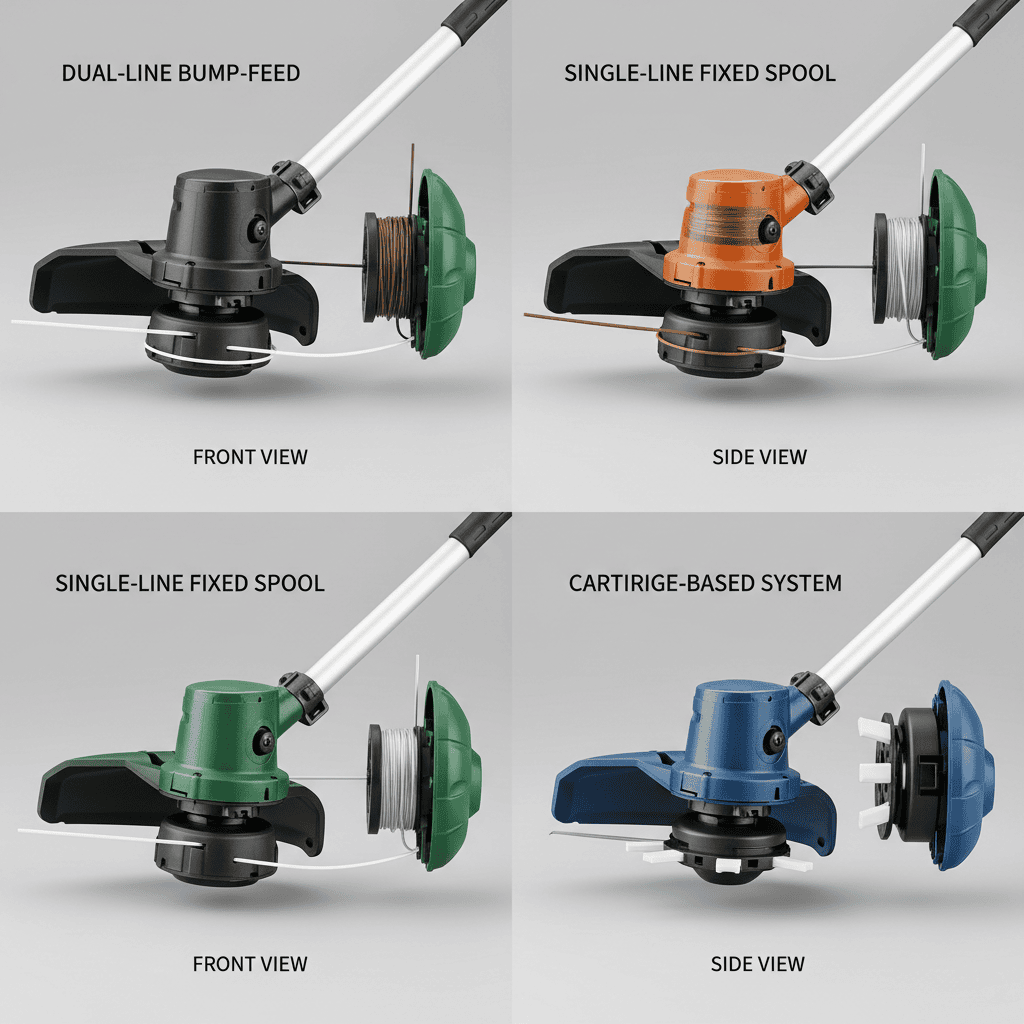
Before you begin, identify which type of trimmer head your weed eater has. Different designs require different approaches, and using the wrong procedure can damage your equipment or waste time.
Common Trimmer Head Styles
- Dual-Line Bump-Feed Head: The most common consumer design. Two lines spin and feed automatically when you tap the head on the ground. This is what most homeowners use.
- Single-Line Fixed Spool: One line only, manually wound and tied. Common on commercial or specialty trimmers. Line does not feed automatically.
- Automatic-Feed (Semi-Automatic) Head: Single line that advances automatically as it wears. Tapping the ground triggers a mechanism that feeds fresh line.
- Cartridge-Based Systems: Some premium models use pre-wound cartridge systems that snap in and out for quick changes. Less common in consumer models.
Check your user manual or look for labels on the trimmer head itself. Most residential weed eaters are dual-line bump-feed models, so the instructions below focus on that type with variations noted for other designs.
What You’ll Need Before Starting
Tools and Materials
- Replacement trimmer line (monofilament)
- Scissors or line cutter
- Your weed eater’s model number and user manual (optional but helpful)
- Flat-head screwdriver (if your head uses screws rather than tabs)
- Work surface (table or bench for organizing parts)
Selecting the Correct Trimmer Line
Using the wrong line gauge or material can cause feeding problems, breakage, or inefficient cutting. Check your manual for the exact specification, or look for a label on the trimmer head itself.
| Line Diameter (Gauge) | Common Uses | Typical Applications |
|---|---|---|
| 0.065 inch | Light residential trimming | Thin grass, light weeds |
| 0.080 inch | Standard residential | Average lawn maintenance (most common) |
| 0.095 inch | Heavy-duty residential | Thick weeds, brush, dense vegetation |
| 0.110 inch and up | Commercial / professional | Heavy commercial or specialized equipment |
Pro tip: Buy trimmer line in bulk spools (100 feet or more) rather than pre-wound cartridges, it’s more economical and ensures you always have line on hand.
Step-by-Step: Changing Line on a Dual-Line Bump-Feed Head
This is the most common weed eater design and the procedure most homeowners will follow.
Step 1: Unplug or Disconnect Power
Always disconnect power before working on your trimmer. If using a cordless electric or gas model, remove the battery or ensure the engine is off and cool. This prevents accidental start-up.
Step 2: Access the Spool
Locate the spool cover on the trimmer head. Most covers are removed by:
- Twisting counterclockwise: Grip the cover and rotate left until it loosens and lifts off.
- Pressing release tabs: Look for two or three small tabs on the sides of the cover. Press them inward and lift the cover away.
- Removing screws: Some models use a flat-head screw. Unscrew completely and set aside safely.
Place the cover and any small springs or clips in a safe spot so you don’t lose them. To evaluate matched hardware tolerances, consult our detailed overview of marshall stanmore iii vs harman kardon onyx studio 8.
Step 3: Remove the Old Line
Pull out any remaining old line from the spool. If line is tightly wound or stuck, gently wiggle and pull it free. Some spools have notches or guides, trace these carefully as you remove the line so you understand how it feeds through the eyelets.
Once the spool is clear, inspect it for cracks, warping, or damage. If the spool is damaged, it may need replacement. When planning workspace deployment, consider the engineering criteria outlined in our dyson v8 cyclone vs bissell featherweight stick guide.
Step 4: Measure and Cut New Line
Consult your manual for the exact line length, typical residential models use 15 to 20 feet total (7.5 to 10 feet per side). If you don’t have the manual, a safe starting length is 30 feet of line per spool (to cover both sides generously).
Use sharp scissors or a line cutter to cut a clean, straight edge. Angled or frayed cuts make winding difficult. For additional operational safety benchmarks, see our published testing notes on bissell crosswave hydrosteam vs shark stainforce.
Step 5: Wind the Line onto the Spool
This is the most critical step. Look for an arrow molded into the spool indicating winding direction.
- Insert the line into the small notch or hook at the spool’s edge.
- Wind the line tightly and evenly in the direction of the arrow. Tension is important, loose winding causes tangling and poor feeding.
- Make multiple neat passes around the spool, keeping each wrap close to the previous one.
- Leave approximately 6 inches of line extending from the spool when finished.
Critical tip: Do not wind line randomly or cross over itself. Crossed or twisted line will jam and prevent proper feeding.
Step 6: Thread Line Through Eyelets
Most dual-line heads have two small eyelets (holes) on opposite sides of the head. After winding, thread one end of the line through each eyelet. You should have approximately 3 to 4 inches of line extending beyond each eyelet for cutting edges.
Ensure the line sits fully in the eyelet and is not twisted.
Step 7: Reassemble the Head
Replace the spool cover by reversing the removal method:
- If it twists on, align the tabs and rotate clockwise until snug (do not over-tighten).
- If it uses release tabs, press them and push the cover down until it clicks into place.
- If it uses screws, thread and tighten gently.
Step 8: Test and Trim
Reconnect power (battery or turn on engine). Start the trimmer briefly and listen for smooth operation. If the line feeds and spins freely without noise or vibration, you’re ready to trim. Make a few test cuts on grass to ensure even cutting on both sides.
Variations for Single-Line and Automatic-Feed Models
Single-Line Fixed Spool
Single-line trimmers are common on commercial or specialized equipment. Instead of two lines feeding automatically, one line is manually wound and tied.
- Remove the spool cover as described above.
- Pull out the old line and note any knots or anchor points.
- Cut a line length of 20 to 30 feet (check your manual for exact specs).
- Wrap the line tightly around the spool in the direction of the arrow, leaving one end unwound (about 12 inches).
- Thread the long end through the eyelet.
- Tie a secure knot (typically a square knot or loop knot) at the anchor point on the spool to prevent unwinding.
- Reassemble the head.
Single-line models do not benefit from bump-feed, so you must manually cut or feed new line as it wears.
Automatic-Feed (Semi-Automatic) Models
Automatic-feed heads advance line automatically when you tap the ground or when you pull the trigger. The mechanism is more complex, but line replacement is similar.
- Remove the spool cover.
- Pull out old line.
- Wind new line tightly on the spool following the arrow direction.
- Leave the line ends extending 3 to 4 inches beyond the eyelets (do not cut them short).
- Thread line through eyelets and reassemble.
- The automatic mechanism will feed line as needed when you operate the trimmer.
If your automatic-feed head is not advancing line, the issue is usually a damaged feed mechanism, not the line itself. Consult your manual or contact the manufacturer.
Troubleshooting Common Problems
Line Won’t Feed or Extends Unevenly
Cause: Line is wound too loosely, twisted, or threaded incorrectly through eyelets.
Fix: Remove the spool cover, unwind the line, and rewind it tightly following the arrow direction. Ensure both ends are seated fully in the eyelets with no twists.
Line Breaks Frequently or Frays
Cause: Wrong line gauge for your trimmer, line is old or degraded, or eyelets are cracked or sharp.
Fix: Verify you’re using the correct gauge (check your manual). Replace old line with fresh stock. Inspect eyelets for damage, if they’re cracked or have sharp edges, carefully smooth with fine sandpaper or replace the head.
Line Is Twisted or Jammed in the Spool
Cause: Line was wound against the direction of the arrow or wound carelessly with crosses and overlaps.
Fix: Completely unwind and remove the line. Clean any debris from the spool. Rewind slowly and deliberately in the correct direction, keeping each pass flat and even. Do not rush.
Trimmer Head Won’t Spin or Is Making Noise
Cause: Line is tangled inside the head, spool is damaged, or the cover is not seated correctly.
Fix: Remove the spool cover and inspect for tangled line. Clear any debris. Check that the spool spins freely when rotated by hand. If the spool is cracked or warped, it needs replacement. Reassemble the cover and ensure it’s fully seated.
Line Won’t Extend Past the Eyelets
Cause: Line ends are too short, are not fully threaded, or eyelets are blocked with debris.
Fix: Check that 3 to 4 inches of line extends beyond each eyelet. Pull gently on each end to ensure it’s seated. If eyelets are blocked, use a fine pick or needle to clear debris. If line is too short, unwind and rewind, leaving longer ends.
Maintenance Tips to Extend Line Life
- Use the correct gauge: Line that’s too thin for your equipment will break constantly. Line that’s too thick stresses the motor and feeding mechanism.
- Trim only grass and light weeds: Hitting rocks, concrete, or dense brush wears line rapidly. Keep your trimming area clear of obstacles.
- Maintain consistent speed: Running the trimmer at full throttle constantly wears line faster. Use appropriate speed for the task.
- Store in a cool, dry place: Trimmer line degrades in direct sunlight and heat. Keep your trimmer in a garage or shed.
- Replace line seasonally: Most residential users replace line 2 to 4 times per year depending on use. Heavy commercial users may replace monthly.
- Inspect the spool regularly: A damaged or warped spool prevents proper line feeding. Replace it if you notice cracks or warping.
- Keep the head clean: Grass clippings and debris can jam the spool. Wipe the head clean after each use.
Brand-Specific Resources
While the general procedure above applies to most residential weed eaters, specific brands may have unique features. Check your user manual for model-specific guidance, or visit the manufacturer’s website for video tutorials:
- Ryobi (One+ and One+ HP lines): Ryobi.com support section includes video guides for their cordless trimmers.
- DeWalt (20V and 60V lines): DeWalt.com has detailed manuals and troubleshooting for cordless models.
- Craftsman: Craftsman.com provides user manuals searchable by model number.
- Echo (gas and cordless): Echo.com offers comprehensive product manuals and maintenance guides.
- Stihl (professional and consumer): Stihl.com has detailed manuals and service information for all models.
- Toro (Recycler and Flex Force lines): Toro.com includes video tutorials for battery-powered equipment.
Most manufacturers also post “how to” videos on YouTube. Search your exact model number for step-by-step visual guides.
Buyer FAQs: How To Change Weed Eater Line Solved
How often should I change my weed eater line?
This depends on how frequently you trim and the thickness of vegetation. Casual homeowners typically replace line 2 to 4 times per season. Heavy users or those trimming dense weeds may need monthly replacements. If your line breaks frequently or stops feeding, replace it immediately rather than waiting for a scheduled maintenance window.
Can I use any brand of trimmer line on my weed eater?
Yes, as long as the line gauge (diameter) matches your equipment’s specifications. Different brands of monofilament line are generally interchangeable if the gauge is correct. However, avoid cheap or very old line, it degrades and becomes brittle. Purchase line from reputable suppliers to ensure quality.
Why does my trimmer line keep twisting even after I wind it correctly?
Twisted line usually indicates one of two issues: (1) you’re winding against the arrow direction, or (2) the spool itself is warped or damaged. Double-check the arrow on your spool and wind in the correct direction. If the spool is visibly bent or cracked, replacement is necessary. Worn spools cannot hold line properly and will always cause twisting.
What’s the difference between bump-feed and automatic-feed, and does it affect line replacement?
Bump-feed requires you to tap the trimmer head on the ground to release more line as it wears. Automatic-feed advances line automatically as you operate the trimmer. Both use the same basic line-winding procedure, but automatic-feed models have an internal mechanism that feeds line for you. If your auto-feed trimmer is not advancing line, the issue is the feed mechanism, not the line itself, and the head or trimmer may need service.
Related Maintenance and Operating Guides
To keep your equipment running at peak operating efficiency, explore our related technical walkthroughs and maintenance tutorials:
- Consult our detailed breakdown on cordless stick vacuum buyer guide.
- Consult our detailed breakdown on robotic pool cleaner comparison guide.
Trimmer Line Safety Resources
Replacing trimmer line means handling a sharp cutting head, so keep the engine off and the guard in place. General safety background for handheld trimmers can be found at American National Standards Institute (ANSI).









