Direct Answer: Which Brand Makes the Best Riding Mower?
There is no single ‘best’ riding mower brand that wins across all categories. However, John Deere, Husqvarna, Cub Cadet, and Toro consistently rank as top contenders, with each brand excelling in different areas:
- John Deere is known for durability, extensive dealer networks, and broad model availability—best for buyers prioritizing reliability and long-term support.
- Husqvarna specializes in zero-turn radius mowers and innovation—best for those with larger yards or complex terrain.
- Cub Cadet offers strong value for budget-conscious homeowners without sacrificing quality.
- Toro excels in commercial-grade durability and residential comfort features—best for premium buyers seeking performance.
The ‘best’ brand for you depends on your specific situation: yard size, terrain, budget, and the features that matter most to your mowing experience.
Why ‘Best’ Is Subjective: Understanding the Question
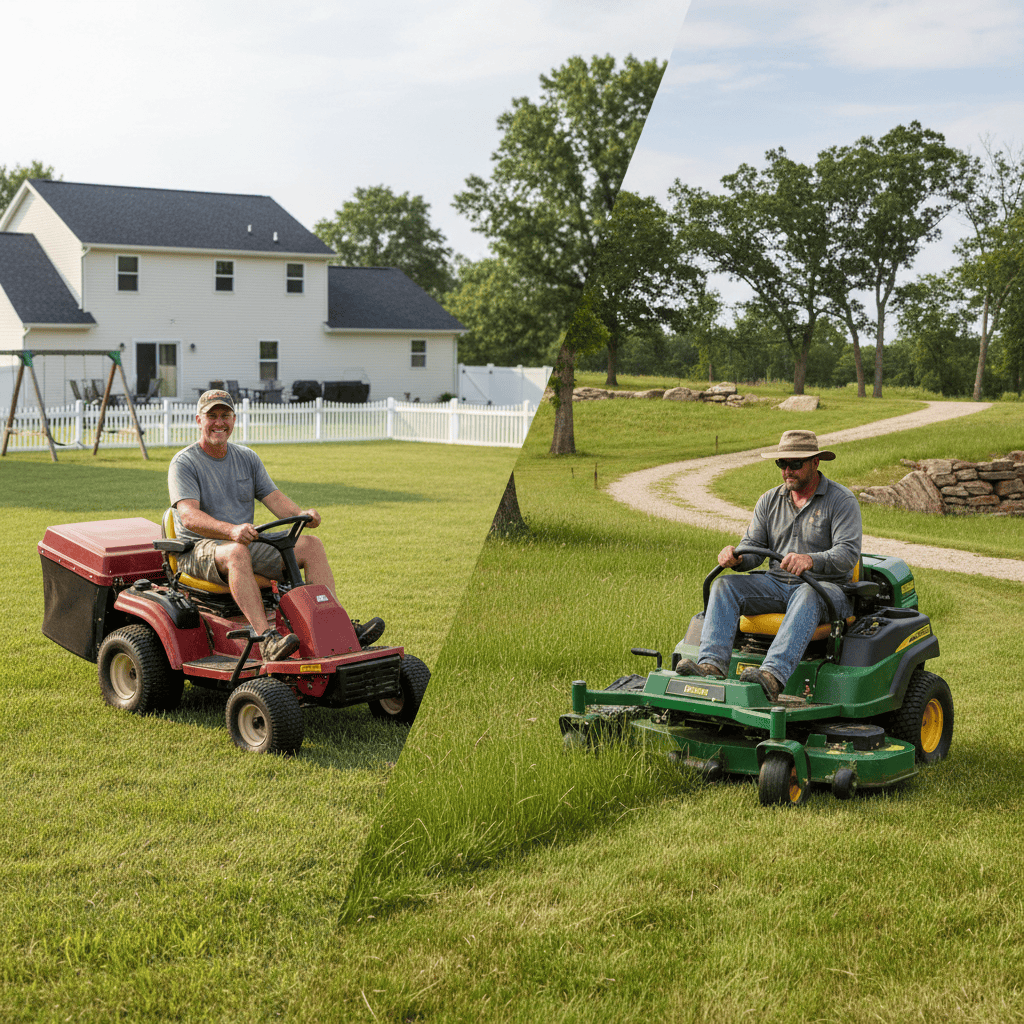
When someone asks “who makes the best riding mower,” they’re really asking three different questions depending on their situation:
- What brand is most reliable and long-lasting?
- What offers the best value for my budget?
- What will perform best on my specific property?
A riding mower that’s ideal for a flat, half-acre suburban lawn is different from one suited to a sloped, three-acre property with obstacles. Similarly, a homeowner with a tight budget needs different advice than someone willing to invest in a premium zero-turn mower.
Residential vs. commercial use also changes the answer. Residential mowers prioritize comfort and ease of use for weekend maintenance. Commercial-grade mowers (often sold in residential lines by premium brands) prioritize durability, uptime, and speed for professional landscapers mowing multiple properties daily.
Key Factors That Matter More Than Brand Name
Before choosing a brand, evaluate these technical and practical factors:
Yard Size and Deck Width
Deck width—the cutting swath—directly impacts mowing time. A larger deck covers more ground per pass but is heavier and less maneuverable in tight spaces:
- Under 1 acre: 42-48 inch deck (lawn tractor or compact zero-turn)
- 1-2 acres: 48-54 inch deck (mid-range lawn tractor or zero-turn)
- Over 2 acres: 54-60+ inch deck (zero-turn or garden tractor)
Terrain and Slopes
Flat, open yards suit any mower type. Properties with slopes, ditches, or dense trees require:
- Hydrostatic transmission for smooth, infinitely variable speed control on uneven terrain
- Lower center of gravity and stability for slopes (important safety feature)
- Tighter turning radius for navigating obstacles
Zero-turn mowers excel on complex terrain; lawn tractors work well on simple, open properties.
Transmission Type
Hydrostatic transmission (foot pedal or lever control) offers smooth, responsive speed changes—better for varied terrain and comfort. Gear transmission (manual shifting) is simpler, often cheaper, and requires more driver engagement. Most modern residential mowers use hydrostatic transmission.
Engine Power (Horsepower)
More horsepower doesn’t always mean better performance. Match HP to your needs:
- 15-17 HP: Small, flat yards under 1 acre
- 18-23 HP: Most residential mowers, 1-3 acres
- 24+ HP: Large properties, tough terrain, zero-turn mowers
Common engine manufacturers include Briggs & Stratton, Kohler, and Kawasaki—all reliable when properly maintained.
Comfort and Convenience Features
For weekend mowing, comfort matters:
- Cushioned seat with armrests
- Cup holder and storage
- Easy-to-reach controls
- Foot pedals or cruise control
- Quiet operation (reduces fatigue)
Attachments and Versatility
Consider what you’ll do beyond mowing:
- Mulching kit: Chops clippings fine for lawn health
- Bagging attachment: Collects clippings for cleanup
- Towing capacity: For trailers, aerators, or spreaders
- Compatibility with implements: Some brands offer wider ecosystems of attachments
How the Top Brands Compare
John Deere
Strengths: Unmatched dealer network, strong resale value, proven durability, wide model range from budget to premium, extensive parts availability, established reputation.
Best for: Buyers who prioritize long-term support, reliability, and resale value. A solid choice for first-time mower buyers in residential settings.
Typical positioning: Mid-range to premium pricing; justified by brand equity and service infrastructure.
Husqvarna
Strengths: Innovation in zero-turn technology, strong commercial heritage, excellent maneuverability, robust engine options, reputation for performance in demanding conditions.
Best for: Buyers with larger yards (2+ acres), complex terrain, or those who value cutting-edge features. Preferred by landscaping professionals.
Typical positioning: Mid-range to premium; often positioned as the performance alternative to John Deere.
Cub Cadet
Strengths: Strong value proposition, solid build quality, good feature-to-price ratio, reasonable dealer support, growing model lineup.
Best for: Budget-conscious homeowners (1-2 acres) who don’t want to sacrifice quality. Offers 80% of the features of premium brands at 60-70% of the price.
Typical positioning: Budget to mid-range; known for accessibility without major compromises.
Toro
Strengths: Premium build quality, comfort-focused design, commercial-grade durability in residential models, innovation in comfort and convenience, strong warranty reputation.
Best for: Premium buyers willing to invest in top-tier equipment, or those with large properties who value professional-grade performance with residential amenities.
Typical positioning: Premium pricing justified by durability and feature set.
Other Brands Worth Considering
MTD (Yard-Man, Troy-Bilt): Budget-friendly entry point; adequate for small, simple yards but less dealer support.
Ariens: Strong in snow/seasonal equipment; solid mowers with good value.
Kubota (high-end garden tractors): Excellent for very large properties or commercial-adjacent residential use.
Step-by-Step Guide to Choosing the Right Riding Mower
Step 1: Measure Your Yard
Estimate total mowing area in acres or square feet. Walk the perimeter or use an online tool. This determines deck size and mower type.
Step 2: Assess Your Terrain
- Is it mostly flat or hilly?
- Are there obstacles (trees, rocks, fences)?
- How wet does it get after rain?
- Are there tight spaces requiring maneuverability?
Flat and open → lawn tractor works fine. Slopes, obstacles, or complex layout → zero-turn or premium lawn tractor.
Step 3: Set Your Budget
- $1,500-$2,500: Entry-level lawn tractors (Cub Cadet, MTD)
- $2,500-$4,500: Mid-range lawn tractors and compact zero-turns (John Deere, Husqvarna)
- $4,500-$7,000+: Premium zero-turns, garden tractors, top-tier features (Toro, Husqvarna, John Deere)
Step 4: Choose a Mower Type
Lawn Tractor (most common): Front-engine, rear-wheel drive, steering wheel. Good for general use, comfortable, versatile. Turning radius wider than zero-turn.
Zero-Turn Radius Mower: Mid-engine or rear-engine, can rotate in place. Faster mowing, tighter maneuverability, steeper learning curve. Better for large or complex yards.
Garden Tractor: Heavy-duty, larger frame, true PTO (Power Take-Off) for attachments. For very large properties or multi-purpose work.
Step 5: Research Brands and Models
Visit local dealers and test-sit mowers. Evaluate:
- Seat comfort for 1-2 hours
- Control responsiveness
- Visibility (can you see the cutting edge?)
- Engine sound level
- Build quality (solid vs. cheap-feeling)
Step 6: Verify Warranty, Parts, and Dealer Support
Check:
- Factory warranty length (typically 2-3 years)
- Parts availability locally (not all brands have equal dealer density)
- Dealer reputation for service
- Cost of common replacement parts (blades, belts, air filters)
Frequently Asked Questions
Q: Is John Deere really worth the premium price?
A: John Deere commands a price premium largely due to brand reputation and dealer network. For a homeowner prioritizing long-term support and resale value, that premium is justified. For a buyer focused purely on function and willing to service the mower independently, Cub Cadet or Husqvarna may offer better value-for-money.
Q: Should I buy a zero-turn mower if I only have 1-2 acres?
A: Not necessarily. A zero-turn excels at speed and tight maneuverability on complex terrain. On a flat, open 1-2 acre yard, a lawn tractor is more comfortable for extended mowing sessions and costs less. Reserve zero-turn for larger yards (3+ acres) or properties with many obstacles.
Q: How often do I need to replace the engine?
A: With proper maintenance (regular oil changes, air filter cleaning, seasonal tune-ups), a quality residential mower engine lasts 500+ mowing hours—typically 10-15 years for an average homeowner. Engine replacement is rare; most owners upgrade or retire the mower before engine failure.
Q: Can I use any riding mower on wet grass?
A: Wet grass clumps, reducing cutting quality and increasing mower stress. Avoid mowing within 24 hours after rain if possible. If you must mow wet grass, use a mulching kit instead of bagging to reduce clumping. All major brands handle this equally well—it’s a maintenance practice, not a brand issue.
The Bottom Line
The “best” riding mower brand is the one that matches your specific yard, budget, and priorities. For most homeowners, John Deere offers the safest choice due to dealer density and support. Husqvarna is the performance choice for larger or complex properties. Cub Cadet delivers value without compromise. Toro appeals to premium buyers seeking top-tier comfort and durability.
Before committing to a brand, focus on the practical factors: yard size, terrain, transmission type, and deck width. Visit local dealers, sit in the seat, and test the controls. The best mower is the one you’ll use comfortably for years to come—and that’s rarely decided by brand name alone.