Best Time to Mow Your Lawn: The Direct Answer
Early morning between 7-9 AM or late afternoon between 4-6 PM is optimal for mowing most lawns. Early morning allows dew to dry while temperatures remain cool, reducing heat stress on freshly cut grass. Late afternoon provides similar temperature benefits while avoiding morning moisture. Avoid midday mowing (10 AM-3 PM) when peak heat and intense sun exposure stress the grass and slow recovery.
Why Timing Matters for Lawn Mowing
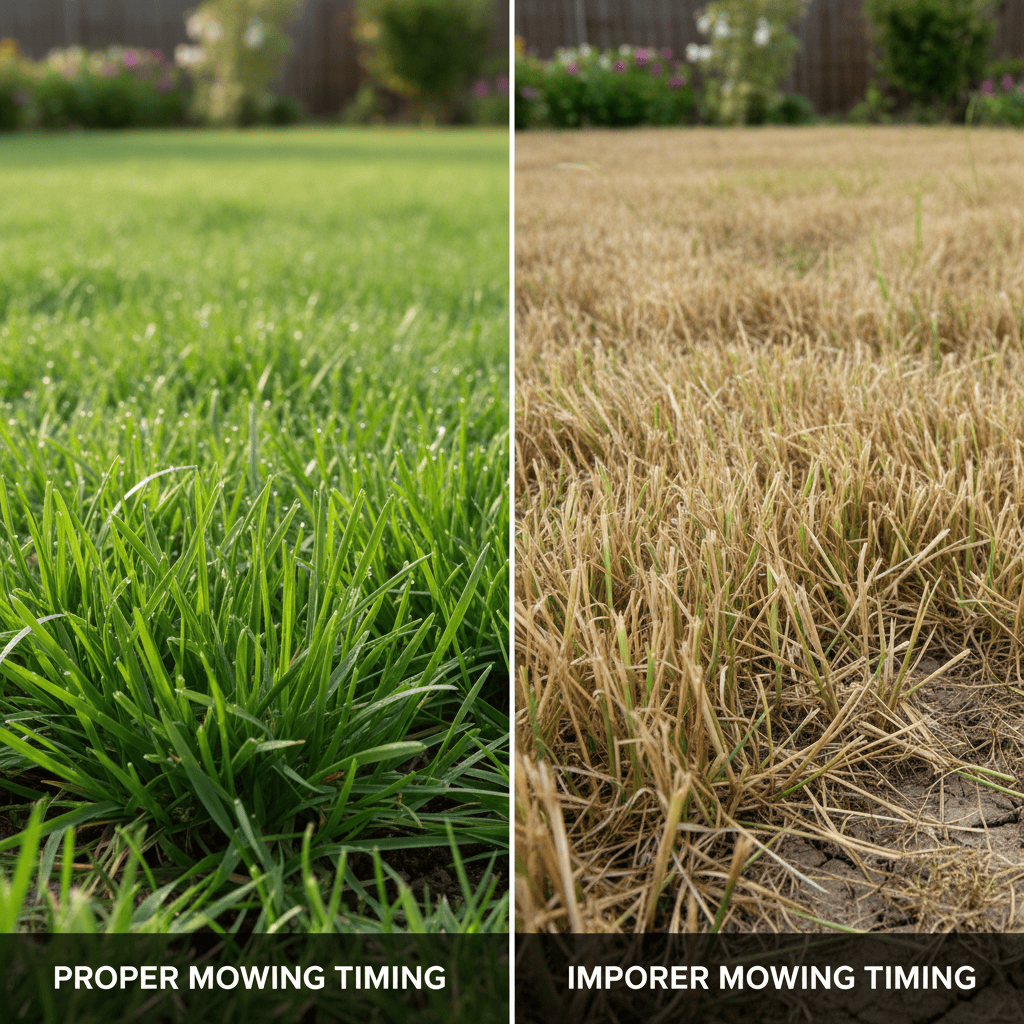
When you mow directly impacts three critical factors: grass health, equipment performance, and recovery speed. Mowing at the wrong time can cause stress that weakens your lawn, promote disease, and reduce the lifespan of your mower.
Grass experiences the most stress during extreme temperatures and when moisture levels are too high or too low. Morning dew creates wet clippings that clog mower decks and clump on the lawn, preventing even coverage and creating dead spots. Midday heat exhausts grass plants, slowing their ability to heal the cut wound. Late afternoon and early morning provide the temperature sweet spot—cool enough to minimize stress but warm enough that grass has recovered from dew or overnight cool-down.
Early Morning Mowing (7-9 AM): Pros and Cons
Advantages
- Cooler temperatures: Morning air is 5-15°F cooler than midday, reducing heat stress on newly cut grass
- Dew has dried: By 7-9 AM in most climates, morning dew evaporates enough for mowing without excessive clumping
- Faster recovery: Grass has the entire day to recover before nighttime dormancy
- Equipment runs cooler: Mowers perform better in cooler temperatures with less engine strain
- Fewer neighbors annoyed: Earlier mowing respects neighborhood quiet hours better than midday noise
Disadvantages
- Some moisture remains: Heavy dew or rain overnight may require waiting until 8-9 AM for adequate drying
- Early wake-up required: Not ideal for those with late work schedules
- Variable by climate: In humid regions, dew may persist longer; in arid climates, early morning may be unnecessarily early
Late Afternoon Mowing (4-6 PM): Timing and Benefits
Advantages
- No dew concerns: Afternoon sun eliminates all morning moisture, ensuring dry grass and clean cuts
- Cooler than midday: By 4-6 PM, temperatures drop from their 2-3 PM peak, providing stress relief
- Flexible schedule: Works well for those with 9-5 jobs or afternoon availability
- Grass recovers during evening: Cool evening temperatures allow rapid recovery before nighttime
- Clean mowing: Dry grass produces cleaner cuts and no clumping issues
Disadvantages
- Limited daylight in winter: Short days mean late afternoon mowing may occur in low-light conditions
- Heat still elevated: In peak summer, even 4-6 PM temperatures may exceed 85°F
- Grass less time to recover: Evening cooling means less active recovery before dormancy
Seasonal Variations: Adjusting Your Mowing Time
Spring (March-May)
Spring is the safest season for flexible mowing times. Temperatures are mild (50-70°F), and grass growth is moderate. Early morning (7-8 AM) is ideal as it avoids any lingering moisture from spring rains while keeping grass cool. By late April-May, temperatures rise; shift toward 8-9 AM or move to late afternoon (5-6 PM) to avoid midday heat above 75°F.
Summer (June-August)
Summer demands the strictest timing discipline. Heat stress is the primary concern. Mow early morning (6:30-8 AM) before temperatures exceed 75°F, or wait until late afternoon (5-7 PM) when temperatures begin dropping from their 2-3 PM peak. In extreme heat waves, avoid midday entirely. If your lawn is exposed to intense afternoon sun, early morning becomes preferable as it maximizes cool recovery time before peak heat.
Fall (September-November)
Fall returns to moderate timing flexibility. Early morning (7:30-9 AM) works best, though late afternoon (4-5:30 PM) remains solid. By November, daylight shortens significantly; aim for earlier times to ensure adequate light and avoid mowing in darkness. Continue monitoring dew—fall rains may create morning moisture.
Winter (December-February)
Most homeowners mow infrequently in winter, but if needed, mow during the warmest part of the day (typically 10 AM-2 PM) when temperatures are least likely to freeze grass or frost the soil. Short daylight hours limit options; prioritize midday regardless of typical guidance.
Grass Type Matters: Cool-Season vs. Warm-Season Grasses
Cool-Season Grasses (Fescue, Bluegrass, Ryegrass)
Cool-season grasses thrive in northern climates and prefer temperatures below 75°F. They experience peak stress during summer heat. For cool-season grasses, prioritize early morning mowing (6:30-8 AM) from June through August to minimize midday heat exposure. In spring and fall, flexible timing works fine. Avoid mowing during heat waves when temperatures exceed 85°F.
Warm-Season Grasses (Bermuda, Zoysia, St. Augustine)
Warm-season grasses thrive in southern climates and actually prefer warmer temperatures (75-95°F). However, they still benefit from avoiding extreme peak heat. Mow late morning (9-10 AM) or late afternoon (4-6 PM) during active growing season. These grasses are more forgiving of midday heat than cool-season varieties, but peak summer heat above 95°F still stresses them. Warm-season grasses green up later in spring and brown earlier in fall, so adjust your mowing schedule accordingly.
Conditions to Absolutely Avoid When Mowing
Wet Grass
Never mow wet grass, regardless of time of day. Wet clippings clog mower decks, create uneven clumping on the lawn, promote fungal diseases, and damage soil compaction. Wait until grass dries completely—typically 4-6 hours after rain. In humid climates, this may mean skipping an entire day of mowing.
Extreme Midday Heat (Above 85°F)
When temperatures exceed 85°F, mowing between 10 AM-3 PM significantly stresses grass plants. The combination of cutting wounds plus peak heat slows recovery and increases disease susceptibility. Shift to early morning or late afternoon during heat waves.
Frost or Frozen Ground
Mow only when soil is not frozen and grass blades are not frosted. Mowing frozen grass damages leaf tissue; mowing on frozen ground causes soil compaction that persists into spring.
Immediately After Fertilizing
Wait 24-48 hours after liquid fertilizer application before mowing. Allow foliar nutrients to absorb and ensure soil is not excessively saturated.
How to Adjust Mowing Time Based on Your Lawn’s Condition
Monitor your specific lawn’s response. If you notice:
- Brown tips after mowing: Grass may be too hot; shift earlier or later
- Uneven clumping: Grass was too wet; wait longer after dew or rain
- Slow recovery (greening takes 5+ days): Temperature stress; move toward cooler times of day
- Fungal patches: Excess moisture combined with heat; prioritize dry, cool conditions
Additional Factors Affecting Mowing Time
Neighborhood Noise Restrictions
Many communities have quiet hours (typically 7 AM-9 PM or similar). Check local ordinances. If restricted, late afternoon (5-6 PM) often works best as a compromise between lawn health and neighbor relations.
Your Mower Type
Gas mowers run hotter and perform better in cooler conditions—favoring early morning or late afternoon. Cordless electric mowers have battery limitations; mow during your preferred time block when you can complete the job before battery depletion.
Lawn Size and Mowing Duration
Large lawns taking 2+ hours should start early to finish during cooler parts of the day. Small lawns can fit within morning or afternoon windows more flexibly.
Best Practices Summary
- Aim for 7-9 AM or 4-6 PM as your primary mowing windows
- Avoid 10 AM-3 PM during hot months (June-August)
- Never mow wet grass
- Adjust seasonal timing as daylight and temperature change
- For cool-season grasses, prioritize early morning in summer
- For warm-season grasses, late morning or afternoon works well year-round
- Monitor your specific lawn for signs of stress and adjust accordingly
Frequently Asked Questions
Is 10 AM ever okay to mow?
Yes, 10 AM works well during spring and fall when temperatures are mild (below 75°F). In summer when heat peaks, 10 AM is too late in many climates. Late winter and early spring allow midday mowing, but early morning and late afternoon remain safer choices year-round.
Can I mow in the evening (7-9 PM)?
Evening mowing is possible if it doesn’t violate noise ordinances and you finish before dusk. However, grass recovers better when it has daylight hours to heal. Evening mowing gives grass only nighttime for recovery, making it less ideal than afternoon mowing. Use evening mowing as a backup option rather than your primary schedule.
Does mowing time affect grass blade sharpness?
Indirectly, yes. Cool conditions (early morning, late afternoon) allow mower blades to stay sharper longer because engines run cooler with less thermal stress. Midday mowing with hot engines can dull blades faster due to material expansion and increased friction. Regardless of time, sharpen blades every 20-40 hours of mowing for clean cuts.
Should I mow right after watering my lawn?
No. Wait 24 hours after watering for soil to firm up and grass to dry completely. Mowing wet grass immediately after watering causes the compaction and clumping problems described above. Early morning watering followed by afternoon mowing (with adequate drying time) is a solid approach.
What’s the best mowing frequency to reduce heat stress?
Mow every 7-10 days during active growing season, removing no more than one-third of blade height per mowing. Frequent mowing with smaller cuts reduces stress compared to infrequent mowing that removes too much at once. Combine proper frequency with optimal timing (early morning or late afternoon) for best results.