What Type of Oil Do Lawn Mowers Use?
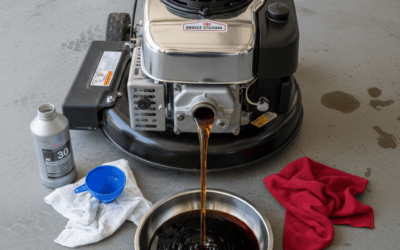
Most lawn mowers use small engine oil with a viscosity rating of SAE 30 for warm climates, 10W-30 for mixed seasons, or 5W-30 for cold climates. The exact grade depends on your mower model, local temperature ranges, and whether you prefer conventional or synthetic formulations. Always consult your owner’s manual for the manufacturer’s specific recommendation and oil capacity.
Small engine oil is purpose-built for lawn mower engines and differs significantly from automotive oil. It contains additives that protect against the high temperatures and demanding conditions of small engines, which often run at higher RPMs than car engines. Using the wrong oil can cause engine wear, poor performance, and costly repairs.
Why You Can’t Use Car Oil in a Lawn Mower
While car oil and small engine oil may look similar, they’re formulated differently. Lawn mower engines operate at higher temperatures and speeds relative to their size, requiring oils with specific detergent packages and anti-wear additives. Car oil can leave excessive deposits in small engines, clog filters faster, and fail to provide adequate lubrication under the stress of mowing.
Additionally, most automotive oils contain friction modifiers designed for automatic transmissions, which can damage small engine clutches. Stick to oil labeled specifically for small engines to ensure your mower runs properly and maintains its warranty.
Understanding SAE Oil Viscosity Grades
SAE (Society of Automotive Engineers) viscosity grades measure how thick oil is at specific temperatures. The lower the number, the thinner the oil and the easier it flows in cold conditions. Higher numbers indicate thicker oil that provides better protection at high temperatures.
- SAE 30: Monograde oil for warm climates; flows well in heat but may thicken in cold weather
- 10W-30: Multigrade oil; the “10W” means it flows like a 10-weight oil in winter, the “30” means it thickens to 30-weight when hot
- 5W-30: Multigrade oil for colder climates; flows better in winter while maintaining 30-weight protection when warm
- 10W-40: Heavier multigrade option for engines running in very hot conditions
Multigrade oils (those with a “W”) are generally preferred for most homeowners because they adapt to seasonal temperature changes, reducing the need to swap oils between summer and winter.
Choosing Oil by Climate and Season
Your geographic location and current season are primary factors in selecting the right oil grade.
Warm Climates (Above 60°F Year-Round)
If you live in a consistently warm region, SAE 30 is typically sufficient. This monograde oil provides excellent protection in heat and costs less than multigrade options. However, if temperatures occasionally dip below 50°F during winter, switch to a multigrade blend like 10W-30 to ensure proper cold-start lubrication.
Mixed or Moderate Climates (40–80°F Range)
10W-30 is the most versatile choice for homeowners in temperate zones. It flows easily when you’re starting the mower on a cool morning and provides sufficient protection during hot summer operation. This oil works well year-round in most of North America.
Cold Climates (Below 40°F in Winter)
In regions with harsh winters, use 5W-30 or even 0W-30 if available. These oils thin significantly in cold weather, allowing your engine to start more easily and receive lubrication faster. Cold, sluggish oil can cause hard starts and inadequate engine protection during the first moments of operation.
Can You Use the Same Oil Year-Round?
Yes, multigrade oils like 10W-30 and 5W-30 are designed to perform across seasonal temperature swings. Most homeowners use the same oil throughout the year without issue. However, if your climate has extreme seasonal variations (very hot summers and very cold winters), you may get slightly better performance by switching between SAE 30 in summer and 10W-30 in winter. Check your manual to see if the manufacturer recommends seasonal changes.
Conventional vs. Synthetic Oil for Lawn Mowers
Conventional Small Engine Oil
Conventional oil is mineral-based and the standard choice for lawn mowers. It costs less than synthetic alternatives and works reliably when changed on schedule. Most mower manufacturers approve conventional oil, and it’s widely available at hardware stores and garden centers.
Advantages: Lower cost, readily available, proven track record
Disadvantages: Shorter change intervals (typically every 50–100 hours of use), thickens faster in cold weather, less protection at high temperatures
Synthetic Small Engine Oil
Synthetic oils are chemically engineered to provide superior protection and performance. They maintain consistent viscosity across a wider temperature range and resist breakdown longer than conventional oils.
Advantages: Extended change intervals (up to 300+ hours), better cold-start performance, superior protection in extreme temperatures, less sludge buildup
Disadvantages: Higher upfront cost (typically 2–3 times more expensive), overkill for casual homeowners who mow once per week
For most residential lawn mower owners, conventional oil is sufficient and more economical. Synthetic makes sense if you run a commercial operation or use your mower heavily. Always verify that your mower’s engine manufacturer approves synthetic oil, as some older models are incompatible.
How to Check and Change Your Lawn Mower Oil
Checking Oil Level
Check your oil level before each mowing session:
- Place the mower on level ground and let the engine cool for at least 5 minutes
- Locate the dipstick (usually a yellow or orange handle on the side of the engine)
- Pull the dipstick straight out and wipe it clean with a paper towel or rag
- Reinsert the dipstick fully, then pull it out again to get an accurate reading
- The oil level should reach the “full” mark; if low, add small amounts of the correct oil grade until it reaches full
Never overfill. Excess oil can cause smoking, fouled spark plugs, and engine damage.
Oil Change Intervals
Check your owner’s manual for the exact interval, but general guidelines are:
- Conventional oil: Every 50–100 hours of use or once per season
- Synthetic oil: Every 200–300 hours of use
If you mow weekly for 3–4 months, a typical 1-acre residential lot requires oil changes roughly every 3–4 weeks with conventional oil.
How Much Oil Does a Lawn Mower Hold?
Oil capacity varies by mower type:
- Push mowers: 0.5–1.5 quarts
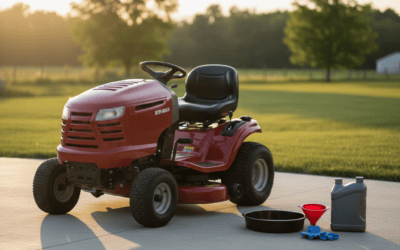
- Riding mowers: 1.5–2.5 quarts
- Zero-turn mowers: 2–3 quarts
Check your manual for the exact capacity. Adding too much or too little affects engine performance and longevity.
Step-by-Step Oil Change
- Allow the engine to cool for 10–15 minutes
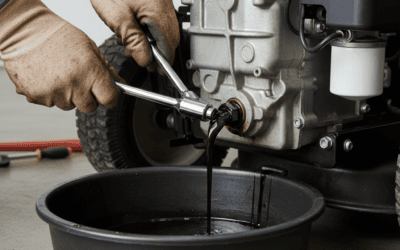
- Locate the drain plug (usually at the bottom of the engine)
- Place a drain pan underneath and remove the plug to let old oil drain completely
- Wipe the drain plug and reinstall it, hand-tight
- If your mower has an oil filter, replace it according to the manual
- Pour in the correct amount of fresh oil through the filler cap
- Check the level with the dipstick and top off if needed
- Run the engine for 30 seconds and recheck the level
- Dispose of old oil at a recycling center or auto parts store (many accept it free)
Push Mowers vs. Riding Mowers: Oil Differences
Both push and riding mowers typically use the same oil grades (SAE 30, 10W-30, etc.), but they differ in capacity and usage patterns.
Push Mower Oil Considerations
Push mowers hold 0.5–1.5 quarts and are usually used for 20–60 minutes per session. They run cooler than riding mowers because air circulation is better. Most push mowers use SAE 30 or 10W-30 oil, and you’ll change it every 3–4 weeks during mowing season.
Riding Mower Oil Considerations
Riding mowers hold 2–3 quarts and run longer per session (up to 2–3 hours). They generate more heat due to the larger engine and transmission system. Follow the manufacturer’s recommendation, which is usually 10W-30 or 5W-30. Some riding mowers have separate oil for the transmission and engine—check your manual to avoid mixing them up.
Zero-Turn Mowers
Zero-turn mowers are a subset of riding mowers with dual hydrostatic transmissions. They require larger oil quantities and longer change intervals than typical riding mowers. Always consult your manual, as some zero-turns require specialized hydraulic fluid in addition to engine oil.
Four-Stroke vs. Two-Stroke Engines
Most modern lawn mowers use four-stroke engines, which have a separate oil reservoir and use standard small engine oil. Two-stroke engines (less common in residential mowers) mix oil directly into the fuel and require two-stroke engine oil, which is different and not interchangeable.
Check your mower’s manual or engine type label to determine which applies. If your mower manual specifies a fuel-oil ratio (e.g., 50:1), you have a two-stroke engine and need two-stroke oil, not the oils discussed in this guide.
Finding Your Mower’s Oil Recommendation
Checking the Owner’s Manual
Your owner’s manual is the most reliable source for oil specifications. It includes the recommended viscosity grade, capacity, and change interval for your specific model. Look for a section titled “Maintenance,” “Oil,” or “Service Intervals.”
Locating a Manual Online
If you’ve lost your manual:
- Visit the manufacturer’s website and search for your mower model number (usually on a label affixed to the engine or frame)
- Use a general search engine to search “[brand] [model] manual PDF”
- Check YouTube for tutorials specific to your model
- Contact the manufacturer’s customer service for guidance
Oil Label on the Engine
Many mowers have a small sticker or plate on the engine listing the recommended oil grade. This label is usually permanent and visible near the filler cap.
Frequently Asked Questions
Can I use 10W-40 instead of 10W-30 in my lawn mower?
It depends on your mower and climate. 10W-40 is thicker when warm and provides more protection in extreme heat, but it may flow too sluggishly in cold weather. Always use the grade specified in your owner’s manual. Using a heavier oil than recommended can reduce fuel efficiency and increase wear on cold starts.
How do I know if my lawn mower needs an oil change?
Check the oil level before each use. If it’s consistently low, change it sooner than the recommended interval. Additionally, if the oil appears very dark or gritty, an oil change is overdue. Some mowers have an oil-change indicator light that turns on when service is needed.
Is it safe to mix synthetic and conventional oil?
Yes, mixing small amounts is harmless in an emergency, but avoid making it a habit. Synthetic oil’s extended-interval benefits are diminished when mixed with conventional oil. If you switch from conventional to synthetic, drain and refill completely rather than topping off with synthetic.
What happens if I use the wrong oil grade?
Using oil that’s too thick may prevent the engine from starting in cold weather and reduce fuel efficiency. Oil that’s too thin may not provide adequate protection at operating temperature, leading to increased wear and potential engine damage. Stick to your manual’s recommendation to ensure reliability and maintain your warranty.