What Type of Oil Should You Use in a Toro Lawn Mower?
Most Toro lawn mowers require either SAE 30 or 10W-30 oil for the engine. SAE 30 is the standard specification for warm-weather operation and summer use, while 10W-30 provides year-round versatility with superior cold-start performance in temperatures below 50°F. The exact specification depends on your mower’s engine type, size, and model year, which is why consulting your owner’s manual is essential. Oil capacity typically ranges from 0.6 to 2 quarts.
Understanding Oil Types and SAE Ratings

To select the correct oil for your Toro mower, you need to understand what the numbers and letters on an oil container actually mean.
What Does SAE 30 Mean?
SAE stands for Society of Automotive Engineers, and the number indicates the oil’s viscosity—essentially how thick or thin it is. SAE 30 is a single-grade oil with a viscosity of 30, meaning it maintains a consistent thickness across a range of temperatures but performs best in warm conditions. SAE 30 oil flows easily when cold but provides adequate protection when the engine heats up.
What’s the Difference Between SAE 30 and 10W-30?
The key difference lies in cold-weather performance:
- SAE 30: Single-grade oil; standard for warm climates and summer-only mowing. The “30” indicates viscosity at operating temperature.
- 10W-30: Multi-grade oil; the “10W” means it has a winter viscosity rating of 10, allowing it to flow better in cold temperatures. The “30” indicates its viscosity at full operating temperature. This is ideal for year-round use and provides better engine protection during cold starts.
In practical terms, 10W-30 is more versatile and recommended for most users unless you live in a consistently warm climate and mow only during summer months.
Can I Use Synthetic Oil in My Toro Mower?
Yes, you can use synthetic oil in your Toro lawn mower if it meets the required SAE specification (SAE 30 or 10W-30). Synthetic oils offer several advantages over conventional mineral oils:
- Better protection across a wider temperature range
- Longer intervals between oil changes (though small engines still typically need annual changes)
- Improved engine cleanliness and reduced sludge buildup
- Better performance in extreme heat or cold
Both synthetic and conventional oils meeting the same SAE rating provide adequate protection for lawn mower engines. Choose based on your budget and climate conditions.
Why Is Using the Correct Oil Type Important?
Using the wrong oil viscosity can cause several problems:
- Too thick (higher viscosity): Restricts oil flow, making cold starts difficult and increasing engine wear during startup.
- Too thin (lower viscosity): Fails to provide adequate lubrication at operating temperature, increasing friction, heat, and potential engine damage.
- Wrong oil type: May not meet your engine’s detergency and protection requirements, leading to faster sludge accumulation and reduced engine life.
Using the correct specification ensures optimal engine protection, easier starting, and longer mower lifespan.
Determining Your Toro Mower Type
Toro manufactures several categories of lawn mowers, and while most residential models use similar oil types, specifications can vary by engine size and design.
Common Toro Mower Types
- Walk-behind push mowers: Lightweight, manual or self-propelled models for residential lawns. Typically use smaller single-cylinder engines requiring 0.6 to 1 quart of SAE 30 or 10W-30.
- Zero-turn radius (ZTR) mowers: Ride-on mowers with zero-turn capability for improved maneuverability. Usually require 1.5 to 2 quarts of oil depending on engine size.
- Riding mowers: Traditional sit-down mowers with larger frames and engines. Oil requirements vary by model, typically 1.5 to 2 quarts.
- Commercial-grade mowers: Heavy-duty equipment for professional landscaping. May have different specifications—always consult the manual.
How to Find Your Mower’s Model Number and Engine Information
Your mower’s model number and engine specifications are usually located on a decal or label attached to the frame. Common locations include:
- Under the seat on riding mowers
- On the side of the engine housing on push mowers
- On the rear frame or under the deck
Once you locate the model number, you can access the owner’s manual through Toro’s website or search for “[Your Model Number] manual” online. The manual will provide exact oil type and capacity specifications.
Oil Specifications by Toro Mower Type
Walk-Behind Push Mower Oil Requirements
Most Toro walk-behind mowers use SAE 30 or 10W-30 engine oil. These typically feature small single-cylinder four-stroke engines that hold approximately 0.6 to 1 quart of oil. For year-round use or if you experience temperatures below 50°F, use 10W-30. For summer-only mowing in warm climates, SAE 30 is adequate.
Zero-Turn Radius Mower Oil Requirements
Toro ZTR mowers typically require SAE 30 or 10W-30 depending on model and climate. These machines hold approximately 1.5 to 2 quarts of oil. Check your specific model’s manual, as some commercial ZTR models may have different specifications. Additionally, ZTR mowers have separate hydraulic fluid systems; do not confuse engine oil with hydraulic fluid.
Riding Mower Oil Requirements
Standard Toro riding mowers generally use SAE 30 or 10W-30 engine oil, with capacities ranging from 1.5 to 2 quarts. The exact specification depends on the engine manufacturer (some Toro mowers use engines from Kohler, Kawasaki, or other suppliers) and the model year. Always refer to your owner’s manual for definitive guidance.
Commercial-Grade Equipment
Professional Toro equipment may have different oil specifications. Always consult the owner’s manual for commercial models, as they may require different viscosities or specialized oils not typically used in residential mowers.
How to Check and Change Your Mower’s Oil
How Much Oil Does Your Toro Mower Need?
Oil capacity varies by mower type:
- Walk-behind mowers: 0.6 to 1 quart
- Riding and ZTR mowers: 1.5 to 2 quarts
Your owner’s manual specifies the exact capacity for your model. Overfilling can cause engine damage, so measure carefully.
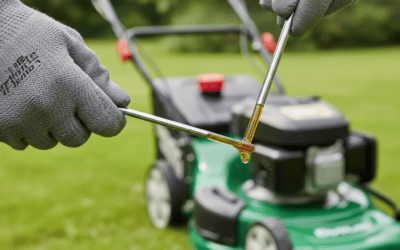
How to Check Oil Level
Most Toro mowers have a dipstick or sight-glass oil level indicator:
- Place the mower on level ground.
- Locate the dipstick (usually a yellow or orange handle on the engine).
- Pull the dipstick straight out and wipe it clean with a rag.
- Reinsert the dipstick fully, then withdraw it again to check the level.
- The oil should reach the “full” line on the dipstick. Top up if necessary.
Check oil level before each mowing session or weekly during the season.
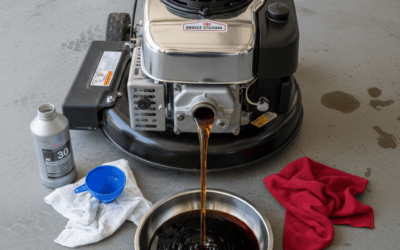
Step-by-Step Oil Change Process
- Warm the engine: Run the mower for 2-3 minutes to warm the oil, making it drain faster and more completely. Shut off the engine and allow it to cool slightly.
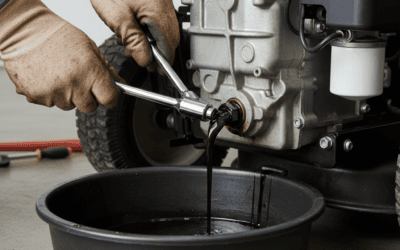
- Locate the drain plug: Consult your manual to find the oil drain plug location. Place a drain pan underneath.
- Remove the drain plug: Unscrew the drain plug and allow all old oil to drain completely (5-10 minutes).
- Replace the drain plug: Wipe the drain plug clean and reinstall it, tightening securely but not excessively.
- Add new oil: Remove the dipstick or oil fill cap. Pour the recommended oil type into the engine, checking level frequently with the dipstick to avoid overfilling.
- Check level again: Replace the dipstick or cap, run the engine for 1-2 minutes, shut it off, wait a minute, then check the oil level again. Top up if necessary.
How Often Should You Change the Oil?
Toro recommends changing oil every 50 hours of use or once annually, whichever comes first. If you mow weekly during mowing season, plan for an oil change in early spring and potentially a mid-season change if you use your mower frequently.
Seasonal and Storage Considerations
Should You Use Different Oil in Winter vs. Summer?
If you live in a climate with significant seasonal temperature variation, using 10W-30 year-round is the simplest approach. It provides adequate protection in both cold and warm conditions. However, in consistently warm climates where temperatures rarely drop below 50°F, SAE 30 is sufficient and slightly more economical.
Oil for Off-Season Storage
If you store your mower for winter or an extended period:
- Change the oil before storage if the engine hasn’t been run in several weeks. Fresh oil has better protective properties.
- Use SAE 30 or 10W-30 as normal; the choice depends on your climate.
- Ensure the oil level is full before storage to minimize moisture accumulation in the crankcase.
- Run the engine briefly each month during storage to circulate fresh oil.
Climate Considerations
In cold climates (below freezing for extended periods), 10W-30 is strongly recommended. The “W” (winter) rating ensures the oil flows adequately during cold starts, protecting the engine during initial operation. In consistently warm climates, SAE 30 is adequate and often specified by Toro.
Where to Find Your Mower’s Oil Specification
Locating Information in Your Owner’s Manual
The oil type specification is typically found in the “Maintenance” or “Service” section of your owner’s manual. It’s usually listed clearly with the exact SAE rating, capacity, and any special recommendations.
Accessing Digital Manuals Online
If you don’t have a printed manual:
- Visit Toro’s official website and use their manual search feature.
- Enter your mower’s model number (found on the frame decal) to locate the digital manual.
- Download and save the PDF for future reference.
What If You Can’t Find the Specifications?
Contact Toro customer support directly with your mower’s model number. They can provide exact specifications for your machine. Alternatively, most Toro dealers can identify your mower and provide the correct oil recommendation.
Frequently Asked Questions
Can I mix SAE 30 and 10W-30 oil?
Yes, mixing SAE 30 and 10W-30 in your Toro mower is acceptable in emergencies, though not ideal as a regular practice. The resulting blend will have characteristics between the two oils. For ongoing use, stick to one type as specified in your manual to ensure predictable engine protection.
What happens if I use motor oil from my car in my lawn mower?
While automotive motor oil (such as 10W-30 for cars) meets the same SAE specification as lawn mower oil, it may contain additives designed for engines with oil filters, catalytic converters, and emission systems that small lawn mower engines don’t have. Most lawn mower engines lack oil filters, so they benefit from cleaner oil without detergent packages designed for long-term automotive use. Use oil specifically marketed for small engines when possible, though automotive oil in the correct SAE rating will not immediately damage the engine.
Is synthetic oil worth the extra cost for a lawn mower?
Synthetic oil offers better protection across temperature extremes and resists breakdown better than conventional oil, potentially extending engine life and reducing sludge buildup. For homeowners who mow 50-100 hours annually and plan to keep their mower for many years, synthetic oil’s longevity and protection may justify the higher cost. For casual users with newer equipment, conventional oil meeting the correct SAE rating is perfectly adequate and more economical.
How do I know if my lawn mower needs an oil change?
Change your Toro mower’s oil every 50 hours of use or annually. Additionally, if the oil appears very dark or has visible debris on the dipstick, an oil change is needed. Difficulty starting or reduced engine performance can sometimes indicate dirty or degraded oil, though other factors may be responsible.