Quick Answer: Lawn Mower Battery Voltages
Most residential lawn mowers use 12V lead-acid starter batteries. Larger riding mowers and zero-turn models typically require 24V or 48V systems. Modern cordless electric mowers operate on 20V, 40V, or 60V lithium-ion battery packs. The voltage your mower needs depends on its type, engine size, and power requirements.
Common Lawn Mower Battery Voltages by Mower Type
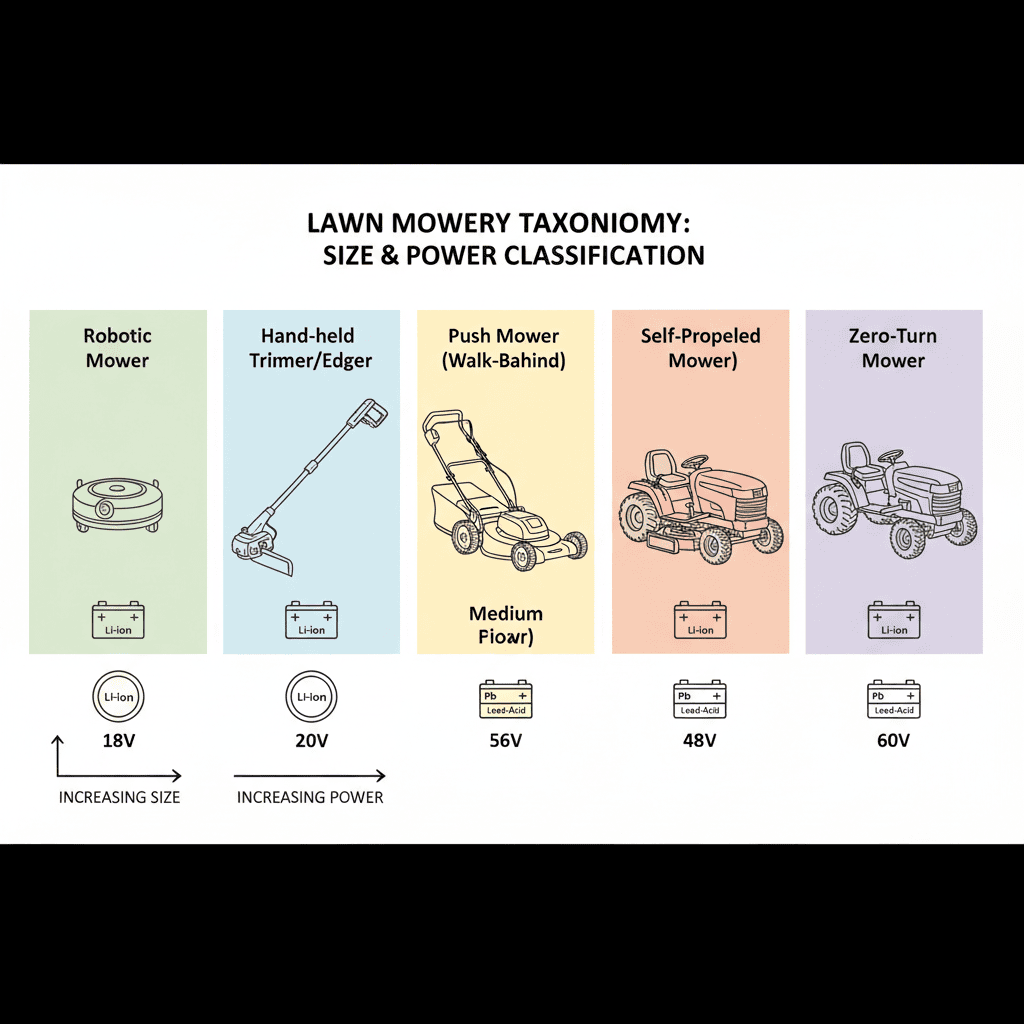
Lawn mower battery voltage varies significantly based on the mower category. Understanding these distinctions helps you identify compatible replacements and avoid costly purchasing mistakes.
| Mower Type | Typical Voltage | Battery Type | Common Brands |
|---|---|---|---|
| Push mowers (gas) | 12V | Lead-acid | Most manufacturers |
| Small riding mowers | 12V | Lead-acid | Craftsman, MTD, John Deere compact |
| Large riding mowers | 24V or 12V (dual) | Lead-acid | John Deere, Kubota, Cub Cadet |
| Zero-turn mowers | 24V or 48V | Lead-acid | Hustler, Toro, Exmark |
| Cordless push mowers | 20V, 40V, or 60V | Lithium-ion | DeWalt, Ryobi, Ego, Makita |
| Cordless riding mowers | 48V, 60V, or 80V | Lithium-ion | Ego, Ryobi, Craftsman |
12V Batteries in Traditional Gas Mowers
12V is the standard for most residential gas-powered lawn mowers. This voltage is used in push mowers and smaller riding mowers because it provides sufficient starting torque for single-cylinder and small multi-cylinder engines while remaining compact and affordable.
Why 12V is the residential standard
A 12V lead-acid battery delivers enough cranking amps to turn over a small gas engine reliably. Residential mowers typically have engines ranging from 5 to 15 horsepower, which require 200–500 cold cranking amps (CCA) at startup. A 12V battery also fits easily under the seat or in an engine compartment without adding significant weight or bulk.
What a 12V battery does in a gas mower
The 12V battery powers:
- The starter motor (cranks the engine to begin operation)
- The ignition system (provides electrical spark to ignite fuel)
- Lights and safety switches (on models equipped with them)
- The alternator or charging system (keeps the battery topped up while mowing)
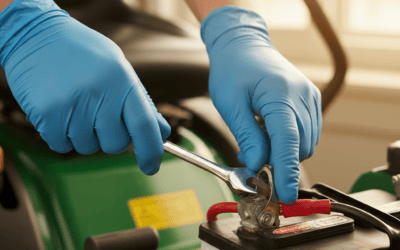
Replacing a 12V mower battery
When replacing a 12V mower battery, check both the voltage (must be 12V) and the cold cranking amps (CCA) rating on your old battery or in your owner’s manual. Using a 12V battery with insufficient CCA can result in weak starts or complete starting failure, especially in cold weather. Most residential mower batteries range from 200 to 400 CCA.
24V and 48V Systems in Commercial and Large Mowers
Higher voltage systems appear in larger riding mowers, zero-turn mowers, and professional-grade equipment. These systems provide greater electrical power and starting torque needed for engines exceeding 15 horsepower.
24V systems: Common in mid-size and professional mowers
24V batteries are typically found in:
- Full-size John Deere riding mowers
- Kubota lawn tractors
- Cub Cadet commercial-grade mowers
- Some zero-turn mowers
A 24V system uses two 12V batteries connected in series, or one dedicated 24V battery pack. This configuration doubles the available voltage, providing stronger electrical output for heavier-duty starting requirements and accessory power (hydraulics, blade engagement motors, etc.).
48V systems: Professional and high-end equipment
48V batteries appear in:
- Premium zero-turn mowers (Hustler, Toro Titan, Exmark)
- Commercial landscaping equipment
- Heavy-duty riding mowers with 20+ horsepower engines
A 48V system (four 12V batteries in series) delivers maximum electrical capacity for demanding starting conditions and power-hungry accessories like hydraulic blade lifts and sophisticated electrical control systems.
Can you upgrade voltage?
No—your mower’s electrical system is engineered for a specific voltage. Installing a higher-voltage battery will overload the alternator, damage the starter motor, and destroy lights and electronic controls. Always match the original battery voltage exactly.
Cordless Electric Mower Battery Voltages
Battery-powered mowers have become increasingly popular and operate on completely different voltage standards than gas mowers. Cordless mower voltages range from 20V for compact push mowers to 80V for premium riding models.
20V cordless mowers
20V lithium-ion batteries are used in lightweight, compact cordless push mowers designed for small residential lawns. Examples include budget DeWalt and Makita models. A 20V system is sufficient for mowing areas up to 0.25 acres and typically provides 30–60 minutes of runtime per charge, depending on battery capacity (measured in amp-hours, or Ah).
40V cordless mowers
40V is the most popular voltage for residential cordless mowers. Ryobi, Craftsman, and Greenworks all use 40V systems. A 40V mower handles yards up to 0.5 acres and offers 45–90 minutes of runtime. Many manufacturers in this category offer interchangeable batteries across their product lines, so you can use the same battery on multiple tools.
60V cordless mowers
60V lithium-ion systems power premium cordless push and riding mowers. Ego and high-end Ryobi models use 60V, which delivers more cutting power and longer runtimes (60–120+ minutes). This voltage class suits larger residential properties (0.5–1.5 acres) and is popular with users who want professional performance without gas maintenance.
80V and higher
80V systems are reserved for premium cordless riding mowers and are not interchangeable with lower-voltage cordless mower batteries. These represent the highest-performing consumer-grade battery-powered lawn equipment.
Lithium-ion vs. lead-acid: Key differences
Cordless mower batteries are lithium-ion, which are completely different from traditional lead-acid starter batteries:
- Lithium-ion: Lighter weight, longer lifespan (5–10 years), no maintenance, consistent power output, can be stored unused for months
- Lead-acid: Heavier, shorter lifespan (3–5 years), requires occasional maintenance and charging, power decreases as battery drains, needs regular use to prevent sulfation
How to Identify Your Mower’s Battery Voltage
If you’re unsure of your mower’s battery voltage, follow these steps:
Step 1: Check the battery label
Locate the battery (usually under the seat or near the engine on gas mowers). The voltage is clearly printed on the battery case or label. Look for markings like “12V,” “24V,” or “48V.” For cordless mowers, check the battery pack itself or the charger label.
Step 2: Consult the owner’s manual
Download your mower’s manual from the manufacturer’s website or search for it by model number. The manual lists battery specifications in the maintenance or parts section.
Step 3: Check the engine’s charging system
For gas mowers, the alternator output tells you the battery voltage. If you see markings like “12V alternator” or “24V charging system” on the engine, that confirms the voltage.
Step 4: Use a multimeter
If the battery label is worn or missing, a digital multimeter can measure voltage. Set the multimeter to DC voltage mode, touch the red lead to the positive terminal and black lead to the negative terminal. A healthy 12V battery reads approximately 12.6V when fully charged; a 24V reads ~25V; a 48V reads ~50V.
Choosing a Replacement Battery: Key Considerations
Voltage is only one factor when selecting a replacement lawn mower battery. Several other specifications determine compatibility and performance.
1. Voltage must match exactly
Always replace your battery with the same voltage. A 12V mower cannot use a 24V battery, and vice versa. Check your old battery or manual to confirm the exact voltage before purchasing.
2. Cold cranking amps (CCA) for lead-acid batteries
CCA measures the battery’s ability to start your engine in cold weather. Match or exceed the CCA rating of your original battery. Most residential mower batteries range from 200–400 CCA. If your manual specifies 300 CCA, choose a replacement rated for at least 300 CCA.
3. Amp-hour (Ah) capacity for cordless batteries
Amp-hours indicate how long a cordless battery will power your mower. Higher Ah ratings provide longer runtime. A 40V 5Ah battery lasts longer than a 40V 2.5Ah battery. Most residential users find 4Ah–6Ah sufficient for typical lawn sizes.
4. Battery type compatibility
For cordless mowers, batteries are often brand-specific. A Ryobi 40V battery works with all Ryobi 40V tools, but won’t work with DeWalt 40V or Makita 40V equipment due to different connector designs.
5. Warranty and build quality
OEM (original equipment manufacturer) batteries typically cost more but include full warranties. Aftermarket batteries are cheaper but may have shorter lifespans. Choose based on your budget and how long you plan to keep the mower.
Troubleshooting Battery Voltage Issues
If your mower isn’t starting or is starting slowly, a voltage problem may be the cause.
Weak battery voltage: Causes and solutions
Symptom: Slow cranking or clicking sounds when you try to start the mower.
- Cause: Battery is sulfated or discharged (most common in lead-acid batteries stored over winter)
- Solution: Charge the battery for 8–12 hours with a smart charger. If the battery won’t hold a charge, it needs replacement.
No electrical power at all
Symptom: No lights, no cranking, completely dead.
- Cause: Corrosion on terminals, loose connections, or completely dead battery
- Solution: Clean battery terminals with a wire brush and baking soda paste. Ensure cables are tight. Test voltage with a multimeter—if it reads 0V or severely low, replace the battery.
Alternator not charging
Symptom: Battery charges when you use an external charger, but dies again after mowing for 10–15 minutes.
- Cause: Faulty alternator (not the battery itself)
- Solution: Have the alternator tested at a small engine repair shop. The battery is fine; the charging system needs repair.
Frequently Asked Questions
Can I use a car battery in my lawn mower?
Only if the voltages match exactly (12V car battery in a 12V mower). However, car batteries are designed for different starting characteristics and may not fit in your mower’s battery compartment. Use a battery specifically rated for small engines to ensure compatibility and proper fit.
How long do lawn mower batteries last?
Lead-acid starter batteries typically last 3–5 years with proper maintenance. Lithium-ion cordless batteries last 5–10 years and degrade more slowly. Lifespan depends on how often you use the mower, whether you maintain the charging system, and how you store the mower off-season.
Is 12V or 24V better for a riding mower?
Neither is “better”—the correct choice depends on your mower’s engine size and manufacturer design. Most smaller residential riding mowers use 12V, while larger models and zero-turn mowers use 24V or 48V. Use whatever voltage your mower is designed for. Always check your manual or battery label.
Why do cordless mowers use different voltages than gas mowers?
Cordless mowers use lithium-ion technology, which operates on different electrical principles than lead-acid starter batteries. Lithium-ion systems are optimized for sustained power delivery (cutting grass for an hour) rather than brief high-current bursts (engine starting). The voltage standards (20V, 40V, 60V) are set by individual manufacturers based on their product line power requirements.