When to Stop Mowing Your Lawn: Quick Answer
Stop mowing your lawn when grass growth slows dramatically and soil temperature drops below 40°F (4°C), typically in late fall for cool-season grasses. This usually occurs in October to November in northern climates (USDA Zones 3–5), November to December in temperate zones (Zones 6–7), and December to January in warm climates (Zones 8–10). The exact timing depends on your local frost date and grass type—cool-season grasses dormant in fall, warm-season grasses dormant in winter.
Cool-Season vs. Warm-Season Grasses: Which Do You Have?
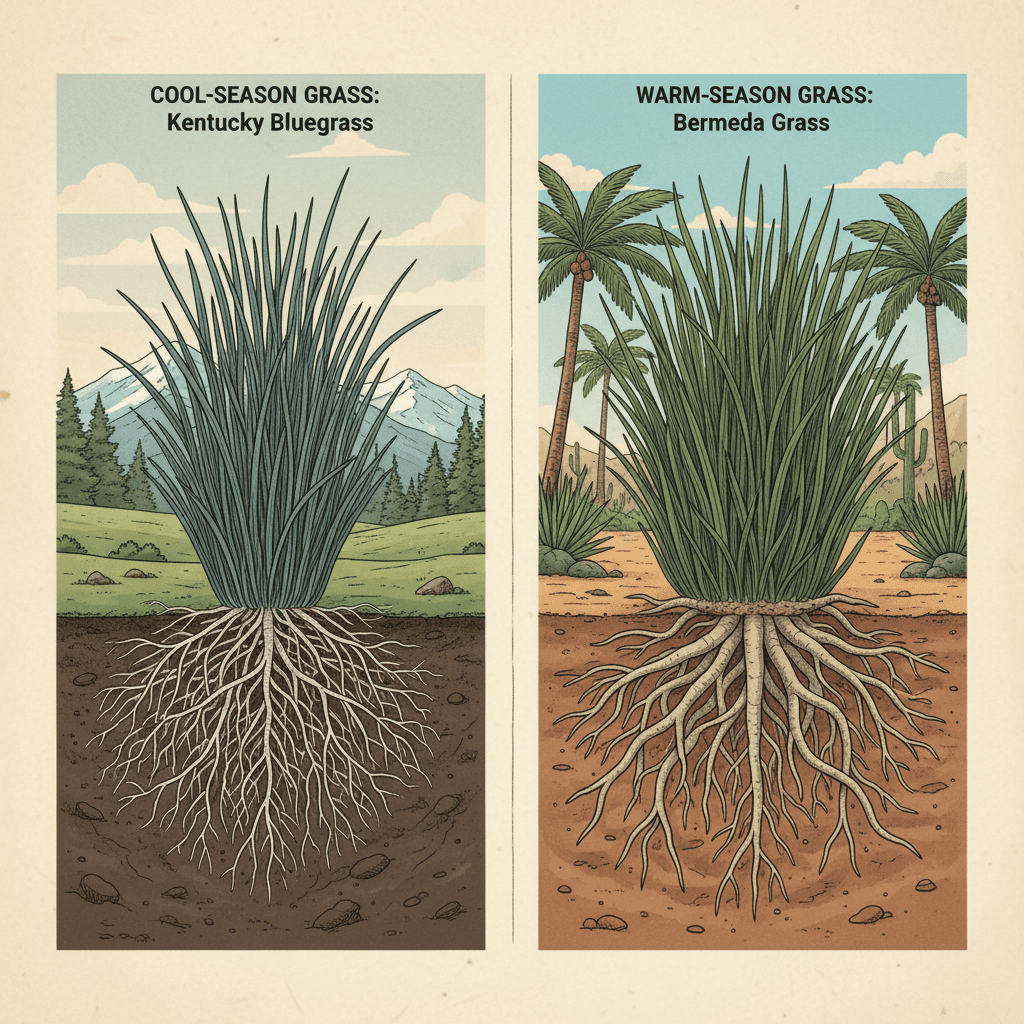
The timing for stopping lawn mowing depends entirely on which type of grass dominates your lawn. Cool-season and warm-season grasses have opposite growth cycles, so they require different mowing end dates.
Cool-season grasses (Kentucky bluegrass, fescue, perennial ryegrass) thrive in northern and temperate regions and grow actively in spring and fall. They slow growth significantly when temperatures drop below 50°F and enter dormancy when soil temperature falls below 40°F. These grasses are common in USDA Zones 3–7.
Warm-season grasses (Bermuda, zoysia, St. Augustine grass) thrive in southern climates and grow actively during hot summers. They slow growth when temperatures drop below 50°F and enter complete dormancy after the first hard frost in fall or early winter. These grasses dominate USDA Zones 8–10.
To identify your grass type, examine the blade structure: cool-season grasses have finer, narrower blades, while warm-season grasses have wider, coarser blades. You can also check your USDA hardiness zone at planthardiness.usda.gov and compare it to typical grass distributions for your region.
Key Signals That It’s Time to Stop Mowing
Rather than relying solely on a calendar date, watch for these observable physical signs that your grass has entered dormancy or is preparing to:
- Grass growth rate drops visibly: If you’re mowing every week but suddenly only see minimal new growth over two weeks, dormancy is near.
- Soil temperature falls below 40°F: This is the critical threshold for cool-season grass dormancy. You can measure soil temperature with an inexpensive soil thermometer placed 2 inches deep.
- Blades turn brown or tan: Cool-season grasses may discolor slightly as they enter dormancy; warm-season grasses will turn brown after the first hard frost.
- First hard frost arrives: A hard frost (temperatures at or below 28°F) signals that cool-season grasses are fully dormant and warm-season grasses are ending their growing season.
- Grass height stops changing noticeably: If the lawn looks the same for 10–14 days despite previous weekly growth, mowing is unnecessary.
Mowing Schedule by Region and USDA Zone
Use this regional guide to determine when to stop mowing for your climate:
| Climate Zone | USDA Zones | Regions | Stop Mowing Timeline | Key Trigger |
|---|---|---|---|---|
| Cold/Northern | 3–5 | Minnesota, Wisconsin, Michigan, New England | Mid-October to early November | Soil temp drops below 40°F; first frost typically mid-September to early October |
| Temperate | 6–7 | Pennsylvania, Ohio, Missouri, Upper South | Late October to mid-November | Soil temp approaches 40°F; first frost typically late October |
| Warm/Mild | 8–9 | Georgia, North Carolina, Texas, Arizona | Late November to mid-December | Warm-season grass enters dormancy after first hard frost (late October–November) |
| Subtropical/Tropical | 10+ | Florida, Southern California, Hawaii | December to January, or not at all | Cool-season overseeding dormancy or minimal winter dormancy |
These dates assume a typical seasonal pattern. Verify your exact first frost date at almanac.com/gardening/frostdates by entering your ZIP code.
Why Timing Matters: The Impact of Mowing Too Late or Too Early
Stopping at the wrong time can damage your lawn’s health and appearance heading into spring.
Mowing Too Late (After Hard Frost)
Continuing to mow after the first hard frost stresses dormant grass. Once grass enters dormancy, its cell structure hardens to survive freezing temperatures. Mowing cuts those hardened blades, exposing tender tissue to frost injury, winter disease (snow mold, gray leaf spot), and moisture loss. Late mowing can also leave matted, damaged patches that recover slowly in spring.
Stopping Too Early (Before Growth Truly Slows)
If you stop mowing while grass is still actively growing, the lawn may look unmowed and unkempt through fall. Tall grass can mat down under wet leaves or snow, creating a favorable environment for fungal diseases over winter. However, this risk is minor compared to mowing too late.
Optimal Outcome
Mowing at the right time—when growth has slowed but before the first hard frost—removes the last flush of growth, leaves the lawn neat through winter, and reduces disease risk. It also eliminates the need to mulch fallen leaves or rake obsessively.
Final Fall Mowing: Should You Do a Last Mow Before Winter?
Yes, a final fall mow is recommended if grass is still growing, but timing and height are critical.
When to Do the Final Mow
Schedule your last mow for 1–2 weeks before your region’s typical first hard frost date, when soil temperature is still above 40°F and grass is still growing but slowing noticeably. This typically falls in mid-to-late October for northern regions and early-to-mid November for temperate zones.
Ideal Grass Height for Winter
Mow to a height of 2.5–3.5 inches for cool-season grasses and 1–2 inches for warm-season grasses. This height provides some leaf surface for photosynthesis during mild winter days while remaining short enough to prevent matting under snow or wet leaves. Grass that enters dormancy at this height recovers faster in spring.
Avoid These Mistakes
- Do not cut below 2 inches on cool-season grass; this weakens root systems and increases winter stress.
- Do not leave grass taller than 4 inches; it will mat and create disease conditions.
- Do not mow wet grass in late fall; wet clippings clump and mat, increasing disease risk.
Frequently Asked Questions
Q: What if I miss the frost date and my grass is still growing?
If an unexpected warm spell keeps grass growing past your expected frost date, continue mowing if growth is visible and soil temperature is still above 40°F. Stop immediately when the first hard frost arrives, even if the lawn looks longer than ideal. Never mow dormant, frost-damaged grass.
Q: Should I bag or mulch my final fall mowing?
Mulch the clippings (leave them on the lawn) if the cut is clean and clippings are fine. Bagging is only necessary if clippings are clumpy or if you have heavy thatch. Mulched clippings provide organic matter as grass enters dormancy. Do not bag unless absolutely necessary.
Q: Do I need to stop mowing if I overseed my lawn in fall?
Yes, absolutely. Stop mowing 2–3 weeks before overseeding to allow existing turf to slow growth. After overseeding, do not mow new seedlings until they have been mowed twice and are fully established (typically 6–8 weeks). Premature mowing stresses young grass.
Q: What if I live in a warm climate where grass doesn’t go fully dormant?
In warm climates (Zones 9–10), cool-season grasses may grow year-round or slow dramatically rather than enter true dormancy. Reduce mowing frequency to every 3–4 weeks during winter months when growth is minimal. Stop only if grass genuinely stops growing; otherwise, continue at reduced frequency to maintain appearance and prevent thatch.
Summary: Your Lawn Mowing Stop Date
Stop mowing when soil temperature drops below 40°F and grass growth visibly slows, typically October–November in northern climates, November–December in temperate zones, and December–January in warm climates. Plan one final mow at 2.5–3.5 inches height 1–2 weeks before your region’s first hard frost date. This timing protects dormant grass from frost stress and disease while leaving your lawn neat through winter. Monitor local frost dates and soil temperature rather than relying on a fixed calendar date for the most accurate timing in your specific region.