When to Stop Mowing: The Direct Answer
Stop mowing cool-season grasses 4-6 weeks before your region’s first frost date. For warm-season grasses, stop during peak summer dormancy (typically June-August depending on location). The exact timing depends on your grass type, local climate, and whether grass is still actively growing.
Understanding Your Grass Type: Cool-Season vs. Warm-Season
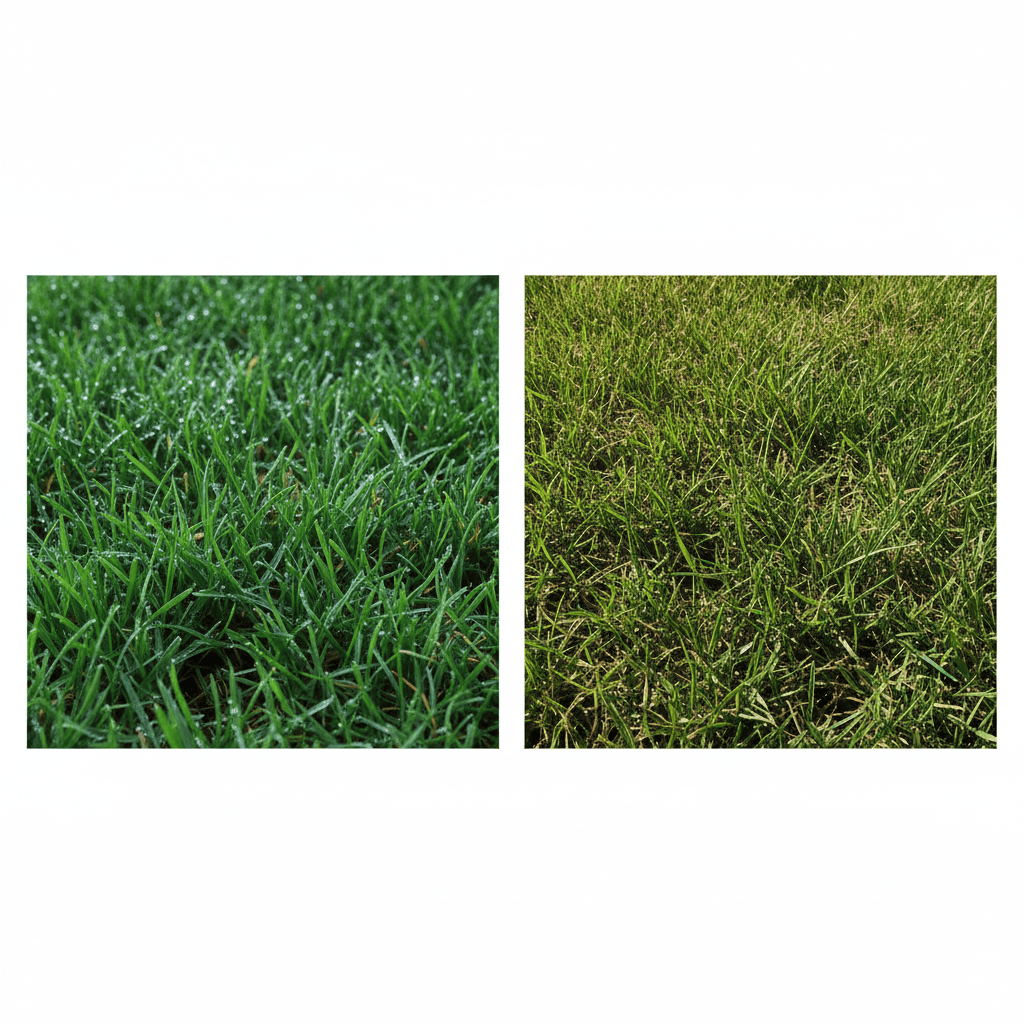
The timing for your final mow depends entirely on whether you have cool-season or warm-season grass. These two categories have opposite growth patterns, which means the “right time to stop mowing” varies significantly by region.
Cool-season grasses (Kentucky bluegrass, perennial ryegrass, fescue) grow most vigorously in spring and fall when temperatures are mild. They slow dramatically during summer heat and winter cold. If you live in the northern United States, northern Europe, or other cool climates, you likely have cool-season grass.
Warm-season grasses (Bermuda, Zoysia, St. Augustine, Buffalo grass) thrive in hot weather and grow fastest in late spring through early fall. They enter dormancy during winter, turning brown and going completely inactive. Warm-season grasses dominate the southern United States and tropical regions.
Identifying your grass type is the first step to determining when to stop mowing. Check your lawn’s growth pattern: Does it grow most in spring/fall (cool-season) or summer (warm-season)? If unsure, contact your local cooperative extension office—they maintain regional grass identification resources.
The Last Mow Rule: Using First Frost Date
For cool-season grass regions, the most reliable decision framework is the 4-6 week before first frost rule. Your region’s first frost date marks the point when temperatures reliably drop below 32°F (0°C) and grass stops growing entirely.
Here’s why this timing matters: Mowing grass as it enters dormancy weakens it. Short grass is more vulnerable to winter desiccation (drying out), frost heave (soil expanding and contracting), and winter damage. Additionally, mowing stimulates minor growth, which is counterproductive when the grass needs to harden off and conserve energy for winter survival.
To find your first frost date, search online for “first frost date [your city]” or visit the USDA Plant Hardiness Zone Map. Most regions have reliable historical data. Once you know the date, count back 4-6 weeks to determine your target final mow date.
Example: If your first frost date is October 15, your final mow should occur between August 26 and September 17. This window gives grass time to recover from the mowing and establish a protective dormancy period before hard freezes arrive.
Signs That Grass Growth Is Slowing
Beyond calendar dates, watch your lawn’s actual growth rate as a mowing indicator. As fall approaches in cool-season regions, you’ll notice grass needs cutting less frequently. Instead of needing a mow every 7-10 days, you might go 2-3 weeks between cuts.
When mowing intervals stretch to 3+ weeks and grass appears to be growing minimally, growth has slowed enough to stop mowing. At this point, the risks of mowing—stress, injury, and stimulated growth—outweigh the benefits of maintaining appearance.
Additional signs of slowing growth include:
- Grass blades appear less vibrant, with a duller green color
- Mowing produces noticeably less clippings than earlier in the season
- Leaf tips show browning or discoloration even after mowing
- Weeds appear to dominate recently mowed areas rather than grass recovering quickly
These visual cues often arrive before the calendar suggests stopping. If you observe these signs, trust them—your lawn is telling you it’s time to cease mowing.
Cool-Season Grass Regions: Fall and Winter Mowing
If you live in a cool-season grass region (northern U.S., Canada, northern Europe), fall is actually the prime growing season for your lawn. This creates a common misconception: many homeowners assume they should stop mowing earlier because the grass “looks dormant.” The opposite is true.
Cool-season grasses experience a growth surge in September and early October as temperatures cool and moisture increases. This is an excellent time to mow—in fact, it’s one of the best times for lawn maintenance. Continue regular mowing through early fall, maintaining your standard cutting height.
As you approach your first frost date (typically mid-October through November in most northern regions), reduce mowing frequency and prepare for the final cut. Your last mow should leave grass at a height of 2.5 to 3.5 inches depending on your specific grass type—slightly taller than your regular summer cutting height.
Why longer grass before winter? Taller grass provides better insulation to the soil and protects the crown (growing point) of the plant from freeze-thaw damage. It also provides surface area for light interception come spring, jumpstarting growth when temperatures warm.
After the final mow: Stop mowing entirely. Do not resume mowing until spring growth accelerates (typically late March or April). Winter mowing damage is severe and unnecessary—the lawn simply won’t grow enough to warrant cutting.
Warm-Season Grass Regions: Summer Dormancy and Spring Resume
Warm-season grass owners face a different challenge: their grass essentially stops growing during the hottest parts of summer, not winter. In regions with warm-season grass (southern U.S., Australia, tropical areas), mowing cessation occurs during heat-induced dormancy, not cold dormancy.
Warm-season grasses stop actively growing when temperatures consistently exceed 90-95°F (32-35°C) and drought stress increases. During this period, continuing to mow can severely damage the lawn. Mowing stressed, dormant grass removes green tissue when the plant cannot recover, leading to thinning, bare patches, and disease vulnerability.
In warm-season regions, follow this pattern:
- Spring (March-May): Mow regularly as grass greens up and grows actively
- Early summer (June): Reduce mowing frequency as heat increases
- Peak summer (July-September): Stop mowing entirely; grass is dormant and heat-stressed
- Fall (September-October): Resume light mowing as temperatures cool and grass begins growing again
- Winter (November-February): Minimal or no mowing; grass is completely dormant
The key difference: warm-season grass owners get a mowing break during summer, while cool-season owners get one during winter. Respect this natural rhythm to avoid lawn damage and disease.
Pre-Dormancy Lawn Preparation
Your final mow isn’t just about cutting grass—it’s part of a broader dormancy preparation strategy. Beyond setting the right height, consider these practices:
Timing of the final mow: Make your last cut 1-2 weeks before your first expected hard freeze. This allows the grass to recover from mowing stress while still having energy reserves to build cold tolerance.
Mower maintenance: Use a sharp mower blade for your final cut. Dull blades tear grass tissue, leaving ragged edges that are more susceptible to winter disease and stress. A clean cut heals faster and reduces vulnerability.
Clipping removal: After the final mow, remove clippings rather than leaving them on the lawn. Excess thatch (dead plant material) can harbor winter diseases and prevent spring growth. A single layer of clippings is fine, but heavy accumulation causes problems.
Post-mow care: After your final mow, consider a fall fertilization. Cool-season grasses benefit from an application of slow-release nitrogen in late fall, which supports root growth and spring green-up. Avoid aggressive feeding, which stimulates tender new growth.
Climate-Based Decision Framework
To determine your specific mowing stop date, follow this step-by-step process:
Step 1: Identify your grass type. Research whether you have cool-season or warm-season grass based on your location and lawn’s growth patterns.
Step 2: Find your first frost date (cool-season) or peak summer temps (warm-season). Use online tools or contact your local extension office.
Step 3: For cool-season grasses, count back 4-6 weeks from first frost. For warm-season grasses, plan to stop mowing when daily temps consistently exceed 90°F.
Step 4: Monitor actual lawn growth. Don’t rely solely on the calendar. If grass is still growing vigorously past your target date, continue mowing. If growth has clearly stopped before your target date, cease mowing early.
Step 5: Adjust year-to-year. Weather varies annually. A warmer fall might delay your first frost date; an early cold snap might accelerate it. Adjust timing based on actual conditions, not fixed dates.
This flexible framework accounts for regional variation, year-to-year weather differences, and individual lawn conditions while providing a reliable starting point for decision-making.
Frequently Asked Questions
What happens if I keep mowing dormant grass?
Mowing dormant or severely stressed grass removes living tissue when the plant cannot recover or grow back. This creates bare patches, thins the lawn, and reduces the grass’s ability to survive winter or summer stress. Dormant grass has no energy reserves to heal mowing wounds, so you essentially weaken the plant right when it needs all its resources for survival. Spring recovery is significantly delayed, and disease vulnerability increases.
Can I mow if there’s light snow on the lawn?
Avoid mowing when snow covers the lawn. Snow-covered mowing compacts snow into ice, suffocates grass underneath, and damages the mower. Additionally, the grass is dormant and cannot recover from the mowing. Wait until snow melts and spring growth clearly resumes before resuming mowing.
Should I leave grass clippings on the lawn after the final mow?
It depends on clipping volume. A thin layer (under 0.5 inches) of fine clippings can be left—they decompose and return nutrients. However, heavy clipping accumulation after the final mow should be removed to prevent thatch buildup and winter disease. Use a rake or bag attachment to collect excess clippings after your last cut.
What if my region has unpredictable weather or multiple freeze-thaw cycles?
In regions with erratic fall or spring weather, use the “growth rate” method rather than strict dates. Stop mowing when grass clearly slows to minimal growth (2-3 week intervals between cuts). This approach is more reliable than fixed dates because it responds to your lawn’s actual physiology rather than weather predictions that may not materialize.