Which Lawn Mower Is Good? The Direct Answer
The ‘good’ lawn mower depends entirely on your situation. Push mowers are ideal for small, flat lawns under ¼ acre with limited budgets. Self-propelled mowers work best for medium lawns (¼ to ½ acre) and slight slopes, reducing physical effort. Riding mowers are necessary for large properties over ½ acre. Robotic mowers offer convenience for medium, well-maintained lawns but require significant upfront investment. Your choice should be guided by lawn size, terrain type, budget, and your willingness to perform maintenance.
What Makes a Lawn Mower ‘Good’?
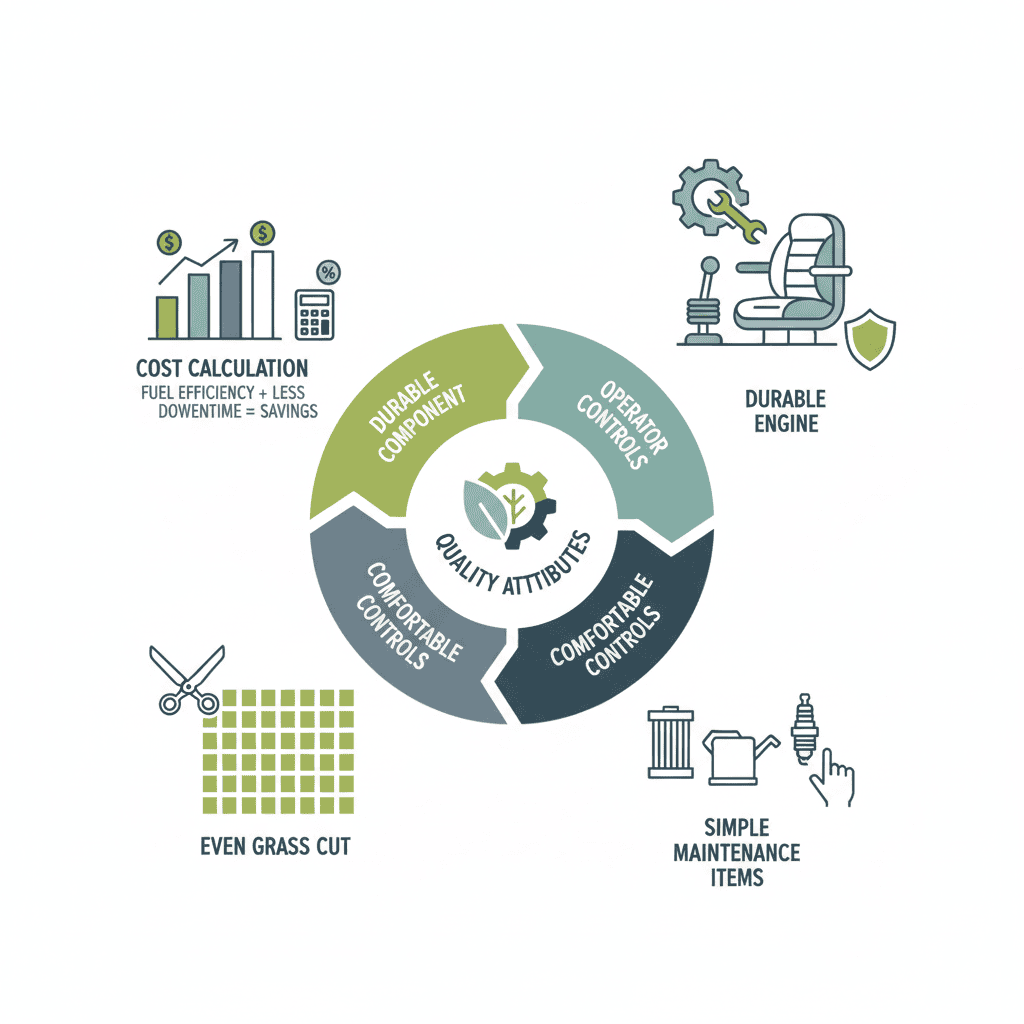
Quality in a lawn mower extends beyond brand recognition and initial price. A good mower balances several factors:
- Durability: Engine reliability, deck construction, and component lifespan determine long-term value. Gas mowers typically last 10–15 years with proper maintenance; battery-powered mowers last 5–10 years depending on battery lifespan.
- Ease of use: Comfort during operation, intuitive controls, and minimal physical strain matter greatly for regular use.
- Maintenance requirements: Simpler maintenance schedules and lower repair costs reduce frustration and expense over the mower’s life.
- Cutting quality: Even, clean cuts promote healthy grass growth and reduce disease risk.
- Cost of ownership: Factor in fuel or electricity costs, annual maintenance, repairs, and eventual replacement—not just the purchase price.
Decision Framework: How to Identify Your Lawn Mower Needs
Before comparing specific mower types, answer these questions about your situation:
- What is your lawn size? Measure in acres or square feet. Small lawns are under 5,000 sq ft (¼ acre); medium lawns are 5,000–20,000 sq ft (½ acre); large lawns exceed 20,000 sq ft.
- What is your terrain type? Flat lawns are easier to maintain with any mower. Sloped terrain (over 10–15 degrees) challenges push mowers and may require self-propelled or riding equipment.
- What is your budget? Push mowers range $150–$400; self-propelled mowers, $400–$900; riding mowers, $1,500–$5,000+; robotic mowers, $800–$3,000+.
- How much physical effort are you willing to exert? Push mowers demand significant effort; self-propelled mowers reduce strain; riding mowers eliminate it.
- What power source do you prefer? Gas mowers offer power and run time but require fuel and produce emissions. Electric corded mowers suit lawns near outlets. Battery-powered mowers provide convenience and low maintenance but have limited run time and higher upfront costs.
Push Mowers: Best for Small Lawns
Use case: Small, flat residential lawns under ¼ acre with tight budgets and minimal storage space.
How they work: You provide all propulsion power by pushing the mower forward. The engine drives only the cutting blade. Manual models have no engine and rely entirely on human effort.
Advantages:
- Most affordable option ($150–$400 for gas; $100–$300 for electric)
- Low maintenance; fewer moving parts mean fewer repair points
- Lightweight and easy to store in sheds or garages
- Quiet operation, especially electric models
- No emissions with electric or manual versions
Disadvantages:
- Physically demanding; not suitable for users with mobility issues or large lawns
- Poor performance on slopes or uneven terrain
- Slower mowing speed increases time spent on lawn care
- Limited cutting width (typically 18–22 inches) means more passes on medium lawns
Best for: Apartment dwellers, small residential lots, budget-conscious homeowners, or those seeking exercise while mowing.
Self-Propelled Mowers: Medium Lawns with Less Effort
Use case: Medium lawns (¼ to ½ acre) with slight slopes or uneven terrain where push mowers become exhausting.
How they work: The engine powers both the blade and the drive wheels, propelling the mower forward without requiring you to push. You control speed and direction using a lever or bail handle.
Advantages:
- Significantly reduces physical strain and fatigue
- Handles slopes and uneven ground better than push mowers
- Moderate price point ($400–$900 for gas; $600–$1,500 for battery-powered)
- Faster mowing due to consistent, controlled speed
- Wider cutting decks (20–24 inches) reduce mowing time
- Battery-powered versions are low-maintenance and quiet
Disadvantages:
- More expensive than push mowers
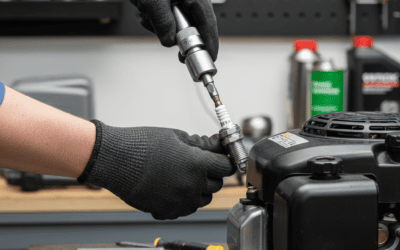
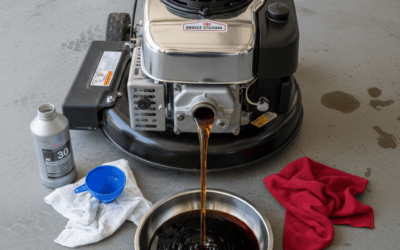
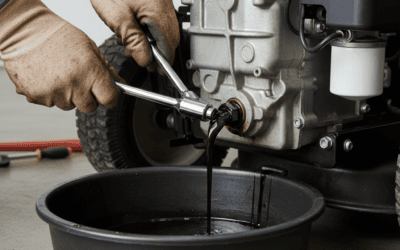
- Requires routine maintenance: oil changes, spark plug replacement, air filter cleaning
- Gas models produce emissions and noise
- Battery-powered models have 30–60 minute run times; may require a second battery for larger lawns
- Takes up more storage space than push mowers
Best for: Homeowners with medium lawns, those who want comfort without the cost of a riding mower, or users dealing with minor slopes.
Riding Mowers: Large Properties and Comfort
Use case: Large residential properties over ½ acre where standing and pushing becomes impractical.
How they work: You sit on an engine-powered seat and steer like a vehicle, controlling blade engagement with a lever or pedal. Most have hydrostatic or gear-driven transmissions for smooth speed control.
Advantages:
- Dramatically reduces time on large lawns; 1-acre lawns take 1–2 hours versus 4–6 hours with push mowers
- Comfortable operation; seated position eliminates fatigue
- Excellent for slopes and rough terrain
- Wide cutting decks (42–54 inches) minimize passes needed
- Can handle thick, dense grass and tall weeds
Disadvantages:
- High cost ($1,500–$5,000+ for residential models; $5,000–$15,000+ for zero-turn models)
- Requires significant storage space (garage or shed)
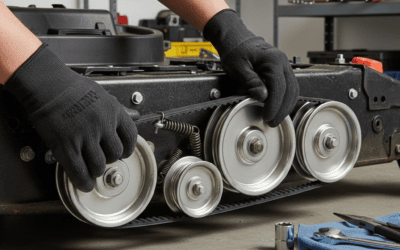
- Substantial maintenance: oil changes, belt replacement, deck cleaning, seasonal preparation
- Gas consumption is notable; expect 2–4 hours per gallon depending on terrain
- Safety concerns if operated on steep slopes
- Steeper learning curve for first-time operators
Best for: Owners of properties over ½ acre, older or mobility-limited users, landscapers, or those prioritizing speed and comfort.
Robotic Mowers: Convenience and Automation
Use case: Medium, well-maintained lawns (¼ to ½ acre) where automation justifies higher upfront costs.
How they work: Battery-powered robots navigate your lawn autonomously on a programmed schedule, mulching clippings in place. Most use boundary wires to define mowing zones and GPS or sensor technology to optimize coverage.
Advantages:
- Fully automated; mow while you’re away or sleeping
- No physical effort required from the user
- Mulches clippings, adding nitrogen back to soil (reduces fertilizer needs)
- Quiet operation; many run early morning or evening without disturbing neighbors
- Low maintenance; no oil, spark plugs, or seasonal prep
- Reduces carbon emissions versus gas mowers
Disadvantages:
- High upfront cost ($800–$3,000+) with long payback periods
- Requires boundary wire installation and clear perimeter (no garden beds or obstacles in mowing path)
- Cannot handle steep slopes (typically limited to 25–35 degree slopes)
- Ineffective on complex lawn shapes with multiple obstacles
- Vulnerable to theft or damage if left unsecured
- Weather-dependent; stops during rain and wet conditions
- Slower cutting speed means daily operation is necessary, not weekly
- Limited by battery range; very large lawns may not be fully covered
Best for: Tech-savvy homeowners with simple, flat to gently sloped lawns, busy professionals seeking convenience, or environmentally conscious users.
Key Factors to Compare Across Mower Types
| Factor | Push Mower | Self-Propelled | Riding Mower | Robotic Mower |
|---|---|---|---|---|
| Cutting Width | 18–22 inches | 20–24 inches | 42–54 inches | 20–28 inches |
| Ideal Lawn Size | Under ¼ acre | ¼ to ½ acre | Over ½ acre | ¼ to ½ acre |
| Price Range | $150–$400 | $400–$900 | $1,500–$5,000+ | $800–$3,000+ |
| Noise Level | Low (electric) / High (gas) | Moderate (gas) / Low (battery) | High (gas) | Very low (whisper-quiet) |
| Maintenance | Minimal | Moderate | Significant | Minimal |
| Slope Capability | Poor (flat only) | Fair (up to 15°) | Good (up to 25°) | Limited (up to 35°) |
| Physical Effort | Very High | Low to Moderate | None | None |
| Annual Fuel Cost | $50–$100 | $100–$200 | $300–$600 | $10–$20 (electricity) |
Choosing Based on Lawn Size
Lawns Under ¼ Acre (under 10,900 sq ft): A push mower is usually sufficient and economical. If terrain is uneven or you prefer comfort, a self-propelled mower is the next step up.
Lawns ¼ to ½ Acre (10,900–21,800 sq ft): Self-propelled mowers are ideal. They balance cost, effort, and mowing time. Robotic mowers work here if your lawn is flat and simple. Riding mowers are overkill for most users in this range.
Lawns Over ½ Acre (over 21,800 sq ft): A riding mower or zero-turn mower is practically necessary. Pushing or self-propelling a mower over such an area becomes unreasonable in time and effort.
Terrain and Slope: Impact on Mower Selection
Flat lawns: All mower types perform adequately. Your choice should prioritize budget and lawn size.
Slight slopes (under 10 degrees): Self-propelled mowers handle these comfortably. Push mowers become tiring; avoid them for regular use on sloped terrain.
Moderate slopes (10–25 degrees): Riding mowers are appropriate. Some self-propelled mowers perform adequately, but operator safety becomes a concern. Never use push mowers.
Steep slopes (over 25 degrees): Riding mowers and zero-turn mowers are required. Robotic mowers are ineffective. Consider hiring professional lawn care on extremely steep terrain to prevent accidents.
Uneven terrain with ruts or soft ground: Wider tires and heavier frames distribute weight better. Riding mowers and robust self-propelled mowers are superior to push mowers. Robotic mowers struggle with deep ruts.
Budget Considerations and Cost of Ownership
Purchase price is only part of the equation. Calculate total cost of ownership over the mower’s expected lifespan:
Push Mower Example: $300 initial cost + $50/year maintenance × 10 years = $800 total.
Self-Propelled Gas Mower Example: $700 initial + $150/year (fuel, oil, spark plug, air filter, repairs) × 12 years = $2,500 total.
Riding Mower Example: $3,000 initial + $400/year (fuel, maintenance, repairs) × 15 years = $9,000 total.
Robotic Mower Example: $1,500 initial + $50/year (battery replacement every 3–4 years, charging) × 10 years = $2,000 total.
Electric vs. Gas: Battery-powered mowers have lower fuel and maintenance costs but higher upfront prices. Gas mowers have lower initial costs but higher operating expenses. Break-even typically occurs after 2–3 years of regular use.
Frequently Asked Questions
What lawn mower requires the least maintenance?
Robotic mowers and battery-powered self-propelled mowers require the least maintenance. Both eliminate oil changes, spark plug replacement, and seasonal engine prep. Electric corded push mowers are also extremely low-maintenance. Gas-powered mowers require annual maintenance: oil changes, air filter cleaning, spark plug replacement, and seasonal carburetor service.
How often should a lawn mower be serviced?
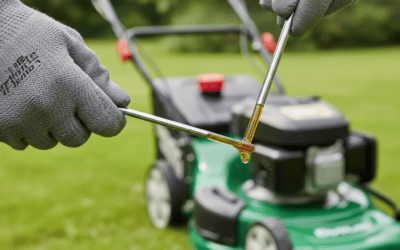
Gas mowers should be serviced annually, preferably before the mowing season begins. Check oil before every use, clean or replace air filters every 100 hours of operation, and replace spark plugs every 100–200 hours or annually. Battery-powered mowers need battery checks and charging system inspection annually. Push mowers and robotic mowers require minimal servicing beyond cleaning.
Can I use a push mower on slopes?
Push mowers are not recommended for slopes over 5 degrees. On steeper terrain, you lose footing control, operator safety is compromised, and the mower performs poorly because the deck tilts, causing uneven cuts. Self-propelled or riding mowers are appropriate for slopes.
Is a robotic mower worth the investment?
Robotic mowers are worth it if you have a flat, simple lawn (¼ to ½ acre) and value automation over cost. They pay for themselves in time saved, reduced fuel costs, and eliminated physical effort over 5–7 years. They are not worth it for complex lawns with obstacles, steep slopes, or large properties, where they perform poorly and cannot justify the expense.