Quick Answer
To start a lawn mower, first perform pre-start safety checks: verify fuel and oil levels, engage the parking brake, and inspect the spark plug. Then set the choke to cold start, prime the engine if needed, and either turn the ignition key (riding mowers) or pull the starter cord (push mowers). Electric mowers require a charged battery and a simple power button press. Exact procedures vary by mower type and manufacturer.
Pre-Start Safety Checks
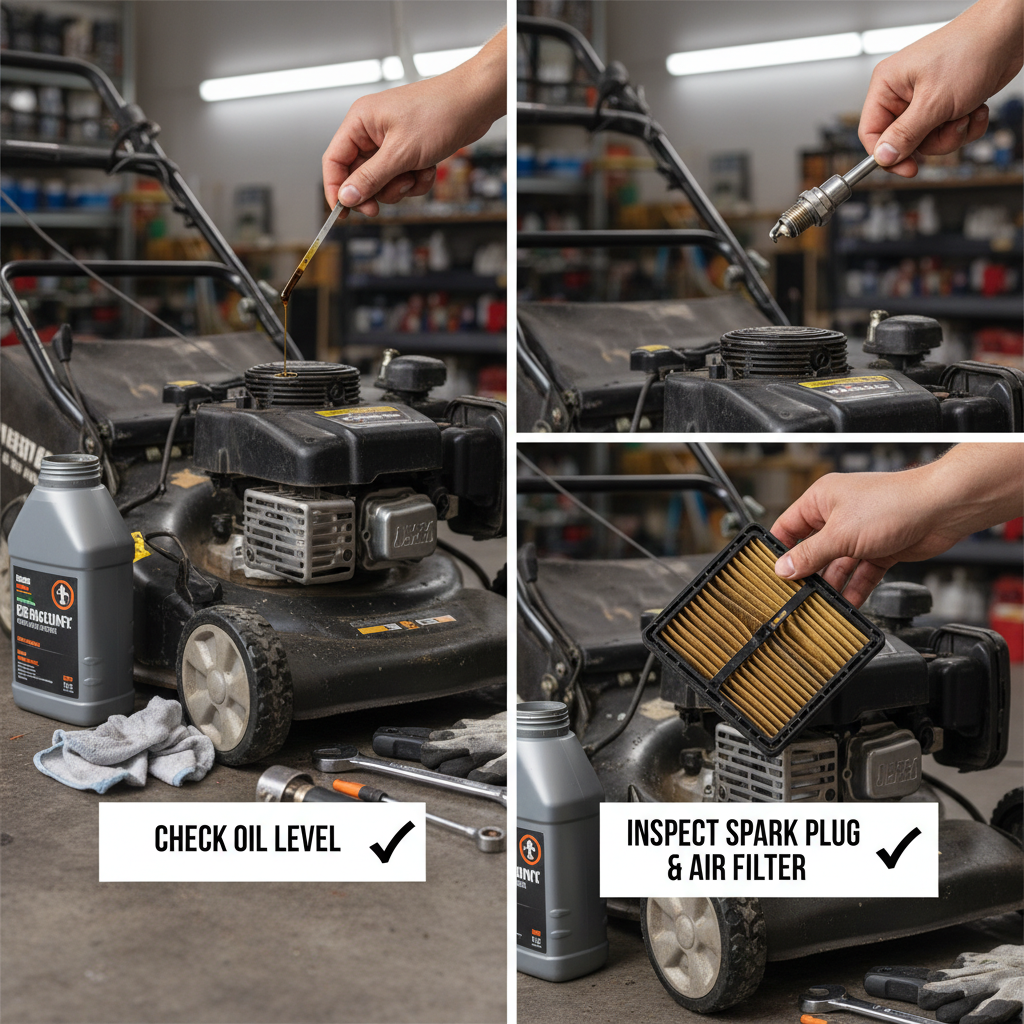
Before attempting to start your mower, establish safe operating conditions by completing these essential inspections:
- Check fuel level: Ensure the tank contains fresh gasoline. Old fuel can gum up the carburetor and prevent starting. For seasonal storage longer than 30 days, drain the tank or add fuel stabilizer.
- Verify oil level: Use the dipstick to confirm oil is at the recommended level. Low oil can damage the engine and prevent it from turning over.
- Inspect the spark plug: A fouled or damaged spark plug is a common cause of starting failure. Remove the plug wire, unscrew the plug, and check for black deposits or gaps. Replace if necessary.
- Examine the air filter: A clogged air filter restricts airflow and makes ignition difficult. Replace a dirty filter before attempting to start.
- Engage the parking brake: This prevents accidental movement and is required on most models for the engine to turn over.
- Clear the cutting deck: Remove grass, sticks, and debris to prevent jamming during startup.
Starting a Gas Push Mower
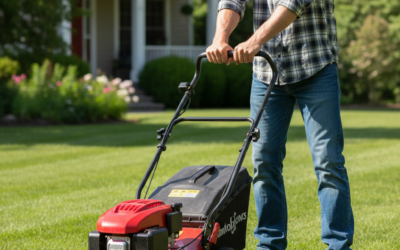
Manual-start and key-start gas push mowers follow similar ignition sequences, though the method of starting differs.
For Manual-Start (Recoil) Mowers:
- Set the choke to cold start: On a cold engine, move the choke lever fully to the “choke” or “closed” position. This restricts air intake and enriches the fuel mixture for easier ignition. On a warm engine, set it to half-choke or open position.
- Prime the engine (if applicable): Some mowers have a primer bulb (a small rubber button on the carburetor). Press it 3–5 times to push fresh fuel into the cylinder. If your mower lacks a primer, skip this step.
- Set throttle to fast: Move the throttle lever to the “fast” or “full” position to ensure adequate fuel flow during startup.
- Position yourself firmly: Stand with feet wide apart, one foot on the deck for stability, ensuring you won’t lose balance when pulling the cord.
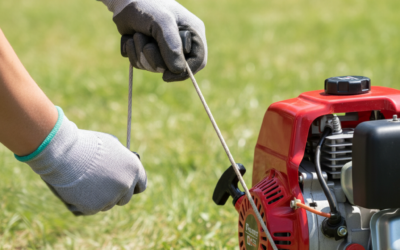
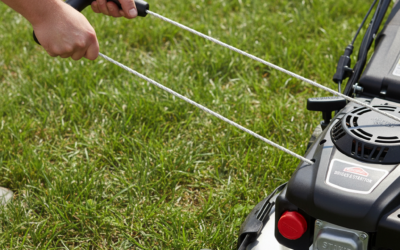
- Pull the starter cord: Grip the handle, pull sharply and smoothly in one continuous motion. Do not jerk or yank. Release and allow the cord to rewind automatically. The engine should turn over within 2–3 pulls on a well-maintained mower.
- Move choke to run position: Once the engine catches, gradually move the choke lever toward “open” or “run” as the engine warms. Adjust to full open once idling smoothly.
For Key-Start Gas Push Mowers:
- Set choke and throttle: Engage the parking brake, set choke to cold, and throttle to fast.
- Turn the ignition key: Insert the key and turn it to the “start” position. Hold for 3–5 seconds until the engine fires. Release immediately once it starts.
- Warm the engine: Allow it to idle for 30 seconds to 1 minute, then gradually adjust the choke to the run position.
Starting a Riding Mower
Riding mowers are designed for seated operation and have safety interlocks that prevent starting unless conditions are met.
- Mount the seat and engage parking brake: Sit fully on the seat. The engine will not start unless the parking brake is engaged or the seat switch detects you are seated. Some models also require the blade engagement lever to be in the “off” position.
- Set choke for engine temperature: Move the choke lever to cold start if the engine is cold, or to run if warm.
- Set throttle to fast: Place the throttle control in the “fast” or “high” position.
- Turn ignition key: Insert the key into the ignition switch and turn it to “start.” Hold until the engine catches, typically 2–4 seconds. Release immediately.
- Allow warm-up: Let the engine idle for 30 seconds to 1 minute. Gradually move the choke to the run position if needed.
- Prepare to engage the deck: Once idling smoothly, you can engage the blade-control lever to begin cutting.
Starting an Electric Mower
Electric mowers—whether cordless (battery-powered) or corded—eliminate the need for fuel and choke adjustments, making startup simpler and faster.
For Cordless (Battery) Mowers:
- Check battery charge: Verify that the battery is fully or adequately charged. Most models display battery level on the handle or via LED indicators. A low battery prevents the motor from starting.
- Engage parking brake or safety switch: Ensure the parking brake is set or the safety lever is in the correct position (varies by model).
- Insert battery (if removable): Slide the battery into the battery bay until it clicks into place.
- Press the power button: Press and hold the power button for 1–2 seconds. The motor should start immediately. Some models have a two-button safety sequence: press one button, then the start button.
- Release and begin mowing: Once the blade is spinning, you’re ready to mow. No warm-up period is needed.
For Corded Electric Mowers:
- Connect to outdoor outlet: Plug the power cord into a grounded, outdoor-rated outlet. Use a GFCI-protected outlet for safety.
- Verify cord routing: Ensure the cord is positioned behind the mower and away from the blade path.
- Press the power button: Press the start button; the motor should engage immediately.
- Monitor cord distance: Keep the cord clear as you mow to avoid cutting it or tangling it in the blade.
Troubleshooting Common Starting Problems
Engine Won’t Turn Over
- Check spark plug: A fouled or gapped spark plug is the most common culprit. Remove, inspect, and replace if necessary.
- Verify fuel: Ensure the tank contains fresh gasoline. Stale fuel (older than 30 days without stabilizer) loses volatility and won’t ignite. Drain the old fuel and refill with fresh gas.
- Inspect the air filter: A completely clogged filter starves the engine of oxygen. Replace it if it’s dark or blocked with debris.
- Check oil level: Low oil can trigger a low-oil cutoff switch on newer mowers, preventing ignition. Top up to the recommended level.
Engine Starts But Won’t Stay Running
- Adjust choke: If the engine dies immediately after starting, the choke may be too restrictive. Gradually move it toward the “run” position.
- Check carburetor: A dirty carburetor (common with old fuel) restricts fuel flow. Clean it with carburetor cleaner or have a technician service it.
- Verify throttle setting: Ensure the throttle is set to fast or mid-speed, not idle.
Flooded Engine
A flooded engine has excess fuel in the cylinder, preventing spark plug ignition.
- For gas mowers: Move the choke to the open position, set the throttle to fast, and pull the starter cord 5–10 times without priming to clear excess fuel. Let the engine sit for 15–20 minutes if flooding persists.
- Replace the spark plug: Fuel flooding often fouls the spark plug. Remove and replace it, then attempt to start again.
Battery Won’t Charge (Electric Mowers)
- Check charger connection: Ensure the charger is plugged into a working outlet and properly connected to the battery.
- Inspect battery contacts: Dirt or corrosion on battery terminals prevents charging. Clean with a dry cloth.
- Replace battery: If the battery doesn’t hold a charge, it may be defective and require replacement.
Seasonal Startup Tips
Spring Startup After Winter Storage
If you stored your mower over winter, take these steps before the first cut of the season:
- Drain old fuel and replace with fresh gasoline mixed with fuel stabilizer (for gas mowers).
- Change the oil and oil filter if more than 50 hours have elapsed since the last change.
- Replace the spark plug if it’s been more than one season.
- Inspect the air filter and replace if necessary.
- Charge the battery overnight if you have an electric mower.
Fall Shutdown for Storage
Prepare your mower for storage to ensure reliable starting next season:
- For gas mowers, add fuel stabilizer to a full tank and run the engine for 15 minutes to distribute the stabilizer through the fuel system. Alternatively, drain the fuel tank and carburetor completely.
- Change the oil to remove contaminants accumulated during the season.
- Clean or replace the air filter.
- Store in a dry location away from temperature extremes.
Frequently Asked Questions
What does the choke do on a mower?
The choke restricts airflow to the carburetor, enriching the fuel mixture. A cold engine requires more fuel to ignite, so the choke is set to “closed” for cold starts. As the engine warms and vaporizes fuel more readily, you gradually move the choke to “open” to allow normal airflow and fuel ratio.
Why won’t my mower start after sitting unused?
Stale fuel is the primary reason. Gasoline loses volatility after 30 days, especially in warm climates. The fuel gums up the carburetor, preventing ignition. Drain the old fuel, refill with fresh gasoline, and attempt to start again. If the problem persists, the carburetor may need cleaning.
Can I start a riding mower in neutral without the parking brake engaged?
No. Most riding mowers have safety interlocks that prevent starting unless the parking brake is engaged and you are seated. These devices exist to prevent accidental movement and operator injury. Verify that the parking brake is fully engaged before attempting ignition.
How often should I replace the spark plug?
Replace the spark plug annually or every 100–200 operating hours, whichever comes first. A fouled or worn plug is a leading cause of starting problems. If your mower struggles to start, inspect and replace the spark plug as part of your troubleshooting process.
Is it safe to store a mower with fuel in the tank?
For short-term storage (a few weeks), fuel in the tank is acceptable. For long-term storage (more than one month), either drain the tank completely or add fuel stabilizer and run the engine for 15 minutes to distribute the stabilizer through the carburetor and fuel lines. This prevents fuel degradation and carburetor gumming.