Direct Answer: CFM Is the More Important Metric for Most Users
CFM (cubic feet per minute) is the more important specification for most leaf blower purchases because it measures the volume of air moved per minute—the metric that directly determines how quickly and thoroughly you can clear debris from your yard. MPH (miles per hour) measures air velocity and matters for dense or wet debris, but a leaf blower with high CFM and moderate MPH will outperform one with high MPH and low CFM in typical residential scenarios. The best leaf blower balances both metrics based on your yard size, debris type, and seasonal conditions.
What CFM and MPH Actually Measure in a Leaf Blower
CFM: The Volume of Air Movement
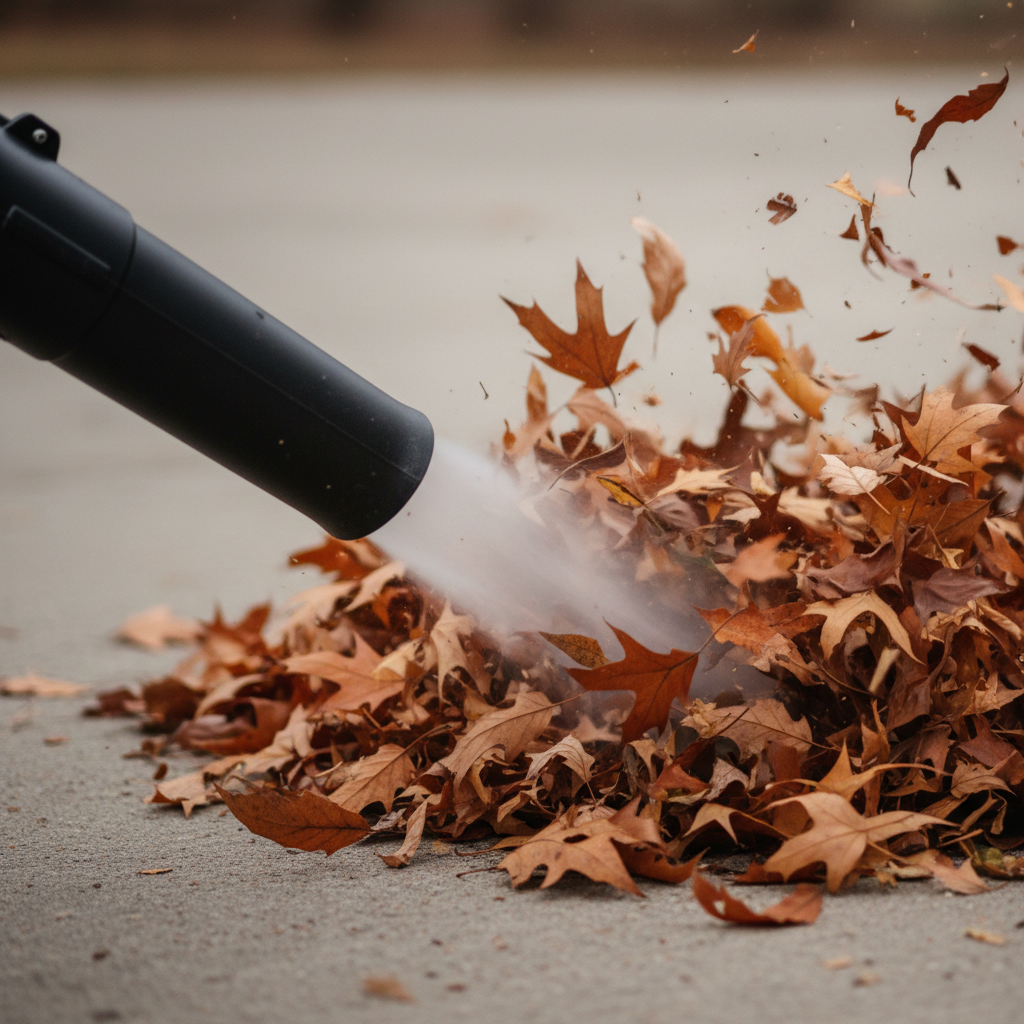
CFM stands for cubic feet per minute and measures how much air a leaf blower moves in 60 seconds. Think of it as the blower’s capacity or throughput. A leaf blower with 400 CFM moves 400 cubic feet of air every minute; one with 600 CFM moves 600 cubic feet. This metric tells you how much material the blower can handle and how quickly it can cover ground.
Higher CFM means you can clear larger areas faster and handle greater volumes of debris—leaves, grass clippings, light twigs, and dust. For most homeowners, CFM is the first metric to evaluate because it directly correlates with productivity.
MPH: The Speed of Air Movement
MPH measures the velocity or speed at which air leaves the blower nozzle. A leaf blower rated at 120 MPH pushes air at 120 miles per hour; one rated at 90 MPH moves air more slowly. This velocity determines whether the air stream is forceful enough to move heavy, dense, or wet debris.
Higher MPH creates more concentrated force at the nozzle, which is essential for moving clumped, wet leaves, pine needles, mulch, or debris stuck in corners and gutters. However, MPH alone doesn’t tell you about total cleaning power—a high-velocity blower with low volume won’t move as much material overall.
How CFM and MPH Work Together
CFM and MPH are independent measurements that work together to determine overall performance. You need sufficient CFM to move large quantities of debris and sufficient MPH to handle density and resistance. The relationship is complementary, not interchangeable:
- High CFM + High MPH: Premium performance; handles almost any residential or commercial task efficiently
- High CFM + Moderate MPH: Excellent for general cleanup; covers ground quickly but may struggle with wet or densely packed material
- Moderate CFM + High MPH: Good for precision work and difficult debris; slower overall coverage but forceful enough for stubborn material
- Low CFM + Low MPH: Best for light, occasional use; insufficient for sustained yard work
Why CFM Is the Primary Performance Indicator for Most Users
CFM Determines Overall Cleaning Efficiency
Professionals and manufacturers prioritize CFM because it measures total air delivery—the core function of a leaf blower. A higher CFM rating means the blower can move more debris in less time. On a typical suburban lot with fallen leaves and grass clippings, a 600 CFM blower will finish the job faster than a 400 CFM blower, even if the 400 CFM model has higher velocity.
This efficiency advantage compounds over larger areas. If you’re clearing a 5,000-square-foot yard, the CFM advantage becomes immediately noticeable in time and fatigue.
CFM Correlates with Yard Size and Debris Volume
Industry guidance suggests these CFM minimums for residential use:
- Small yards (under 1,000 sq ft): 300-400 CFM sufficient for light cleanup and maintenance
- Medium yards (1,000-5,000 sq ft): 400-600 CFM recommended for efficient seasonal cleanup
- Large yards (5,000+ sq ft) or heavy debris: 600+ CFM for reasonable productivity
Most residential users should target at least 400-500 CFM to handle typical fall leaf cleanup without excessive runtime. Below 350 CFM, leaf blowers become tedious for anything beyond light maintenance.
CFM Enables Versatility Across Tasks
Higher CFM gives you options. A 600 CFM blower can handle leaves, grass clippings, light debris, gutters, and patios. You have margin for challenging conditions. A 350 CFM blower performs best on light, dry leaves but may struggle with compacted material or wet conditions, forcing you to make multiple passes or abandon certain tasks.
When MPH Becomes the Deciding Factor
Dense and Wet Debris Require Higher Velocity
MPH becomes critical when dealing with material that resists movement. Wet leaves, pine needles, mulch, gravel, and heavily compacted debris require sufficient velocity to dislodge and move. A leaf blower with 500 CFM at 85 MPH may struggle to clear wet autumn leaves that a 450 CFM blower at 130 MPH can handle more effectively.
In this scenario, MPH is the limiting factor. The lower-velocity blower simply can’t generate enough force to push dense material, regardless of volume.
Specialized Tasks Favor Higher MPH
Certain applications demand higher velocity:
- Gutter and downspout cleaning: Requires concentrated force to dislodge compacted leaves and debris in tight spaces
- Clearing gravel or mulch: Heavy material won’t move without sufficient velocity
- Wet season cleanup: Damp or rain-soaked leaves need forceful air to displace
- Precision directing: Narrower nozzles (which increase velocity) are useful for targeting specific areas without blowing light debris everywhere
If your yard frequently presents these conditions, prioritizing MPH becomes justified even at the cost of some CFM.
Can High CFM with Low MPH Handle Dense Debris?
Not always effectively. A 700 CFM blower at 80 MPH will move more total air but may fail to dislodge wet, clumped leaves that a 450 CFM blower at 140 MPH handles easily. The low velocity means the air stream disperses quickly and loses force. You’d need to make multiple passes or use nozzle attachments (which reduce CFM but concentrate velocity) to achieve results.
For yards with frequent wet debris or heavy material, a balanced or velocity-favored specification is more practical than maximizing CFM alone.
How to Choose Between CFM and MPH for Your Specific Needs
Decision Framework by Yard Type
| Yard Condition | Priority | Recommended Specs | Reasoning |
|---|---|---|---|
| Typical residential, dry season | CFM first | 500+ CFM, 100+ MPH | Volume handles variety; moderate velocity covers most conditions |
| Heavy fall cleanup, wet leaves | Balanced or MPH | 450+ CFM, 120+ MPH | Higher velocity essential for damp material; adequate CFM for coverage |
| Large yard, light maintenance | CFM strongly | 600+ CFM, 100+ MPH | Volume reduces total time; velocity less critical for light debris |
| Small yard, precision work | MPH or balanced | 350+ CFM, 120+ MPH | Lower volume acceptable; higher velocity for control and dense spots |
| Gutter cleaning, patios | MPH | Any CFM, 130+ MPH | Concentrated force needed; volume less relevant in confined spaces |
Seasonal and Climate Considerations
Your local climate affects which metric to prioritize. In dry regions with light, dry leaves and minimal compaction, high CFM becomes increasingly valuable—you’re maximizing coverage speed. In wet climates with frequent moisture and heavy debris, balanced or high-MPH specifications become more practical investments.
Homeowners in temperate zones with distinct seasons should aim for a blower that balances both metrics (500+ CFM, 110+ MPH) to handle seasonal variation without compromises.
CFM and MPH in Context: Real-World Performance Comparisons
Scenario: 600 CFM at 90 MPH vs. 450 CFM at 130 MPH
The first blower (high volume, moderate velocity) excels at clearing large areas with dry, light debris. You’ll finish a typical fall cleanup faster due to superior volume coverage. However, if you encounter wet leaves or compacted material in corners, the lower velocity becomes a limitation—you may need to make secondary passes or switch to a nozzle attachment.
The second blower (moderate volume, high velocity) handles wet leaves and dense debris more effectively. It’s better for precision work and difficult conditions but requires more passes across open areas, resulting in longer total runtime for general cleanup.
Winner for typical residential use: The high-CFM model wins for pure efficiency, but if your yard frequently has wet or compacted debris, the high-MPH model becomes more practical despite slower coverage.
What Happens When CFM Is High but MPH Is Too Low?
A 700 CFM blower at 70 MPH moves substantial air but lacks the velocity to push resistant material. On dry leaves, it performs excellently—the high volume ensures fast clearing. But introduce wet leaves, and the low velocity becomes frustrating. The air stream dissipates quickly without concentrated force. You’d compensate by using a nozzle attachment to concentrate the airflow, but this reduces effective CFM and creates a suboptimal situation that the right balanced spec would avoid.
Is There a Minimum MPH Threshold?
Yes, practical minimums exist based on use case:
- Dry season, light debris: 80 MPH minimum is acceptable with sufficient CFM
- General residential use: 100-110 MPH minimum recommended to handle seasonal variation
- Wet climates or frequent challenging debris: 120+ MPH recommended
- Professional or commercial use: 130+ MPH often preferred for reliability across conditions
Below 80 MPH, blowers become primarily suited for very light maintenance tasks. Below 90 MPH, they struggle with anything damp or compacted. For homeowners, targeting 100+ MPH ensures you won’t encounter frustrating velocity limitations during seasonal changes.
How Nozzle Design and Attachments Affect Effective Performance
Nozzle shape and size significantly impact how CFM and MPH translate to real-world performance. A wide nozzle spreads air broadly but reduces effective velocity. A narrow or tapered nozzle concentrates air, increasing velocity and force but reducing coverage width. Premium leaf blowers include multiple nozzles or nozzle rings to adjust the balance based on task.
This means that published CFM and MPH specs are measured at a standard nozzle configuration. Changing nozzles changes practical performance. A 500 CFM blower with a narrow nozzle can deliver more concentrated force (higher effective MPH) than the spec suggests, but at reduced coverage width. Understanding this flexibility helps you choose a blower that adapts to varied tasks rather than forcing a one-spec compromise.
Frequently Asked Questions
Should I always choose the highest CFM available?
Not always. If your yard frequently has wet debris or you prioritize precision work, a balanced or higher-MPH specification may be more practical than maximizing CFM. However, for general residential cleanup and covering ground efficiently, higher CFM (with adequate MPH) is the better choice. Most users benefit from prioritizing CFM above 450-500 range before chasing incremental MPH gains.
Can a leaf blower with low CFM but very high MPH replace a balanced model?
For specialized tasks like gutter cleaning, yes—velocity becomes the primary requirement. For general yard cleanup, no. A 300 CFM blower at 150 MPH will handle wet leaves well but requires many passes to clear an open yard, making total time tedious. A balanced 500 CFM, 120 MPH model finishes general cleanup much faster while still handling challenging debris adequately.
What CFM and MPH do I need for a residential yard?
For most suburban homeowners, target 450-600 CFM with 100-130 MPH. This range handles typical fall cleanup, maintains yards efficiently, and manages seasonal variation without compromise. Smaller properties (under 1,000 sq ft) can operate effectively at 350-450 CFM; larger properties (5,000+ sq ft) benefit from 600+ CFM to reduce fatigue and time investment.
Does MPH matter more for commercial or professional landscapers?
Professionals often prioritize balanced or high-MPH specifications because they encounter varied conditions daily and use blowers for specialized tasks like gutter cleaning and precise site work. However, commercial-grade blowers typically offer both high CFM and high MPH (700+ CFM at 130+ MPH), so the choice isn’t binary. For professionals, the balance shifts toward MPH reliability and durability, but absolute CFM remains important for productivity on large properties.
Final Recommendation: Balancing CFM and MPH for Real-World Performance
For the majority of homeowners, CFM is the more important metric because it determines overall efficiency and your ability to clear ground quickly. However, CFM alone doesn’t tell the full story. A leaf blower that balances both specifications—offering adequate CFM for your yard size combined with sufficient MPH for your typical debris conditions—outperforms one that maximizes either metric at the expense of the other.
Use yard size and debris type to guide your CFM target, then ensure MPH is at least 100-110 (120+ if you live in a wet climate or have frequent challenging debris). This balanced approach ensures you won’t encounter frustrating performance gaps when conditions change seasonally or you encounter damp leaves and compacted material. The best leaf blower for your needs isn’t the one with the highest single specification—it’s the one with sufficient performance across both metrics for your actual use case.