

Quick Answer: How Long Do Lawn Mower Blades Last?
A lawn mower blade does not last a fixed number of years or mowing hours. On a typical rotary mower, the cutting edge can dull well before the metal is worn out. Sharpening and balancing can keep a sound blade effective for a long time. Replace it when it is bent, cracked, deeply nicked, worn thin, or no longer safe…

Pros
- Large-size design named in product title
- Sharpening and balancing functions listed
- Listed as a new upgraded version

Pros
- Adjustable 15-to-45-degree range in title
- Sharpening and balancing functions listed

Pros
- Sharpener and balancer functions in title
- 15-to-45-degree adjustable setting listed
- Built for lawn mower blade maintenance
Pros
- Includes replacement gaskets and a 98079-55846 spark plug
- Matches Honda HRR216 and HRS216 lawn mower models
- Designed around the 16100-Z8B-901 carburetor specification
Cons
- Restricted to select Honda GCV160 mower applications
- Installation requires basic mechanical tools and skills
What people usually mean by how long a blade lasts
When people ask how long lawn mower blades last, they are often mixing two different clocks. One clock is the cutting edge. That edge can lose its bite after a stretch of hard use, sandy soil, or a few hard impacts. The other clock is the blade as a piece of steel. The metal can remain usable long after the first dulling if it stays straight, thick enough, and free of cracks.
There is no single lifespan that fits every home lawn because blade life is not a calendar event. A small, clean yard mowed at a sensible height is a different job from a large lot with tree roots, gravel edges, molehills, or dusty soil. Two neighbors with the same rotary mower can see very different wear if one hits the ground often and the other rarely does.
In practice, a typical rotary-mower owner should think of blade life as a cycle of inspection, sharpening, and eventual replacement. The useful question is not “How many seasons does a blade get?” It is “Is this blade still cutting cleanly, still balanced, and still structurally sound?” If the answer is yes, maintenance can extend its working life. If the answer is no, the part is finished even if it looks fairly new.
This article focuses on general consumer rotary lawn mower blades—the spinning bar under a walk-behind or riding deck. Reel mowers, robotic mowers, and commercial fleets can wear and be serviced differently. Those machines are not ranked here; they simply follow different duty cycles and maintenance habits. For additional operational safety benchmarks, see our published testing notes on jbl partybox club 120 vs sony srs xv500.
Sharpening versus replacing a blade
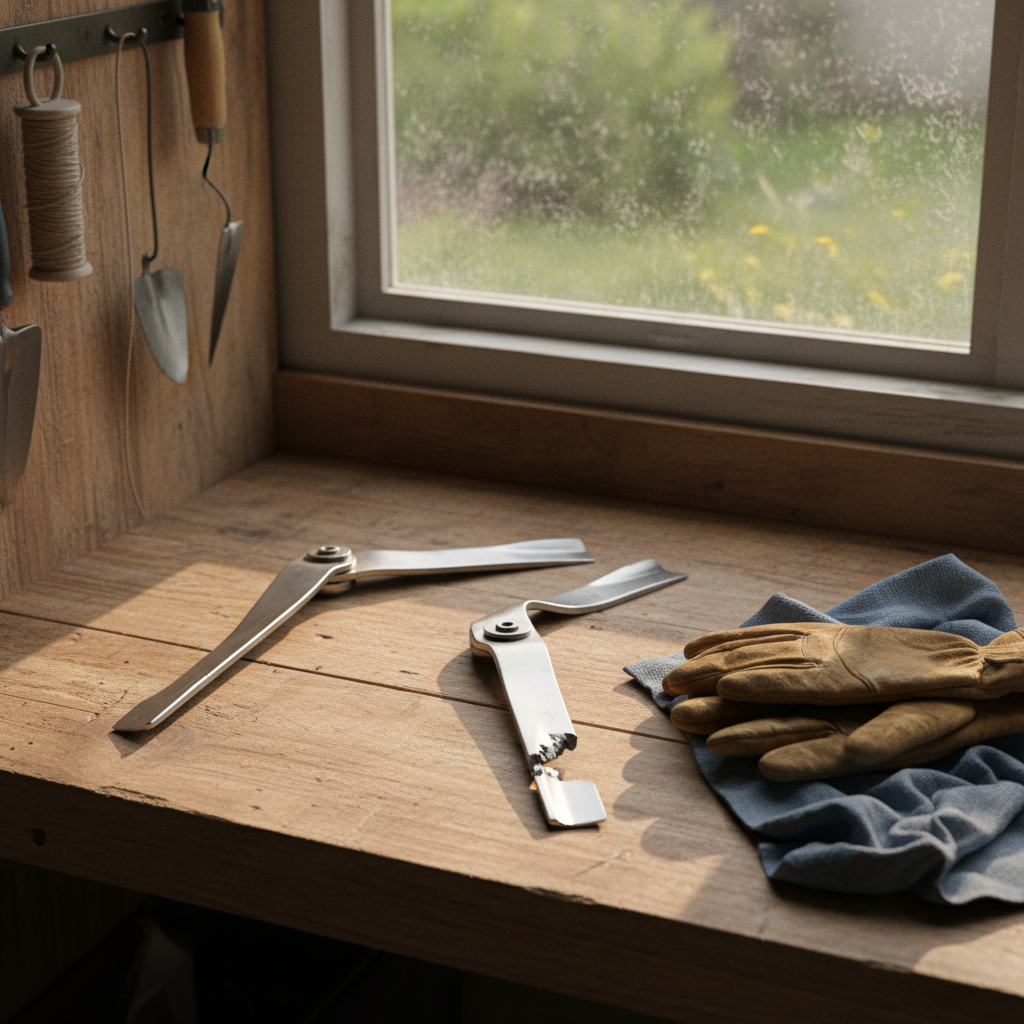
Sharpening and replacement answer different problems. Mixing them up is how people either throw away a good blade or keep using a dangerous one. For additional operational safety benchmarks, see our published testing notes on jbl partybox club 120 vs sony srs xv500.
What sharpening actually restores
Sharpening restores a cutting edge. A rotary blade does not slice like a kitchen knife, but it still needs a defined, reasonably keen edge so grass is cut rather than beaten. When that edge becomes rounded, shiny, or lightly nicked, a proper sharpening can bring back a cleaner cut—if the blade is otherwise straight and structurally sound. To compare alternative configurations, check our hands-on review of z890 vs x870e motherboard.
A sharp, undamaged blade tends to leave a cleaner finish. Grass blades are sliced instead of shredded. Clippings may scatter or bag more evenly. The mower may also sound and feel less strained, though that is a qualitative clue, not a promise of lower fuel use or a healthier lawn by any measured amount.
Sharpening should also include a check for blade balance. Removing metal from one side only can leave the blade heavier on the other. An unbalanced blade can shake the spindle, loosen hardware, and wear the deck. Balancing is part of keeping a resharpened blade usable, not an optional extra. To compare alternative configurations, check our hands-on review of z890 vs x870e motherboard.
What sharpening cannot restore
Sharpening cannot straighten a bend, close a crack, or put back metal that has been worn away. Repeated sharpening removes material. Over time the cutting edge can become narrower, the lift area can change shape, and the blade can become harder to balance. That does not mean there is a universal maximum number of sharpenings. How much metal remains, and whether the shape still matches the job, matters more than a count of shop visits.
Manufacturer limits on remaining thickness, width, or weight are source-dependent. If the owner’s manual or the blade maker publishes a discard limit, that limit belongs to that product. A general article cannot invent a remaining-thickness rule that applies to every consumer blade. Users looking for related component recommendations can explore our marshall stanmore iii vs harman kardon onyx studio 8 breakdown.
When replacement is the safer or more practical choice
Replacement is the right move when the blade is bent, cracked, deeply notched, badly thinned, missing chunks, or impossible to balance. It is also the practical choice when the edge has been ground so often that the original profile is gone. A mulching blade or high-lift blade depends on more than a sharp edge. The wings, curls, or lift surfaces help move air and clippings. If those shapes are worn flat or battered, sharpening the edge will not restore the way the blade moves grass through the deck.
On a multi-blade deck, unmatched wear can keep the set from running smoothly. Replacing blades as a set is often the practical choice when one is damaged or much more worn than the others. Matching type and mounting matters more than mixing leftover parts that happen to bolt on. Before finalizing equipment decisions, refer to our comprehensive dyson v8 cyclone vs bissell featherweight stick comparison.
What shortens or extends blade life
Blade dullness and blade wear are related, but they are not the same. An edge can go dull quickly on abrasive ground and still be thick enough to sharpen. A blade can also suffer one hard impact that ends its life immediately. The conditions below change both clocks.
How often, how much, and what you cut
Frequent mowing on a large lawn simply puts more grass, dust, and occasional debris in front of the edge. That is ordinary abrasive wear. Thick, wiry, or very dry grass can be harder on an edge than soft, regularly cut turf. A small, even lawn that is never allowed to get tall is usually gentler than a neglected lot that is scalped in one pass. For broader ecosystem context, read through our operational guide on bissell crosswave hydrosteam vs shark stainforce.
Heavier or commercial use typically shortens the time between sharpening or replacement. That is a duty-cycle difference, not a claim that home blades or fleet blades last a stated number of hours.
Soil, sand, dust, and hidden obstacles
Abrasive soil is one of the fastest ways to dull a cutting edge. Sandy yards, dusty paths, freshly tilled borders, and lawns that throw grit up into the deck act like sandpaper. The edge rounds over even when the blade never hits a rock.
Sticks, stones, roots, irrigation heads, edging, and driveway lips do something rougher. They nick, fold, or bend the edge. A single impact can open a notch that no careful filing will make safe again. Edging against concrete, brick, or steel landscape border is especially hard on the tips.
Ground contact, wet grass, and cutting height
Scalping and hitting the ground wear a blade faster than cutting grass alone. Low spots, steep banks, ruts, and a deck set too low all increase the chance that the blade kisses soil or turf crowns. Wet, dense grass does not always destroy the steel, but it packs the deck, makes the blade work harder, and can hide the fact that the cut is tearing rather than slicing.
Correct cutting height is one of the simplest ways to protect both the lawn and the edge. Leaving more leaf, overlapping passes, and slowing down in rough patches reduces ground strikes. It also reduces the temptation to “dig” with the blade when the grass is too tall.
Mulching, bagging, and how hard the blade works
Mulching and bagging change how the blade moves air and clippings. A mulching blade is asked to recut clippings inside the deck. A high-lift blade is asked to push more air for bagging or side discharge. Neither style automatically lasts longer or shorter than the other in every yard. What matters is whether the blade is the right type for the deck and whether the deck stays clear enough for that airflow to work.
A packed mulching deck makes the blade churn wet clumps instead of cutting cleanly. That extra work does not always remove a measurable amount of steel, but it can hide dullness and increase vibration from uneven buildup. Keeping the underside of the mower deck clean is maintenance for the blade as well as for cut quality.
Habits that help a sound blade last longer
Regular inspection is the habit that matters most. Walk the lawn for branches, toys, wire, and stones before you mow. Avoid using the blade as an edger against hard surfaces. Keep the deck height appropriate for the terrain. After dusty or sandy mowing, check the edge sooner rather than waiting for the lawn to look ragged.
Keeping the blade balanced and the deck clear reduces vibration and uneven wear. Vibration is not only uncomfortable; it can loosen the blade fastener and stress the spindle. A sound blade lasts longer when it is running true. Steel type, coatings, and aftermarket brand names are not a substitute for that basic care, and they do not come with a reliable hour rating that applies to every lawn.
Signs the blade is dull and may only need sharpening
A dull blade often announces itself on the lawn before it looks ruined in the hand. The classic picture is torn grass instead of a clean cut. Leaf tips look ragged, frayed, or browned after a day or two because the plant was bruised rather than sliced. The finish may look uneven even if you overlapped your passes. Clippings may clump more, especially in thicker turf.
On the blade itself, a dull or slightly nicked edge often looks rounded, polished, or lightly chewed, yet the bar is still straight. There are no cracks, no missing corners, and no obvious thinning at the cutting edge or lift area. Light nicks from small debris are common. If they are shallow and the blade remains structurally sound, sharpening can often restore a usable edge.
Performance clues that point toward sharpening rather than replacement include a recently good-cutting mower that gradually started tearing grass, a blade that still sits flat and true, and vibration that disappears after you clean packed clippings off the blade and deck. Those clues are useful, not conclusive. The same lawn symptoms can also come from a dirty deck, the wrong cutting height, wet grass, a worn belt, or a failing spindle. Sharpening a sound blade can improve cut quality; it will not repair a mechanical problem elsewhere and it will not transform a lawn overnight.
Signs the blade should be replaced instead of resharpened
Some damage makes sharpening a poor or unsafe idea. Treat the following as replacement cues, not as a challenge to “save” the part.
- The blade is bent, twisted, or no longer sits true.
- There is a crack, including hairline cracks near the center hole, mounting area, or a deep nick.
- Chunks of the edge or tip are missing.
- There are deep notches that would require removing a lot of metal to erase.
- The cutting edge is badly misshapen or folded over.
- The edge or lift area looks visibly thinned, knife-thin, or scooped away.
- The center hole, keyway, or mounting slots look worn oversized or egg-shaped.
- Severe rust has pitted or weakened the metal, not just stained the surface.
- Vibration continues after the deck is clean and the blade has been professionally balanced, or the blade cannot be balanced at all.
Wear, balance, and missing metal are how a blade tells you it is finished. A rotary blade is a fast-spinning mass. Once enough steel is gone, or once that mass is no longer even, sharpening the remaining edge does not make the part trustworthy. There is no universal minimum width, thickness, or weight that applies to every consumer blade. If the metal looks frail, the profile is gone, or a shop cannot balance it, replacement is the answer.
Age by itself is not a discard rule. An undamaged blade stored or used lightly is not automatically unsafe because a certain number of years have passed. The opposite is also true: a new blade that hit a hidden stake can be scrap the same afternoon.
On mowers with more than one blade, replace a matching pair or set when wear is uneven or one blade is damaged. Unmatched blades can keep the deck from running smoothly even if each piece looks “good enough” on a workbench.
How to inspect a blade safely
A useful inspection starts before anyone reaches under the deck. Wait until the engine and blade have fully stopped. Prevent accidental starting using the method in the owner’s manual. That method varies by machine: some mowers need the spark-plug lead disconnected, some electric models need the key, battery, or power disconnected, and some have additional interlocks. Follow the manual for that mower rather than a generic workshop shortcut. Stabilize the machine so it cannot tip or roll. Wear eye protection and sturdy gloves. A blade edge can still cut when it is too dull to cut grass well.
A visual, hands-off-first inspection should include the blade, the mounting area, and the deck. Look for straightness along the length of the blade. Check both cutting edges if the blade is reversible or double-edged. Look for cracks, deep nicks, folded metal, thinning, and rust that has eaten into the steel. Look at the center hole and any drive features for wear. Check for debris packed on the blade, under the deck, and around the spindle. Packed mud can hide damage and throw the rotating assembly out of balance even when the steel is fine.
If you need to remove the blade for sharpening or a closer look, treat that as a service job with the right tools and support, not as something to improvise. Blade fasteners can be tight. The deck must stay stable. Torque values, thread locker, washer orientation, and blade orientation are manufacturer-specific. Those details belong in the owner’s manual or with a qualified technician. Do not rely on makeshift blocking methods or work on a machine that is running, poorly supported, or still able to start.
Balancing and sharpening are easier and safer with the right equipment or a service shop. A shop can also tell you when the remaining metal or the blade profile is no longer worth saving. If the mower has electrical, fuel, or hydrostatic service issues mixed in with the blade job, stop and use the manual or a qualified technician. A blade inspection should not turn into an unplanned repair of the whole machine.
Cut-quality problems that are not a worn-out blade
Replacing a good blade will not fix a dirty deck or a lawn that was cut too short. Several common issues mimic a bad blade closely enough that people scrap a part they could have kept.
A dull but still sound blade is the first look-alike. The lawn looks torn, yet the steel is straight and thick enough to sharpen. A clogged deck is next. Wet clippings stuck under the housing change airflow, leave clumps, and make even a sharp blade leave a messy finish. Uneven tire pressure, a bent wheel, or a deck that is not level can leave stripes or uncut ridges that look like blade failure.
Drive parts matter on many rotary mowers. A loose or worn belt, a damaged pulley, or a worn spindle can cause poor cutting, odd noises, or vibration. Those problems can continue after you install a new blade. If vibration remains after the blade is clean, straight, and balanced, the spindle or deck hardware deserves attention. Do not assume a new blade will cure vibration when the supporting parts are worn.
Grass condition is often the limiting factor. Mowing too low, mowing soaked dense turf, skipping overlap, or cutting after a long stretch of neglected growth can brown tips and leave a ragged look even with a sharp blade. In those cases the blade is not worn out. The job asked of it was a poor one. Raising the deck, waiting for drier conditions, and taking a second higher pass are more useful than buying another blade.
This is a diagnostic list, not a repair manual. It is enough to keep you from replacing a serviceable blade when the real issue is height, moisture, a packed deck, or a worn drive component. Model-specific defects need the manual or a technician, not a guess from a general article.
Mechanical safety standards, operational tolerances, and protective gear guidelines align with benchmark specifications established by the American National Standards Institute (ANSI).
Safety and practical limits
A damaged or unbalanced blade is a hazard, not a maintenance inconvenience. Rotary blades spin at high speed. A bent, cracked, or badly unbalanced blade can throw debris farther than you expect, increase vibration, loosen hardware, and stress the spindle and deck. Continuing to use a questionable blade to “finish the yard” is a poor trade.
Do not weld, hammer-straighten, or otherwise repair a cracked or bent blade. Heating and bending change the steel in ways a home shop cannot reliably control. A straightened crack is still a crack. Replacement blades should match the mower’s intended type and mounting—standard, mulching, or high-lift as the deck and the manufacturer allow. The fact that a blade can be bolted on is not the same as it being the correct part.
The owner’s manual is the right place for part numbers, torque values, blade-length rules, safety interlocks, and any certification or replacement guidance that applies to your machine. Those details are not universal. Warranty coverage for wear or impact damage is also source-dependent; many wear items are treated as consumables, but only the warranty document can say so for a given mower.
Used carefully, a consumer rotary blade is a serviceable part with two endings. The edge ends first, and sharpening can often restore it. The metal ends later, when damage, thinning, or lost balance makes the blade unsafe or ineffective. Judge the blade in front of you—its cut, its shape, and its condition—rather than a calendar, an hour meter, or a single number that pretends every lawn is the same.
For more hands-on benchmarks and buying recommendations, consult our guides on heavy-duty chainsaw buyer guide.









