Direct Answer: How Lawn Stripes Are Created
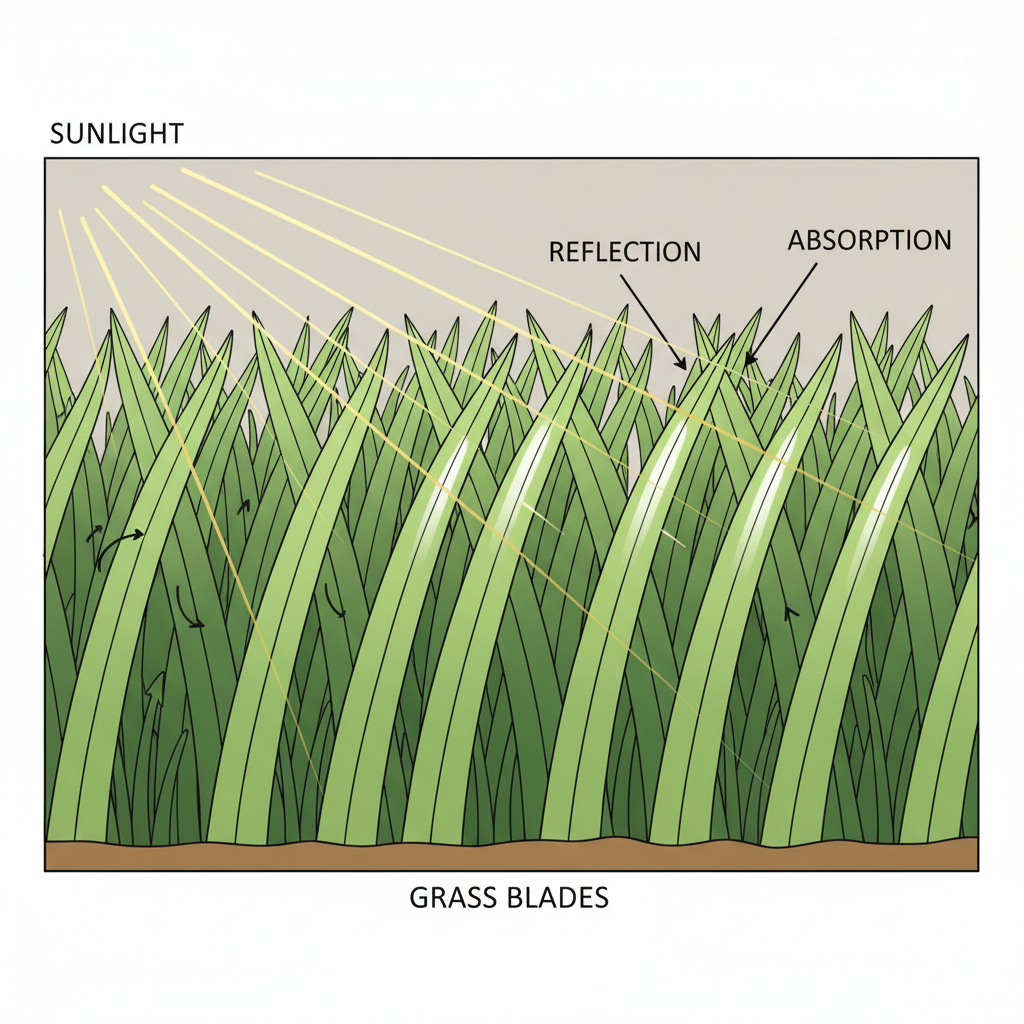
Lawn stripes are an optical illusion created entirely by grass blade direction and light reflection, not by cutting grass at different heights or colors. When you mow with a roller-equipped mower, the roller bends grass blades in the direction of travel. By alternating your mowing direction on each pass, you create rows of grass bending in opposite directions. As light hits these bent blades from different angles, some rows reflect more light while others absorb it, producing the distinctive striped pattern visible from above.
How Lawn Stripes Actually Work
Understanding the mechanism behind stripes helps you troubleshoot visibility issues and appreciate why certain conditions enhance or diminish the effect.
The Role of Grass Blade Bending
Every grass blade is flexible. When a mower with a roller passes over your lawn, the roller’s weight pushes blades down in the direction of travel. The blades don’t break or get damaged—they bend and gradually recover to their upright position over the next 24–48 hours. During recovery, they retain a slight lean in the direction you mowed.
Light Reflection and the Stripe Effect
Grass blades have a natural sheen. When blades bend away from you, they reflect more light back to your eyes, appearing lighter. When they bend toward you, they absorb more light and appear darker. By mowing in alternating directions—north, then south, then north again—you create alternating light and dark bands. This contrast is what you see as stripes. The effect is strongest when the sun is low in the sky (early morning or late afternoon) and when viewed from a distance.
Why Stripes Disappear From Certain Angles
Stripes are most visible when the sun is behind you or at a low angle. If you stand parallel to the stripe rows or with the sun directly overhead, the light-reflection advantage disappears and stripes become nearly invisible. This is why professional sports fields often have the most dramatic stripes during game times when lighting conditions are ideal.
Do Stripes Harm the Grass?
No. Bending grass blades does not damage the plant or reduce its health. Grass recovers fully within 1–2 days and naturally bends and recovers countless times in wind and rain. Striping is purely cosmetic and does not affect lawn vigor or growth.
Essential Equipment for Striping
What Type of Mower Creates the Best Stripes
Not all mowers create equal stripes. Roller-equipped mowers produce the most visible stripes because the roller provides consistent weight and bending action. Reel mowers with rollers (the cylindrical type used on golf courses) are ideal. Rotary mowers with aftermarket or factory-installed rollers also work well. Walk-behind rotary mowers without rollers can produce stripes, but they’re less pronounced because the mower body distributes weight unevenly.
The Importance of the Roller
The roller serves two purposes: it creates consistent grass blade bending and it smooths the lawn as you mow. A heavier roller produces more dramatic bends and more visible stripes. Some homeowners add weight to their mower or roller to enhance striping. The roller should be wide enough to cover the mower’s cutting width and should be positioned behind the cutting deck so it presses blades down after they’re cut.
Mower Width and Stripe Width
Your mower’s cutting width determines your stripe width. A 21-inch rotary mower creates 21-inch-wide stripes. A 54-inch zero-turn mower creates 54-inch stripes. Wider mowers create bolder, more dramatic stripes because the light-reflection contrast spans a larger distance.
Step-by-Step Striping Technique
Step 1: Plan Your First Stripe Line
Choose a straight line across your lawn as your starting point. This could be your driveway edge, a garden bed, or an imaginary line you visualize. This first line sets the tone for all subsequent passes. Use a marking line (some mowers have stripe kits that include a marking guide) or walk the line mentally before starting.
Step 2: Mow Your First Pass
Start at one end of your lawn and mow straight down your planned line, maintaining consistent speed and direction. The roller bends all grass blades in your direction of travel. Don’t worry about perfection—slight waviness is normal and won’t be visible from a distance.
Step 3: Alternate Your Direction
For your second pass, turn 180 degrees and mow parallel to your first stripe but in the opposite direction. This is the critical step. The grass blades now bend opposite to the first row, creating the light-reflection contrast. Continue alternating directions for every subsequent pass.
Step 4: Maintain Parallel Lines
Keep each pass parallel to the previous one. Most mowers have a wheel rut to follow, or you can use your previous stripe as a visual guide. Parallel lines ensure uniform stripe width and a professional appearance.
Step 5: Handle Corners and Obstacles
At the end of each row, overlap slightly with the previous pass to avoid missing grass. This overlap won’t be visible in the final stripe pattern. Around obstacles like trees or garden beds, simply continue your current direction until you can resume the parallel pattern.
What Happens If You Don’t Alternate Directions
If you mow in the same direction repeatedly, all grass blades bend the same way and you’ll see no stripes—just a uniformly green lawn. Stripe visibility requires the alternating-direction pattern.
Factors That Affect Stripe Visibility
Grass Type and Species
Cool-season grasses (Kentucky bluegrass, fescue, perennial ryegrass) typically show stripes more visibly than warm-season varieties (Bermuda, zoysia, St. Augustine). Cool-season grasses have broader, flatter blades that reflect light more dramatically when bent. Warm-season grasses are finer and curl, reducing light-reflection contrast.
Grass Height
Taller grass shows stripes more dramatically than short grass. At 2–3 inches, stripes are clearly visible. At 1 inch, they’re subtle. At 4+ inches, they’re bold and striking. Mowing at your grass type’s recommended height is ideal for both health and stripe visibility.
Lighting Conditions
Stripes are most visible during golden hour (early morning or late afternoon) when the sun is low and angled. Midday sunlight directly overhead washes out stripe contrast. Overcast days produce faint or invisible stripes. Plan your striping project for late afternoon on a clear, sunny day for maximum impact.
Lawn Health and Density
Thick, healthy lawns with dense grass coverage show more dramatic stripes. Thin or patchy lawns produce weak stripe contrast because light reflects unevenly off gaps and bare spots. Regular watering, fertilizing, and lawn maintenance improve stripe visibility.
Soil Moisture
Slightly moist soil (not waterlogged) helps grass blades bend more smoothly and hold their lean longer. Dry, stressed grass is brittle and may not bend consistently. However, avoid mowing immediately after heavy rain when grass is soaked.
Blade Sharpness
Sharp mower blades create clean cuts that allow grass to recover and retain blade bend more effectively. Dull blades tear grass tips, which may fray and reflect light inconsistently, dulling stripe contrast. Sharpen blades every 20–40 hours of mowing.
Common Striping Patterns
Classic Straight Stripes
The simplest pattern: alternating north-south passes. This creates parallel stripes running the length of your lawn and is the most popular choice for residential lawns.
Diagonal Stripes
Instead of mowing north-south, mow at a 45-degree angle across your lawn, then alternate in the opposite 45-degree direction. This creates diagonal stripes and is more visually interesting than straight stripes. It requires more planning to keep lines parallel.
Checkerboard Pattern
Mow diagonal stripes one week, then mow perpendicular diagonal stripes the following week. The overlapping pattern creates a checkerboard effect. This is more advanced and requires precision to keep lines aligned, but it produces a dramatic visual impact.
Curved Stripes
Some mowers can follow curved paths by alternating curved passes. This requires skill and careful planning but creates a unique aesthetic. Curved stripes are common on golf courses and professional sports fields.
Chevron or Arrow Pattern
Create two diagonal stripe sections meeting at a center line in a V or arrow shape. This requires mowing to a central point and then reversing direction, creating a pointed visual effect down the center of the lawn.
Frequently Asked Questions
How Long Do Lawn Stripes Last?
Stripes fade gradually over 1–2 weeks as grass recovers and straightens. Heavy rain, wind, or foot traffic accelerates fading. To maintain stripes, mow weekly on the same schedule. Newly mowed stripes are always most dramatic immediately after mowing.
Can You Stripe a Lawn Without a Roller?
Yes, but stripes will be less visible. Rotary mowers without rollers still bend grass, but unevenly. Reel mowers without rollers also produce stripes but with less consistency. Attaching an aftermarket roller (available for many mower models) dramatically improves results.
Does Striping Cost Extra or Require Special Skills?
Striping requires no special skills beyond normal mowing. The only technique change is alternating your direction each pass. If your mower already has a roller, there is no additional cost. If you need to add or upgrade a roller, costs range from $50–$300 depending on the mower type and roller quality.
Will Striping Damage My Lawn?
No. Grass blades bend naturally and recover fully within 24–48 hours. Roller weight does not compact soil permanently or damage roots. Stripes are a safe, purely cosmetic enhancement with no negative health effects.