Understanding Lawn Mowing Pricing Factors
Lawn mowing pricing is not a flat rate—it depends on multiple variables that justify different quotes for different jobs. The primary driver is yard size, but location, terrain, lawn condition, and service frequency all play major roles.
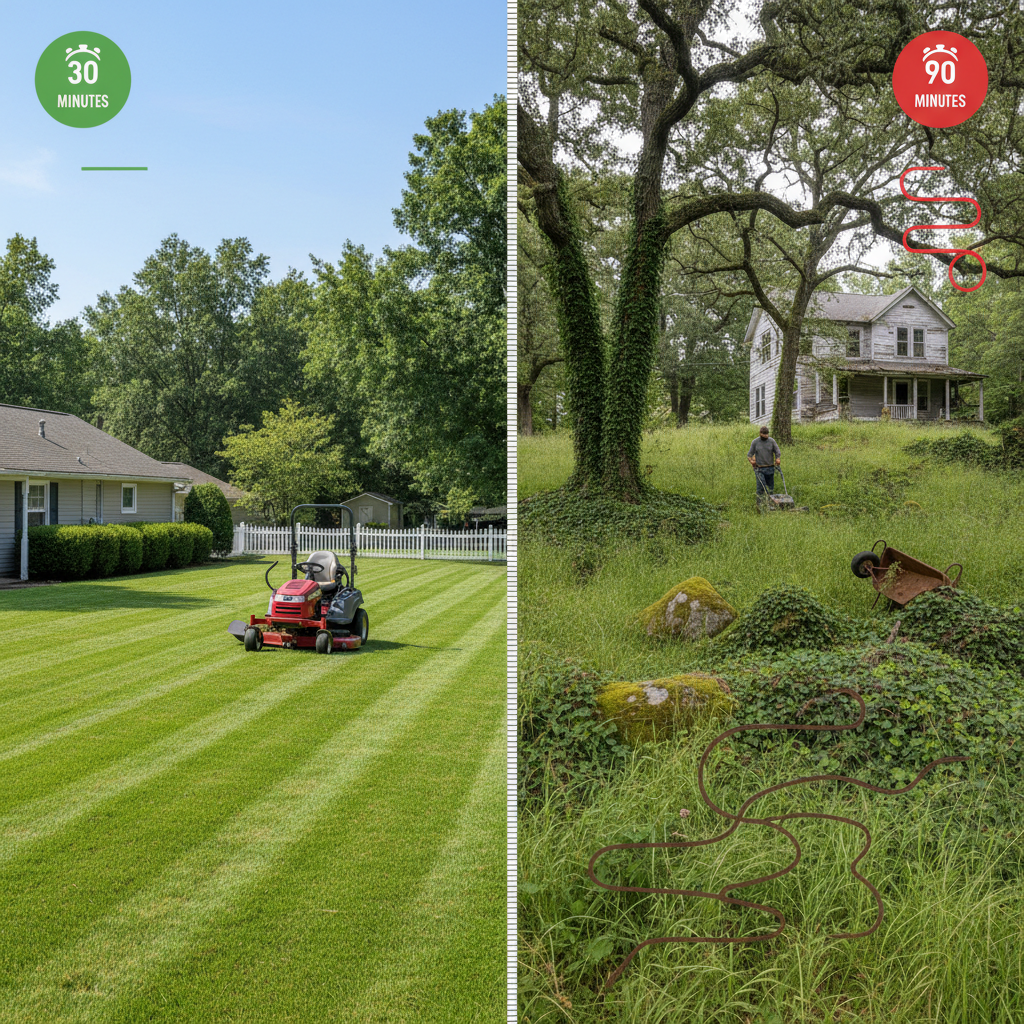
When you mow a lawn, you’re paying for three things: time, equipment wear, and expertise. A small, flat, well-maintained quarter-acre takes 20–30 minutes. A half-acre overgrown property with obstacles, slopes, and thick weeds can take 60–90 minutes. The time difference alone justifies different pricing.
Geographic location dramatically affects rates. A suburban lawn in Dallas costs less to mow than an equivalent property in New York City or San Francisco, where labor costs, fuel prices, and market demand are higher. Rural areas typically have lower rates due to lower cost of living, though longer travel distances can offset that savings.
Terrain and lawn condition are often underestimated pricing factors. A flat, rectangular yard with clear edges mows faster than a property with slopes, trees, flower beds, landscaping obstacles, and irregular borders. An overgrown lawn requiring double-passes or weed trimming costs more than a well-maintained property on a weekly schedule.
Pricing by Yard Size: Small, Medium, and Large Lawns
Yard size is the clearest pricing anchor. Most lawn care companies tier their pricing around square footage because it directly correlates to mowing time.
Small Lawns (Under 5,000 sq ft): $30–$60
Small residential lots—typically quarter-acre or less—mow quickly and efficiently. A 3,000–4,500 sq ft lawn usually takes 20–35 minutes with a standard walk-behind mower. Even with travel time and edge trimming, the total job is 45–60 minutes of billable work.
Pricing at the lower end ($30–$40) is common in suburban and rural areas with lower labor costs. Urban areas and high-demand markets may charge $50–$60 for the same size yard. Budget-conscious homeowners and service providers accepting lower margins often quote $30–$45. Premium services or properties requiring precise edging and landscaping care may charge $50–$65.
Medium Lawns (5,000–10,000 sq ft): $60–$100
Medium yards represent typical suburban properties and half-acre lots. These lawns take 40–70 minutes to mow depending on terrain and condition. This is the most common yard size and the sweet spot for pricing consistency across regions.
Standard market rates for medium lawns range $60–$85 in most U.S. markets. High-cost urban areas and premium service providers charge $85–$110. Properties with complex layouts, multiple landscape features, or difficult terrain may command $100–$120.
Medium lawns benefit from recurring service discounts. A one-time mow might cost $80, but weekly service often drops to $60–$70 per visit due to improved efficiency and reduced setup time when the lawn is maintained on schedule.
Large Lawns (Over 10,000 sq ft): $100–$200+
Large residential properties, small commercial lots, and acreage require equipment upgrades and significantly more time. A one-acre property (43,560 sq ft) typically takes 90–150 minutes with a walk-behind mower or 45–75 minutes with a ride-on mower.
Large lawns justify higher pricing because they often involve commercial-grade equipment, professional crews, and extended service windows. Base pricing for large residential properties typically starts at $100–$150. Properties over 1.5 acres or with complex terrain may reach $150–$250+ per service.
Commercial properties (parking lots, corporate campuses, apartment complexes) are typically quoted separately based on square footage, frequency, and required maintenance level. Pricing may be bid as monthly contracts rather than per-service rates.
Additional Factors That Increase or Decrease Lawn Mowing Costs
Lawn Condition and Complexity
A well-maintained lawn on a regular schedule mows predictably and efficiently. An overgrown or poorly maintained yard requires extra work—multiple passes, weed trimming, edge cleanup—that justifies a price increase of 20–50% above the base rate.
Properties with obstacles (trees, flower beds, playground equipment, parked cars, large rocks) require slower, more careful mowing and trimming around edges. Services may add $5–$20 to the base price for complex layouts.
Slope and terrain also matter. Flat lawns mow faster than hilly properties, which pose safety risks, require more careful equipment handling, and increase fatigue. Steep terrain may add 20–30% to pricing or require commercial mowers instead of standard equipment.
Service Frequency Impact
One-time mows are quoted at full retail rate. Weekly recurring service typically discounts 15–25% per visit because:
- Lawn stays shorter and mows faster
- Less edge trimming and weed control needed
- Route efficiency improves with regular stops
- Reduced risk of unexpected obstacles or overgrowth
A yard quoted at $80 for a one-time mow might cost $60–$65 per week if you commit to weekly service ($240–$260 monthly). Bi-weekly service discounts are typically 10–15% below the one-time rate.
Equipment and Travel Costs
Service providers factor equipment wear and fuel into pricing. A standard walk-behind mower costs $300–$800 new and lasts 5–10 years with maintenance. Ride-on mowers cost $1,500–$4,000+ and last 8–15 years. These capital costs are recovered across hundreds or thousands of lawns.
Travel time and distance affect pricing. A route with multiple lawns in one neighborhood is efficient; isolated properties with long drive times justify higher per-lawn rates or may require minimum fees ($50–$100) to cover travel costs.
Regional Pricing Variations and Market Rates
Lawn mowing pricing varies significantly by geography due to differences in labor costs, cost of living, market competition, and regional demand.
Urban vs. Suburban vs. Rural Rates
Urban areas (major metro centers like NYC, LA, San Francisco, Chicago) typically charge 30–50% higher rates than suburban areas. A medium lawn that costs $75 in the suburbs may cost $100–$110 in the city. Urban service providers face higher rent, vehicle costs, labor wages, and often work on smaller or oddly shaped properties that complicate routing.
Suburban areas represent the standard market baseline. This is where most lawn care pricing is anchored: $30–$60 for small, $60–$100 for medium, $100–$150 for large yards. Suburban markets have consistent pricing across most regions of the country.
Rural areas typically charge 10–25% less than suburbs due to lower operating costs. However, long travel distances between properties can offset these savings. A rural service provider may charge $50 per lawn but spend 45 minutes driving between jobs, reducing effective hourly earnings.
Regional Price Snapshots
Based on typical market rates:
| Region | Small Yard ($) | Medium Yard ($) | Large Yard ($) |
|---|---|---|---|
| South (TX, FL, GA, NC) | 25–45 | 55–80 | 90–140 |
| Midwest (OH, IL, MN, MI) | 30–50 | 60–85 | 100–150 |
| Northeast (NY, NJ, PA, MA) | 40–65 | 80–120 | 140–200 |
| West (CA, WA, CO, AZ) | 35–60 | 70–110 | 120–180 |
These ranges reflect general market conditions but vary within regions. High-income neighborhoods and properties with premium landscaping maintenance expectations command rates 20–40% above average in any region.
Setting Rates as a Lawn Care Service Provider
Cost-Based Pricing Formula
Professional lawn care companies use a cost-plus pricing model. Start by calculating your true costs per hour:
- Labor: Your desired hourly wage (including taxes, insurance, benefits if applicable)
- Equipment depreciation: Total equipment cost ÷ years of life ÷ hours per year
- Fuel and maintenance: Average fuel cost per lawn + estimated maintenance per lawn
- Overhead: Vehicle insurance, licensing, phone/software, marketing (as hourly cost)
- Profit margin: Typically 20–40% markup on total costs
Example: If you want to earn $25/hour and your total costs (equipment, fuel, overhead) add $8/hour, your effective cost is $33/hour. With a 30% markup ($9.90), your target billing rate is roughly $43/hour. A 45-minute job bills at ~$32. A 75-minute job bills at ~$54.
Market-Based Pricing
Cost-based pricing ensures profitability, but you also need to match market rates. If your calculations suggest $50 for a medium lawn but your market average is $75, you have two options: operate more efficiently to reduce costs per lawn, or accept that your market can support premium pricing if you differentiate on quality, speed, or additional services.
Research local competitors’ pricing by calling as a potential customer, checking online reviews that mention price, and asking other lawn care providers what they charge (many will share). Most professional services cluster within 10–15% of each other; significant underpricing suggests either exceptional efficiency or unsustainable margins.
Equipment and Sustainability
Your equipment choice affects pricing and positioning. A solo operator with a walk-behind mower and string trimmer can serve 5–8 lawns per day with modest startup costs ($1,000–$2,000). A two-person crew with a ride-on mower and commercial-grade equipment can serve 15–25 properties daily but requires $15,000–$30,000 in initial investment.
Larger equipment justifies higher per-lawn rates because you can service more properties in a day, reducing per-job overhead. Route efficiency and fleet management are critical to profitability at any scale.
Evaluating Quotes as a Homeowner
What Questions to Ask
When getting lawn mowing quotes, clarify these details:
- What is included in the quote? Basic mowing, edging, and blowing, or also weed trimming, bagging, cleanup?
- What is the turnaround frequency? Weekly, bi-weekly, or as-needed?
- Are there discounts for recurring service? Most providers offer 10–25% discounts for regular weekly or bi-weekly contracts.
- What happens if weather delays service? Is the fee adjusted if mowing is postponed?
- Are there extra charges for obstacles or difficult terrain? Clarify upfront to avoid surprise invoices.
- How is the lawn measured or assessed? Do they visit in person or quote based on address/photos?
Assessing Whether a Quote Is Fair
Get 3–4 quotes to establish your local market baseline. If quotes cluster within $15–$20 of each other, that range represents fair market pricing. A quote 30–50% higher or lower warrants follow-up questions.
High quotes may reflect premium services (commercial-grade results, same-day bookings, additional landscaping work) or simply higher-end providers in your area. Low quotes may indicate efficiency and lean operations, or unsustainable pricing that could lead to service quality issues or business closure.
Compare the whole package, not just price: response time, professionalism, equipment quality, warranty/guarantee policies, and online reviews. A provider $10 more expensive per lawn but 20% more reliable may deliver better overall value.
What Services Are Typically Included vs. Extra Charges
Usually included: Mowing grass to standard height, edging borders, blowing clippings from sidewalks and driveways.
Often charged separately: Weed trimming around obstacles, bagging clippings, mulching, edging overgrown areas, moving parked cars or obstacles, cleanup after major weather events, spring or fall cleanup (leaves, branches).
Standard pricing assumes a well-maintained lawn on a regular schedule. If your lawn is overgrown, has excessive weeds, or requires extra attention, expect to pay 20–50% above the base quote, either as an initial adjustment fee or as a higher recurring rate after the first cleanup visit.
Frequently Asked Questions
How often should I have my lawn mowed?
Most homeowners benefit from weekly or bi-weekly mowing during the growing season (spring through early fall). Weekly service keeps grass at optimal height (2.5–3.5 inches for most grass types), promotes healthy growth, and prevents overgrowth that requires extra work. Bi-weekly service works for slow-growing lawns but risks longer grass that may not mow as cleanly. Winter and dormant seasons may require monthly or no service depending on climate.
Is there a significant price difference between hiring an individual vs. a lawn care company?
Individual contractors and small operations often charge 10–25% less than established companies because they have lower overhead (no office, minimal marketing, owner-operated). However, companies typically offer better reliability, insurance coverage, equipment backups if something breaks, and recourse if you’re unsatisfied. The price premium for a company often reflects these assurances. Both can deliver quality results; the choice depends on your priorities regarding cost vs. professionalism and accountability.
Should I negotiate lawn mowing prices?
Minor negotiation (5–10% discount for longer contracts like 12-week commitments) is reasonable and common. However, lawn care operates on thin margins. Aggressive negotiation often results in lower-quality service, missed appointments, or the provider dropping you mid-season. Accept quoted prices as fair market rates; invest savings in longer-term contracts instead of per-service discounts.
What is a typical tip for lawn mowing service?
Tips for lawn mowing are not standard practice the way they are for restaurants or services like haircuts. For a one-time mow, a $5–$10 tip is appreciated but not expected. For ongoing weekly service, many homeowners give annual bonuses (gift card, $20–$50 cash) during holidays or at the end of season as appreciation for consistent service. Ask your service provider about their preference.