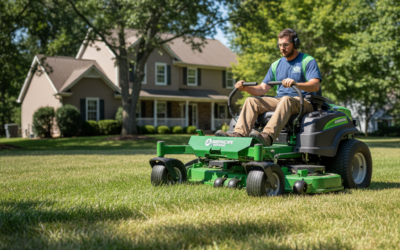
Inspect the mower, blade area, and lawn first. Wear eye protection and sturdy closed-toe shoes, then either plug an outdoor-rated extension cord into a protected outdoor outlet or install a charged battery. Set a conservative cutting height, start the mower with both hands on the handle controls, and mow in overlapping passes while keeping any cord behind you. Release the handle control to stop, disconnect power, wait until the blade is fully still, then clear clippings and store the machine dry.
The basic first-use sequence
An electric lawn mower is simple to use once you treat it as a cutting tool with a live blade, not as an appliance you can switch on and walk away from. Controls, safety keys, discharge options, and drive systems vary by model, so the owner’s manual and the labels on the machine always override generic advice. The sequence below is the household order that stays the same for most walk-behind corded and cordless machines.
- Walk the lawn and pick up debris. Check that the grass is dry enough to stand on without slipping and that the area is clear of people and pets.
- With the mower unplugged or the battery pack removed, inspect the handle, deck, wheels, bag or discharge cover, cord or battery, and the underside for damage or packed clippings.
- Put on eye protection, long pants, and sturdy closed-toe shoes. Tie back loose clothing and keep hearing protection nearby if the mower is loud or you will be working for a long stretch.
- Set a conservative cutting height before you apply power. On a first pass over long or uneven grass, higher is usually safer than forcing a low cut.
- For a corded mower, connect an outdoor-rated extension cord to a protected outdoor outlet and route the cord so it will stay behind you. For a cordless battery mower, inspect the pack, then seat it fully and install any safety key the model uses.
- Stand behind the handle, keep both hands on the controls, and start the mower only when the discharge is pointed away from people, windows, and vehicles.
- Mow in overlapping passes at a steady walking pace. Do not pull the mower back toward your feet, and do not leave the operator-presence handle tied or taped down.
- To stop, release the handle control, wait until the blade and wheels are fully still, then unplug the cord or remove the battery and safety key before you empty a bag, clear a clog, or walk away.
- Clean damp clippings off the deck and bag, store the machine dry, and charge or store the battery according to the charger and mower labels.
The steps that change with power type are the connection itself and how you manage the energy source while you walk. A corded mower adds cord routing and a constant shock and trip hazard. A cordless model adds battery seating, charging, and heat or damage checks. What must never be skipped, even on a short job, is the pre-start inspection, eye and foot protection, a full stop before any hand goes near the deck, and disconnecting power before you leave the machine.
Inspect the mower, blade area, and lawn
Most injuries and poor cuts start before the motor runs. A cracked deck, missing guard, packed chute, or hidden stone can turn a routine mowing into a thrown-object or blade-contact incident. Do this check with the cord unplugged or the battery and safety key removed, and do not squeeze the operator-presence handle while you look the machine over.
What to check on the machine
Start at the handle and work down. Confirm that the operator-presence bar or bail moves freely and springs back when you let go. Look for a bent handle, loose knobs, frayed wiring along the handle, or a damaged switch housing. Check that any safety key, lock-off button, or interlock is present and not taped, wedged, or bypassed.
On the mower deck, look for cracks, missing bolts, a loose wheel, or a discharge chute that will not stay closed or aligned. If the mower uses a rear bag, inspect the bag fabric, zipper or clips, and the mounting hooks. If it mulches or uses side discharge, confirm that the mulch plug or side-discharge cover is the correct part and is fully seated. A missing bag or cover can throw clippings and debris sideways at high speed.
Cords and batteries get their own look. On a corded mower, examine the power cord, strain relief, and plug for cuts, crushed insulation, exposed copper, or a bent prong. On a cordless model, check the battery pack and charger for cracks, leaking residue, swelling, scorch marks, or a damaged latch. Do not install a pack that is wet, hot, or physically damaged.
How to inspect the underside without reaching a live blade
Never tip or reach under the deck while the mower is connected to power or while the blade could still be spinning. Disconnect the cord or remove the battery and safety key, wait until every moving part has stopped, and only then tilt the mower the way the manual describes. Many walk-behind models should be tipped with the air intake or switch side kept from collecting debris, but the safe tilt direction is model-specific, so follow the label rather than a generic rule.
Look for packed grass, twine wrapped around the blade shaft, a bent blade, missing blade fasteners, or objects jammed in the deck. Do not test blade sharpness with your fingers. If a blade looks bent, cracked, or badly nicked, take the mower out of service until a qualified person inspects or replaces it. Blade-bolt tightness belongs in the owner’s manual; do not guess at torque or reuse damaged hardware.
What to clear from the lawn
Walk the yard before you start. Sticks, stones, wire, sprinkler parts, toys, tools, landscape edging fragments, and pet waste can become projectiles or wrap the blade. Mark or mow around low fixtures you cannot move, such as valve boxes and shallow roots. Check the path you will walk: hoses, cords for other tools, and wet leaves are easy to miss once the mower is running.
Postpone mowing when the turf is wet enough that your shoes slip, clippings smear into a paste, or water can reach plugs and battery contacts. A typical walk-behind electric mower is a poor choice for a steep bank, a ditch edge, or grass so tall that the deck will immediately bog down. Slope limits and maximum grass height are not universal; if the yard is steep, uneven, or heavily overgrown, use a higher first pass, cut in stages, or choose another method rather than forcing the machine.
Connect a cord or install a battery without creating a shock or trip hazard
Power setup is where corded and cordless use diverge. In both cases the goal is the same: keep electricity dry, keep connections intact, and keep the energy source from becoming something the blade can cut or the operator can trip over.
Corded mower setup and cord management
Use an outdoor-rated extension cord that is long enough to reach the work without stretching taut, and keep the connection off wet soil if you can. A widely recommended precaution is a GFCI-protected outdoor outlet, because outdoor receptacles and lawns combine water, damaged insulation, and bare skin. Local electrical rules vary, so follow the outlet, cord, and mower labels rather than assuming one receptacle type is required everywhere.
An extension cord is a poor choice for outdoor mowing when it is indoor-rated, cut, patched with tape, missing a ground pin on a grounded plug, too light for the load printed on the mower, or so long and thin that the motor starves and overheats. Do not invent a one-size gauge chart; use the cord specification on the mower or a cord the manufacturer lists as compatible.
Plug the mower into the cord, then plug the cord into the outlet, unless the manual gives a different order. Make a simple strain-relief knot or use the cord hook on the handle if the machine has one, so a tug hits the handle instead of the plug. While you mow, keep the cord behind you and to the side you have already cut. Never cut toward the cord, never hold the cord in the same hand you use to steer into uncut grass, and never drape it over the deck. If you need to cross the cord, stop the mower, move the cord, and start again.
Battery charging, inspection, and installation
Charge a battery pack only with the matching charger on a hard, dry, ventilated surface, away from puddles, damp concrete, and anything that could short the terminals. Let a pack that is very cold or hot from the sun return toward ordinary room conditions before charging if the charger or battery label asks for that. Do not cover the charger with a rag, charge on a bedspread, or leave a pack where children can pull it off a bench.
Before you install the pack, look again for swelling, cracks, a broken latch, or a pack that is unusually hot. Seat it until it clicks or locks, then add the safety key if the mower uses one. Keep spare packs out of the cutting path so you do not run over them.
If a cord, plug, charger, or battery looks damaged, swollen, wet, leaking, or scorched, do not use it. Unplug a charger that is sparking or smoking if you can reach the outlet safely. A cut cord or a damaged pack is a replacement or qualified-service problem, not a tape-and-continue repair.
Wear protection and check the work area
Electric mowers are often quieter than gas models, but they still throw debris, and the blade does not care that the motor is electric. Personal protection and a clear site prevent the injuries that happen in the first few minutes of a rushed job.
Wear wraparound eye protection, long pants, and sturdy closed-toe shoes or boots with decent traction. Sandals, bare feet, and lightweight fabric shoes leave toes exposed if you slip toward the deck or if a wheel drops into a hole. Gloves can help when you empty a bag or pick up debris before the mower starts, but they are not a reason to reach under a live deck. Hearing protection is still worth considering on a long session, in a hard-walled courtyard, or with a model that whines at high pitch. Quiet is not the same as harmless, and there is no single decibel claim that covers every electric mower.
Keep children, pets, and bystanders out of the yard while the blade is turning, and do not let anyone walk in the discharge path. A helper who “just wants to pull the cord out of the way” is standing in the worst possible place. If someone enters the lawn, release the handle and wait for a full stop before you talk to them.
Wet grass, poor light, and cluttered paths raise risk in different ways. Wet turf hides holes, packs the deck, and makes both the operator and the mower slide. Low light hides toys, cords, and the uncut strip you meant to overlap. Clutter forces awkward turns that pull the mower back toward your feet. If you cannot see the ground clearly or keep your footing, wait.
Start the mower and set cutting height
Set cutting height before the blade is live. Most household mowers use axle levers or a single height control that raises or lowers the deck. Choose a setting that will cut grass cleanly without scalping high spots. A useful lawn-care rule of thumb is to remove only about one-third of the grass height in a single mowing. That is a general guide, not a laboratory specification, and it is why a higher first pass is usually safer on grass that grew longer than usual. Cutting too low can yellow the lawn, stall the motor, throw more debris, and leave a ragged finish.
Operator-presence handles, safety keys, and interlocks exist so the blade should stop when you let go or when a key is removed. Typical designs ask you to press a lock-off button or insert a key, then pull a bail toward the handle. Some models add a start button or a brief self-propel engagement. Do not assume a neighbor’s mower starts the same way as yours, and never tape, tie, or wedge the bail so the mower can run unattended.
Before you squeeze the bail or press start, confirm four things: power is connected only because you intend to cut, the discharge points away from people and glass, both of your feet are behind the rear wheels, and nothing is under the deck that you just inspected. Keep both hands on the handle through the start. If the motor sounds strained, smokes, or fails to come up to a smooth note, release the control and disconnect power instead of repeating the start.
A push mower moves only when you push it, which makes pace and direction entirely your job. A self-propelled drive adds a speed control or an extra bar that feeds the wheels. Engage drive only after the blade is running and you are pointed into the first pass. Start in a low drive setting if the control is variable, and be ready to release both the drive and the blade control if the mower pulls you toward a drop-off, a street, or a cord. Self-propelled models can still be pushed by hand if you disengage the drive; they should not be dragged backward toward your legs while the blade is turning.
Mow in a controlled pattern
A controlled pattern matters more than speed. You want even coverage, a discharge direction you chose on purpose, and enough attention left over to manage a cord or a change in slope.
On a typical rectangular lawn, make a first pass around the perimeter to create a turning lane, then mow the interior in straight, overlapping strips. Overlap just enough that you do not leave a thin uncut ribbon; there is no universal percentage that fits every deck width. At the end of a strip, release self-propel if you have it, turn in the already-cut lane, and start the next pass. Keep a steady walking pace. Running makes the cut uneven and puts your feet closer to a machine you no longer fully control.
Point mulching, rear-bag, and side-discharge setups so clippings and debris travel away from people, windows, vehicles, streets, and flower beds you care about. Mulching leaves finely cut clippings on the lawn when the grass is dry and not overly long. A rear bag is useful when you need to keep walks and beds clean, but a full bag changes the balance of the mower and can clog the chute. Side discharge throws a wider stream; treat that stream as a hazard, not as a convenient way to blow the sidewalk.
If you are using a corded mower, plan the pattern so the outlet stays at your back as much as practical. Work away from the outlet in a way that lets the cord trail into cut grass. Flip the cord to the opposite side when you turn rather than letting it drift under the deck. If the cord catches on a tree, corner, or wheel, stop. Do not yank the mower forward to free it while the blade is running.
On slopes, many walk-behind manuals prefer mowing across the face rather than straight up and down, because a downhill slip can put your feet under the deck and an uphill stall can make the mower roll back. That advice is site- and model-dependent. If the slope feels steep enough that you cannot keep both feet stable, or if the mower wants to slide sideways, stop and use another approach. Around trees, beds, and furniture, slow down, keep the discharge pointed inward toward the grass when possible, and do not lift the front wheels to “carve” an edge while the blade is at full speed. In tall or uneven grass, raise the deck, take a first pass, then lower slightly for a second pass. Forcing a low cut through a hay-like lawn packs the deck and invites a stall you may be tempted to clear with the motor still live.
Push the mower; do not pull it back toward your feet to tidy a missed strip. If you must back up, release the blade control, wait for a stop if the space is tight, then reposition. Keep both hands on the handle whenever the motor is running.
Stop, disconnect power, and clear clippings
The shutdown order is the same whether you are emptying a bag, freeing a clog, crossing a driveway, or going inside for water. Release the operator-presence control first. Wait until the blade, and any self-propelled wheels, have come to a complete stop. Only then unplug the extension cord or remove the battery pack and the safety key. The blade can keep moving after the motor is switched off; there is no single coast-down time that applies to every deck, so wait for stillness you can see, not a guessed number of seconds.
If you leave the mower unattended even briefly, disconnect power. A machine that still has a battery seated and a key installed is not “off” in any useful sense if someone squeezes the bail.
It is safe to tip or reach near the deck only after that full stop and disconnect. Use a stick, a plastic scraper, or the tool the manufacturer provides to clear a clogged chute, bag mouth, or underside. Hands should not be the first clearing tool. Packed wet clippings can hide a sharp blade edge, and a jammed blade can move when the clog lets go. Do not hold the bail on with a strap so you can reach under a spinning deck, and do not ask someone else to hold the handle while you clear the chute.
Empty a rear bag before it is so full that clippings fall back into the chute. Shake the bag out away from your face, and keep the discharge opening covered again before you restore power. If you struck something solid, stay disconnected and inspect the blade and deck before the next start.
Clean, charge, and store the mower
Aftercare is not a full service, but skipping it is how decks rust, bags rot, and the next start becomes a clogged, smelly mess. If the mower is warm, let it sit a few minutes after shutdown. Then, with power still disconnected, brush or scrape damp clippings off the deck, wheels, and discharge path so they do not cake into a concrete-like layer. A hose can be tempting; water forced into switches, motor openings, or battery contacts can create the next shock or failure. Follow the cleaning method in the manual, and keep water away from electrical parts.
Turn a grass bag inside out or hose it only if the fabric and the manual allow it, then let it dry before storage so it does not mildew on the mower. Wipe the handle and controls so the next start is not a wet-hand event.
Store the machine indoors or at least under dry cover, on a level surface where it will not be knocked over. Coil an outdoor-rated cord loosely and hang it so it does not sit in a kink or a puddle. Store battery packs dry, away from heat sources, and away from loose metal objects that could bridge the terminals. Many manufacturers want the battery removed for storage; follow that label rather than leaving a pack in the mower by habit. Do not store a damaged or swollen pack “until you deal with it later” in a junk drawer.
After every use, the useful checks are visual: debris off the deck, bag emptied, cord or battery undamaged, guards in place. When performance drops, when the cut becomes ragged, or when you hear a new rattle, add a closer look at the blade path and fasteners. Blade removal and sharpening are high-risk jobs. Incorrect balance or a loose blade can destroy the mower and throw metal. If you are not equipped to do that work the way the manual describes, have a qualified person inspect or replace the blade.
Safety limits and common mistakes
Stop immediately if you hear a new grinding or slapping noise, feel heavy vibration, smell burning plastic or insulation, see smoke, lose traction, or strike a hidden object. Those are inspection events, not invitations to finish the last strip. Also stop if a battery becomes hot or changes shape, if a charger or cord feels hot, or if the mower no longer responds cleanly to the handle control.
The most dangerous cord mistakes are cutting toward the cord, using an indoor or damaged extension cord, leaving connections in standing water, and trying to splice a cut cord with tape so you can finish the yard. A cut cord is an electrical emergency. Release the handle, leave the damaged cord where it is, and disconnect power at the outlet if you can reach that outlet without touching the cut. Do not handle a live damaged cord with wet hands, and do not repair it as a field splice.
The most dangerous battery mistakes are charging a cracked or swollen pack, using a charger that does not match the pack, covering a charger so it cannot shed heat, and installing a wet pack. The most dangerous site mistakes are wet, slippery turf, mowing a slope you cannot stand on, and working around children who think the quiet machine is a toy. Wet grass is not automatically safe just because the mower is electric. Water, cut insulation, and a metal deck are still a shock combination.
Interlocks, guards, bags, and discharge covers stay in place because they aim or contain what the blade throws and because they keep hands out of the deck. Removing them to “get a better discharge” or tying down a bail to reduce fatigue defeats the only things standing between you and the blade. After a hidden-object strike, disconnect power and check for a bent blade, a cracked deck, and loose hardware before you mow again. After a shock, a deep cut, or debris in the eye, stop work and get professional medical care rather than trying to finish the lawn.
If the mower will not start or will not cut well
Household troubleshooting stays on the outside of the machine. You are checking power, controls, and a blocked deck, not opening a motor, charger, or battery pack.
If a corded mower has no power, confirm that the outdoor outlet is live with another known-working outdoor device if you have one, that any GFCI has not tripped, that the extension cord is fully seated at both ends, and that the cord and mower plug are undamaged. Confirm that you are fully engaging the lock-off and operator-presence handle in the order the manual shows. If the outlet is dead, the cord is cut, or the switch housing is broken, stop. Wiring repairs are for a qualified technician.
If a cordless mower will not start, confirm that the battery is charged, fully latched, and intended for that mower. Reseat the safety key. Try a second known-good pack only if it is the correct pack and shows no damage. A pack that will not charge, a charger that stays in a fault state, or a pack that overheats belongs in service or replacement, not in a teardown.
If the mower runs but the cut is ragged or the motor keeps bogging down, raise the cutting height, slow your walking pace, and check for a packed deck, a full bag, or a wrapped blade after a proper shutdown. Dull, bent, or unbalanced blades also leave torn tips and extra vibration. Tall, wet grass will defeat a deck that was fine last week; wait for drier conditions or take multiple high passes.
Stop DIY checks when you would need to cut or splice a cord, bypass a safety switch, open a battery, force a bent blade back into shape, or keep resetting a charger that reports a problem. Those are qualified-service jobs. A mower that runs only when you hold a switch at an odd angle, or a deck that shakes after an impact, should not go back on the lawn until it has been inspected.
Frequently asked questions
Can I mow with an electric lawn mower after a light rain?
Not if the grass is slippery, the clippings smear into a paste, or water can reach plugs, switches, or battery contacts. Electric power does not make wet-turf mowing automatically safe. Wait until footing is secure and connections can stay dry.
Do I need hearing protection if the mower is quieter than a gas model?
Often the noise is lower, but that is not a guarantee you can skip protection. Use hearing protection if the mower is loud to you, if you will be mowing for a long time, or if hard walls bounce the sound back.
Should I bag, mulch, or side-discharge?
Use whichever setup the mower is designed for and that keeps debris pointed away from people and hard surfaces. Mulching works best on dry grass that is not overly long. Bag when you need a cleaner surface. Treat side discharge as a directed stream of clippings, not as an uncontrolled spray.
What is the difference between using a push mower and a self-propelled electric mower?
A push mower moves only with your effort, so you control every start and turn. A self-propelled drive can pull the machine forward as soon as you engage it, which helps on larger lawns but also means you must be ready to release the drive on slopes, near streets, and around a cord.