

Quick Answer: What Is A 3 In 1 Mower Blade?
A 3-in-1 mower blade is a multipurpose lawn-mower blade meant to support three grass-handling modes—usually mulching, bagging, and side discharge—when the deck is set up with the matching mulch plug, collection bag, or discharge chute. The blade’s cutting edges and lift help chop, recirculate, or throw clippings. The deck path still decides which mode actually happens, so the steel blade…

Pros
- Large-size design named in product title
- Sharpening and balancing functions listed
- Listed as a new upgraded version

Pros
- Adjustable 15-to-45-degree range in title
- Sharpening and balancing functions listed

Pros
- Sharpener and balancer functions in title
- 15-to-45-degree adjustable setting listed
- Built for lawn mower blade maintenance
Pros
- Includes replacement gaskets and a 98079-55846 spark plug
- Matches Honda HRR216 and HRS216 lawn mower models
- Designed around the 16100-Z8B-901 carburetor specification
Cons
- Restricted to select Honda GCV160 mower applications
- Installation requires basic mechanical tools and skills
What people mean by a 3-in-1 mower blade
In everyday owner-manual and replacement-parts language, a 3-in-1 mower blade is a single blade sold as able to work with more than one clipping-handling path on a lawn mower. The three jobs people usually have in mind are mulching, bagging, and side discharge. Some decks use rear discharge as the third path instead of, or in addition to, a side chute. That trio is typical marketing and manual wording, not a single legally defined standard, so two manufacturers can use the same phrase for slightly different accessory sets.
The phrase is also ambiguous. It may describe only the steel blade, a blade-plus-accessory conversion kit, or a complete mower advertised as 3-in-1 because it ships with a mulch plug, a bag, and a chute. Readers comparing a replacement blade with a “3-in-1 mower” are often talking about different things. The blade still has to match the deck; the name on the package does not create a third cutting mode by itself. For complementary hardware performance, examine our breakdown on riding lawn mower.
People contrast a 3-in-1 blade with a single-purpose blade because dedicated designs usually lean toward one job. A mulching blade is shaped to recut and recirculate clippings. A high-lift or bagging blade is shaped to move more air and throw material into a bag or out a chute. A 3-in-1 design is sold as a middle option: one blade that can support several modes if the mower deck is configured for each of them. Readers comparing setup options can review our technical analysis on jbl partybox club 120 vs sony srs xv500.
What mulching, bagging, and side discharge actually do
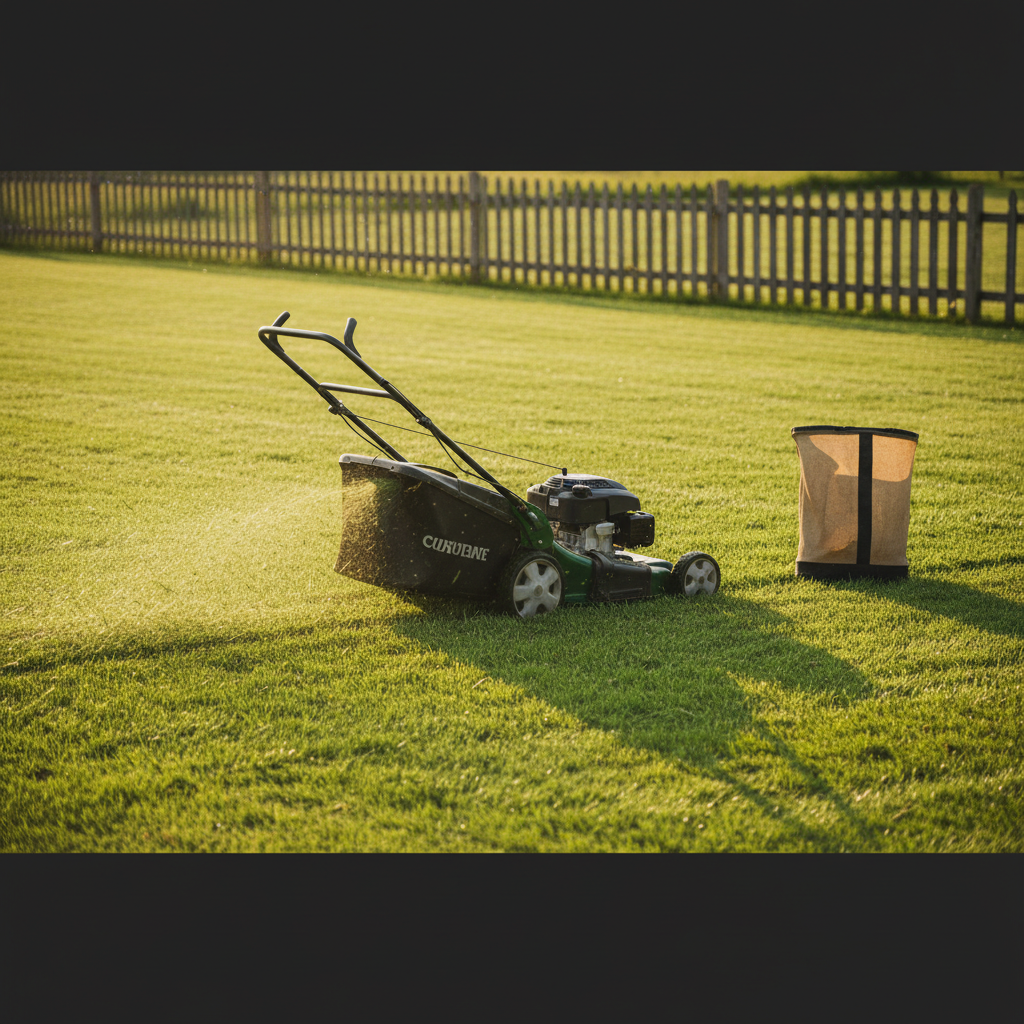
The three modes are about where clippings go after the blade cuts them, not about three different kinds of grass. The same cutting edges can be asked to support all three because the deck path changes. Close the deck and the clippings stay under the housing longer. Open a chute or attach a bag and the airflow the blade creates has somewhere to send them. Readers comparing setup options can review our technical analysis on jbl partybox club 120 vs sony srs xv500. For complementary hardware performance, examine our breakdown on weed eater specifications.
Mulching
In mulching mode, clippings are meant to stay under the deck, get recut into smaller pieces, and drop back into the lawn. Homeowners usually choose this when they want to leave clippings on the turf instead of collecting or scattering them in a visible windrow. Typical aims include less raking and returning some plant material to the surface. Those are intended outcomes, not guaranteed results. Long, wet, or heavy grass can still leave clumps even when the blade is labeled for mulching. For complementary field maintenance guidelines, examine our breakdown of z890 vs x870e motherboard.
Bagging
In bagging or collection mode, clippings are lifted and thrown into a collection bag, hopper, or similar container. People usually bag when they want a cleaner look, when they are collecting leaves mixed with grass, or when they do not want a thick layer of clippings left on the lawn. The blade still cuts and creates airflow. The bag and the sealed path into it do the collecting.
Side discharge and rear discharge
In side-discharge mode, clippings are thrown out through a side chute and spread beside the mower. Rear discharge does a similar job through an opening at the back of the deck. Discharge is often chosen when the grass is too long or wet to mulch well, when bagging would fill too quickly, or when the operator simply wants the simplest open-deck setup. The usual goal is to get material out from under the housing so the blade can keep cutting. Appearance of the discharged strip depends on grass length, moisture, and how the chute is aimed. To evaluate matched hardware tolerances, consult our detailed overview of marshall stanmore iii vs harman kardon onyx studio 8.
Because the blade is spinning in the same housing in every case, changing the exit path is what switches the job. A closed mulching chamber asks the blade to recut. An attached bag asks it to lift and pack. An open chute asks it to throw. That is why one multipurpose blade can be expected to support all three modes without being three different pieces of steel. For complementary field maintenance guidelines, examine our breakdown of z890 vs x870e motherboard.
How blade shape and lift relate to those modes
A mower blade does two mechanical jobs at once. Sharpened cutting edges slice the grass. Raised wings, sails, or similar formed surfaces move air and clippings. People call that second job blade lift: the tendency of the spinning blade to create upward and outward airflow under the deck. Lift helps stand grass up for a cleaner cut and helps carry clippings into a bag or out a chute.
Designers can emphasize one job or the other. Extra cutting surfaces, a more closed or twisted profile, or features that keep clippings circulating are generally intended to help mulching by giving the material more chances to be recut. Higher, more aggressive sails are generally intended to move more air so clippings travel farther into a bag or out a discharge chute. Low-lift shapes move less air, which can be useful when the operator wants clippings to drop more locally or when a high-volume throw is not needed. To evaluate matched hardware tolerances, consult our detailed overview of marshall stanmore iii vs harman kardon onyx studio 8.
A 3-in-1 blade is typically a middle design rather than the most specialized shape for one job. It needs enough cutting action and recirculation to support mulching when the deck is plugged, and enough lift to support bagging or discharge when the path is open. That compromise is the point of the product category. It is also why a dedicated mulching blade or a dedicated high-lift blade can still outperform a multipurpose blade at the single job it was built for. No one unnamed geometry always mulches better or always bags better; the deck, grass conditions, and how sharp the edges are matter as much as the marketing label.
What you can see without a specification sheet is still useful. Look at whether the blade has pronounced sails, extra cutting notches, or a relatively flat profile. Those visual cues hint at whether the designer leaned toward throw, recutting, or a blend. They do not replace the mower maker’s specified blade type, length, or rotation. When planning workspace deployment, consider the engineering criteria outlined in our dyson v8 cyclone vs bissell featherweight stick guide.
Why the deck, mulch plug, chute, and bag also matter
Switching modes is mostly a deck-setup change. The blade does not become three tools by itself. Under the housing, baffles and the shape of the mower deck guide air and clippings. A mulch plug or mulch cover blocks the discharge opening so material stays in the cutting chamber. A discharge chute opens that path and aims the stream. A collection bag, used with the chute or a dedicated bagging adapter, captures what the blade throws. Chute doors and bag airflow have to work with the blade’s lift: if the exit is blocked when you want to bag, or open when you want to mulch, the blade cannot do the job the label describes.
The right blade can still perform poorly if the deck is open when it should be closed, blocked by packed clippings, missing a plug, or fitted with a damaged chute. An open side port during “mulch” use lets material escape before it is recut. A missing or poorly seated bag lets air and clippings leak instead of packing the container. A clogged chute or a bag that cannot breathe reduces the airflow the blade is trying to create, which can look like weak lift even when the blade is the type the mower was designed to use. For additional operational safety benchmarks, see our published testing notes on bissell crosswave hydrosteam vs shark stainforce.
Not every walk-behind or rider includes all three accessories. Some mowers are sold ready for all three modes. Others ship as discharge-only machines, with a mulch kit or bagger offered separately. Before assuming a 3-in-1 blade will do all three jobs on your machine, check the owner’s manual for which parts that deck actually uses: mulch plug or cover, side or rear chute, bag or hopper, and any required baffles or adapters. The manual is also the place to confirm which blade the manufacturer specifies for that deck.
How a 3-in-1 blade differs from a single-purpose blade
A dedicated mulching blade is generally trying to optimize recutting and recirculation. The intended result is smaller pieces that fall back into the canopy rather than a long throw out of the deck. A high-lift or bagging blade is generally trying to optimize airflow so clippings stand up, stay suspended, and travel into a bag or out a chute. A low-lift or standard discharge blade is often chosen when less aggressive throw is preferred, when the operator mainly side-discharges, or when the mower’s design does not need a high-volume bagging sail.
A 3-in-1 blade sits between those roles. The tradeoff is versatility versus specialization. One blade that is asked to mulch, bag, and discharge will rarely match a purpose-built mulching blade at fine recutting and rarely match a purpose-built high-lift blade at filling a bag in heavy conditions. That does not make the multipurpose design useless. For many home lawns, one compatible blade plus the correct plug, chute, or bag is enough if grass is cut often and is not soaked or overgrown.
Someone may still prefer a single-purpose blade even when a 3-in-1 option exists. Frequent bagging of thick growth, a strong preference for leaving finely recut clippings, or a deck that the manufacturer specifies only one blade style for are common reasons. The comparison is about intended use and design emphasis, not a ranking. A 3-in-1 blade is not always good enough for every lawn, and it is not automatically the wrong choice either. Wet, long, or dense grass can overwhelm any of these designs.
Blade-only replacements versus a 3-in-1 mower
If a mower is advertised as 3-in-1, that label usually describes the whole system: a deck that can be closed for mulching, opened for discharge, and fitted with a bag, plus whatever blade the factory installed. It does not automatically describe the blade alone. A conversion kit, when offered, typically adds the missing plug, chute parts, bag, or baffles rather than changing the laws of how a spinning blade works.
A replacement sold as a 3-in-1 blade can be used only if it physically matches the mower. The marketing name is incomplete without length, center-hole shape, mounting style, rotation direction, and a deck designed for that blade’s sweep. “Universal 3-in-1” wording does not mean the blade fits every walk-behind, rider, or other mower. A blade that is too long can strike the housing. A wrong center hole or adapter can sit off-center. The wrong rotation puts the dull side forward. Those mismatches matter more than whether the package says 3-in-1.
Treat the label as a claim about intended modes, then verify fit against the mower maker’s blade specification or a known OEM-equivalent description. If the deck was never designed for a mulch plug or a bagger, installing a multipurpose blade will not add those accessories. Conversely, a mower that already has the plug, chute, and bag may accept a specified 3-in-1 replacement without any other change, as long as hardware and orientation are correct.
Choosing a setup for mulching, bagging, or discharge
Pick the mode for the day’s grass and configure the deck to match. Typical homeowner practice depends on grass length, moisture, and which accessories the mower actually includes. None of these choices guarantees a particular lawn-health result or a particular cut quality.
- Mulching is a reasonable choice when the lawn is dry enough to cut cleanly, growth is not extreme, and you want clippings left on the turf. Install the mulch plug or cover so the deck path is closed, and use a blade the manufacturer allows for mulching.
- Bagging is usually more practical when you want clippings off the lawn, when you are picking up leaves, or when a thick layer of cuttings would be unsightly. Attach the collection bag and any required adapter so the only intended exit is into the bag.
- Side or rear discharge is often the simpler option when grass is long or damp, when the bag would fill constantly, or when you do not need to collect. Open the chute and remove the mulch plug so material can leave the deck.
Before swapping modes or blades, read the owner’s manual for that mower. Confirm which plug, door, chute, and bag the deck uses, which blade is specified, and any warnings about running without a chute, bag, or plug in place. Guards and covers are part of the designed airflow and of operator protection.
Some conditions make any one mode work poorly. Wet grass packs under the deck and in chutes. Grass that is much taller than the chosen cutting height overloads the blade and the chamber. Dense leaves can choke a mulch setup. A bag that is full or a chute that is kinked will clog even with a high-lift sail. In those cases, raising the deck a step, cutting more often, letting the lawn dry, or switching from mulch to discharge or bagging is usually more effective than blaming the 3-in-1 label.
Safety, orientation, and hardware caveats
A mower blade is a sharp, heavy piece of steel even when the engine is off. Edges can cut through gloves, and a blade that is still under spring or belt tension, or that can spin if the shaft is turned, remains hazardous to hands and feet. Incorrect blade type, orientation, or hardware can affect both cutting performance and safe operation. Missing guards, a loose blade, or bypassed safety devices are not acceptable workarounds.
Manuals typically require that you isolate power before reaching under the deck. For a gasoline mower that usually means stopping the engine, allowing moving parts to stop, and disconnecting the spark-plug lead so the engine cannot start. For a battery mower it usually means removing the battery or using the key and interlock procedure the maker specifies. For a corded electric mower it means unplugging the machine. Follow the steps printed for your model rather than a generic checklist from memory, then wait until the blade has fully stopped.
Orientation, rotation, and mounting hardware matter. Blades are directional: the cutting edges must lead in the direction of rotation, and any sails or lift faces must point the way the designer intended, usually so they throw air and clippings correctly under that deck. Mounted upside down, a blade may cut poorly, move air the wrong way, or strike the deck. The wrong length can hit baffles or the housing. The wrong center hole can allow the blade to walk on the shaft. Fasteners, washers, and any blade adapter must be the type the manufacturer specifies, in the order the manual shows, and tightened as that manual requires. This article cannot supply torque values, bolt grades, or RPM limits; those belong in the mower and blade instructions.
Get torque, replacement-part, and balance guidance from the manufacturer’s documentation or a qualified technician. A bent, cracked, or badly out-of-balance blade can vibrate the spindle and the whole machine. If you are not equipped to inspect, mount, and secure the blade to the maker’s standard, have the work done by someone who is. Do not operate the mower with a loose blade, missing hardware, or damaged guards.
Mechanical safety standards, operational tolerances, and protective gear guidelines align with benchmark specifications established by the American National Standards Institute (ANSI).
Limitations and common mix-ups
A 3-in-1 blade can leave clumps even in mulch mode. Common causes include dull edges, grass that is too long or wet, a missing or unseated mulch plug, packed material on deck baffles, and a cutting height that takes off too much in one pass. Those problems can look like the “wrong blade” when the deck path or the grass load is the real issue.
Poor bag fill or a clogged chute has a similar list of explanations. The bag may be full, dirty, or unable to pass air. The chute may be blocked, crushed, or not latched. The deck may still have a mulch plug installed. The blade may be dull or mounted so the lift faces are not doing their job. Heavy, wet clippings overwhelm airflow regardless of whether the blade is sold as 3-in-1, high-lift, or something else.
A newly bought 3-in-1 blade that does not fit, sits crooked, or causes vibration should not be forced onto the spindle. Recheck length, center hole, rotation, and whether an adapter is required. Inspect the blade for shipping damage and the spindle and mounting surfaces for wear. Persistent vibration, unusual noise, or a blade that contacts the deck are reasons to stop and have the deck and blade inspected by a qualified technician. Fitment, balance, and damage questions belong with the manufacturer or that technician, not with guesswork about a generic “universal” part.
It can be time to use a dedicated blade, or to stop using the current one, when the mower maker specifies a different style for the mode you use most, when the multipurpose blade is worn or bent, or when no amount of deck cleaning and mode setup produces an acceptable cut. The 3-in-1 idea is a convenient system: one compatible blade, three possible clipping paths, and accessories that open or close those paths. It is not a promise of fine mulch, clog-free bagging, or a single blade that fits every lawn mower.
For more hands-on benchmarks and buying recommendations, consult our guides on heavy-duty chainsaw buyer guide, as well as high-CFM commercial leaf blower guide.









