The most powerful leaf blower is typically a commercial-grade, gas-powered model designed for maximum air volume and speed. Power in a leaf blower is measured by two key metrics: air volume in cubic feet per minute (CFM) and air speed in miles per hour (MPH). A blower with high CFM moves large amounts of debris, while high MPH blasts material from a distance. The most powerful choice for you depends on your yard size, debris type, and local regulations.
Understanding the Question: What Does “Most Powerful” Actually Mean?
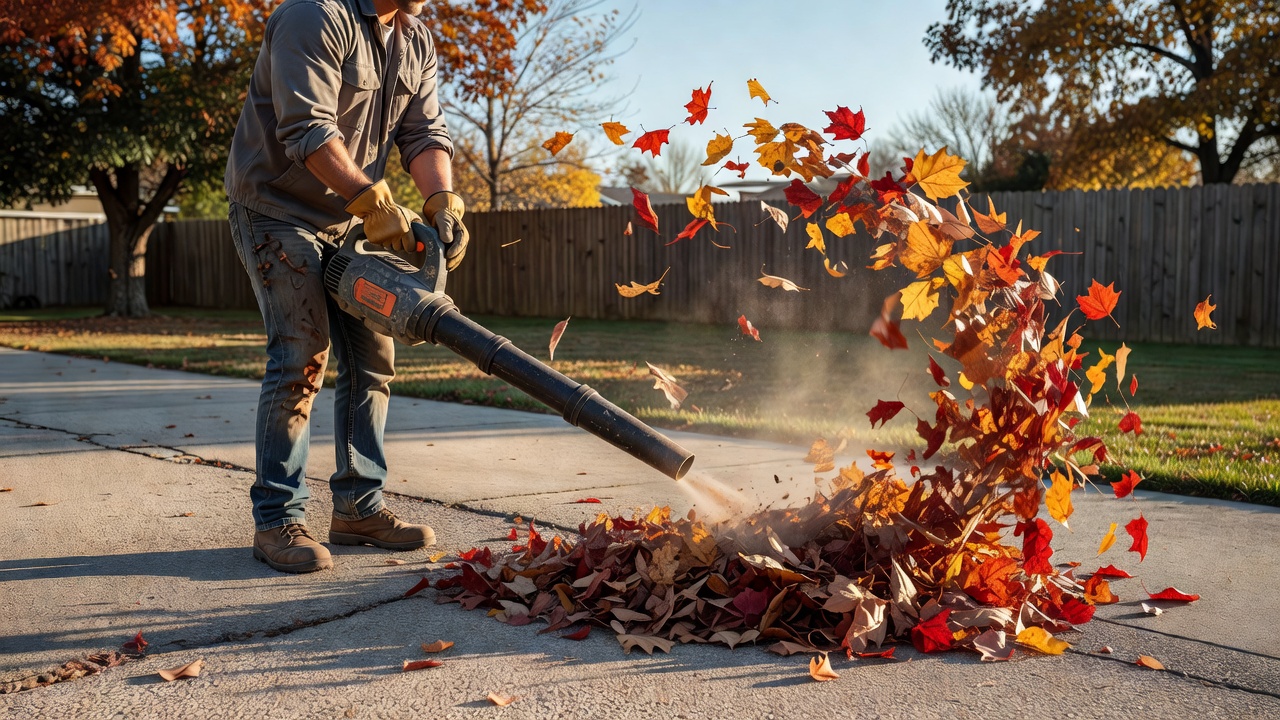
When shoppers ask for the “most powerful” leaf blower, they often assume there is a single, universal answer. In reality, power is defined by two distinct performance metrics, and which one matters most depends entirely on the job you need to do.
Air Volume (CFM) measures how much air a blower moves. Higher CFM means the blower can push more debris at once. This is critical for moving heavy, wet leaves or clearing large piles quickly. A blower with high CFM acts like a wide broom, sweeping a broad path with each pass.
Air Speed (MPH) measures how fast the air exits the nozzle. Higher MPH means the blower can push debris from a greater distance or dislodge stubborn material stuck in cracks or corners. A blower with high MPH acts like a focused jet, concentrating force on a small area.
Most manufacturers list both CFM and MPH in their specifications. A truly powerful blower excels in both areas, but some models prioritize one over the other. For example, a blower with very high MPH but lower CFM might be excellent for clearing gravel from a driveway but less effective at moving a large pile of wet leaves. Conversely, a blower with very high CFM but lower MPH might move a mountain of leaves but struggle to blast debris out of a tight corner.
Which Metric Matters More?
- For wet leaves and heavy debris: Prioritize high CFM. You need volume to move mass.
- For long-distance clearing or stubborn debris: Prioritize high MPH. You need speed to project force.
- For general yard cleanup: Look for a balanced combination of both.
Power Sources Compared: Gas, Corded Electric, and Battery
The power source of a leaf blower is the primary factor that determines its maximum potential performance. Each type has distinct advantages and limitations.
Gas-Powered Blowers
Gas-powered models, especially commercial-grade units, generally produce the highest CFM and MPH ratings. They are not limited by a cord or battery capacity, so manufacturers can equip them with larger, more powerful engines. This makes them the typical choice for professional landscapers and homeowners with very large properties.
The trade-offs are significant. Gas blowers are heavier, louder, and produce emissions. They require fuel and regular engine maintenance, such as spark plug and air filter changes. They also often have higher vibration levels, which can cause fatigue during extended use.
Corded Electric Blowers
Corded electric blowers offer a middle ground. They provide consistent power without the need for fuel or battery charging, and they are lighter and quieter than most gas models. However, their performance is limited by the household electrical circuit and the length of the extension cord. They are best suited for small to medium yards where an outlet is easily accessible.
While some high-end corded models can approach the performance of consumer-grade gas blowers, they generally cannot match the output of commercial gas units. The cord also presents a tripping hazard and can restrict movement around obstacles.
Battery-Powered Blowers
Battery-powered blowers have improved dramatically in recent years. High-voltage lithium-ion batteries now power models that can handle most suburban yard tasks. They are lightweight, quiet, and produce zero emissions, making them ideal for noise-sensitive neighborhoods.
The main limitations are runtime and peak power. Even the best batteries will run out of charge, and high-power modes drain them quickly. While some battery models can produce impressive MPH ratings, they often cannot sustain the high CFM needed for moving large amounts of wet debris over an extended period. They are excellent for quick, regular maintenance but may struggle with the most demanding cleanup jobs.
Key Factors to Consider Before Choosing Maximum Power
Before investing in the most powerful leaf blower you can find, consider whether you truly need that level of performance. More power often means more weight, noise, and cost.
Yard Size and Debris Type
A small suburban lawn with a few trees does not require a commercial-grade blower. For most homeowners, a mid-range battery or corded electric model is sufficient. If you have a large property with many mature trees, especially if you deal with wet leaves, pine needles, or gravel, then a powerful gas model may be justified.
Noise and Emission Regulations
Many municipalities have noise ordinances that restrict the use of loud equipment during certain hours. Gas-powered blowers are often the loudest, and some areas have banned or restricted them due to noise and air pollution concerns. Check your local regulations before purchasing a gas model. Battery-powered blowers are typically the quietest option.
Weight and Ergonomics
More powerful blowers are often heavier. A heavy machine can cause back and shoulder strain, especially during long cleanup sessions. Look for models with padded shoulder straps, harnesses, and ergonomic handles to distribute weight more comfortably.
Maintenance and Fuel Costs
Gas blowers require regular maintenance, including oil changes, spark plug replacement, and carburetor cleaning. They also require purchasing fuel and oil. Electric and battery models have far fewer maintenance needs, though batteries will eventually need replacement.
How to Compare Leaf Blower Power Specs Step by Step
When shopping for a leaf blower, use the following steps to compare models objectively.
- Locate the CFM and MPH ratings on the manufacturer’s spec sheet or product page. These are the primary indicators of air-moving power.
- Compare the balance between CFM and MPH. A model with 700 CFM and 200 MPH will behave differently than one with 500 CFM and 250 MPH. Match the profile to your typical tasks.
- Read independent reviews and user feedback. Spec sheets tell part of the story, but real-world performance can vary based on nozzle design, engine tuning, and build quality. Look for reviews that test the blower on wet leaves, gravel, or other challenging debris.
- Consider the nozzle and tube design. A well-designed nozzle can concentrate airflow more effectively, making a blower feel more powerful than its specs might suggest. Some models include adjustable nozzles for different tasks.
- Check the noise level (dBA). A higher dBA rating means a louder machine. If you plan to use the blower early in the morning or in a residential area, a quieter model may be more practical, even if it has slightly lower power.
Direct Answer: Who Actually Needs the Most Powerful Leaf Blower?
The most powerful leaf blowers are designed for professional landscapers and homeowners with very large properties who need to move massive amounts of debris quickly. For these users, the time savings and efficiency of a high-power commercial gas model can justify the higher cost, weight, and maintenance requirements.
For the average homeowner with a typical suburban yard, the most powerful blower on the market is rarely the best choice. A mid-range battery-powered or corded electric model will handle most tasks effectively, with less noise, weight, and hassle. The right power level is the one that matches your specific needs without unnecessary excess.
When evaluating your options, focus on the combination of CFM and MPH that best suits your yard size and debris types. Consider the practical trade-offs of each power source, and check local regulations before committing to a gas model. By matching the blower’s capabilities to your actual requirements, you will achieve the best results with the least effort.