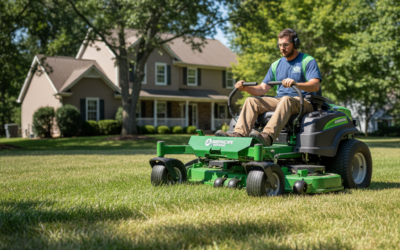
To use a typical walk-behind push lawn mower, clear the lawn and inspect the machine first, set a conservative cutting height, then start it using the controls for its power type. Push at a steady walking pace in slightly overlapping passes, keep both hands on the handle, and never reach under the deck while the blade can still turn. When you finish, release the operator-presence control to stop the blade, shut the mower down completely, wait until all motion stops, then clear debris and store the mower safely.
A push lawn mower is a walk-behind machine you steer from behind the handle. The same safety sequence applies to most home rotary models: prepare the yard, check the mower, set height, start, mow in a controlled pattern, then shut everything down before you touch the deck or blades. Details change with gasoline, corded, battery, or manual reel designs, but the hazards stay similar: spinning metal, flying debris, slips, and energy sources that can restart if you skip a disable step.
What to do before you start the mower
Decide whether the lawn is actually ready to cut. Delay mowing if the grass is wet, the ground is muddy or unstable, light is poor, or a storm is nearby. Wet turf is slippery, clogs the mower deck, and can leave ruts. Tall, soaked grass also mats instead of standing up to the blades. If you cannot see rocks, toys, or drop-offs clearly, wait for daylight or better weather.
Wear eye protection and sturdy closed-toe shoes with decent traction. Long pants help against flying grit. Hearing protection is especially useful on gasoline models, which are louder than most battery or reel machines. Avoid loose clothing, dangling cords, open-back shoes, and anything that can catch in the handle or wheels. Tie back long hair.
Clear people and pets first. Keep children and animals indoors or well away from the yard for the whole job, not just the first pass. Then walk the lawn and pick up rocks, sticks, wire, sprinkler parts, toys, sports equipment, and hidden debris. Those objects can become projectiles through the discharge chute or damage the blades. Note holes, roots, low branches, hoses, and low-hanging fruit of irrigation heads so you can steer around them.
Walking the lawn before the first pass is not optional busywork. It is how you find the things a spinning blade will throw, and how you plan a path that does not send clippings into a street, window, or gravel bed.
Know which kind of push mower you have
Read the labels on your machine before you treat any start sequence as universal. A pure push walk-behind mower moves only when you push it. A self-propelled walk-behind mower still requires you to steer and to keep the operator-presence control engaged, but a drive control can roll the wheels once the engine or motor is running. On a self-propelled model, be ready to release that drive control at every pause, turn, or obstacle.
Power type changes starting, stopping, and energy hazards:
- Gasoline rotary mowers use fuel, exhaust, a hot engine, and usually a pull cord or electric starter. They need outdoor air. Carbon monoxide from exhaust is hazardous in garages, sheds, and other enclosed spaces.
- Corded electric mowers need an outdoor-rated extension cord kept behind you and clear of the blades. Shock and cord-cutting are the extra hazards.
- Battery mowers use a removable or onboard battery pack. Shock and stored energy remain after the motor sounds quiet, so the pack still has to come out before hands-on work.
- Manual reel mowers have no powered spin-down wait, but the helical blades still cut. They are quieter and have no exhaust, yet they remain a cutting hazard if you reach into the reel.
Almost every rotary push mower shares the same working parts: a handle with controls, a mower deck that houses the blades, wheels with cutting-height adjusters, and a discharge path that may send clippings out a side chute, into a grass catcher, or back onto the lawn in a mulching setup. Learn those parts on your machine so later steps make sense.
Inspect the mower and make it safe to handle
Do a visual inspection before you add fuel, plug in a cord, install a battery pack, or pull a starter. Look at the deck for cracks, missing bolts, and packed mud. Check that wheels turn and stay on their axles. Confirm the handle is locked in a comfortable position and that control cables are not frayed or pinched. Inspect the discharge chute, mulch plug, and grass catcher for holes, missing fasteners, and packed clippings. The chute guard or bag should be in place as designed. If a guard, deflector, or bag is missing, do not use the mower until it is restored.
Test the operator-presence control, often a bail lever on the handle, with the mower still disabled. It should move freely and return when released. A defeated, taped, or tied-back bail is a stop-use condition. So is a bent blade that you can see from a safe vantage, a leaking fuel system, a damaged power cord, a cracked battery pack, or a deck that looks like the blade has been striking it.
Disable power before you tip the mower or look near the blades:
- On a gasoline model, stop the engine if it was recently run, let hot parts cool, then disconnect the spark-plug lead and keep it away from the plug so the engine cannot start.
- On a corded model, unplug the outdoor-rated extension cord from the mower and from the outlet.
- On a battery model, remove the battery pack and keep the key or lockout, if the machine has one, in your pocket.
- On a reel mower, set it on a stable surface and keep fingers out of the reel while you check for stuck sticks or wire.
Fuel, oil, battery, and cord checks belong in this same pre-start routine. For gasoline models, check that the tank and fuel lines are intact and that oil is in the safe range shown on the dipstick or fill marks in your manual. Add gasoline only outdoors or in a well-ventilated area, with the engine off and cool, away from flames, sparks, and cigarettes. Never add gasoline to a hot or running engine. For electric models, inspect the entire cord for cuts and crushed insulation, and confirm the battery pack is charged, dry, and undamaged. Do not use a mower with a leaking tank, a damaged cord, or a swollen or cracked battery.
If anything safety-critical is missing or broken, stop. Visual checks are enough at this stage. Blade torque, oil capacity, fuel grade, and service intervals belong in the model manual, not in a generic walk-through.
Set the cutting height
Cutting height is the distance the deck holds the blades above the soil. On most rotary push mowers you change it with a lever at each wheel or with a single deck lever. Some older designs use axle positions. Set every adjuster to the same height unless your manual describes a specific staggered setup. Mismatched wheels tilt the deck, which scalps one side and leaves a ridge on the other.
A widely used lawn-care practice is to remove no more than about one-third of the grass blade in a single mowing. That is a general guideline, not a promise for every species or season. If the lawn is overgrown, raise the deck for the first pass, then lower it gradually over later mowings rather than forcing a low cut through thick growth. Raise the deck as well for thick, wet, or uneven grass so the mower can move clippings instead of choking.
There is no single height in inches that is correct for every lawn. Cool-season and warm-season grasses, shade, and drought all change what “reasonable” looks like. When in doubt, start higher. You can always make a second higher-quality pass later. You cannot put scalped crowns back.
After you set height, confirm the discharge path still matches the job. A grass catcher, side-discharge deflector, or mulching plug should be locked in as the machine was designed to use it. Do not operate with an open, unguarded discharge.
Start the mower
Stand behind the handle, not beside the deck. Point the discharge chute away from people, windows, vehicles, streets, and gravel. Keep bystanders out of the yard. The operator-presence control, or bail lever, is the handle bar or blade you hold to tell the machine a person is still in control. On modern powered walk-behind mowers it must stay engaged for the blades to run. Never tape it down, wedge it, or tie it back.
Typical start patterns differ by power type. Always follow the label on your machine if it conflicts with a generic description.
Gasoline walk-behind mowers
Use the mower only outdoors. Set the machine on level ground if you can. Engage the bail, then use the primer, choke, throttle, and starter the way the controls are marked. Many cold engines need choke or a few primer-bulb presses; many warm engines need less. Pull the starter cord in a smooth stroke, or use the electric-start button if the mower has one. Do not invent a required number of pulls. If the engine does not start after the labeled sequence, stop and check the simple items in the troubleshooting section rather than flooding the carburetor through guesswork.
Corded and battery mowers
For a corded model, connect an outdoor-rated extension cord, keep the connection off wet soil if the design allows, and route the cord behind you so you will not mow over it. Engage the bail or two-step start control as labeled. For a battery model, seat a charged battery pack fully, then use the labeled start control while holding the bail. Keep the cord or unused battery away from the deck.
Manual reel mowers
There is no powered start. Confirm the reel turns freely, then simply push. The blades cut only while the reel turns, but they can still pinch or cut if you reach in.
Once a powered mower is running, stay behind the handle. Do not walk around to the discharge or lean over the deck to “see if it is spinning.”
Push, steer, and mow in a practical pattern
Walk at a comfortable, steady pace. Rushing leaves strips and clogs the deck; creeping so slowly that grass is beaten rather than cut can leave a ragged finish. Overlap each pass slightly so the blades cover the uncut edge. Keep both hands on the handle and both feet behind the deck.
A practical pattern for a typical yard is to mow a clean border around the perimeter first, then work in straight or gently curved lanes. That border gives you room to turn without chewing flower beds. At the end of a row, slow down, ease off a self-propelled drive if you have one, and turn with the deck still in front of your feet. Never pull a running rotary mower back toward your legs to “fix” a missed strip. Release the bail, wait for the blades to stop, then reposition.
Point the discharge chute away from people, streets, windows, parked cars, and gravel. When you mow along a sidewalk or driveway, aim clippings back onto the lawn if the layout allows. Around trees, beds, and fences, slow down and keep the deck from scraping trunks or edging stones. Do not force the mower into wire fencing or over loose rock.
Treat slopes with extra caution. Widely recommended practice with a walk-behind mower is to mow across a slope rather than straight up and down, and to avoid steep, unstable, or wet slopes entirely. There is no single degree limit that is safe for every machine and every operator. If you cannot keep solid footing and full control of the handle, do not mow that slope. Self-propelled drive can pull you faster than you expect downhill; use the drive control only as labeled and be ready to release it.
Skip wet turf when you can. If you must finish a job after a light dew, raise the deck, slow down, and clear the chute more often after full shutdown. Do not mow in standing water or on slick mud.
Stop the blade and shut the mower down
Releasing the operator-presence control is designed to stop the blade on modern powered walk-behind mowers. That is the pause control for a moment at the end of a row, a conversation, or a clog. It is not the same as making the machine safe to touch. Wait until the blades have fully stopped. Coast-down time varies; do not assume an instant stop.
For a complete shutdown:
- Release the bail and, on gasoline models, move the throttle or engine switch to the labeled off position and wait until the engine is still.
- On electric models, release the control, then unplug the cord or remove the battery pack before any hands-on work.
- On a reel mower, stop pushing and wait until the reel is motionless.
Before you leave the mower, cross a driveway, empty a grass catcher, or unclog the deck, shut it down completely and wait for all motion to stop. Then disable power the same way you did for inspection: spark-plug lead off and away from the plug on a gas mower, cord unplugged, or battery pack removed. Never reach into the discharge chute or under the deck while the mower is capable of starting.
If you only need to cross a smooth sidewalk with a still-running mower, that is still a judgment call. The safer habit is to stop the blades, look for traffic, and restart on the far side. A spinning blade on pavement throws grit and can damage the cutting edge.
Clean up, handle clippings, and store the mower
After the last pass, shut the mower down, disable power, and wait for a full stop. Scrape or brush clippings from the deck underside and discharge chute with a stick or plastic scraper, not your hands. Avoid spraying water into a hot gasoline engine, a muffler, or electrical openings. Packed clippings hold moisture against metal and can hide wire or stones for the next start.
Side discharge, bagging, and mulching are handling choices, not ranked products:
- Side discharge throws clippings out the chute. It is simple on tall grass but can scatter debris if you aim poorly.
- Bagging collects clippings in a grass catcher. Empty the bag before it is stuffed so airflow does not collapse and clog the deck.
- Mulching recuts clippings and drops them into the lawn. It works better when you are not removing a huge amount of leaf tissue at once.
Use clippings as your lawn and local rules allow. Do not blow them into streets or storm drains.
Do a short end-of-job check so the next start is not a surprise. Confirm the bail returns, the chute is clear, wheels are still at the same cutting height, and there is no fresh fuel smell or damaged cord. If you used gasoline, store leftover fuel only in an approved container, away from living spaces and ignition sources. Store battery packs in a dry place according to the tool manufacturer. Coil cords without sharp kinks. Keep the mower off bare soil if you can, so moisture does not sit against the deck.
Do not invent storage temperatures, fuel-stabilizer doses, or disposal rules. Follow the manual and local rules for leftover gasoline and batteries.
Mistakes, limits, and when to stop
Most problems with a push lawn mower come from rushing the setup or fighting the machine. Common mistakes include mowing hidden debris, cutting too low on the first pass, walking so fast the deck cannot process grass, aiming the discharge at gravel, and forcing a clogged chute while the blades can still turn. Scalping often means the deck is too low, one wheel is on a different notch, or you turned with the deck over a high spot. Debris kickback often means the lawn was not walked first or the chute was pointed at a hard surface.
Never defeat the operator-presence control. Never operate with a missing guard, a leaking tank, or a damaged cord. Never reach under a live deck. Those shortcuts are how serious blade and amputation injuries happen.
A typical walk-behind mower is the wrong tool for some jobs. It is not a riding mower, robotic mower, or commercial unit. It is a poor choice for very steep banks, deep ditches, heavy brush, and areas full of rocks or wire. This guide does not cover blade sharpening procedures, carburetor work, or electrical repairs. If the mower has a known safety recall condition, missing guards, a blade that strikes the deck, or damage you cannot make safe with a visual check, stop using it and seek qualified service.
If the mower will not start or will not cut evenly
Stay with obvious, reversible checks. Confirm the bail is fully engaged. On a battery model, confirm the pack is charged and fully seated. On a corded model, confirm the plug is fully in and the cord is not cut. On a gasoline model, confirm there is fuel in the tank and that the labeled choke or primer steps were used. Stale fuel left from a previous season is a common reason a gas engine will not start; treating that usually means proper fuel handling or service, not a safety-switch bypass.
If the mower runs but will not cut evenly, look at setup before you assume a repair. Mismatched cutting-height levers, a clogged chute, walking too fast through thick grass, or a damaged blade can all leave strips and waves. A blade that is bent from hitting a hidden object can also cause vibration. Do not continue if you feel heavy vibration, hear metal-on-metal noise, or see fuel leakage.
Do not clean a carburetor, gap a spark plug from memory, or defeat a safety switch to “just get it started.” If the labeled controls fail, or if anything about the machine feels unsafe, stop and take it to a qualified technician.
Quick recap
Using a push lawn mower well is a loop, not a single trick. Clear the yard and inspect the machine. Set a consistent, conservative cutting height. Start from behind the handle with the discharge aimed somewhere harmless. Push at a walking pace in slightly overlapping lanes, keep both hands on the handle, and treat slopes and wet ground as reasons to slow down or stop. When you pause or finish, release the bail, shut the mower down, wait until the blades stop, then disable power before you clean, bag, or store anything. That sequence works across gasoline, corded, battery, and reel walk-behind mowers, and it is the part that stays the same even when the labels on the handle look different.