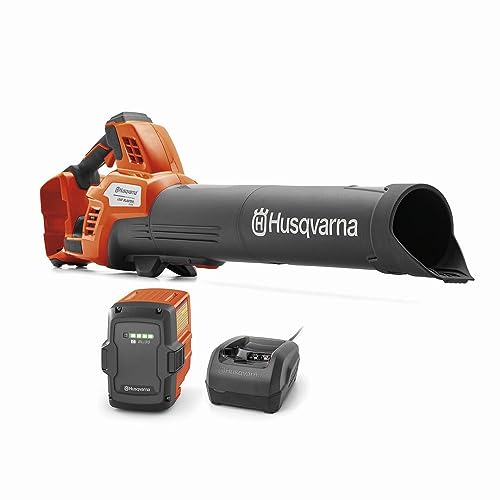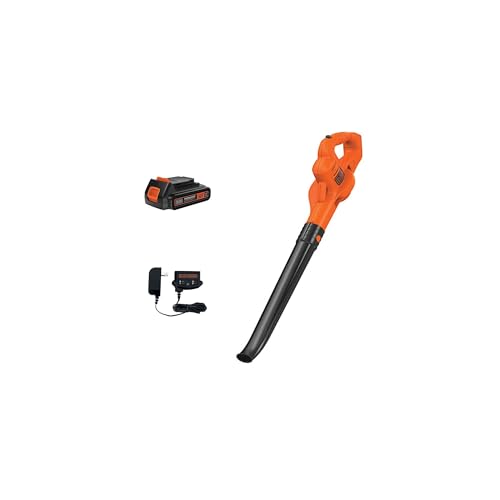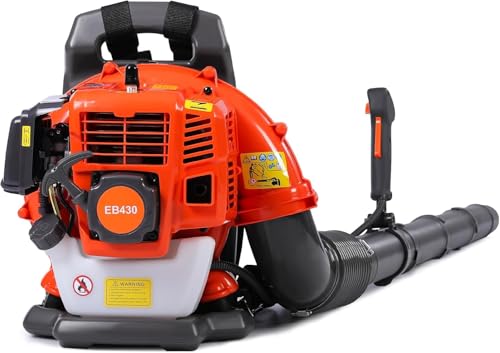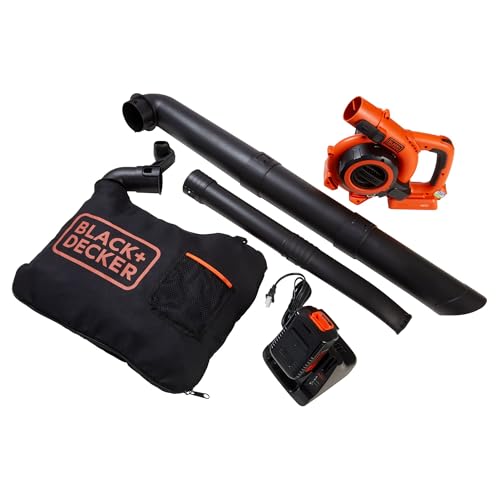
Quick Answer: Choosing the Best Electric Leaf Blower
There is no single best electric leaf blower for every home. The strongest choice is the one that matches your yard size, leaf and debris type, and whether you want a cord’s continuous power or a battery’s mobility. Compare usable air volume and air speed together, then weigh weight, noise, runtime or cord reach, comfort, and whether vacuum or mulch…

Pros
- Delivers up to 615 CFM and 170 MPH in turbo mode
- Variable speed dial with lock-on button from 200–480 CFM
- High-efficiency brushless motor reduces operating vibration
- Includes 56V 2.5Ah battery and standard 50-minute charger
- Fully compatible with all EGO 56V ARC Lithium batteries
Cons
- Turbo mode rapidly reduces the available battery runtime
- Weighs 7.5 pounds, which may feel heavy with larger batteries
Pros
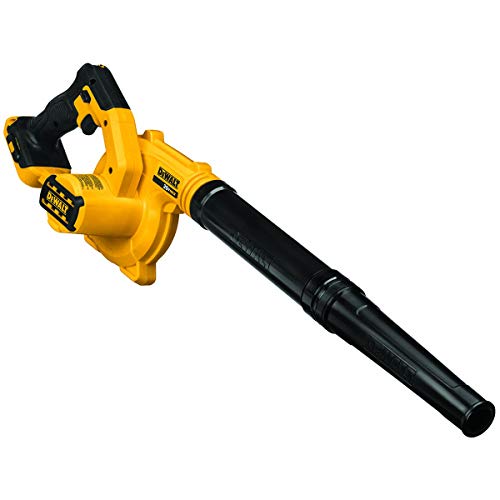
- Lightweight 2.5-pound design fits into tight spaces
- 3-speed variable switch plus variable speed trigger
- Trigger lock-on reduces hand fatigue during continuous use
- Includes 3 nozzle attachments for different clearing tasks
Cons
- Sold as a bare tool without battery or charger
- 100 CFM airflow is strictly intended for jobsite debris
Pros
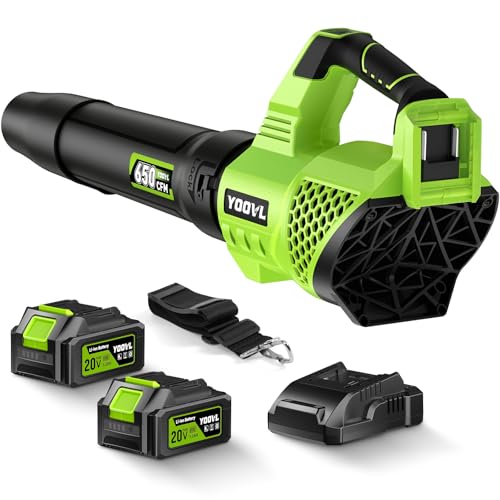
- Airflow rated up to 650 CFM using advanced turbo technology
- Comes with two high-capacity 20V 5.2Ah batteries and fast charger
- Three selectable speed modes for delicate to heavy-duty jobs
- Includes an adjustable shoulder strap to reduce arm fatigue
- Includes blower tube and extension nozzle attachments
Cons
- Maximum 150-minute runtime applies only to low-speed mode
- Heavier battery packs may add weight during prolonged handheld use

Pros
- Brushless motor delivers rated airflow up to 650 CFM and 180 MPH
- Includes two 20V 4.0Ah batteries and a fast charger
- Six adjustable speed settings ranging from 80 to 180 MPH
- Comes with an ergonomic shoulder strap and two detachable nozzles
- Includes a storage bag to keep components organized
Cons
- Stated 30-minute runtime is restricted to low-speed operation
- High-speed settings will deplete battery charge more rapidly

Pros
- Includes two 20V 2.0Ah batteries and a fast charger
- Extremely lightweight design at just 3.4 pounds
- Two selectable speed modes match light and heavier tasks
- Ergonomic non-slip grip allows comfortable one-handed use
- Comes with an extension nozzle for targeted airflow
Cons
- Runtime decreases significantly at the higher speed setting
- Best suited for light residential cleanup rather than dense debris
Pros
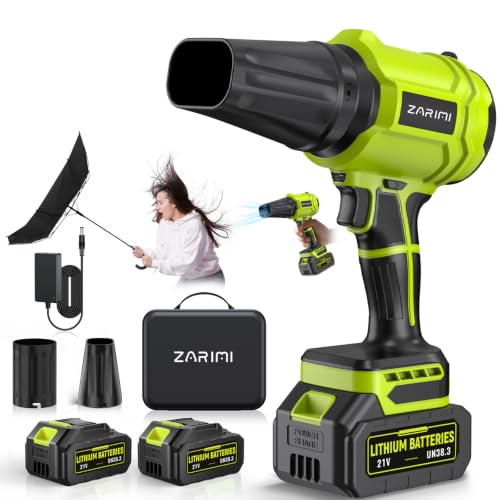
- Extremely lightweight at only 2.8 pounds for low-fatigue use
- Reaches stated air speeds over 50 m/s (110+ MPH)
- Comes with two batteries and charger for alternating use
- Includes a concentrated narrow nozzle for detailed edging
- Compact footprint stores easily in tight spaces or vehicle trunks
Cons
- Limited runtime of only about 13 minutes per battery
- Not designed for moving heavy or deep piles of wet leaves

Pros
- Weighs only 2.28 lbs for easy one-handed operation
- Includes two 21V 4000mAh lithium batteries
- Variable speed trigger provides precise airflow control
- Comes with an extension tube and flat nozzle attachment
Cons
- Rated runtime tops out at roughly 30 minutes
- Not designed for large properties or heavy wet debris

Pros
- Includes two 3.0Ah batteries for swapped use
- Stated output reaches up to 680 CFM and 230 MPH
- Lightweight handheld design at roughly 3.96 lbs
- Comes with two interchangeable blower tubes
- Built-in battery level indicator lights
Cons
- Combined runtime is roughly 40 minutes across both batteries
- Two speed settings offer limited flow adjustments

Pros
- Lightweight build suitable for one-handed operation
- Operates at a relatively quiet 65 dB
- Rated up to 200 MPH and 600 CFM output
- Cordless battery platform allows flexible movement
- Versatile for dry debris, sawdust, and car drying
Cons
- Runtime decreases significantly at maximum output
- Single included battery limits extended sessions
- Not suited for heavy, wet leaf accumulations

Pros
- Includes two 21V 4.0Ah batteries for extended runtime
- Delivers up to 420 CFM airflow and 150 MPH air speed
- Lightweight design weighs under 3 lbs bare tool for low fatigue
- Comes with both round and flat interchangeable nozzles
- Two adjustable speed settings for varying cleanup tasks
Cons
- Limited to two preset airflow speeds
- Best suited for dry leaves and light debris rather than heavy wet waste
What “best” depends on
A ranked winner only makes sense if every yard, user, and cleanup job is the same. They are not. Dry maple leaves on a driveway behave differently from wet oak mats on grass. A townhouse patio is a different job from a suburban lot with street trees, fences, and stairs. The person who will actually hold the tool also matters: wrist strength, storage space, and tolerance for noise or a trailing cord change the right pick more than a voltage number on a box.
Rank the decision in this order. First, the job: how large the area is, how often you clear it, and whether the debris is loose and dry or damp, needle-like, or stuck in corners. Second, the power source you can live with: a corded leaf blower that runs as long as the outlet does, or a cordless leaf blower that you can carry around obstacles. Third, comfort and control for the length of a typical session. Brand marketing and a single headline spec sit after those constraints, not before them. For additional operational safety benchmarks, see our published testing notes on jbl partybox club 120 vs sony srs xv500.
An electric leaf blower is a strong fit for typical home cleanup: dry leaves on hardscape, light scatter on a lawn, and occasional wet clumps you can lift with a focused stream. It is a weaker fit when the work looks more like commercial groundskeeping, thick mud, large branches, or a property so large that you would spend more time managing batteries or a cord than moving debris. In those cases a rake, tarp, or a different class of machine may finish the job with less frustration. Electric tools often start more easily and need less routine engine maintenance than gas blowers, but they do not automatically replace every gas unit on every lot.
How electric leaf blowers actually move debris
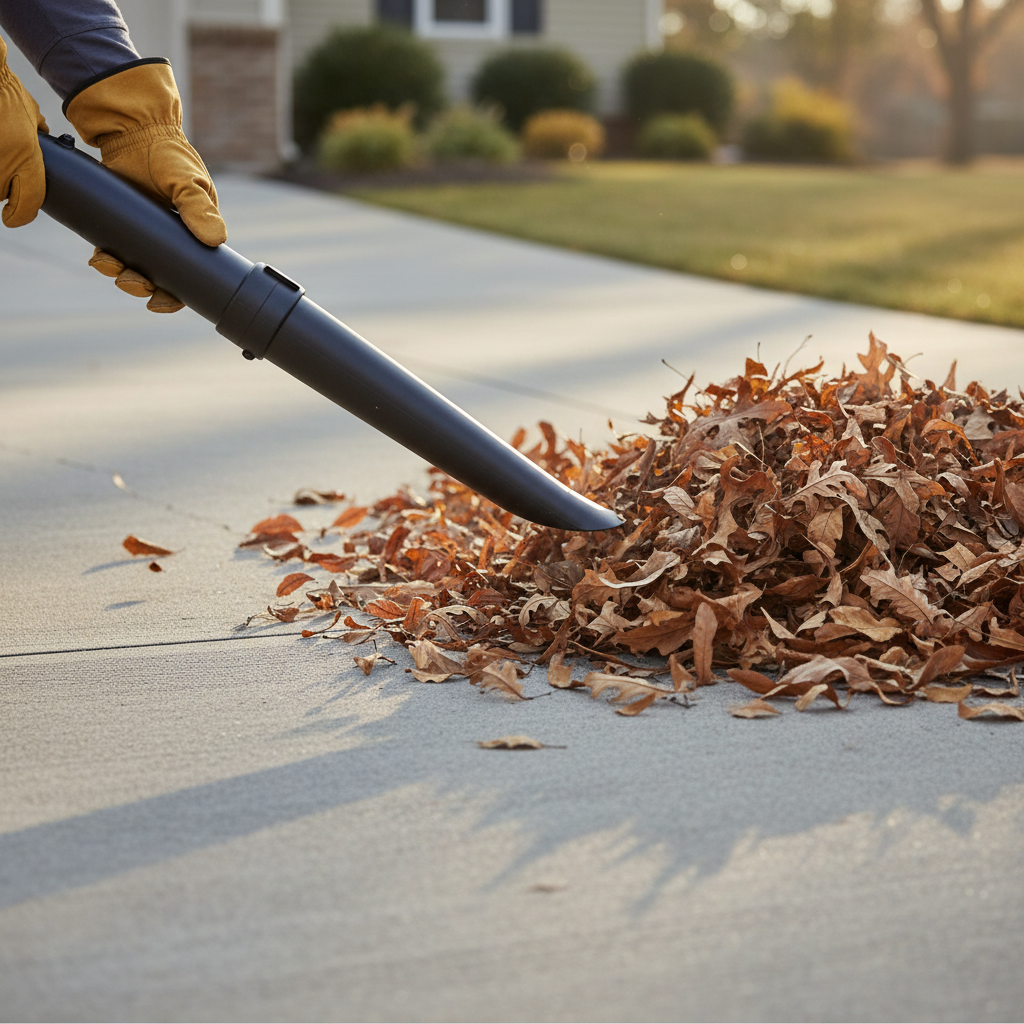
Performance claims usually split into two ideas that people treat as a scoreboard. They are not interchangeable. Air volume is how much air the tool moves. Air speed is how fast that air leaves the nozzle. Loose, dry leaves on pavement respond well to a wide, high-volume stream that rolls a carpet of debris toward a pile. Wet, matted, or stuck material often needs higher air speed and a tighter stream so the blast can get under an edge and lift it. For additional operational safety benchmarks, see our published testing notes on jbl partybox club 120 vs sony srs xv500.
Usable performance is the combination of those two ideas plus how well you can aim and modulate the stream. A tool that looks strong on paper but only runs at one harsh setting will scatter mulch, sting bare skin, and bounce gravel. A slightly milder tool with variable speed and a nozzle you can control often clears a home yard faster because you spend less time repairing the mess you just made.
Look past a single headline number. Manufacturer air ratings are useful for a rough comparison inside one brand family, but they are not always measured the same way across brands. Treat them as directional, not as a guarantee. Also look at: To compare alternative configurations, check our hands-on review of z890 vs x870e motherboard.
- Whether speed is variable or only a couple of fixed steps.
- Whether a concentrator nozzle or tapered tip is included for stubborn spots, gutters from the ground, and fence lines.
- How the tube length and sweep angle let you work without stooping or blasting your own feet.
- Whether you can lock a cruising speed so your trigger finger is not clenched for the whole session.
Nozzle shape changes real-world control as much as the motor. A wide opening spreads the stream for dry leaves on a driveway. A concentrator nozzle trades some of that width for a faster, more pointed jet. Switching between those modes is often more useful than chasing the largest printed figure on the carton.
Corded versus cordless electric blowers
Power-source preference is not a fashion choice. It is a constraint you will feel on the first windy Saturday. Users looking for related component recommendations can explore our marshall stanmore iii vs harman kardon onyx studio 8 breakdown.
What a corded blower still does well
A corded leaf blower can run as long as it has power. There is no mid-job battery swap and no extra pack to buy so you can finish the back fence. For a small-to-medium lot with a convenient outdoor outlet and a clear path around the work area, continuous power is a genuine advantage. The trade is mobility. You are limited by cord length, by how you route the cord around shrubs and vehicles, and by trip hazards on wet grass or steps.
If you go corded, use an outdoor-rated extension cord that matches the tool maker’s guidance for gauge and length. Indoor-only cords do not belong outside. Keep connections off wet ground, inspect the cord before each use, and retire damaged insulation instead of taping over it. A longer, thinner cord can starve the motor and make the tool feel weaker than the listing suggested. Plan the route so you pull the cord behind you rather than looping it around your ankles. Before finalizing equipment decisions, refer to our comprehensive dyson v8 cyclone vs bissell featherweight stick comparison.
Where a cordless blower wins
A cordless leaf blower removes the leash. That matters around fences, parked cars, decks, stairs, and the strip of leaves between the sidewalk and the street. You can start at the far corner of the lot and work with the wind instead of walking back to an outlet. The costs of that freedom are runtime, charge time, spare-battery expense, and temperature. A pack that feels ample on a cool, dry morning can fade sooner in cold weather or when you stay on full trigger through wet leaves.
Plan cordless use the way you plan a cordless mower or trimmer. One battery may be enough for a patio and a short hedge line. A larger property, thick debris, or a user who hates stopping mid-job usually needs a second pack and a charging habit that starts the night before. Do not assume a higher voltage label equals a stronger blast. Voltage, battery size, motor design, and nozzle all interact. Two tools that share a number on the housing can feel different in the hand. For broader ecosystem context, read through our operational guide on bissell crosswave hydrosteam vs shark stainforce.
When an existing battery platform matters most
If you already own cordless tools from one battery platform, staying inside that ecosystem is often more practical than chasing a slightly stronger standalone blower with incompatible packs. Shared batteries reduce the number of chargers in the garage and make a spare pack useful for more than one chore. Switch platforms only when the existing line clearly cannot cover the yard, the form factor you need, or the comfort of the person who will use it. A lonely extra-strong blower that needs its own orphan batteries is an easy way to overspend.
Handheld, backpack, and other form factors
Form factor decides who can finish the job without a sore wrist, not just how the tool looks on a hook.
A compact handheld blower is for smaller lots, short sessions, and people who want something they can hang on a wall. It is the usual electric leaf blower shape: motor and battery or cord at the rear, tube in front, one or two hands on a handle. That design is easy to store and quick to grab for a porch, patio, or driveway. On a larger property or a long session, the same weight hanging off the wrists becomes the limiting factor, even if the air stream is adequate.
A backpack blower or a harnessed design moves much of the mass onto the hips and shoulders. That can reduce fatigue more than a modest gain in air power would, especially if you already know you spend a long time walking the same route each week. It does not automatically mean every backpack electric is stronger than every handheld unit. Some backpacks exist mainly to make a heavier battery and motor wearable. Try the harness fit if you can. Poorly adjusted straps turn a “supported” tool into a backache.
Balance and grip matter as much as total weight. A nose-heavy tube fights you at the end of every sweep. Vibration in the handle adds up even when the number on the spec sheet looks modest. Some people prefer two-handed control for aim; others need a design they can manage with one hand while opening a gate or moving a pot. Smaller households should also check storage length, whether the tube comes apart, and whether the lightest user in the home can lift the tool from a hook and carry it down steps. A blower that only the strongest person can use will sit unused while leaves mat on the walk.
Match the blower to yard size and debris
Specs become useful only when you picture the actual route you walk.
On a small patio or townhouse lot, the job is usually edges, corners, and a short hardscape run. A compact handheld unit with variable speed is often enough if you can work toward one collection point and bag or bin the pile. You do not need to “win” a volume contest. You need control next to planters, a parked car, and a neighbor’s door.
On a suburban lawn with several trees, think in passes, not in one heroic blast. Dry leaves on pavement are the easiest electric-blower task. Start at the upwind side, keep the stream low, and roll debris toward a driveway or tarp instead of chasing individual leaves across the grass. Grass grabs leaves; hardscape releases them. Many people finish faster by blowing onto pavement and collecting there than by trying to march everything across the lawn in one pass.
Debris type changes the job more than lot shape:
- Wet leaves cling and need patience, a concentrator nozzle, and sometimes a second pass after the sun or wind dries the surface.
- Pine needles and seed pods are light but slippery; they lodge in ground cover and need a focused stream and often hand pickup.
- Gravel, decorative rock, and dusty soil turn a full-trigger blast into projectiles and a haze. Drop the speed.
- Gutter-adjacent debris and fence-line drifts need a longer tube and careful aim so you do not drive material into the neighbor’s yard or the street.
A blower is the wrong first tool for thick thatch, mud, ice, or large branches. Those jobs need a rake, shovel, or saw, not a stronger trigger pull. Using air to attack material that should be lifted by hand wastes battery or heats a corded motor while scattering grit. If your “leaf” problem is actually compacted organic mats after storms, plan a mixed method: lift the worst clumps, then blow the loose remainder.
Any rule of thumb about acreage is only illustrative. Two lots of similar size can differ completely if one is open lawn and the other is beds, fences, and wet shade. Match the tool to the hardest regular task you actually do, not to the cleanest photo of a driveway in autumn sun.
Weight, noise, and comfort in real use
A slightly less powerful blower that you can hold steadily often finishes a yard faster than a heavier unit with a more impressive rating. Fatigue makes people stop, switch to full blast because they are tired of modulating, or skip the last fence line. Balance, trigger design, and nozzle length show up in the last ten minutes of a session, which is when most leftover debris lives.
Variable speed is a comfort feature and a control feature. Near flower beds, cars, windows, and gravel, a lower setting keeps mulch in place and reduces the chance of a stone hitting glass. A cruise lock or speed latch reduces the death-grip on the trigger. If you cannot try the tool in person, at least check whether the handle angle lets the tube sit parallel to the ground without bending your wrist, and whether a shoulder strap is available on heavier handheld models.
Electric blowers are often quieter and simpler to start than comparable gas blowers. They are not silent. High air speed is noisy by nature, and a morning session can still bother a shift worker next door. Think about your own hearing as well as neighbor goodwill. Hearing and eye protection are prudent for regular use even when a tool is marketed as quiet. Do not treat “electric” as permission to skip glasses or to run the tool at dawn beside an open bedroom window. If you can, handle a display model long enough to notice vibration and whether the exhaust or motor housing blows toward your face.
Comfort features worth checking before you buy:
- Weight distribution with the battery installed or the cord attached, not the empty tube on a pegboard.
- Handle shape and whether you can reach the speed control without shifting your grip.
- Nozzle length and whether extra tubes are included for taller users.
- A usable strap on anything that will be run for more than a short burst.
- How quickly the tool starts and stops when you need to pause for a pedestrian or pet.
Vacuum and mulch features: when they matter
Some electric units convert into a vacuum mulcher. The idea is simple: instead of only pushing leaves, the tool pulls them into a bag and shreds them so the pile takes less space. That helps when your real bottleneck is collection and you mostly have dry, leafy debris you want to bag or add to a compost pile. It is less helpful when you only need to move leaves off a walk and into a bed, or when the conversion takes long enough that you never bother.
Expect trade-offs. Vac kits add weight and bulk. Wet leaves, twigs, and acorns clog intakes and bags. Emptying a bag every few minutes can be slower than blowing a neat pile onto a tarp and lifting the tarp. Manufacturer shred ratios are marketing claims unless you have a clear test method behind them; treat them as “leaves come out smaller,” not as a precise recipe for municipal-bag rules or compost quality. Those rules and results vary by city and by what else is in the pile.
Skip vac mode if you already have an easy collection habit, if your debris is routinely wet or full of sticks, or if the person using the tool cannot manage the extra weight. Buy it when you dislike raking piles into bags and your typical debris is dry leaves on hardscape or short grass. Try the conversion once in the store parking lot of your mind: if the thought of swapping tubes and clipping a bag feels like a chore, you will blow and bag by hand anyway.
A practical way to choose without a ranked list
Decide in a fixed order so listings cannot yank you around.
- Constraints: Do you have a safe outdoor outlet and a workable cord path, or do fences, vehicles, and a street strip make a cord miserable? Who will use the tool? Do you need to collect leaves or only relocate them?
- Form factor: Handheld for short, light work; backpack or harnessed support if sessions run long or the user is sensitive to wrist load.
- Power source: Corded for continuous runtime on a simple lot; cordless for mobility, especially if you already own a compatible battery platform.
- Comfort: Weight, balance, variable speed, and whether you can hold a natural sweeping posture.
- Performance band: Compare air volume and air speed together, preferably among tools from the same brand family so the ratings are at least in conversation with each other. Ignore orphan numbers that are not paired with control features.
Useful listing details include tube configuration, whether a concentrator nozzle is included, battery compatibility, weight with a typical pack installed, and whether vac parts are in the box or sold separately. Marketing noise includes vague “pro” language, unsourced “most powerful in class” claims, and voltage treated as if it were a blowing score. Pictures of autumn forests do not tell you how the handle feels.
If you already live on a cordless platform, start there and only leave if the available blowers cannot cover comfort or the hardest regular debris. Check the retailer’s return window while leaves are still falling so you can test the tool on your actual lot. Ask whether replacement tubes, bags, and batteries are sold as ordinary parts. Warranty length and spare-part policy are manufacturer or retailer facts; read them on the listing rather than assuming a standard term. A first-time buyer should also plan storage that keeps batteries dry, off a hot shed floor, and away from damaged chargers.
Safety, neighbors, and local limits
A leaf blower is a directed air machine. It will throw more than leaves.
Wear eye protection. Hearing protection is reasonable for regular sessions. A dust mask can help on dry, dirty lots, but it is not a substitute for aiming the stream so you are not standing in your own cloud. Keep children, pets, and passersby out of the work area. Never point the nozzle at people, pets, windows, or a roadway. Gravel, acorns, and metal debris become projectiles. Slow down near cars and glass. Work away from doors that might open into the stream.
For corded outdoor use, follow the tool manual on extension cords. Use an outdoor-rated cord, keep connections dry and off the ground, and watch for trip hazards on steps and slick grass. Do not run a damaged cord. If an outlet or cord feels hot, stop and treat that as a problem for a qualified electrician rather than a reason to try a longer bargain cord. Wet grass and electricity are a bad mix; postpone the job or switch to a cordless tool used according to its wet-condition guidance in the manual.
For batteries, charge and store packs as the manufacturer describes. Take damaged, swollen, or overheated batteries out of service. Do not improvise storage in a sealed box of your own design or attempt to repair a pack. Household charging belongs on a hard, nonflammable surface where you will notice a problem, not under a pile of rags. Recycle or dispose of packs through an appropriate battery program rather than household trash when the maker or local rules say so.
Some communities restrict blower type, hours, or use, especially for gas units and early-morning noise. Electric is often treated more leniently, but that is not a legal conclusion about your street. Check local rules before you assume a weekend dawn session is fine. Courtesy still matters where the law is silent: a short, planned cleanup at a reasonable hour beats a long, full-trigger session beside a nursery window.
Limits of electric blowers and common frustrations
A unit that felt strong on a dry driveway will struggle on wet lawn leaves because water adds weight and makes leaves seal to the grass. That is not always a defective tool. It is a different job. Raise air speed, use a concentrator nozzle, work in smaller patches, or wait for a drier window. If wet mats are your normal autumn, you may need a more supported form factor, a different cleanup method, or simply more patience and a rake for the worst spots. Compact electric handhelds have a ceiling; large lots, dense needles, and storm debris can exceed it.
Short cordless runtime usually comes from a small pack, cold weather, full-trigger use, or a battery that is aging. Power often fades as the charge drops, so the last corner of the yard can feel weaker than the first. Charging habits, a spare battery, and variable speed that you actually use will stretch a session more reliably than hoping the next voltage class will magically double the lot you can finish. A second battery does not automatically double acreage, because walking, aiming, and debris type still consume time.
Reduce clogging on vac models by sticking to dry leaves and emptying the bag before it packs tight. Reduce dust by keeping the nozzle low and the speed no higher than the debris requires. Reduce neighbor conflict by aiming toward your own collection point, staying off the street, and not blowing debris onto someone else’s walk. If you still cannot finish without pain, mid-job shutdowns, or a trail of complaints, step up the form factor, add a battery, or change the method. A tarp, a rake, and a modest blower used together often beat a single machine asked to do work it was never going to do well.
The best electric leaf blower, in the only sense that holds up, is the one that matches the yard you have, the debris you actually get, and the person who will stand there with air coming out of a tube. Choose the constraints first. Let air volume, air speed, and comfort settle the rest. Skip the hunt for a universal champion that does not exist.
For more hands-on benchmarks and buying recommendations, consult our guides on heavy-duty chainsaw buyer guide.
Mechanical safety standards, operational tolerances, and protective gear guidelines align with benchmark specifications established by the American National Standards Institute (ANSI).