To adjust a lawn mower carburetor, first clean or replace the air filter and ensure the fuel system is clean. Locate the idle speed screw and the idle mixture screw (and on some engines, a high-speed mixture screw). Start the engine and let it warm up, then set the idle speed to the manufacturer’s specification. Turn the idle mixture screw in small increments to find the smoothest idle, and adjust the high-speed screw if present while the engine runs at full throttle. Always consult your engine manual for exact settings, as adjustment procedures vary significantly by engine type and manufacturer.
Prepare the Mower and Gather Tools
Before you begin adjusting the carburetor, prepare your lawn mower safely and assemble the necessary tools. Working on a cold engine is safer than working on a warm one, so allow the engine to cool completely if it has been running recently. This prevents accidental burns and ensures accurate readings during adjustment.
Gather a basic set of tools: a screwdriver set (both flathead and Phillips), a small socket set, an air filter cleaning kit or replacement filter, and the engine’s service manual. Most lawn mower carburetors use standard screwdrivers for adjustment, though some may require specialty screwdriver tips. Having the service manual nearby is essential because idle speed and mixture specifications vary between manufacturers and engine types.
Inspect and clean or replace the air filter before making any carburetor adjustments. A clogged air filter restricts airflow, affecting the fuel-air mixture and making carburetor tuning impossible. If the filter is paper and visibly dirty, replace it. If it’s foam, clean it with mild soap and water, rinse thoroughly, and allow it to dry completely.
Check the fuel system for cleanliness. If the fuel tank contains old, stale fuel, drain it and refill with fresh fuel. Stale fuel can clog the carburetor jets, causing poor running even after adjustment. If you suspect fuel system contamination, consider using fuel system cleaner or having the carburetor professionally serviced.
Locate the Carburetor Adjustment Screws
Identifying the correct adjustment screws on your specific engine is critical. Most lawn mower carburetors have two or three main adjustment points: the idle speed screw, the idle mixture screw, and occasionally a high-speed mixture screw.
The idle speed screw, also called the throttle stop screw, controls how fast the engine runs when the throttle is at rest. It’s typically a larger brass or steel screw located on the side of the carburetor body or near the throttle linkage. Turning this screw clockwise increases idle speed; counterclockwise decreases it.
The idle mixture screw regulates the ratio of fuel to air at idle. This is usually a smaller screw with a spring underneath, located on the carburetor body. Some engines have only one mixture screw for idle adjustment; others have separate idle and high-speed mixture screws. Turning the mixture screw clockwise leans the mixture (less fuel); counterclockwise richens it (more fuel).
Before locating and adjusting any screws, consult your engine manual to identify which screw is which on your specific model. Manufacturer labels on the carburetor or engine block often indicate screw functions. If you cannot identify the screws visually, take a photo of the carburetor and compare it to images in the manual or equivalent online documentation for your engine type.
Adjust the Idle Speed and Mixture
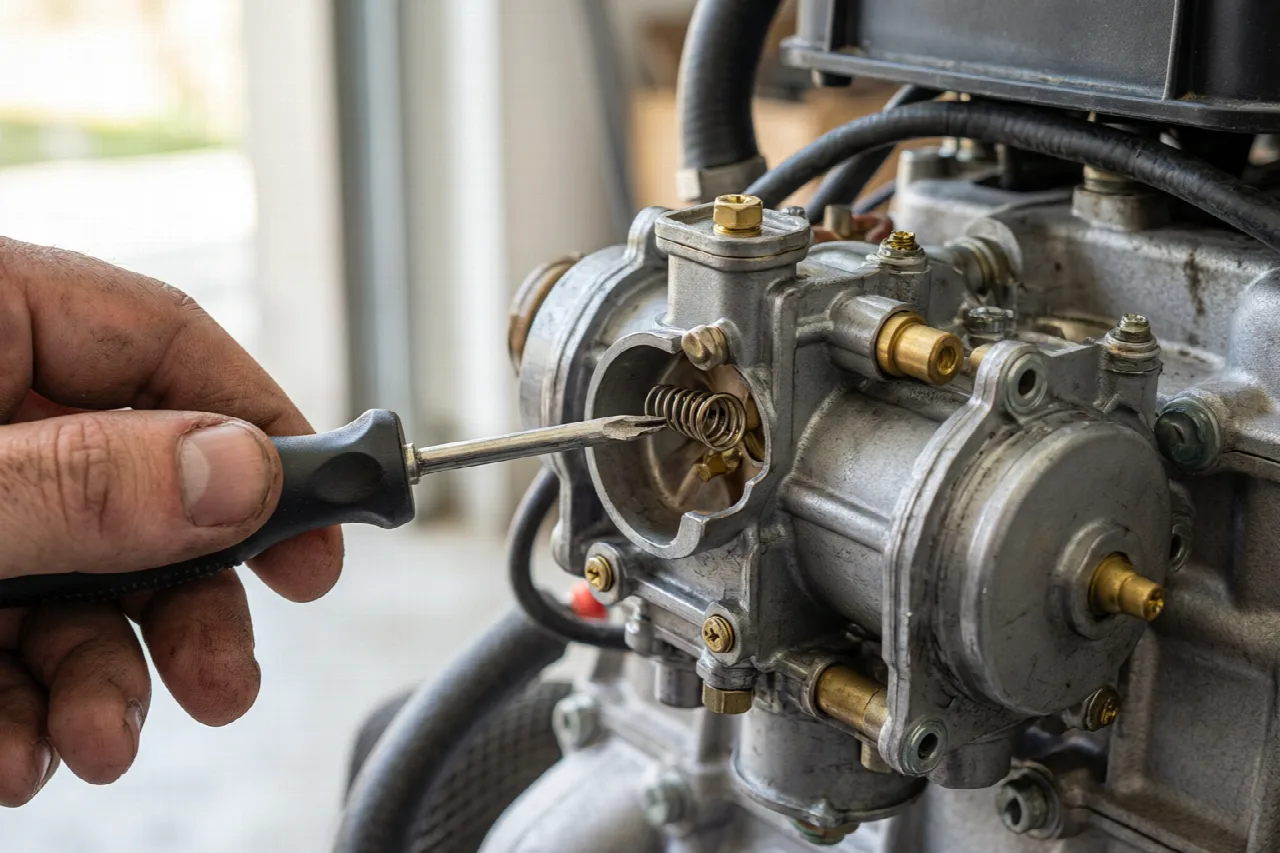
With the engine cold, start by setting a baseline. Some technicians recommend turning the idle mixture screw gently clockwise until it seats, then turning it counterclockwise 1.5 turns as a starting point. Do not force the screw; if it resists, stop immediately to avoid damaging the needle inside.
Start the engine and allow it to warm up for two to three minutes. A warm engine provides more stable readings and represents actual operating conditions. During warm-up, listen to the engine note and observe for any stumbling or erratic running.
Once warm, use the idle speed screw to set the engine to the manufacturer’s specified idle speed, which is usually printed on an engine decal or in the service manual. Typical idle speeds for small lawn mower engines range from 1,200 to 1,500 rpm, but consult your specific manual for accuracy. Turn the screw to raise or lower the idle as needed.
With idle speed set, adjust the idle mixture screw. Turn it slowly clockwise until the engine begins to stumble or stall, then turn it counterclockwise until the engine runs smoothly. The goal is to find the point where the engine idles most smoothly and steadily. This sweet spot is where the fuel-air ratio is optimized for idle conditions. Make small quarter-turn adjustments and wait a few seconds between changes for the engine to respond.
If the engine will not idle smoothly at any mixture setting, the carburetor may be clogged or damaged. Return the mixture screw to its original position and consider professional service or carburetor cleaning.
Adjust the High-Speed Mixture (If Applicable)
Not all lawn mower engines have a high-speed mixture screw. Older or commercial-grade engines often do; many modern consumer models rely on fixed jets for high-speed operation. Check your engine manual to determine whether your model has this adjustment.
If your engine has a high-speed mixture screw, adjustment occurs at full throttle. Run the engine at full throttle for at least 30 seconds to warm the engine thoroughly. Listen for the engine sound and observe how it accelerates and runs under load.
If the engine hesitates when accelerating or runs rough at full throttle, the high-speed mixture may be too lean (not enough fuel). Turn the high-speed mixture screw counterclockwise in quarter-turn increments to enrich the mixture. If the engine sounds sluggish or loses power, the mixture is too rich; turn the screw clockwise to lean it out.
Make small adjustments and run the engine at full throttle for several seconds between changes. The goal is smooth, responsive acceleration and steady high-speed operation. Some engines run best with the screw turned slightly counterclockwise from the seated position; others prefer a leaner setting. Manufacturer specifications, if available, should guide your final adjustment.
Troubleshoot Common Carburetor Problems
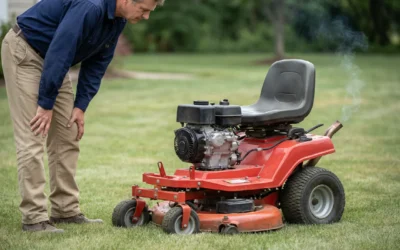
Adjustment alone cannot solve all carburetor issues. If the engine runs rough, stalls, or fails to start despite proper adjustment, other problems may be at fault.
A clogged carburetor is one of the most common issues. Signs include difficulty starting, rough idle that worsens over time, and poor acceleration. If you suspect blockage, the carburetor may require cleaning or professional service. Leaving fuel in the mower over winter or using old, contaminated fuel accelerates clogging.
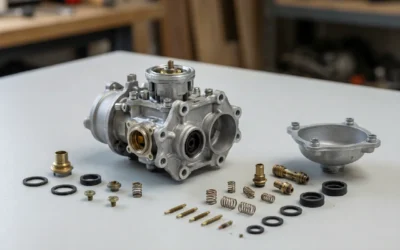
If the engine will not start at all, verify that fuel reaches the carburetor. Check that the fuel tank is full and the fuel line is not kinked or cracked. Inspect the fuel filter for blockage. If fuel flow is confirmed and the engine still will not start, the carburetor may need to be removed, disassembled, and cleaned by a professional.
If the engine runs well at idle but stumbles or dies under load, the high-speed adjustment or fuel delivery may be inadequate. Try adjusting the high-speed mixture screw if your engine has one. If problems persist, the carburetor jets may be partially clogged, restricting fuel flow at high speed.
Persistent poor running after adjustment often signals a need for carburetor rebuild or replacement. Over time, rubber seals inside the carburetor harden and crack, allowing air leaks and fuel leaks. These internal failures cannot be fixed by external adjustment alone. A professional service technician can rebuild the carburetor or install a replacement if necessary.