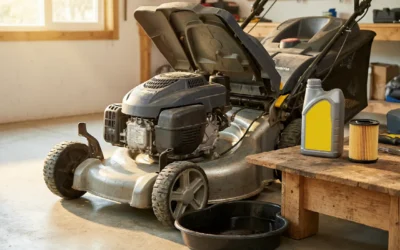
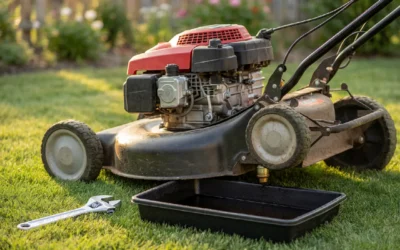
To change lawn mower oil, run the engine briefly to warm the oil, then disconnect the spark plug wire for safety. Tilt the mower or access the drain plug to drain the old oil into a pan. Remove and replace the oil filter if your model has one, refill with the correct type and amount of new oil according to your owner’s manual, and reinstall the drain plug and spark plug wire. Running the engine briefly after refilling ensures the new oil circulates properly.
Before You Start: Safety and Preparation
Your safety is the top priority when working on any lawn mower. Always disconnect the spark plug wire before beginning maintenance—this prevents the engine from accidentally starting while you work beneath or near moving parts. Twist and pull the wire away from the spark plug firmly to ensure a complete disconnect.
Gather all necessary tools and materials before starting. You’ll need an adjustable wrench or socket set to access the drain plug, an oil pan large enough to catch the old oil without spilling, a funnel for pouring new oil into the engine filler opening, and absorbent rags or shop towels for cleanup. If your mower has an oil filter, have a filter wrench or adjustable strap wrench available to remove the old filter. Wear work gloves and safety glasses to protect yourself from hot oil and spills. Check your owner’s manual to identify the oil type and capacity for your specific mower model, then purchase fresh oil in the correct grade. A typical lawn mower requires SAE 30 oil or 10W-30 for general use, though some models may specify different types.
Draining the Old Oil
Begin by running your lawn mower’s engine for two to three minutes to warm the oil. Warm oil flows more freely than cold oil and carries away more contaminants. After the engine has run briefly, turn it off completely and disconnect the spark plug wire. Allow the engine to cool slightly—warm but not hot—before proceeding. This reduces the risk of burns while still keeping the oil thin enough to drain efficiently.
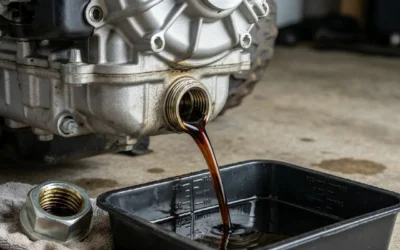
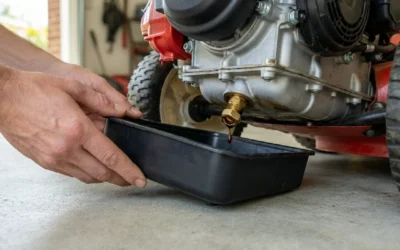
Place your mower on a level surface and position an oil pan directly underneath the drain plug location. Most lawn mowers have a drain plug on the underside or side of the engine block. Using your wrench, carefully turn the plug counterclockwise to loosen it. Once loose, unscrew it by hand slowly and set it aside. Allow the old oil to drain completely into the pan, which typically takes three to five minutes. Some smaller push mowers don’t have a drain plug and require tilting instead. For these models, consult your owner’s manual for the correct tilt direction—usually with the carburetor side tilted upward—to allow oil to drain from the filler opening. Never guess the direction, as tilting incorrectly can damage the engine or carburetor.
Replacing the Oil Filter (If Applicable)
Not all lawn mowers have an oil filter. Check your owner’s manual or inspect your engine for a cylindrical filter cartridge, typically located on the side of the engine block. If your mower has a filter, replace it every time you change the oil to keep fresh oil clean and protect your engine.
Using a filter wrench or adjustable strap wrench, carefully loosen the old filter by turning it counterclockwise. Once loose, unscrew it by hand and allow any remaining oil to drain into your pan. Wipe the filter mounting surface on the engine with a clean rag to remove dirt and any remnants of the old gasket. Take the new filter and apply a thin layer of fresh oil to the rubber gasket around its top edge. Hand-screw the new filter onto the mounting surface until the gasket makes contact, then tighten it an additional three-quarter turn. Do not over-tighten, as this can damage the gasket and cause leaks. If you’re unsure whether your model has a filter or need the exact replacement part number, contact the mower’s manufacturer or a local dealer.
Adding New Oil and Finishing Up
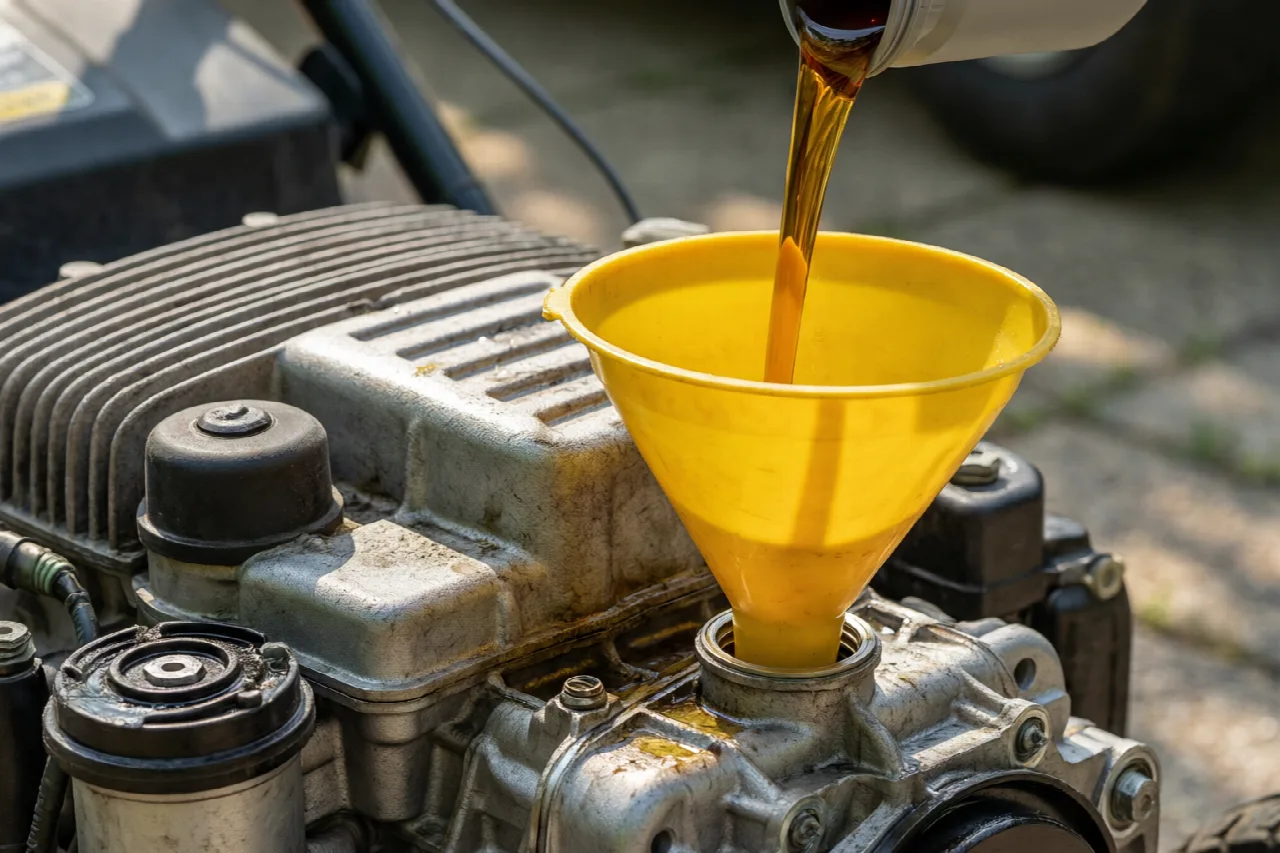
If you removed a drain plug, reinstall it now. Hand-screw the plug into the drain hole until snug, then use your wrench to tighten it firmly. Avoid over-torquing, as excessive tightening can strip the threads or crack the engine block. Position your funnel in the oil filler opening on top of the engine and carefully pour in the amount of fresh oil specified in your owner’s manual. Most lawn mowers require between 0.5 and 2 quarts, depending on engine size.
After adding the recommended amount, wait a moment for the oil to settle in the engine sump. Remove the dipstick by twisting and pulling it out, wipe it clean with a dry rag, push it back in fully, then pull it out again to check the level. The oil should reach the full mark on the dipstick. If it’s below the full line, add a small amount more and recheck. It’s better to check multiple times than to overfill, which can cause smoking, fouled spark plugs, and engine damage. Once the level is correct, secure the dipstick or filler cap, wipe away spills, and reconnect the spark plug wire by pushing it firmly onto the spark plug terminal until it seats. Start the engine and let it run for one minute to circulate the new oil, then turn it off and check the level one more time to ensure it remains correct.
How Often Should You Change Lawn Mower Oil?
Regular oil changes are crucial for lawn mower engine longevity and performance. Most manufacturers recommend changing your mower’s oil every 50 operating hours of use or once per season, whichever comes first. If you use your mower frequently during peak cutting season, aim to change the oil every three to four weeks. For casual or seasonal use, once per season is typically adequate.
Keeping track of your mower’s running hours helps ensure timely maintenance. Many modern mowers include an hour meter, but you can also estimate by tracking usage—a typical lawn might take one to two hours to mow, so count the number of mowings. By maintaining a regular oil change schedule, you’ll keep your engine clean, reduce wear, maintain good performance, and potentially extend the life of your mower by years. A neglected mower with old oil runs sluggishly, starts poorly, and may require expensive repairs.
Frequently Asked Questions
Can I use car oil in my lawn mower? While car oil and lawn mower oil are often similar, they’re not always interchangeable. Some lawn mower engines require specific oil grades like straight SAE 30, which is rarely used in modern cars. Always check your owner’s manual before using any oil. Using the wrong oil can affect engine performance and void your warranty.
What do I do with the used oil? Never dispose of used engine oil down a drain or onto the ground. Used oil is a hazardous waste that contaminates soil and water. Instead, store it in a sealed, labeled container and take it to a local auto parts store, quick-lube shop, or municipal recycling center, many of which accept used oil at no charge. Some areas offer seasonal collection events for hazardous household waste.
How do I know if my oil is dirty and needs changing? Old oil often appears dark brown or black, whereas fresh oil is golden or amber in color. If your oil looks thick, gritty, or smells burnt, it’s time to change it. Additionally, adhering to the recommended maintenance schedule ensures your oil is changed before severe degradation occurs.
Should I warm the engine before draining oil? Yes, warming the engine for a few minutes helps thin the oil so it drains more easily and completely, carrying away contaminants. However, allow the engine to cool slightly before touching the drain plug or handling the mower to avoid burns.