To change the oil on a Husqvarna lawn mower, run the engine for a few minutes to warm the oil, then turn it off. Drain the old oil by removing the drain plug (or tilting the mower if no plug exists) into a catch pan. If your model has an oil filter, replace it. Refill with the manufacturer-recommended oil type and capacity (check your owner’s manual), then check the level with the dipstick. Dispose of the used oil at a recycling center or auto parts store.
What You Need Before Starting
Before you begin changing the oil on your Husqvarna lawn mower, gather the right tools and materials. Having everything ready makes the process smoother and reduces the chance of spills or mistakes.
Tools and Materials
You will need a catch pan or drain container large enough to hold the old oil, a socket or wrench that fits your mower’s drain plug, and a funnel for refilling. You should also have the correct replacement oil on hand, along with a new oil filter if your model is equipped with one. A shop rag or paper towels are useful for cleaning up spills and wiping the dipstick.
Safety Precautions
Always perform an oil change on a level surface with the engine cool enough to handle safely, though the oil should still be warm for easier draining. Never work on a hot engine, as this creates a burn risk. Wear gloves to protect your hands from hot oil and sharp edges, and keep children and pets away from the work area. If you tilt the mower to drain oil, be aware that fuel may leak from the tank, so take care to avoid spills and ignition sources.
How to Drain the Old Oil
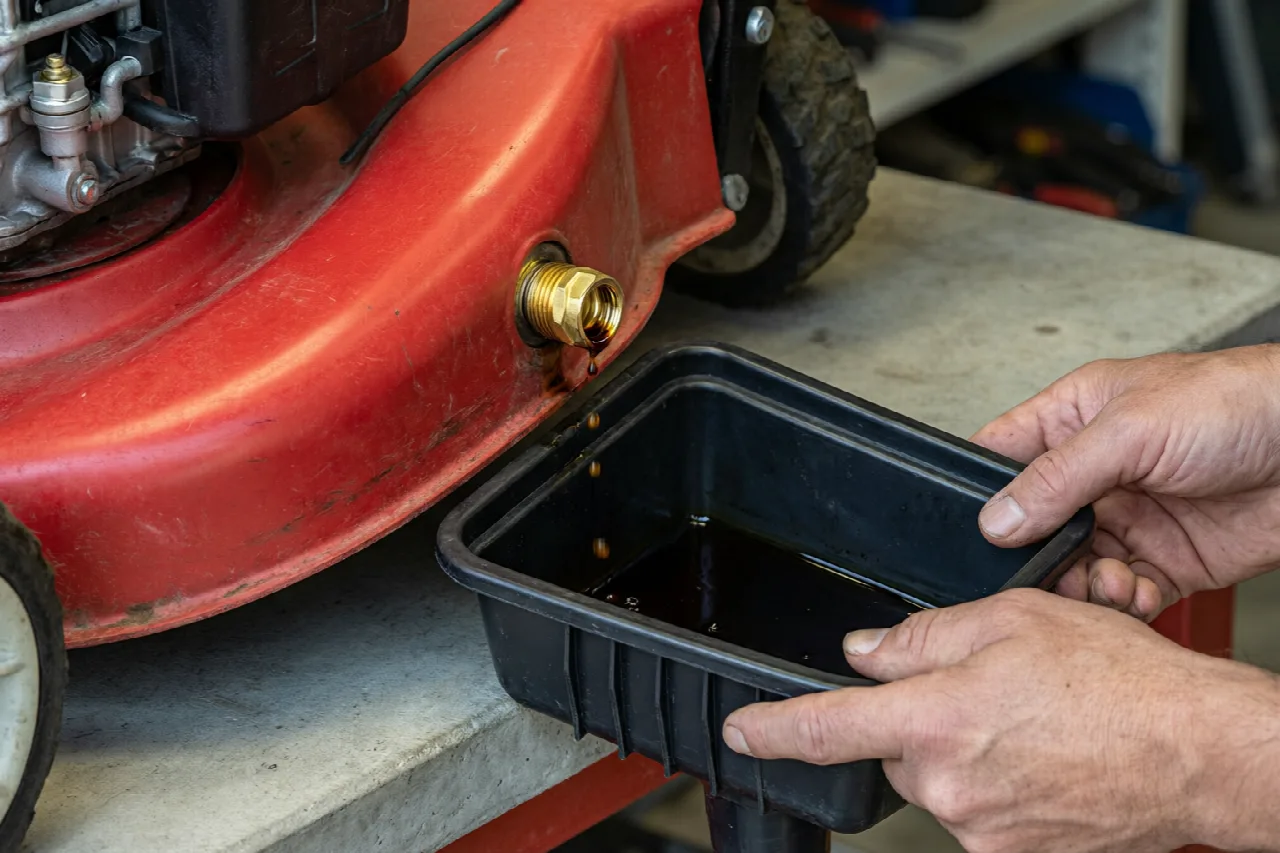
Draining the old oil is the most important step in the process. The method you use depends on whether your Husqvarna model has a drain plug or requires tilting.
Locating the Drain Plug
On many Husqvarna walk-behind mowers, the drain plug is located at the bottom of the engine, near the deck. On riding mowers, the plug is often positioned on the side of the engine or beneath the frame. Consult your owner’s manual for the exact location on your model, as it can vary. Once located, place your catch pan beneath the plug before loosening it.
Draining Without a Drain Plug
Some Husqvarna mowers do not have a drain plug. In this case, you will need to tilt the mower to pour the oil out of the fill tube. First, remove the oil fill cap and dipstick. Then, carefully tip the mower on its side, with the air filter and carburetor facing upward to prevent oil from entering them. Allow the oil to drain into your catch pan. Be cautious, as fuel may also spill from the tank during this process.
Warming the Engine First
Warming the engine before draining is recommended because warm oil flows more easily and drains more completely than cold oil. Run the engine for about five minutes, then turn it off and allow it to cool slightly. The oil should be warm but not hot enough to burn you. This practice helps remove more contaminants from the engine.
Replacing the Oil Filter (If Equipped)
Not all Husqvarna mowers have an oil filter, so it is important to know whether your model includes one.
Does Your Mower Have an Oil Filter?
Many Husqvarna riding mowers and some larger walk-behind models are equipped with an oil filter. Smaller walk-behind mowers often rely on a simple splash lubrication system without a filter. Check your owner’s manual or inspect the engine for a small cylindrical component near the oil drain or fill area to determine if a filter is present.
How to Replace the Oil Filter
If your mower has an oil filter, replace it during the oil change for best results. After draining the old oil, remove the old filter using an oil filter wrench if it is tight. Apply a thin coat of fresh oil to the rubber gasket on the new filter, then screw it on by hand until snug. Avoid overtightening, as this can damage the gasket. Always use a filter that matches your Husqvarna model’s specifications.
Refilling With the Correct Oil
Choosing the right oil and adding the correct amount is essential for engine performance and longevity.
Oil Type and Amount
Husqvarna engines typically require a high-quality detergent oil, commonly SAE 30 or 10W-30 depending on the operating temperature. For most models, SAE 30 is recommended for warmer conditions, while 10W-30 works well across a broader temperature range. The exact capacity varies by model, often ranging from roughly 15 to 48 ounces for walk-behind mowers and more for riding mowers. Always refer to your owner’s manual for the precise oil type and capacity for your specific Husqvarna model.
Checking the Oil Level
After adding oil, use the dipstick to verify the level. Insert the dipstick fully, then remove it and wipe it clean. Reinsert it and remove it again to read the level. The oil should fall between the minimum and maximum marks on the dipstick. Add small amounts of oil at a time and recheck to avoid overfilling, which can damage the engine.
Disposing of Used Oil Properly
Used engine oil is hazardous waste and must not be poured down drains, onto the ground, or into the trash. Proper disposal protects the environment and complies with local regulations.
Collect the used oil in a sealed, leak-proof container. Many auto parts stores and recycling centers accept used motor oil for free. Some municipalities also offer collection events or designated drop-off locations. Check with your local waste management authority for the nearest accepted disposal site. Never mix used oil with other fluids, such as antifreeze or solvents, as this can make recycling difficult.
Frequently Asked Questions
How Often Should I Change the Oil on a Husqvarna Mower?
Husqvarna generally recommends changing the oil after the first five hours of use on a new engine, then every 50 hours of operation or at least once per season, whichever comes first. However, the exact interval can vary by model, so consult your owner’s manual for the specific recommendation. If you mow frequently or in dusty conditions, more frequent changes may be beneficial.
What Should I Do If the Oil Looks Milky or Contaminated?
Milky or foamy oil usually indicates water or moisture in the engine, which can happen if the mower is stored outdoors or washed improperly. If you notice this, change the oil promptly and inspect for signs of a leaking head gasket or other issues. If the oil returns to a milky appearance shortly after a change, have the mower inspected by a qualified technician, as this may signal a more serious problem.
For more hands-on benchmarks and buying recommendations, consult our guides on heavy-duty chainsaw buyer guide, as well as high-CFM commercial leaf blower guide, as well as durable ride-on lawn tractor guide, as well as automated robotic lawn mower guide.