Lawn mowing pricing typically uses three primary approaches: hourly rates (generally $25–$75 per hour depending on location and experience), per-square-foot pricing ($0.01–$0.04 per square foot), or flat rates for specific jobs. The right method depends on lawn size, complexity, equipment needs, travel time, and local market rates. Most residential lawns mow in 20–60 minutes, which directly informs both hourly and flat-rate decisions.
Pricing Methods for Lawn Mowing
Three main pricing structures dominate the lawn mowing industry, each suited to different situations and service providers.
Hourly Rate Pricing
Hourly rate pricing charges clients based on the time spent mowing. This method works well for service providers who want straightforward billing and clients who understand labor-based charges. Hourly rates for lawn mowing typically range from $25 to $75 per hour, though rates vary significantly by region, experience level, and equipment quality. Urban areas and regions with higher cost of living tend to command premium rates, while rural areas often reflect lower regional wages.
To use hourly pricing effectively, track the actual time spent on each lawn, including setup, mowing, and cleanup. Many service providers round to the nearest quarter or half-hour for simplicity. This method suits lawns with variable complexity or when the exact scope of work is unclear before arrival.
Per-Square-Foot Pricing
Per-square-foot pricing divides the total lawn area by the price charged per square foot, typically ranging from $0.01 to $0.04 per square foot. This approach rewards efficiency and provides clients with transparent, area-based pricing.
To calculate per-square-foot pricing, measure the lawn dimensions (or estimate them using aerial maps) and multiply by your per-square-foot rate. A 5,000-square-foot lawn at $0.02 per square foot costs $100. This method works best for standard residential lawns with consistent terrain and minimal obstacles. It incentivizes faster work and scales naturally with lawn size.
Flat-Rate Pricing
Flat-rate pricing charges a set fee for a specific property or job type, regardless of exact time or conditions. This method is popular among established lawn care companies because it simplifies quoting and billing. A flat rate might be $45 for a small residential lot or $150 for a large corner property.
Flat-rate pricing requires experience to set accurately. Underestimating costs profit margins, while overestimating prices you out of work. Many service providers combine flat rates with add-on fees for extras like edging, trimming, or bagging.
Factors That Affect Lawn Mowing Price
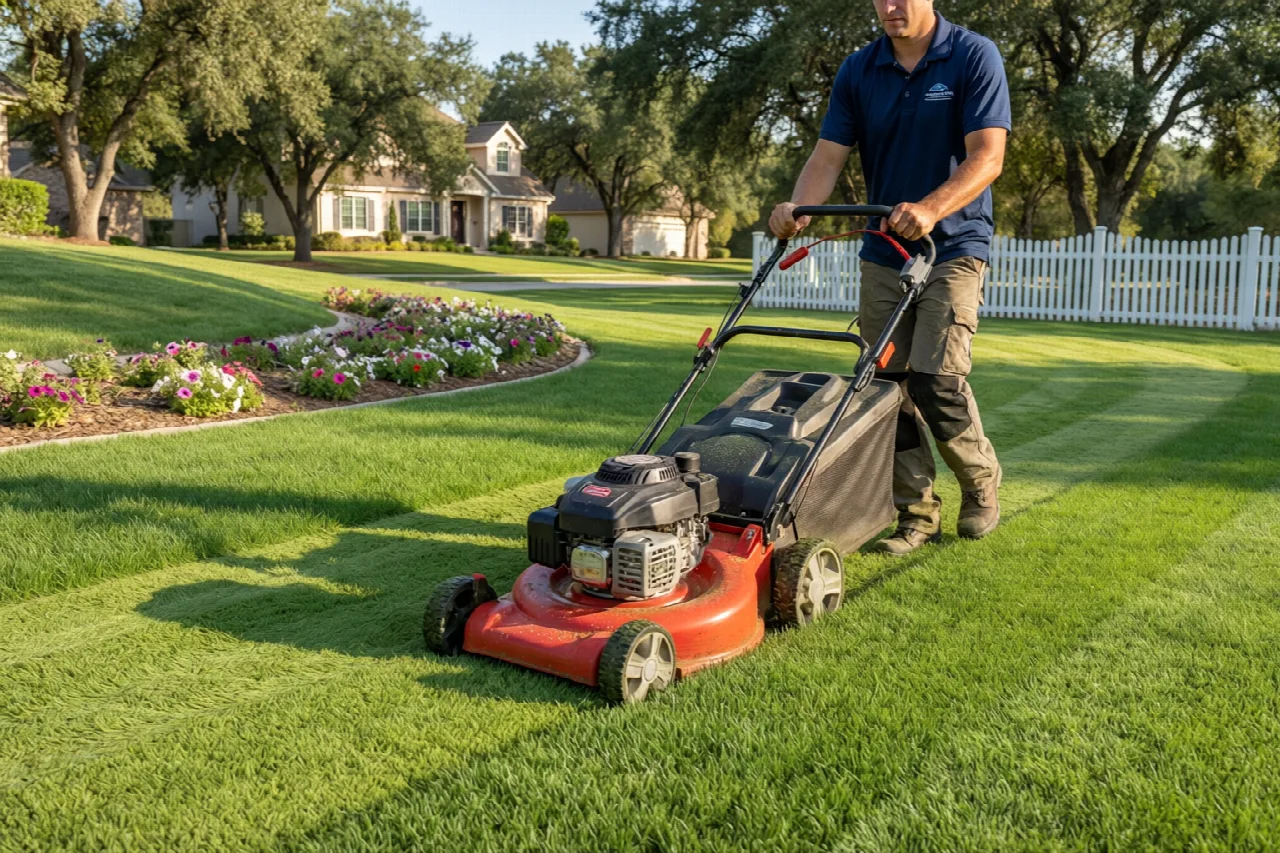
Pricing should account for variables that change the time, effort, or resources required for each job.
Lawn Size
Lawn size directly impacts mowing time and effort. A 2,000-square-foot lawn typically takes 15–30 minutes to mow, while a 10,000-square-foot property may require 60–90 minutes or more. Larger lawns generally cost more, whether you charge hourly or by area.
Terrain and Complexity
Terrain difficulty affects pricing significantly. Flat, open lawns are faster to mow than properties with slopes, obstacles, trees, or landscaping features requiring maneuvering. Rocky, wet, or overgrown lawns take longer and increase equipment wear. Properties with narrow side yards, dense landscaping, or many flower beds warrant higher rates or add-on fees.
Location and Local Market Rates
Geographic location heavily influences what clients expect to pay. Urban and suburban areas typically support higher rates than rural regions. Wealthy neighborhoods often have higher market rates than working-class areas. Research local competitors and regional wage standards to set competitive prices.
Equipment and Travel Distance
The condition and type of your equipment affects both pricing and profitability. Commercial-grade mowers are more efficient and durable than residential models, potentially justifying higher rates or enabling faster work. Travel distance between jobs influences pricing; if a property is far from your service area, add a travel fee or adjust the base rate to account for fuel and time.
Seasonal Factors
Pricing may shift with seasons. Peak growing seasons (spring and early summer) require more frequent mowing and allow higher rates due to demand. Off-season mowing (late fall and winter) may command lower prices or be unavailable in cold climates.
Calculating a Fair Price for Your Market
Setting competitive pricing requires research, cost accounting, and adjustment based on experience.
Research Local Market Rates
Start by calling or requesting quotes from 5–10 established lawn care services in your area. Ask what they charge for a standard-sized lawn (such as 5,000 square feet). Use online review sites, local directories, and social media to identify pricing patterns. Rates that vary significantly indicate market segmentation by quality, experience, or service add-ons.
Account for Business Costs
Your pricing must cover all business expenses. Include equipment maintenance and eventual replacement, fuel, insurance, vehicle wear and tear, and labor (your own time at a reasonable wage). Calculate a rough hourly cost by dividing annual business expenses by billable hours. If your mower costs $3,000, insurance is $500 annually, and fuel averages $10 per lawn, factor these into your rate to ensure profitability.
Set a Baseline and Adjust
Start with a baseline rate informed by local market research and your cost structure. For example, if local hourly rates are $40 and your costs require $30 per hour, a $45 hourly rate provides reasonable profit margin. Adjust upward for difficult properties, high-end neighborhoods, or premium services like edging and bagging. Offer slight discounts for weekly recurring contracts to build stable revenue.
Example Pricing Scenarios
A 5,000-square-foot suburban lawn taking 30 minutes at $50 per hour costs $25 in labor, or $0.005 per square foot if charged by area. Adding $15 to cover equipment and overhead yields $40 for the job. At $0.01 per square foot, the same lawn costs $50. Most homeowners expect $35–$60 for this property type, depending on location.
A 10,000-square-foot lot with slopes and obstacles taking 75 minutes warrants either $62.50 at $50 hourly, or $100–$150 at premium per-square-foot rates. Adjusting for complexity is essential to maintain profit margins on difficult jobs.
Building Client Relationships Through Fair Pricing
Transparent pricing builds trust. Clearly explain whether you charge hourly, by area, or flat-rate, and what’s included in the price. Many service providers offer free estimates so clients understand costs before booking. Consistent, fair pricing—not the lowest price—attracts repeat customers who value reliability.