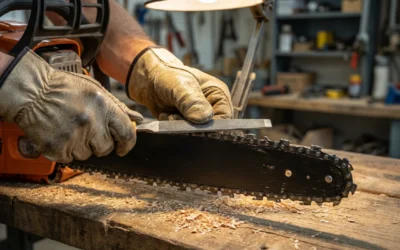
A chainsaw chain can be sharpened at home using manual tools like a file and guide or motorized tools like an electric or bench grinder. For professional results or complex sharpening needs, you can take the chain to a small engine repair shop, a hardware store with tool services, a lumberyard, or an authorized chainsaw dealer. The right choice depends on your skill level, the condition of the chain, and the tools you already own.
DIY Techniques for Sharpening a Chainsaw Chain
Sharpening a chainsaw chain at home is a practical skill that saves time and money. With the right tools and a little patience, you can keep your chain cutting efficiently without leaving your property. Below are the main methods, from simple hand filing to powered sharpeners.
What Tools Are Needed for Sharpening a Chainsaw Chain by Hand?
The essential tools for manual sharpening include a round file of the correct diameter for your chain, a file guide to hold the file at the proper angle, and a flat file for dressing the depth gauges. You will also need a way to secure the bar, such as a bench vise or a bar-mounted clamp. Safety glasses and work gloves are strongly recommended to protect against metal filings and sharp cutters.
What Is the Correct Technique for Using a File and Guide on a Chain?
Start by securing the saw so the bar is stable. Place the file guide over the cutter so the file rests at the recommended angle, typically 30 degrees for most chains. Push the file across the cutter in smooth, firm strokes, moving from the inside of the cutter toward the outside. File only in one direction, lifting the file on the return stroke. Apply consistent pressure and count the same number of strokes on each cutter to keep them uniform. After filing all cutters on one side, rotate the saw and repeat on the opposite side.
How Do You Use an Electric Chainsaw Sharpener to Sharpen a Chain?
An electric chainsaw sharpener uses a spinning grinding wheel to remove material from each cutter. Mount the chain in the sharpener’s clamp, adjust the depth stop so the wheel contacts the cutter at the correct height, and set the angle to match the chain’s specifications. Lower the wheel onto the cutter, grind for a few seconds, then move to the next cutter. Electric sharpeners are faster than hand filing but require careful setup to avoid removing too much metal or creating uneven cutters.
What Are the Key Steps for Maintaining Cutter Consistency During Sharpening?
Consistency is the most important factor in chain sharpening. Every cutter must be the same length and filed at the same angle, or the chain will pull to one side and cut poorly. Use a depth gauge tool to check that all depth gauges are set to the correct height relative to the cutters. Count strokes or grinding time per cutter, and periodically measure a few cutters to confirm they are even. Replace the chain if cutters become too short to sharpen safely.
Professional Sharpening Services for Chainsaw Chains
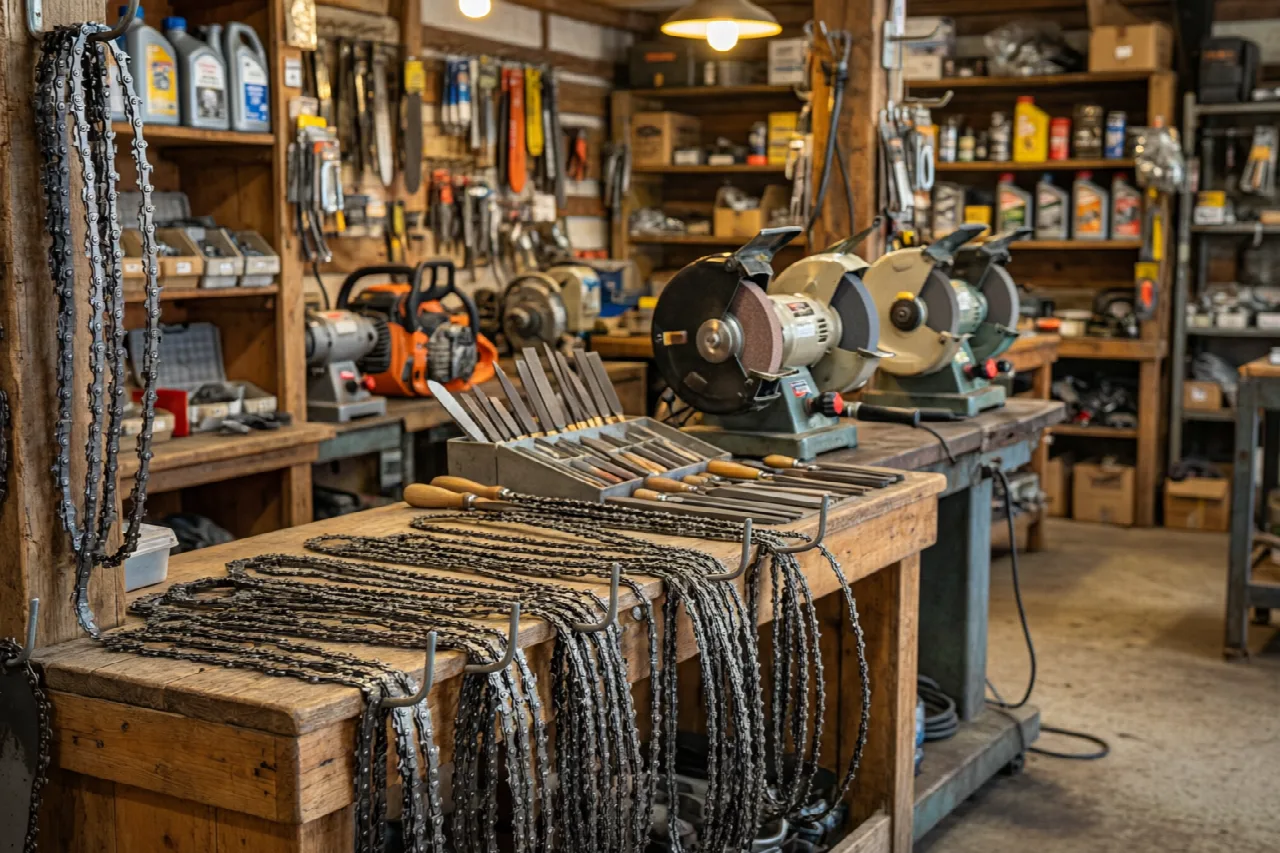
If you prefer not to sharpen the chain yourself, or if the chain is badly worn or damaged, professional services offer a reliable alternative. Many local businesses can restore a chain to a sharp, cutting condition quickly and accurately.
Which Local Businesses Can Sharpen a Chainsaw Chain?
Small engine repair shops are the most common places to get a chainsaw chain sharpened, as they typically have the equipment and expertise. Many hardware stores and home improvement centers offer tool sharpening services, including chainsaw chains. Lumberyards and forestry supply stores often provide this service as well. Authorized chainsaw dealers, especially those that sell and service major brands, usually have professional sharpening equipment on site.
What Does a Professional Chainsaw Chain Sharpening Service Typically Include?
A professional service usually removes the chain from the bar, inspects it for damage, and sharpens each cutter on a grinder. Many services also check and adjust the depth gauges, which is a step that is easy to overlook at home. The technician will typically clean the chain and may identify worn or broken links that need replacement. Some services can also sharpen the bar and check the sprocket, giving you a complete maintenance check.
How Do You Find an Authorized Chainsaw Dealer That Offers Sharpening?
To find an authorized dealer, start by checking the website of your chainsaw’s manufacturer, which often lists authorized service centers by region. You can also call local small engine shops and ask if they sharpen chainsaw chains and whether they service your brand. Online directories and local business listings can help you identify nearby options. Before visiting, call ahead to confirm the service is available and ask about turnaround time and cost.
Understanding Chain Sharpening and Maintenance
Knowing why sharpening matters and how to do it effectively helps you get the most from your chain and avoid common mistakes. A well-maintained chain cuts faster, requires less effort, and is safer to operate.
Why Is It Important to Sharpen a Chainsaw Chain Evenly?
An unevenly sharpened chain will cut crooked, bind in the kerf, and put extra strain on the saw’s engine and bar. When cutters are different lengths or angles, the chain pulls toward the side with the longer cutters, making straight cuts difficult and increasing the risk of kickback. Even sharpening also extends the life of the chain and the bar by reducing uneven wear. Taking the time to keep every cutter consistent is one of the most effective ways to maintain cutting performance.
How Do You Determine the Correct File Size for Your Specific Chainsaw Chain?
The correct file size is determined by the chain’s pitch and the size of its cutters. The pitch is the distance between drive links and is usually stamped on the bar or listed in the owner’s manual. Common pitches include 1/4 inch, 3/8 inch, and .325 inch, and each requires a specific file diameter. For example, a 3/8-inch pitch chain typically uses a 3/16-inch file, while a .325-inch pitch chain usually takes a 5/32-inch file. Check the chain’s packaging or the manufacturer’s specifications to confirm the exact size before purchasing.
What Are the Safety Considerations When Working with Chainsaw Chains?
Always wear safety glasses to protect your eyes from metal filings, and use heavy gloves to guard against sharp cutters. Secure the bar firmly before filing or grinding so the chain cannot move unexpectedly. When using an electric sharpener, follow the manufacturer’s instructions and avoid forcing the wheel into the cutter. Work in a well-lit area and keep your hands clear of the cutting surfaces. Never sharpen a chain while it is mounted on a running saw, and always disconnect the spark plug or battery before any maintenance.