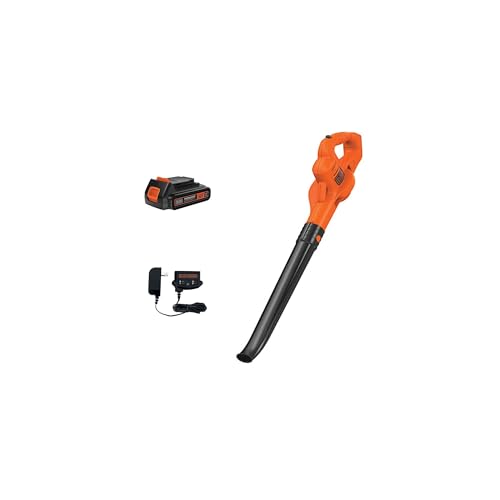
Quick Answer
The best handheld leaf blower balances air volume (CFM) with air speed (MPH). For most residential yards, a cordless model delivering 500 to 650 CFM and 120 to 150 MPH provides enough clearing power. Choose the blower whose airflow suits the size of your yard and the debris you need to move.

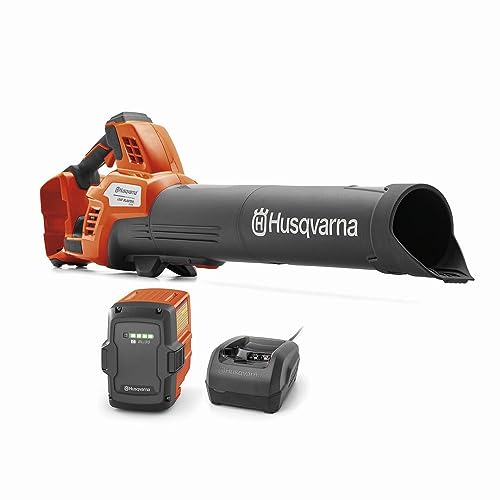
Pros
- 28-cc engine delivers up to 470 CFM and 170 MPH
- Cruise control function enables comfortable sustained operation
- Air purge system removes air from carburetor for easier starting
- Auto-return stop switch automatically resets to the on position
- Adjustable soft-grip handle engineered to reduce strain
Cons
- Requires 2-cycle fuel and oil mixing
- Produces engine exhaust emissions and engine noise

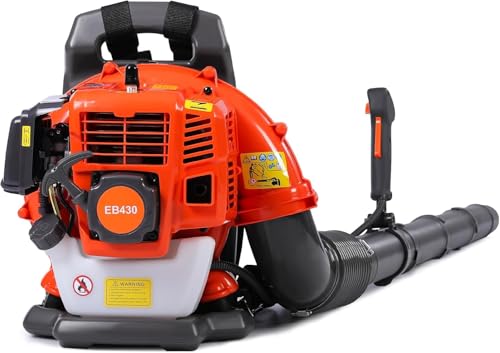
Pros
- Blow, vacuum and mulch functions in one unit
- Auto-lock cruise control throttle lever, per listing
- Flat and round nozzles included
- 10-gallon collection bag and padded shoulder strap
Cons
- Requires 50:1 gas-to-oil pre-mix
- Listed weight of 12.3 pounds
- Power, airflow and shredding figures are manufacturer-stated

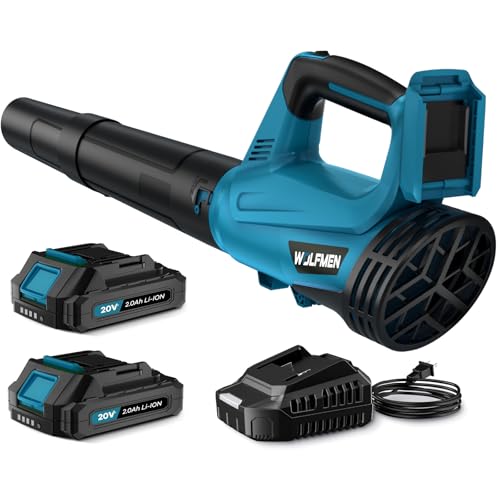
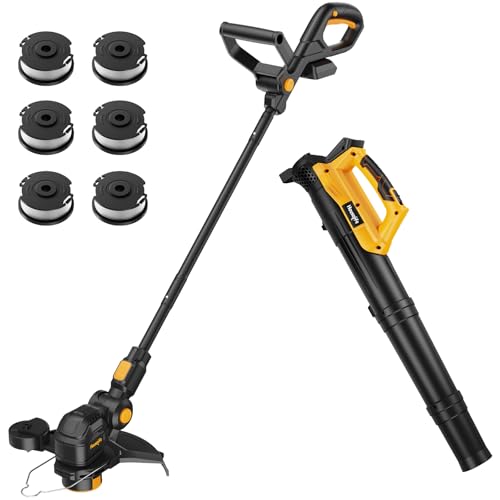
Cons
- Feature details are missing from the listing
- Listed weight of 0.000625 pounds appears to be a data error
Understanding the Physics of Handheld Blower Performance
When evaluating a handheld leaf blower, you must look beyond marketing claims and understand the three primary physical metrics that determine real-world clearing ability. These metrics are Air Volume, Air Speed, and the resulting Air Force.
Air Volume (CFM): The Bulk Mover
Cubic Feet per Minute (CFM) measures the total volume of air the blower moves. Think of CFM as the “width” of the air stream. A higher CFM rating means the blower can move a larger pile of leaves in a single pass. For handheld units, anything above 500 CFM is considered high-performance for residential use.
Air Speed (MPH): The Penetrator
Miles per Hour (MPH) measures how fast the air leaves the nozzle. This is the “reach” of the blower. High MPH is essential for dislodging wet, matted leaves or moving debris out of cracks in a driveway. However, high speed with low volume results in a narrow stream that takes too long to clear a large area.
Newton Force: The True Metric
As noted by industry experts, Newton force is the single best number to compare blowers because it combines CFM and MPH into a measurement of actual work being done. Residential gas blowers typically reach about 12 Newtons, while professional handheld models top out around 15 Newtons. Many modern cordless blowers now exceed these figures, offering gas-like performance without the emissions.
Handheld vs. Backpack vs. Wheeled: Choosing the Right Form Factor
Selecting the right blower depends entirely on your property size and terrain. While handheld models are the most popular due to their portability, they are not always the most efficient choice for every scenario.
| Form Factor | Best For | Pros | Cons |
|---|---|---|---|
| Handheld | Small to medium yards (under 1/4 acre), driveways, patios | Lightweight, easy to store, instant start | Arm fatigue on large jobs, limited runtime |
| Backpack | Large yards, hilly terrain, heavy leaf fall | Weight on back (less arm fatigue), higher capacity | Heavier overall, more expensive |
| Wheeled | Massive properties, commercial use | Zero arm fatigue, highest power | Hard to maneuver, gas-only usually |
For most homeowners, the handheld blower is the ideal balance of power and maneuverability. If you are deciding between a handheld and a larger unit, review our detailed backpack vs handheld blowers comparison.
Gas vs. Electric: The 2026 Shift
The debate between gas and electric has shifted significantly in recent years. While gas blowers still hold the crown for raw runtime, cordless electric models have closed the gap in power and offer distinct advantages in maintenance and noise.
The Cordless Advantage
Modern 56V and 60V battery platforms provide instant torque and zero emissions. They are significantly quieter than gas engines, often operating below 65 dB, which reduces noise complaints in neighborhoods. For a deep dive into the trade-offs, see our gas or electric leaf blower comparison.
Top Handheld Leaf Blower Recommendations
Based on performance metrics, runtime, and ergonomic design, these are the top-rated handheld models for 2026.
1. EGO POWER+ LB6504 (Best Overall)
The EGO LB6504 is widely regarded as the benchmark for cordless performance. It delivers a massive 650 CFM and 180 MPH, making it capable of handling wet leaves and heavy debris. It features a variable speed dial and a turbo button for maximum power when needed. It is compatible with all EGO 56V ARC Lithium batteries.
2. Greenworks 80V 145 MPH / 700 CFM
For those needing maximum air volume, the Greenworks 80V platform offers industry-leading CFM. This unit is excellent for moving large piles of dry leaves quickly. The higher voltage battery provides consistent power without fading as the charge depletes.
3. Ryobi 40V Brushless Whisper Series
Ryobi focuses on user experience with their Whisper Series, which operates at noise levels comparable to a normal conversation. While it may not have the raw Newton force of the EGO, it is perfect for noise-sensitive environments and quick cleanup tasks.
Diagnostic Matrix: Troubleshooting Common Blower Issues
If your current blower is underperforming, use this diagnostic matrix to identify the root cause.
| Symptom | Likely Cause | Solution |
|---|---|---|
| Low Airflow / Weak Suction | Clogged intake screen or debris in impeller | Power off, remove battery/gas, and clear the intake and nozzle of obstructions. |
| Motor Bogging Down | Dirty air filter (gas) or low battery voltage | Replace air filter or ensure battery is fully charged and compatible. |
| Excessive Vibration | Loose screws or damaged fan blades | Tighten all housing screws; inspect impeller for cracks. |
| Unit Won’t Start | Safety interlock engaged or dead battery | Ensure handle safety switch is fully depressed; check battery charge level. |
Maintenance Intervals for Maximum Lifespan
To ensure your equipment lasts for years, follow these maintenance intervals. Proper care is essential for outdoor power equipment, much like the care required for chainsaw and outdoor tool maintenance.
Every Use
- Inspect the air intake for debris.
- Wipe down the exterior to prevent corrosion.
Monthly / Seasonal
- Cordless: Clean battery contacts with a dry cloth. Store batteries in a cool, dry place (not in the charger).
- Gas: Replace spark plug and air filter. Use fuel stabilizer if storing for more than 30 days.
Safety and Regulations
Always operate blowers with appropriate hearing and eye protection. Be aware of local noise ordinances and emission regulations, which are becoming stricter in many municipalities. For official guidelines, refer to OSHA equipment safety regulations.
For a broader look at the current market, check our comprehensive guide to the best cordless leaf blowers available today.
Related Maintenance and Operating Guides
To keep your equipment running at peak operating efficiency, explore our related technical walkthroughs and maintenance tutorials:
- Consult our detailed breakdown on ego leaf blower.