Quick Answer: Core i9-14900K vs Core i7-12700KF — Which Should You Buy in 2026?
Buy the Core i7-12700KF if you want strong Intel desktop performance at the lower price: it costs $259.99, compared with $479.69 for the Core i9-14900K. Choose the Core i9-14900K when demanding content creation, heavy multitasking, or maximum CPU throughput matters more than budget. The i9 has 24 cores and boosts to 6.0 GHz, while the i7 has 12 cores and boosts to 5.0 GHz. Both use a 125 W processor power rating and the LGA1700 platform.
Winner by Category
| Category | Winner | Evidence |
|---|---|---|
| Power / Compute | Core i9-14900K | It provides 24 cores—8 P-cores and 16 E-cores—versus 12 cores—8 P-cores and 4 E-cores—on the Core i7-12700KF. The i9 also reaches 6.0 GHz, compared with 5.0 GHz for the i7. |
| Productivity performance | Core i9-14900K | The additional 12 cores give the i9 a clear hardware advantage for heavily threaded workloads such as demanding content-creation tasks and multitasking. The supplied research records a PassMark CPU Mark score of 58,247 for the i9, but does not provide a directly comparable i7 result. |
| Gaming performance | Core i9-14900K | The i9 has the higher boost frequency and substantially more cores. The supplied gaming research reports 181 average FPS for the i9 in a 1080p comparison against another processor, but does not provide a direct i9-versus-i7 gaming result. |
| Navigation / Ease of use | Core i7-12700KF | The i7 is easier to justify in a value-focused build because its $259.99 price leaves more budget for a graphics card, memory, storage, or cooling. Both processors require an LGA1700 motherboard, so neither requires a different socket within this comparison. |
| Multitasking / Handling | Core i9-14900K | Its 24-core hybrid design is better suited to running demanding applications alongside background work. The i7 remains a 12-core hybrid processor and is the simpler choice for normal gaming and everyday desktop use. |
| Runtime / Energy efficiency | No clear winner from supplied data | Both product listings specify 125 W processor base power. The supplied running-cost data applies to the i9 in a comparison with another CPU, not to the i7, so a direct efficiency winner cannot be established here. |
| Noise | No clear winner from supplied data | No measured acoustic results or cooler-specific noise data were provided. Both processors should be matched with cooling appropriate to the workload, but the supplied information does not support a noise ranking. |
| Price & value | Core i7-12700KF | At $259.99, the i7 is $219.70 cheaper than the $479.69 i9. It also has a higher listed Amazon rating: 4.5/5 versus 4.2/5, although ratings are not a substitute for workload testing. |
Pros
- Very high core count for a mainstream desktop processor
- Up to 6.0 GHz boost is strong for demanding tasks and gaming
- Unlocked for overclocking, which appeals to enthusiasts
- Broad support for PCIe 5.0, PCIe 4.0, DDR5, and DDR4
Cons
- 125 W processor base power suggests substantial cooling and power delivery needs
- Requires a compatible Intel 700-series or 600-series motherboard
- Platform choice may be more complex because memory support depends on the motherboard
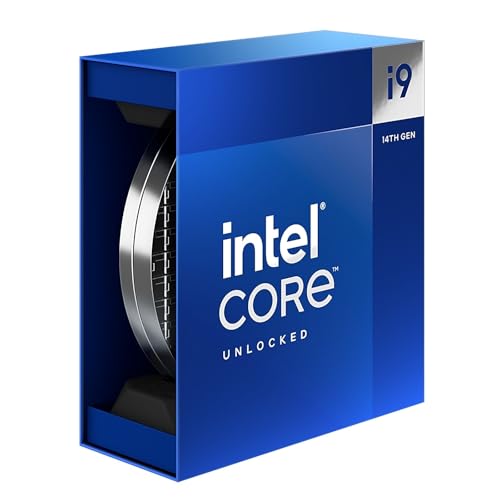
Overview: The Intel Core i9-14900K is a 14th Gen desktop processor built around 24 cores, combining 8 performance cores and 16 efficiency cores for demanding PC builds. Its unlocked design and high boost ceiling make it an attractive option for users who want premium desktop performance.
Performance: Intel Thermal Velocity Boost and Turbo Boost Max Technology 3.0 help the processor reach higher speeds when conditions allow. Support for PCIe 5.0, PCIe 4.0, DDR5, and DDR4 gives it strong flexibility for gaming systems, creator rigs, and upgrade-focused builds.
Drawbacks: The listed 125 W processor base power means cooling and power delivery should be planned carefully. It also needs a compatible Intel 700-series or 600-series motherboard, so it is not ideal for users looking for a simple drop-in upgrade on older platforms.
Verdict: This processor is best suited to experienced builders, gamers, and content creators who want top-end desktop capability and platform flexibility. If your system can support its thermal and motherboard requirements, the Core i9-14900K is positioned as a powerful high-performance CPU.
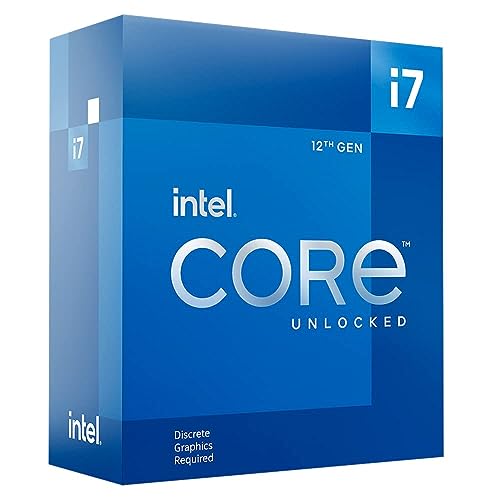
Pros
- Strong 12-core configuration for gaming and multitasking.
- Unlocked processor for overclocking on compatible motherboards.
- Broad compatibility with Intel 600 and 700 series chipset boards.
Cons
- No integrated graphics, so a discrete GPU is required.
- Requires an LGA1700 motherboard, which may mean a platform upgrade.
- 125W power design means cooling quality matters for sustained performance.
Overview: The Intel Core i7-12700KF is a desktop processor built for users who want strong gaming and multitasking performance in an unlocked LGA1700 package. Its 12-core layout combines 8 performance cores and 4 efficiency cores for a balanced desktop build.
Performance: With boost speeds up to 5.0 GHz, Intel 7 architecture, and large L2 and L3 cache, this CPU is designed to handle demanding workloads smoothly. It is a good fit for gaming rigs, productivity systems, and users who want overclocking support on a compatible motherboard.
Drawbacks: The KF model does not include integrated graphics, so a discrete GPU is required. It also depends on an LGA1700 motherboard and proper cooling, which can add to the overall build cost and planning.
Verdict: This processor is best for PC builders who already plan to use a dedicated graphics card and want a high-performance Intel CPU with tuning headroom. It offers strong value for gamers and enthusiasts who want a modern hybrid architecture.
Product prices and availability are accurate as of the date/time indicated and are subject to change. Any price and availability information displayed on Amazon.com at the time of purchase will apply. As an Amazon Associate we earn from qualifying purchases. Images, product titles, and product highlights from Amazon.
Specifications Side-by-Side
The two processors share Intel’s LGA1700 desktop platform and a 125 W processor base-power specification, but they occupy very different performance and pricing tiers. The Core i9-14900K is a 14th-generation Core i9 with 24 hybrid cores. The Core i7-12700KF is a 12th-generation Core i7 with 12 hybrid cores and an unlocked design.
| Specification | Intel Core i9-14900K | Intel Core i7-12700KF |
|---|---|---|
| Brand | Intel | Intel |
| Product family | Core i9 desktop processor | Core i7 desktop processor |
| Generation | 14th generation | 12th generation |
| Performance-core / efficiency-core layout | 8 P-cores + 16 E-cores | 8 P-cores + 4 E-cores |
| Total cores | 24 | 12 |
| Base clock | 3.2 GHz in the supplied benchmark data | 3.60 GHz in the supplied product description |
| Maximum boost clock | Up to 6.0 GHz | Up to 5.0 GHz |
| L3 cache | 36 MB | Not specified in the supplied product data |
| Processor base power | 125 W | 125 W |
| Socket | LGA1700 / FCLGA1700 | LGA1700 |
| Compatible chipsets | Intel 600- and 700-series chipsets | Intel 600- and 700-series chipsets |
| Memory support stated in listing | DDR5 and DDR4 | Not specified in the supplied product data |
| PCIe support stated in listing | PCIe 5.0 and PCIe 4.0 | Not specified in the supplied product data |
| Graphics requirement | Not stated as requiring discrete graphics in the supplied listing | Discrete graphics required |
| Listed price | $479.69 | $259.99 |
| Amazon rating | 4.2/5 | 4.5/5 |
| Processor model | B0CHBJGFBC | B09FXKHN7M |
Performance
Core Performance
The most important difference is the core configuration. The Core i9-14900K has 24 cores, split into 8 performance cores and 16 efficiency cores. The Core i7-12700KF has 12 cores, split into 8 performance cores and 4 efficiency cores. That means the i9 has the same number of P-cores but four times as many E-cores as the i7. This gives the i9 considerably more parallel hardware for workloads that can use many threads at once.
The i9 also has the higher advertised maximum boost: up to 6.0 GHz versus up to 5.0 GHz for the i7. That does not mean every application will run at those speeds continuously, because actual frequency depends on workload, motherboard settings, temperature, power limits, and cooling. It does explain why the i9 is positioned as the higher-end option for demanding gamers and professional content creators.
In the supplied PassMark research, the Core i9-14900K records a CPU Mark score of 58,247 and a single-thread rating of 4,690. Those figures establish the i9’s measured position in that source, but the research does not include a matching Core i7-12700KF result. For that reason, this comparison should not claim a precise percentage advantage for the i9 over the i7. The specification gap nevertheless points clearly toward the i9 for sustained multi-core work.
For gaming, the i9’s extra E-cores and higher boost ceiling are useful when a fast graphics card, high frame rates, streaming, recording, or other background applications place more load on the processor. The supplied research reports an average of 181 FPS for the i9 in a 1080p gaming comparison with another CPU. That result is not a direct test against the i7-12700KF, so it should be treated as context rather than a head-to-head score.
Handling & Ergonomics
Desktop processors do not have handheld ergonomics, but the build experience still matters. Both chips use the LGA1700 socket and are compatible with Intel 600- and 700-series chipset-based motherboards. That makes the i7 especially attractive to someone who already owns a compatible board and wants a cost-conscious upgrade or replacement. The i9 can use the same broad motherboard generation, although a board and cooling solution should be selected with its higher performance tier in mind.
The Core i9-14900K supports both DDR5 and DDR4 memory, along with PCIe 5.0 and PCIe 4.0. This gives a new builder flexibility when choosing a motherboard and memory generation. The supplied i7 listing does not state its memory or PCIe support, so those details should be verified against the exact motherboard and system configuration before purchase.
Both processors are unlocked models. The i9 listing specifically describes it as overclockable, and the i7 listing also identifies the processor as unlocked. Overclocking is not automatically free performance: it can increase cooling requirements, power consumption, system-tuning effort, and the importance of motherboard settings. Buyers who want a simple, quiet, low-maintenance build should not select either model solely because it is unlocked.
Runtime / Fuel & Maintenance
For CPUs, “runtime” is better understood as sustained operation and power management than battery life. Both product listings specify 125 W processor base power. That common figure does not make the processors identical in real-world electricity use: actual consumption varies with workload, motherboard configuration, boost behavior, and cooling. The supplied research includes a $22.81 yearly running-cost estimate for the i9 in a PassMark comparison, but it does not provide an equivalent estimate for the i7, so a direct annual-cost comparison is not possible from the supplied evidence.
Maintenance is primarily about keeping the cooler, fans, heatsink, and case airflow clear of dust and ensuring that the system uses a suitable thermal solution. Neither product listing supplies a cooler, cooler dimensions, or measured temperatures. Plan the rest of the build around the processor’s intended workload rather than assuming that a basic cooler will deliver the same results as a larger performance cooler.
Best Use Cases
- Core i9-14900K: demanding gaming systems, professional content creation, heavy multitasking, and buyers who want the maximum core count of these two options.
- Core i7-12700KF: value-focused gaming PCs, general desktop use, and builds where saving $219.70 for the graphics card or other components is more important than maximum processor throughput.
- Existing LGA1700 systems: either chip can fit the broad Intel 600- and 700-series platform family, subject to motherboard compatibility and any required firmware support.
Maintenance & Running Costs
Neither supplied product listing identifies a bundled stock cooler, replacement fan, thermal compound, or other consumable. Treat cooling as a separate build decision. A processor intended for long rendering, encoding, compiling, or other sustained workloads needs a cooling setup that can dissipate heat consistently; however, the supplied data does not specify a required cooler size or provide temperature measurements for either chip.
Routine CPU maintenance is straightforward. Keep dust filters and heatsink fins clean, confirm that fans spin correctly, and monitor temperatures if the system is used for extended high-load work or overclocking. Replacing thermal compound is an occasional servicing task rather than a daily running cost, but no service interval or compound requirement was supplied for these processors.
The i9’s listed processor base power is 125 W, the same as the i7’s. That is useful for comparing their official listing specifications, but it should not be interpreted as a complete power-consumption result. The i9 has twice the total core count and a higher boost ceiling, while the i7 is the less expensive option. Electricity cost therefore depends heavily on how frequently the system is pushed under sustained load and on the power limits selected in the motherboard firmware.
Features & Usability
The Core i9-14900K is built around Intel’s hybrid architecture and includes Intel Thermal Velocity Boost and Intel Turbo Boost Max Technology 3.0 in the supplied product description. It supports PCIe 5.0 and PCIe 4.0, as well as DDR5 and DDR4 memory, and works with motherboards based on Intel 600- and 700-series chipsets. These features make it flexible for both new builds and upgrades based on the LGA1700 ecosystem.
The Core i7-12700KF is also based on Intel’s performance hybrid architecture and is described as an unlocked processor for gaming and multitasking. Its 8 P-cores and 4 E-cores provide a capable 12-core design, while its LGA1700 compatibility supports Intel 600- and 700-series chipset-based motherboards. The “KF” product designation is reflected in the listing’s practical warning: discrete graphics are required.
That graphics requirement is an important system-planning detail. If you do not already have a discrete graphics card, the i7-12700KF is not the safer choice for a basic display-output build. The i9 listing does not include the same discrete-graphics requirement in the supplied information. Even so, buyers should confirm the exact motherboard display outputs and processor graphics configuration before completing a build.
Compatibility is not only about the socket. Check the motherboard’s chipset, BIOS support, memory type, power delivery, and cooling clearance. The i9 supports DDR4 and DDR5, but a motherboard uses one memory generation rather than both at the same time. The i7’s listing does not specify its memory support, so do not assume that an existing memory kit will transfer without checking the board and processor documentation.
Price & Value Analysis
At the supplied prices, the Core i9-14900K costs $479.69, while the Core i7-12700KF costs $259.99. The difference is $219.70. That is a substantial amount in a complete PC budget: it could instead go toward a faster graphics card, additional storage, memory, or a stronger cooling solution. The i9 needs to deliver meaningful value in the buyer’s workload to justify that premium.
The i9 is worth considering when the computer will regularly perform CPU-heavy work, when heavy multitasking is routine, or when the buyer specifically wants the highest core count and boost frequency available in this matchup. Its 24-core layout and 6.0 GHz maximum boost make it the technically stronger processor of the two.
The i7 is the better value when the computer is mainly used for gaming, everyday applications, and occasional productivity. It still offers 12 cores, an unlocked design, a 5.0 GHz maximum boost, and compatibility with Intel 600- and 700-series chipsets. Its lower $259.99 price also makes it easier to build a balanced system rather than spending heavily on the CPU while compromising elsewhere.
Amazon ratings slightly favor the i7 at 4.5/5, compared with 4.2/5 for the i9. Ratings can reflect different buyers, system configurations, and expectations, so they should not override workload requirements. They do reinforce the i7’s appeal as a well-regarded lower-cost option in the supplied product data.
Which Should You Buy?
Choose Core i9-14900K if…
- You want the strongest specification package in this comparison, with 24 total cores and a maximum boost of up to 6.0 GHz.
- You regularly create content, render, encode, compile, or run several demanding applications at the same time.
- You want 16 E-cores in addition to 8 P-cores for more parallel processing capacity.
- You value support for both DDR5 and DDR4, plus PCIe 5.0 and PCIe 4.0, as stated in the product listing.
- Your budget can absorb the extra $219.70 without reducing the quality of the rest of the PC.
Choose Core i7-12700KF if…
- You want to spend $259.99 rather than $479.69 on the processor.
- Your priority is a cost-effective gaming or general-purpose desktop rather than maximum multi-core throughput.
- You already have, or plan to buy, a compatible Intel 600- or 700-series LGA1700 motherboard.
- You are comfortable using a discrete graphics card, which the product listing identifies as required.
- You would rather put the $219.70 saving toward the graphics card, storage, memory, case, or cooling.
- You prefer the product with the higher supplied Amazon rating, 4.5/5 versus 4.2/5.
Consider a different model if…
- You are building on a newer platform and do not specifically need an LGA1700 processor.
- You need a CPU with clearly documented measured noise, temperature, or power-efficiency results, because those figures were not supplied for this head-to-head comparison.
- You want a complete CPU-and-cooler package, since the supplied listings do not identify a bundled cooler or cooling specification.
- You need a direct, controlled i9-versus-i7 gaming benchmark before buying; the supplied research contains i9 gaming context but no direct comparison result against the i7-12700KF.
- You do not have a discrete graphics card and are considering the i7-12700KF, because its listing explicitly says discrete graphics are required.
- For more options at every price point, see our full guide to Best CPUs.
Frequently Asked Questions
Is the Core i9-14900K faster than the Core i7-12700KF?
The i9 is the higher-performance model on specification grounds. It has 24 cores versus 12 and boosts to 6.0 GHz versus 5.0 GHz. The supplied research also records a PassMark CPU Mark score of 58,247 for the i9. Because no directly comparable i7 benchmark result was supplied, this article does not assign a specific percentage advantage to the i9.
Is the Core i7-12700KF still good for gaming in 2026?
It remains a capable option for a value-focused gaming PC because it has 12 hybrid cores, an unlocked design, and a maximum boost of up to 5.0 GHz. Gaming results depend on the graphics card, resolution, settings, memory, and game engine. The supplied data does not include a direct 2026 gaming benchmark comparing the i7 with the i9.
Do both processors use the same motherboard socket?
Yes. Both are LGA1700 processors and are listed as compatible with Intel 600- and 700-series chipset-based motherboards. Confirm the exact motherboard model, BIOS support, memory type, power delivery, and cooling compatibility before installing either CPU.
How much more does the Core i9-14900K cost?
The supplied price for the Core i9-14900K is $479.69, compared with $259.99 for the Core i7-12700KF. The i9 therefore costs $219.70 more. Whether that premium is worthwhile depends on whether you will use its additional cores and higher boost frequency for demanding workloads.