For homeowners prioritizing uninterrupted runtime and affordable power, corded electric units offer consistent performance, though you remain tethered to an electrical outlet. If complete mobility across a larger property is essential, modern cordless models provide impressive clearing force, but your yard sessions will be limited by battery capacity and charge times.

Pros
- Lightweight 4 lb build minimizes arm fatigue
- Delivers up to 390 CFM airflow and 210 MPH speed
- Continuous corded power eliminates recharging pauses
- Two-speed switch toggles between light and full force
- Nested two-piece tube design for full assembly
Cons
- Requires an extension cord and nearby wall outlet
- Tubes ship nested and must be pulled apart before use

Pros
- Delivers up to 615 CFM and 170 MPH in turbo mode
- Variable speed dial with lock-on button from 200–480 CFM
- High-efficiency brushless motor reduces operating vibration
- Includes 56V 2.5Ah battery and standard 50-minute charger
- Fully compatible with all EGO 56V ARC Lithium batteries
Cons
- Turbo mode rapidly reduces the available battery runtime
- Weighs 7.5 pounds, which may feel heavy with larger batteries

Pros
- Lightweight design at only 4.4 pounds
- 7-Amp motor rated up to 180 MPH and 180 CFM
- Built-in cord retention prevents unplugging
- Zero emissions with instant push-button start
- Simple, low-maintenance corded design
Cons
- Extension cord is not included
- Operating range is limited by cord reach

Pros
- Weighs only 2.28 lbs for easy one-handed operation
- Includes two 21V 4000mAh lithium batteries
- Variable speed trigger provides precise airflow control
- Comes with an extension tube and flat nozzle attachment
Cons
- Rated runtime tops out at roughly 30 minutes
- Not designed for large properties or heavy wet debris

Pros
- Airflow rated up to 650 CFM using advanced turbo technology
- Comes with two high-capacity 20V 5.2Ah batteries and fast charger
- Three selectable speed modes for delicate to heavy-duty jobs
- Includes an adjustable shoulder strap to reduce arm fatigue
- Includes blower tube and extension nozzle attachments
Cons
- Maximum 150-minute runtime applies only to low-speed mode
- Heavier battery packs may add weight during prolonged handheld use

Pros
- Includes two 21V 4.0Ah batteries for extended runtime
- Delivers up to 420 CFM airflow and 150 MPH air speed
- Lightweight design weighs under 3 lbs bare tool for low fatigue
- Comes with both round and flat interchangeable nozzles
- Two adjustable speed settings for varying cleanup tasks
Cons
- Limited to two preset airflow speeds
- Best suited for dry leaves and light debris rather than heavy wet waste

Pros
- Brushless motor delivers rated airflow up to 650 CFM and 180 MPH
- Includes two 20V 4.0Ah batteries and a fast charger
- Six adjustable speed settings ranging from 80 to 180 MPH
- Comes with an ergonomic shoulder strap and two detachable nozzles
- Includes a storage bag to keep components organized
Cons
- Stated 30-minute runtime is restricted to low-speed operation
- High-speed settings will deplete battery charge more rapidly

Pros
- Delivers up to a stated 930 CFM airflow and 197 MPH
- Includes two 4.0Ah batteries and a fast charger
- Six variable-speed settings with a constant-speed lock
- Tool-free assembly with included blower tubes
Cons
- Stated dual-battery runtime is limited to 30–60 minutes

Pros
- Brushless motor delivers up to 700 CFM and 180 MPH
- 3-in-1 tool-free blowing, vacuuming, and mulching
- Stated 15:1 mulch ratio with a 40L collection bag
- Adjustable support wheels help carry the tool's weight
- Includes two 4.0Ah batteries and a quick-access clean gate
Cons
- Total runtime is limited to up to 30 minutes
- Turbo blast mode is restricted to 10-second bursts
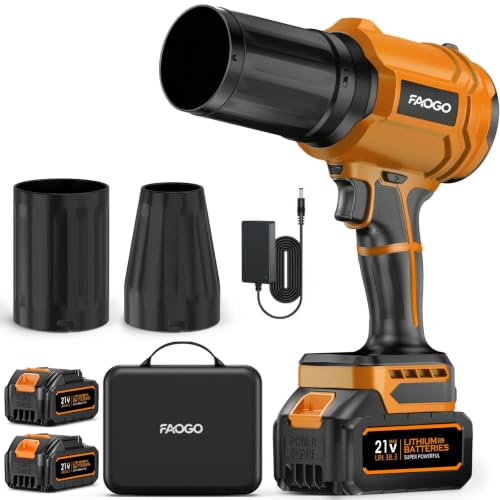
Pros
- Lightweight and compact design for comfortable one-handed use
- Includes two batteries and charger for uninterrupted swapping
- Comes with two extended interfaces for reach in tight spaces
- Storage bag included for convenient organization
Cons
- Total battery life is rated at roughly 26+ minutes across both packs
Corded Reliability vs Cordless Mobility
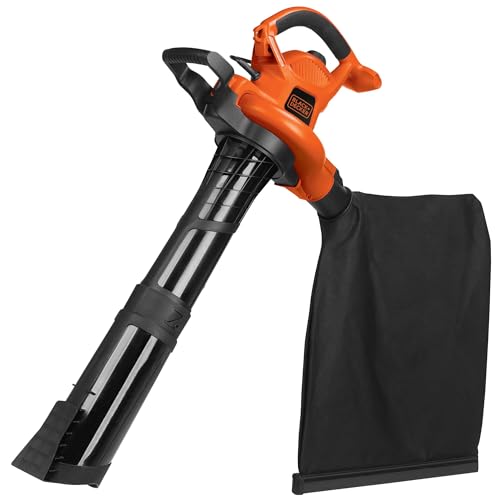
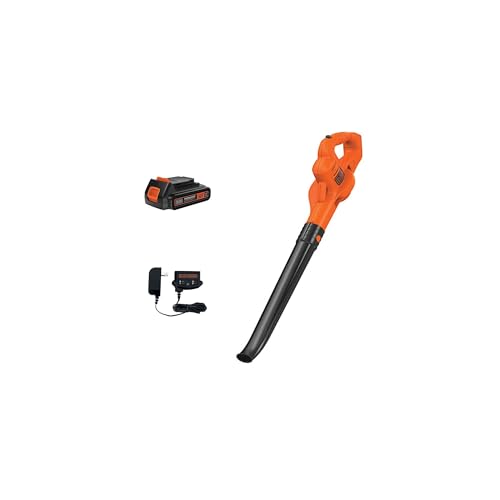
Choosing between corded and battery leaf blowers comes down to whether you prioritize infinite power delivery or unconstrained yard movement. Corded options like the Grasstigon Electric Leaf Blower Corded, 7-Amp and the BLACK+DECKER Electric Leaf Blower utilize 7-amp motors that draw power straight from an outdoor receptacle. This eliminates the downtime of charging cycles and ensures continuous power output, making them dependable choices for smaller suburban lawns, patios, and decks. However, corded tools require a heavy-duty outdoor extension cord and introduce cord-management hassles around trees, fences, and outdoor furniture.
In contrast, cordless units eliminate the trip hazard and tether of a power cable, allowing users to move freely across long driveways and remote yard borders. The main limitation is operating endurance. Even with twin battery kits like the Leaf Blower Cordless, 650CFM Electric Leaf Blowers or the Electric Leaf Blower Cordless with Battery, high-speed clearing tasks will eventually drain the packs, requiring battery swaps or recharge breaks mid-job.
Understanding CFM and Airspeed Claims
Manufacturer airflow metrics describe two distinct elements of blowing performance: volume (CFM) and velocity (MPH). Airflow volume, measured in cubic feet per minute (CFM), indicates the amount of air moving through the blower tube, which determines how wide of a debris swath the tool can herd across your lawn. Airspeed, measured in miles per hour (MPH), represents how fast that air exits the nozzle, providing the concentrated force needed to lift wet, matted leaves or dislodge caked mud from driveways.
For example, the 930CFM Electric Leaf Blower Cordless with 2 X 4.0 advertises up to 930 CFM and 197 MPH using variable 6-speed control, designed to push massive volumes of garden debris. On the other end, the compact BLACK+DECKER Electric Leaf Blower generates an advertised 180 CFM and 180 MPH. While its airspeed is plenty fast to scour paved paths, the lower CFM means it moves smaller clusters of leaves per sweep compared to higher-volume blowers. Buyers should remember that advertised top-tier CFM and MPH figures are manufacturer claims and typically represent maximum burst or turbo modes rather than standard operational levels.
Comparing High-End Platforms and Budget Cordless Kits
Platform compatibility and motor engineering distinguish premium single-battery tools from affordable multi-battery packages. The EGO POWER+ Cordless Electric Leaf Blower, 615 CFM sits in an established 56V power tool ecosystem. It features an aeronautic-inspired turbine fan, a brushless motor, and an included 2.5Ah battery capable of charging in 50 minutes. The trade-off is an upfront price tag of $179.00, though the battery can be shared across other compatible outdoor power equipment from the brand.
Conversely, models such as the Leaf Blower Cordless 650CFM with 2×4.0Ah Battery ($69.98) and the wanvzo Cordless Leaf Blower ($59.99) bundle two standalone batteries and chargers straight out of the box at lower prices. These kits provide immediate redundancy—allowing one battery to charge while the other is in use—but they do not share battery cross-compatibility with broader domestic tool ecosystems. For shoppers planning yard equipment purchases, choosing between an integrated platform and an affordable standalone kit is a decisive factor.
Specialized Multitools: The Leaf Vacuum and Mulcher Option
Standard blowers gather leaves into piles, but collecting and disposing of that debris still requires manual bagging or raking. The MZK 40V Leaf Vacuum Mulcher addresses this cleanup stage by functioning as a 3-in-1 tool that blows, suctions, and shreds garden waste. Driven by a 40V brushless motor, it claims up to 700 CFM and features an internal anti-jam suction tube alongside an advertised 15:1 mulching ratio to condense clippings into its 40-liter collection bag.
While the ability to vacuum and mulch simplifies yard waste disposal, the compromise lies in physical bulk and debris limitations. A vacuum and mulcher setup is inherently heavier and wider than a streamlined blower tube, requiring the user to carry the weight of collected leaves. Mulching impellers are also susceptible to blockages if they encounter thick twigs, gravel, or damp debris clumps. For wide-open turf or simple sidewalk dusting, dedicated blowers remain faster and easier to maneuver.
Weight, Ergonomics, and Handling Differences
Extended yard maintenance quickly leads to forearm and shoulder fatigue if a blower is poorly balanced or overly heavy. Tools like the wanvzo Cordless Leaf Blower (advertised at 2.28 lbs) and the Electric Leaf Blower Cordless with Battery (2.74 lbs bare tool) prioritize ultra-light handling, making them ideal for quick porch sweeps, vehicle drying, or light tasks by seniors and solo operators.
Heavier handheld units, such as the 7.5-pound 930CFM Electric Leaf Blower Cordless with 2 X 4.0, trade ultra-low weight for larger motor housings and heavy battery packs. To offset this, several manufacturers include ergonomic accessories. Both the Leaf Blower Cordless, 650CFM Electric Leaf Blowers and the Leaf Blower Cordless 650CFM with 2×4.0Ah Battery include shoulder straps to distribute operational weight away from the arms across the upper body during extended cleanups.
Frequently Asked Questions About Leaf Blowers
What is the primary trade-off between corded and cordless leaf blowers?
Corded blowers provide unlimited operating time and consistent power without battery degradation, but your range is physically restricted by an extension cord. Cordless battery units provide complete yard mobility, but runtimes depend strictly on battery capacity and motor speed settings.
Does a higher CFM rating always guarantee better yard clearing?
Not necessarily. Manufacturer CFM ratings reflect the volume of air moved, which is great for pushing wide piles of dry leaves. However, MPH (airspeed) is required to dislodge wet, heavy debris stuck to paved driveways or turf.
Can battery-powered blowers handle debris other than dry leaves?
Several models feature multi-speed settings designed to move light powdery snow, grass clippings, and patio dust. However, operating at maximum turbo speeds to move heavier materials drastically depletes battery charge faster than manufacturer low-speed estimates.
Which Leaf Blower Fits Your Yard Cleanup Routine?
Your property layout, outlet access, and physical comfort determine the right leaf blower for your home. Corded blowers offer reliable continuous operation for tight spaces near exterior outlets, while battery-powered blowers deliver unrestricted mobility across driveways and perimeter garden beds at the expense of runtime limits.
For buyers seeking an established cordless ecosystem with refined brushless engineering, the EGO POWER+ Cordless Electric Leaf Blower, 615 CFM is our top recommended cordless model. It provides up to 615 CFM of clearing force and pairs with a fast-charging 56V battery platform, though its higher initial price and single included battery require careful power management on larger properties. If you have an outdoor outlet nearby and want dependable, uninterrupted blowing without battery charging or premium costs, consider the corded Grasstigon Electric Leaf Blower Corded, 7-Amp as a cost-effective, lightweight alternative.