For clearing widespread autumn debris without fuel mixing or cord constraints, the EGO POWER+ Cordless Electric Leaf Blower, 615 CFM offers immediate cordless clearing force, though it requires a higher financial investment and is limited by battery runtime.

Pros
- Lightweight 4 lb build minimizes arm fatigue
- Delivers up to 390 CFM airflow and 210 MPH speed
- Continuous corded power eliminates recharging pauses
- Two-speed switch toggles between light and full force
- Nested two-piece tube design for full assembly
Cons
- Requires an extension cord and nearby wall outlet
- Tubes ship nested and must be pulled apart before use

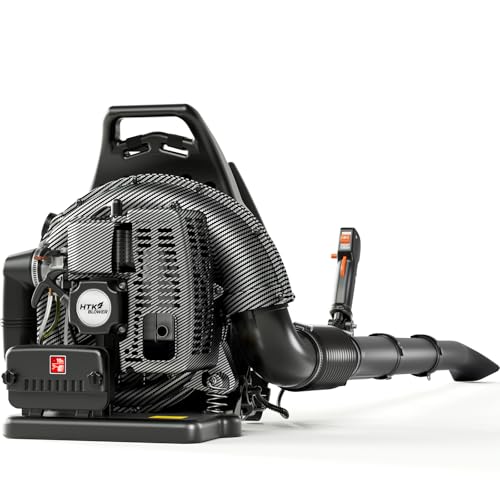
Pros
- Lightweight 9.4-pound design offers easy handheld maneuvering
- Reduced-resistance recoil system eases engine pull starts
- Translucent fuel tank allows quick monitoring of gas levels
- Cushioned anti-vibration handle helps dampen arm strain
- Capable of up to 380 CFM and 180 MPH airflow
Cons
- Requires mixing 2-cycle gas and oil at a 50:1 ratio
- Modest 380 CFM output is best suited for lighter debris

Pros
- Delivers up to 615 CFM and 170 MPH in turbo mode
- Variable speed dial with lock-on button from 200–480 CFM
- High-efficiency brushless motor reduces operating vibration
- Includes 56V 2.5Ah battery and standard 50-minute charger
- Fully compatible with all EGO 56V ARC Lithium batteries
Cons
- Turbo mode rapidly reduces the available battery runtime
- Weighs 7.5 pounds, which may feel heavy with larger batteries

Pros
- Lightweight design at only 4.4 pounds
- 7-Amp motor rated up to 180 MPH and 180 CFM
- Built-in cord retention prevents unplugging
- Zero emissions with instant push-button start
- Simple, low-maintenance corded design
Cons
- Extension cord is not included
- Operating range is limited by cord reach
Pros
- Weighs only 3.9 pounds for light handling
- Rated airflow up to 450 CFM
- Cordless design allows unrestricted mobility
- Convenient one-hand trigger operation
- No gas mixing or cord management required
Cons
- Runtime varies significantly by power output
- Battery charging intervals required

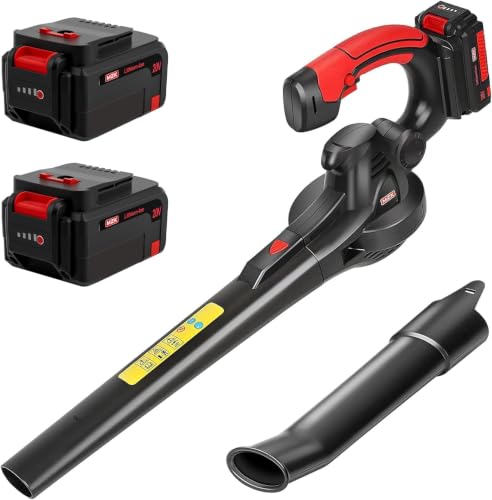
Pros
- Weighs only 2.28 lbs for easy one-handed operation
- Includes two 21V 4000mAh lithium batteries
- Variable speed trigger provides precise airflow control
- Comes with an extension tube and flat nozzle attachment
Cons
- Rated runtime tops out at roughly 30 minutes
- Not designed for large properties or heavy wet debris
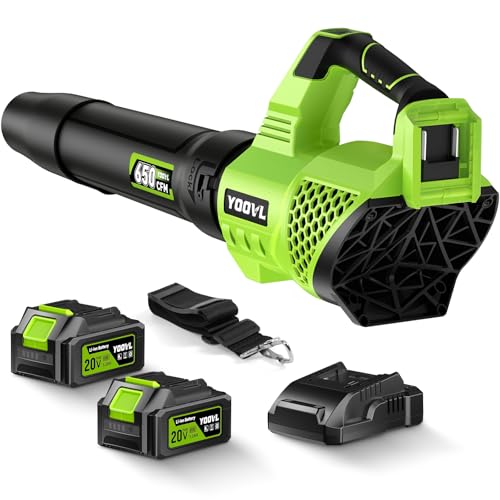
Pros
- Airflow rated up to 650 CFM using advanced turbo technology
- Comes with two high-capacity 20V 5.2Ah batteries and fast charger
- Three selectable speed modes for delicate to heavy-duty jobs
- Includes an adjustable shoulder strap to reduce arm fatigue
- Includes blower tube and extension nozzle attachments
Cons
- Maximum 150-minute runtime applies only to low-speed mode
- Heavier battery packs may add weight during prolonged handheld use

Pros
- Lightweight build suitable for one-handed operation
- Operates at a relatively quiet 65 dB
- Rated up to 200 MPH and 600 CFM output
- Cordless battery platform allows flexible movement
- Versatile for dry debris, sawdust, and car drying
Cons
- Runtime decreases significantly at maximum output
- Single included battery limits extended sessions
- Not suited for heavy, wet leaf accumulations

Pros
- Brushless motor delivers rated airflow up to 650 CFM and 180 MPH
- Includes two 20V 4.0Ah batteries and a fast charger
- Six adjustable speed settings ranging from 80 to 180 MPH
- Comes with an ergonomic shoulder strap and two detachable nozzles
- Includes a storage bag to keep components organized
Cons
- Stated 30-minute runtime is restricted to low-speed operation
- High-speed settings will deplete battery charge more rapidly

Pros
- Instant switch between blow and vacuum modes
- High 18:1 mulch ratio maximizes bag capacity
- Rated up to 350 CFM and 210 MPH air output
- Variable-speed control for different debris types
- Includes 42L debris collection bag
Cons
- Corded design limits overall yard reach
- Weighs 9.3 pounds before debris accumulates
Airflow and Airspeed: Choosing Between CFM and MPH for Heavy Foliage
Cubic feet per minute (CFM) dictates the volume of leaves a blower can sweep into piles at once, while miles per hour (MPH) measures the air velocity required to dislodge wet, compacted foliage from grass and paved surfaces.
When selecting a leaf blower for leaves, matching these metrics to your yard’s conditions is critical. High-volume models like the YOOVL cordless unit (advertising up to 650 CFM) and the EGO POWER+ (delivering an advertised 615 CFM at up to 170 MPH) are engineered to herd broad swaths of scattered dry foliage across turf. In contrast, models like the corded Grasstigon Electric Leaf Blower advertise a higher velocity of 210 MPH paired with 390 CFM. This velocity advantage helps pry stuck clippings from walkways, but its narrower air column sweeps smaller piles per pass than 600+ CFM units. Buyers managing low-density dry leaves on hard surfaces can manage with lower-volume tools like the BLACK+DECKER LB700 (rated at an advertised 180 CFM and 180 MPH), but open-lawn clearing slows down significantly when CFM is limited.
Power Source Trade-Offs: Cordless Freedom Versus Corded Continuous Runtime
Cordless blowers provide total mobility for sweeping distant fence lines and curb edges, but they require managing battery charges, whereas corded electric models offer uninterrupted power at the expense of an extension cord leash.
Corded tools such as the 7-amp Grasstigon and the BLACK+DECKER LB700 eliminate battery degradation and recharge interruptions entirely. They are exceptionally light—the Grasstigon weighs a manufacturer-stated 4 pounds, and the BLACK+DECKER weighs 4.4 pounds—making them easy to maneuver around decks and patios. However, corded operation restricts your reach to the length of your extension cord, and the BLACK+DECKER explicitly does not include a cord in the box. For larger properties or clearing alongside a leaf blower for driveway routine, cordless units like the wanvzo (advertising a 2.28-pound weight with two 21V batteries) or the dual-battery YOOVL system grant unrestricted range, but users must accept that high-throttle sweeping drains batteries substantially faster than low-speed dusting.
Gas Versus Electric: When Does a 2-Cycle Engine Make Sense?
A handheld gas leaf blower provides off-grid clearing power that never requires waiting on a battery charger, but it introduces the ongoing maintenance of 2-cycle fuel mixing and exhaust fumes.
The Getell 26cc Gas Leaf Blower delivers an advertised 380 CFM and 180 MPH using a 2-cycle engine that requires a 50:1 gas-to-oil mixture. While Getell equips the tool with a reduced-resistance recoil starter and a translucent fuel tank for visual level checks, gas equipment remains inherently heavier and louder than electric counterparts. Electric models start instantly with a trigger pull and produce zero direct emissions. However, for rural acreage where running an extension cord is impossible and purchasing multiple high-capacity lithium battery packs is cost-prohibitive, gas remains a viable option if you are comfortable storing fuel and maintaining small engines.
Leaf Collection and Mulching: The All-in-One Alternative
A standard leaf blower only corrals debris into piles for manual disposal, whereas a blower-vacuum-mulcher consolidates clearing and bagging into a single motorized process.
For yards where raking and bagging after blowing is the most burdensome chore, the WORX Trivac WG509 integrates an electric blower, leaf vacuum, and mulcher into one tool. Driven by a 12-amp motor delivering an advertised 350 CFM and 210 MPH, it features a switch to instantly transition to vacuum mode. WORX states it shreds leaves down to an 18:1 mulch ratio directly into an included 42-liter collection bag. The trade-off is physical bulk and cord tethering: while standard blowers remain streamlined for rapid sweeping, a vacuum-mulcher carries the added weight of collection tubes and filled leaf bags, making it better suited for focused perimeter cleanup than clearing entire acreage.
Frequently Asked Questions About Leaf Blowers for Leaves
How much CFM is needed to clear wet autumn leaves effectively?
Airflow volume between 350 CFM and 650 CFM, such as that advertised on the WORX, EGO, and YOOVL models, is generally better suited for shifting dense or damp leaf piles because it moves a wider column of air than lower-CFM sweepers.
Do corded electric leaf blowers include an extension cord?
Most corded blowers do not come with an extension cord. For example, the BLACK+DECKER LB700 explicitly notes that an extension cord is not included, meaning buyers must supply an outdoor-rated cord that matches the tool's amperage.
Matching the Right Leaf Blower to Your Yard’s Demands
Selecting the best tool comes down to balancing the physical scale of your yard against the maintenance effort you are willing to invest. To evaluate overall setup needs across different yard layouts, reviewing what leaf blower is the best approach helps clarify whether cords, batteries, or fuel line up with your seasonal habits.
For homeowners with medium to large yards wanting robust clearing force without gas maintenance, the EGO POWER+ Cordless Electric Leaf Blower, 615 CFM is our primary recommendation. It suits buyers needing brisk sweeping power across open grass, though its higher cost and battery-dependent runtime remain real limitations. For budget-conscious homeowners clearing small patios and driveways who do not mind managing an extension cord, the Grasstigon Electric Leaf Blower Corded, 7-Amp offers a significantly cheaper alternative with unlimited runtime.