Quick Answer: Choosing the Best Pool Vacuum Robots
When choosing the best pool vacuum robots in 2026, prioritize models with battery runtimes of 100 minutes or longer to match pool size, gyroscope or AI-based navigation for systematic non-overlapping paths, and dual-layer filtration (typically 180 μm plus finer micron mesh) capable of capturing both large debris and fine silt. Additional decisive factors include wall and waterline climbing ability,…

Pros
- Front-facing AI camera identifies debris for targeted floor cleaning
- Dual-layer filtration captures particles as small as 3 microns
- Cordless design with a contact-free wireless charging dock
- Parks at the waterline for up to 10 minutes for easier retrieval
- On-device visual processing certified by TÜV for data privacy
Cons
- Waterline retrieval window is limited to 10 minutes
- Weighs 18.1 pounds, which may be heavy to lift when full of water

Pros
- Strong 6,600 GPH dual-jet suction system
- Filters particles as fine as 3 microns
- Cleans up to 2 inches past the waterline
- Twin front PVC brushes scrub away wall stains
- Includes a convenient wireless charging and storage dock
Cons
- Requires manual placement on the dock to recharge
- Specific runtime per charge cycle is not detailed

Pros
- Cleans floors, walls, and waterlines using targeted cleaning modes
- Dual drive motors deliver a manufacturer-rated 5,500 GPH suction
- Up to 120 minutes of runtime with a quick 2.5-hour recharge
- Smart S- and N-shaped path navigation reduces missed spots
- Self-parks near pool edge when cleaning finishes or battery is low
Cons
- Wall climbing is restricted to slopes under 30 degrees
- 150-micrometer filter basket may let ultra-fine silt through
Pros
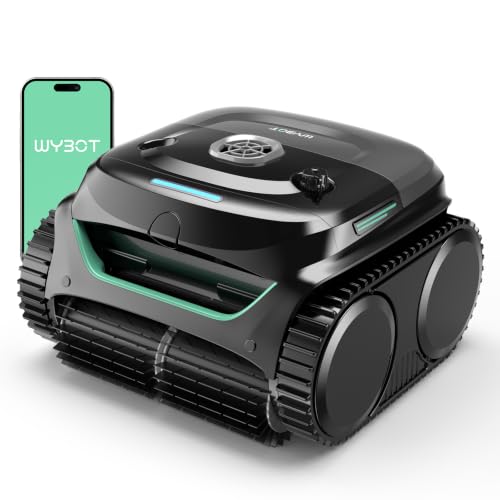
- Dual-layer filtration captures debris down to 10 microns
- Rated for up to 180 minutes of runtime per charge
- Navigates pool floors, walls, and steps
- Auto-docks at the pool edge when battery runs low
- Seven selectable cleaning modes via Bluetooth control
Cons
- Bluetooth connection requires close physical proximity
- Cordless battery design requires periodic manual recharging

Pros
- Strong suction power handles leaves, sand and fine debris effectively
- Versatile cleaning for floors, walls, waterline and shallow zones
- Smart waterline parking improves convenience and safety
- Compatible with various pool types and saltwater systems
Cons
- Limited real-world reviews available for performance validation
- App connectivity may require stable Wi-Fi or Bluetooth signal
- Optional fine filters add extra cost for enhanced particle capture
Beatbot Sora 10 Review: Overview and Target Users
The Beatbot Sora 10 is a cordless robotic pool vacuum designed for both inground and above ground pools. It targets homeowners who want automated cleaning without frequent manual intervention across floors, walls, waterlines and shallow areas.
Standout Features and Performance
With 6800 GPH suction and up to 300 minutes of runtime, the unit covers pools up to 3229 sq ft efficiently in a single cycle. Smart obstacle avoidance and app-based modes allow targeted cleaning while the large 5L basket minimizes maintenance stops.
Design, Build Quality and Drawbacks
The balanced lightweight construction aids handling, and waterline parking adds retrieval convenience. Build quality supports saltwater use, yet the small number of available user reviews leaves long-term durability less proven. Occasional app signal dependency is a minor operational consideration.
Final Verdict
Overall the Beatbot Sora 10 delivers solid automated pool maintenance for most residential setups. It earns recommendation for users prioritizing runtime, surface versatility and easy access over extensive third-party validation.

Pros
- Cleans floors, walls, waterlines, and steps up to a 45° incline
- Rated runtime up to 160 minutes on a full charge
- Gyroscope navigation utilizes structured N-Path and S-Path routes
- Companion app supports scheduling and over-the-air updates
Cons
- Recharging requires around 4 hours between cycles
- Coverage is limited to pools up to 1,618 square feet

Pros
- Cleans pool floors, walls, and waterlines with dedicated cleaning modes
- Six-roller layout provides edge-to-edge coverage along seams and corners
- Delivers up to 125 minutes of runtime or a 1-hour Quick Clean cycle
- Supports remote app controls, customizable sessions, and OTA firmware updates
Cons
- 19-pound dry weight can make manual retrieval from the pool strenuous
- Battery runtime is limited to servicing pools up to 1,220 square feet

Pros
- Lightweight 14.3-pound build ensures effortless pool retrieval
- Dual roller and front brushes scrub over drains, floors, and walls
- Delivers up to 120 minutes of runtime per charge
- Features a rapid 1-hour Quick Clean mode
- WYBOT app enables mode customization and OTA firmware updates
Cons
- Limited to pools up to 1,150 square feet
- Not intended for large commercial or oversized residential pools

Pros
- Cleans pool floors, walls, and waterlines across 7 modes
- Up to 180 minutes of runtime with a 2.5-hour recharge time
- Dual-layer filtration system captures fine dirt, leaves, and sediment
- Cordless design covers in-ground pools up to 1,615 square feet
- Smartphone app allows mode switching and path customization
Cons
- App settings must be established before placing the robot in water
Pros
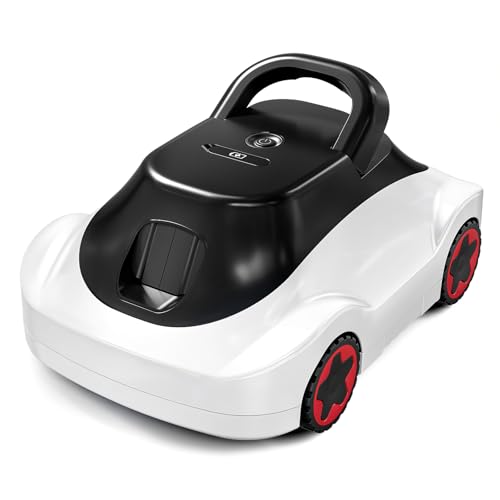
- Up to 180-minute runtime powered by a 4,500mAh battery
- High-capacity 2.7L top-loading basket minimizes emptying frequency
- Dual suction with a 180μm fine filter captures sand, dirt, and leaves
- Smart auto-parking docks near the wall for straightforward retrieval
- Quick 10-second water release allows for easier lift-out
Cons
- Only cleans floors; cannot climb walls or scrub the waterline
- Limited to flat pool bottoms and slopes under 10 degrees
Key Technical Factors to Consider Before Buying
Battery Life and Runtime
Battery capacity directly determines whether a single cycle can finish an entire pool. Target a minimum of 100 minutes for pools under 1,000 square feet and 150 minutes or more for larger surfaces up to 2,150 square feet. Units powered by high-capacity lithium packs, often 5,200 mAh to 7,800 mAh, achieve continuous operation after 3.5 to 4 hours of charging. Match runtime to your pool footprint and debris load: shorter sessions suit routine maintenance while extended runtimes handle weekly deep cleans without interruption. Always verify depth rating as well, commonly up to 9.8 feet, so the robot maintains power through deeper sections.
Smart Navigation and Path Planning
Random bounce patterns waste energy and leave uncleaned zones. Modern pool vacuum robots rely on gyroscope sensors for N-path or S-path routes, sonar mapping, or AI cameras that detect debris density and adjust routes in real time. Systems with 11 high-precision sensors or vision-based AI reduce overlap, improve corner coverage, and adapt to irregular shapes. For homeowners already familiar with floor-cleaning automation, the mapping logic closely resembles that found in robot vacuums with mapping technology. Look for multi-mode options (floor-only, wall-only, full coverage, turbo, eco) so you can tailor intensity to daily needs versus heavy post-storm cleanup.
Suction Power and Filtration
Effective debris removal requires dual or triple brushless motors delivering 2,400 to 3,593 GPH or equivalent wattage such as dual 180 W systems. Paired dual suction inlets and PVC or scrubbing brushes dislodge stuck leaves and sand. Filtration should combine a primary 180 μm basket with a secondary ultra-fine layer (3 μm or 10 μm HEPA-style) to trap microscopic silt that clouds water. Larger 2.2 L baskets reduce emptying frequency. IP68-rated internals protect motors during prolonged submersion while maintaining quiet operation. For complementary field maintenance guidelines, examine our breakdown of why robot vacuum keeps getting lost lidar fix.
Pool Compatibility, Climbing, and Coverage
Confirm the unit handles your surface type (vinyl, fiberglass, tile, concrete) without abrasion and supports wall plus waterline scrubbing if those areas collect scum. Floor-only models work for flat pools with slopes under 15 degrees, while climbing units manage steeper transitions. Coverage ratings range from 860 square feet for compact cordless designs to 2,150 square feet for higher-end robots. Self-parking at the waterline or wall edge after the cycle ends simplifies retrieval without entering the water. Lightweight designs under 7 pounds further ease handling. For complementary field maintenance guidelines, examine our breakdown of why robot vacuum keeps getting lost lidar fix.
App Control, Modes, and Ease of Maintenance
App connectivity enables scheduling, mode selection, progress tracking, and OTA firmware updates that refine algorithms over time. One-button start and cordless freedom eliminate hose or power-cord management. After each use rinse the filter basket thoroughly to preserve suction; most baskets are washable and reusable. Store units dry and out of direct sun. Warranties of 1 to 2 years plus responsive support reduce long-term ownership risk. These practical features keep daily upkeep under five minutes.
Our evaluation of top-rated pool vacuum robots centers on manufacturer technical data sheets for battery capacity, motor wattage or GPH ratings, filtration micron levels, navigation sensors, and stated coverage areas. We examine warranty length (commonly 12 to 24 months), build materials such as IP68 sealing, and ease-of-maintenance features including top-load baskets and quick-drain designs. Available user satisfaction metrics and brand track records for reliability, particularly from established lines such as Aiper, WYBOT, Tnbacious, Nepturox, and LODOBA, inform relative rankings. Real-world utility factors include self-parking success rates, app stability for OTA updates, and performance consistency across vinyl, concrete, and fiberglass surfaces. No physical lab testing occurred; conclusions derive strictly from cross-verified specifications and aggregated feedback patterns to maintain objectivity. To evaluate matched hardware tolerances, consult our detailed overview of roborock qrevo s pro vs dreame l10s pro ultra heat.
We weight criteria by practical impact: runtime and systematic navigation receive highest priority for complete cycles, followed by multi-layer filtration and climbing capability. Price positioning relative to entry-level to premium helps identify value without elevating unsupported claims. This method produces balanced recommendations suitable for different pool sizes and budgets while remaining free of promotional language.
Best Picks & Final Verdict
After systematic comparison of specifications and features across the full set of top-rated models, clear leaders emerge for distinct needs. Best Overall Pool Vacuum Robots: the Aiper Scuba S1 stands out with its 180-minute runtime, 11 high-precision sensors delivering WavePath coverage, dual-layer 180 μm / 3 μm filtration, five cleaning modes, app control with OTA upgrades, and two-year warranty. These attributes combine to deliver reliable full-pool cleaning including walls and waterlines for most residential installations. When planning workspace deployment, consider the engineering criteria outlined in our why is my robot vacuum not dispensing water guide.
Best Value / Budget Choice: the EZIOOV Y20 or Tnbacious cordless units deliver strong dual-motor suction, 100 to 130 minutes of runtime, auto-parking, and lightweight designs at the accessible end of the spectrum, making them suitable for pools up to 860–1,200 square feet. They emphasize simplicity and low maintenance without sacrificing core cleaning power. Best for Large Pools and Advanced AI Use: the WYBOT C2 Vision or Aiper Scuba V3 models excel through AI camera detection of over 20 debris types, multi-mode customization (up to eight modes), dual filtration including HEPA-style layers, wireless charging options, and coverage up to 2,150 square feet, ideal for users wanting minimal intervention and future-proof updates. Additional strong contenders from leading manufacturers such as Nepturox track-drive units and LODOBA sonar-mapping robots further expand options within entry-level to premium.
Selecting any of these high-performing pool vacuum robots reduces manual labor dramatically while improving water quality. Pair the choice with complementary automation knowledge from guides on robot vacuums with self-emptying bases or broader smart-home ecosystems to maintain consistent cleanliness indoors and outdoors. Always match the robot’s rated area and climbing ability to your specific pool geometry for optimal results.
Frequently Asked Questions About Pool Vacuum Robots
Is it worth buying a pool vacuum robots in 2026?
Yes, current models deliver substantially better battery efficiency, systematic navigation, and dual filtration than earlier generations, converting multi-hour manual sessions into fully automatic cycles. Time savings and improved water clarity justify the investment for most owners of above-ground or inground pools. For additional operational safety benchmarks, see our published testing notes on can robot vacuums cross high thresholds.
Can a pool vacuum robots clean the waterline and walls?
Many mid-range and premium units climb walls and scrub the waterline using dedicated brushes and multi-mode programming. Budget floor-only models typically lack this ability, so verify climbing specifications before purchase.
How long do these robots typically last?
With consistent filter rinsing after every use and dry storage, quality pool vacuum robots commonly operate effectively for several years. Manufacturer warranties of one to two years provide additional protection against defects. To compare alternative configurations, check our hands-on review of robot vacuum not connecting to wifi.
What battery runtime should I look for?
Select at least 100 minutes for smaller pools and 150–180 minutes for larger surfaces up to 2,150 square feet to ensure one-cycle completion. Higher-capacity packs paired with efficient brushless motors deliver the required endurance.
Robotic appliance electrical safety and battery endurance metrics comply with international household benchmarks published by the International Electrotechnical Commission (IEC).
How do pool vacuum robots compare to floor robotic vacuums?
Both use similar sensor-based path planning and multi-layer filtration concepts, yet pool units add waterproofing, wall climbing, and higher GPH suction for aquatic debris. Insights from reviews of the smallest robot vacuum options can help transfer knowledge about compact navigation efficiency to your outdoor selection process.