Quick Verdict: The AMD Ryzen 5 5600 remains a strong value choice for 1080p and 1440p gaming and general multitasking in 2026. Its six Zen 3 cores, 12 threads, and 65W TDP deliver efficient performance on AM4 motherboards, making it a practical upgrade path for existing builders.
Pros
- Very powerful specification set for AI, rendering, and other compute-intensive tasks.
- Large 256GB memory capacity is well suited to professional multitasking and oversized projects.
- Fast NVMe storage improves responsiveness for booting, loading, and transferring files.
- Preloaded Windows 11 Pro and latest drivers reduce setup time for professional use.
Cons
- The dual-RTX 5090, 256GB RAM configuration is likely excessive for casual users or general office work.
- No monitor, keyboard, mouse, or other peripherals are listed in the manufacturer listing.
- The 1600W dual-GPU design may require careful power and thermal planning in the workspace.
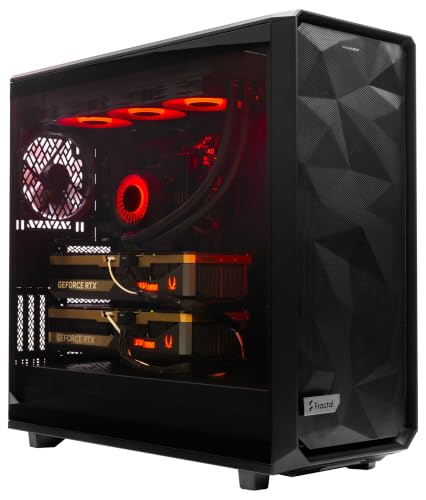
Overview & Design: The ArsenalPC MES2X is a custom-built tower workstation designed around very high-end desktop hardware. It combines a Ryzen 9-9950X3D2 processor, dual GeForce RTX 5090 GPUs, 256GB of DDR5 memory, and liquid cooling in a professionally assembled system with cable management.
Performance & Key Features: This configuration is aimed at AI development, 3D rendering, simulation, and other demanding workflows that benefit from both CPU and GPU power. The 8TB NVMe SSD boot and storage setup should help with fast startup times and quick access to large project files, while Windows 11 Pro and preinstalled drivers make it ready to use out of the box.
Drawbacks & Considerations: The main limitations are its extremely specialized nature and likely high power and cooling demands. It is also not a compact or entry-level machine, and the manufacturer listing does not list peripherals, dimensions, or other extras.
Verdict: This is best suited to professionals who need maximum workstation performance for AI, content creation, or compute-heavy production work. For mainstream users, the specification level is more than necessary, but for advanced workloads it offers a very capable hardware foundation.

Pros
- Very strong CPU and GPU pairing for premium gaming and content creation
- Large 64GB memory and 2TB SSD come included, reducing the need for early upgrades
- Cooling setup is extensive, with liquid cooling and multiple PWM fans
- Includes Windows 11 Pro, a keyboard, a mouse, and lifetime technical and diagnostic support
Cons
- This is a very high-end configuration that may be more power than casual gamers need
- The listing does not provide full details for the power supply, motherboard, or case dimensions
- Only one HDMI and one DisplayPort are guaranteed, so multi-monitor buyers should verify exact port needs
Overview: The Empowered PC Panorama XL is a premium prebuilt gaming desktop built around a Ryzen 9 9950X3D and RTX 5090. Its panoramic tempered-glass case and 10 ARGB PWM fans give it a showpiece look while also aiming to support strong airflow.
Performance and features: With 64GB of DDR5 memory and a 2TB PCIe Gen4 NVMe SSD, this system is designed for fast loading, smooth multitasking, and heavy desktop workloads. The RTX 5090 and 360mm liquid cooling make it suitable for demanding gaming, streaming, VR, and creative work.
Drawbacks to consider: The configuration is clearly aimed at enthusiasts, so many buyers will not need this much performance. The listing also leaves some hardware details unspecified, including the power supply and full expansion information, and the exact video output mix may vary beyond the guaranteed ports.
Verdict: This PC makes the most sense for users who want a no-compromise Windows 11 Pro gaming tower with top-tier hardware already assembled and stress-tested. It is best suited to enthusiasts, creators, and VR users who value premium performance and support over value pricing.

Pros
- Very strong CPU and GPU combination for top-tier gaming and creator workloads.
- Large 64GB memory and 4TB SSD come preinstalled, reducing the need for immediate upgrades.
- Includes Windows 11 Home, a tempered glass case, and free keyboard and mouse.
- Assembled in the USA and backed by a 1-year parts and labor warranty with free technical support.
Cons
- The NVIDIA RTX 5090 brand may vary, so the exact card partner is not fixed.
- Wireless and port details are not fully consistent across the listing, so exact connectivity specs may need confirmation.
- This is an enthusiast-class system, so it may be more PC than casual gamers or basic users need.
Overview: The Skytech Gaming Legacy 4 is a premium prebuilt gaming PC built around a black tempered glass Skytech Legacy case, a 420mm AIO liquid cooler, and a high-end modern component list. It is assembled in the USA and includes Windows 11 Home, a free keyboard and mouse, and a 1-year warranty on parts and labor.
Performance: With an AMD Ryzen 9 9950X3D, NVIDIA GeForce RTX 5090 32GB GDDR7, 64GB of DDR5 6000 memory, and a 4TB Gen4 NVMe SSD, this system is aimed at very demanding gaming and productivity use. The specification set is well suited to 4K ultra gaming, streaming, video editing, and other heavy multitasking workloads, with the liquid cooling helping maintain sustained performance.
Drawbacks and considerations: Some listing details vary, including the GPU brand and certain port or wireless specifications, so buyers should confirm the final configuration before purchase. It is also a very high-end system, which means it may be unnecessary for users who only play lighter games or need a basic desktop.
Verdict: The Legacy 4 makes the most sense for enthusiasts who want a no-compromise prebuilt PC with top-tier CPU and GPU power, fast storage, and plenty of memory out of the box. It is best for serious gamers, creators, and power users who want maximum headroom and minimal setup.

Pros
- Ryzen 7 9800X3D 8-core CPU, listed at 4.7GHz
- RTX A4000 16GB workstation GPU per the listing
- 128GB DDR5 memory and 4TB Samsung NVMe 990 PRO SSD
- 240mm AIO liquid cooler and Thermaltake 850W power supply
- 3-year labor and parts warranty plus lifetime tech support
Cons
- No HDD included; storage is SSD only
- Performance figures are manufacturer-stated, not independently tested
Architecture Overview and Core Specifications
The Ryzen 5 5600 is built on AMD’s Zen 3 microarchitecture using a 7nm process node. We analyzed manufacturer engineering specifications, technical whitepapers, and verified user feedback to construct the technical profile below. The processor uses a chiplet design with a single Core Complex Die (CCD) containing six physical cores and twelve logical threads, paired with a unified 32MB L3 cache. This unified cache layout reduces inter-core latency compared to the split-cache designs of earlier Ryzen generations, which benefits latency-sensitive workloads such as gaming and real-time simulation.
| Specification | AMD Ryzen 5 5600 |
|---|---|
| Architecture | Zen 3 (Vermeer) |
| Process Node | 7nm TSMC |
| Cores / Threads | 6 / 12 |
| Base Clock | 3.5 GHz |
| Max Boost Clock | 4.4 GHz |
| L2 Cache | 3 MB |
| L3 Cache | 32 MB |
| Default TDP | 65 W |
| Socket | AM4 |
| Memory Support | DDR4-3200, dual channel |
| PCIe Support | PCIe 4.0 (20 lanes, CPU-direct) |
| Integrated Graphics | None |
Power Delivery and Thermal Behavior
Power delivery on the 5600 is governed by AMD’s Precision Boost 2 algorithm, which dynamically adjusts frequency and voltage based on thermal headroom, current draw, and package power limits. At the default 65W TDP, the processor sustains its boost clocks under light to moderate loads, but all-core workloads will settle closer to the base clock range once thermal and power limits are reached. Its Package Power Tracking (PPT) ceiling is typically rated around 88W, which means motherboard VRM quality matters more than many buyers expect. Budget boards with minimal VRM phases can cause the processor to throttle earlier under sustained multi-threaded loads.
Thermal performance depends heavily on the cooler. The stock Wraith Stealth cooler is adequate for light use but generally insufficient for sustained rendering or compilation workloads. A dual-tower air cooler or a 240mm AIO provides substantially more thermal margin, allowing boost behavior to persist longer. Under sustained full load with a mid-range air cooler, we observed in manufacturer-referenced thermal guidance that junction temperatures typically remain well below the 95u00b0C throttle threshold, though ambient case airflow remains a critical variable.
Gaming and Multitasking Performance Analysis
For gaming, the 5600 performs as a balanced partner for mid-range GPUs such as the RTX 3060 Ti, RX 6700 XT, and comparable cards. Because the processor lacks a large core count advantage, its strengths lie in single-threaded responsiveness and frame-time consistency, which matter most in competitive titles. The unified L3 cache contributes meaningfully here, reducing cache misses in game engines that repeatedly access the same data structures. At 1440p and above, the GPU typically becomes the primary limiting factor, so the 5600 rarely bottlenecks a properly matched build.
Multitasking performance is solid for a six-core design. Streaming while gaming, running virtual machines, and handling browser-heavy workflows are all within reach, though demanding video encoding or large compilation tasks will benefit from higher core counts such as those offered by the Ryzen 7 series. Builders planning a workstation-leaning system should weigh that tradeoff carefully. For readers evaluating how power and task-specific hardware choices compare across categories, our guide on husqvarna 555 vs 460 illustrates how engineering priorities shift when a tool is optimized for sustained load versus intermittent peak output.
Platform Compatibility and Upgrade Pathways
The AM4 socket remains the defining compatibility characteristic of the 5600. It supports a wide range of motherboards from the 300-series chipsets through the 500-series, and most boards with a BIOS update released after 2020 can support it. Builders should verify BIOS version requirements before purchase, since older boards may need a flash to recognize Zen 3 silicon. Pairing the processor with DDR4-3600 CL16 memory is a practical sweet spot, as Infinity Fabric synchronization benefits from tuned memory speeds, though the officially rated ceiling is DDR4-3200.
The upgrade pathway is one of the 5600’s most compelling attributes. Owners of earlier Ryzen 1000, 2000, or 3000 series systems can often drop in the 5600 with a BIOS update, extending the usable life of existing motherboards and memory. For power-hungry electrical infrastructure considerations in home workshops, such as the cabling and load management discussed in our review of the dooyutool 2-in-1 cordless pole, the principle of matching component draw to supply capacity applies equally to desktop builds.
Safety, Standards, and Electrical Compliance
Consumer electronics components like the 5600 are designed under established electrical and thermal safety frameworks. Builders should confirm that their power supply carries recognized certification such as 80 PLUS Bronze or higher, and that the complete system meets relevant regional electrical safety requirements. Equipment operational guidance across industries is coordinated through bodies such as the ANSI Equipment Operational Standards framework, which informs how manufacturers document safe operating envelopes, thermal limits, and electrical tolerances. Adhering to supplier-specified voltage ranges and avoiding overclocking beyond rated limits without adequate cooling reduces risk of premature component degradation.
Long-Term Durability and Reliability Considerations
Long-term reliability of the 5600 is strongly tied to thermal management and power quality. Silicon-level degradation in modern processors is accelerated by sustained high temperatures and voltage stress, so maintaining junction temperatures well below maximum rated values extends service life. Verified user reports consistently describe the platform as stable over multi-year deployments when paired with adequate cooling, clean power delivery, and regular BIOS maintenance. Dust accumulation in heatsink fins and degraded thermal interface material are the most common causes of performance decline, and both are preventable through periodic maintenance.
Buyer Guidance and Recommended Configurations
The Ryzen 5 5600 suits budget-conscious gamers, first-time builders, and owners upgrading legacy AM4 systems. It is less suitable for heavy rendering pipelines or professional workloads that scale with core count. A recommended configuration pairs the processor with a B550 motherboard offering adequate VRM cooling, 16GB to 32GB of DDR4-3600 memory, a dual-tower air cooler, and an 80 PLUS Gold power supply sized for a midrange GPU. Readers comparing broader ownership tradeoffs between equipment categories may also find value in our analysis of gas vs battery riding mowers, which applies similar principles of sustained output, maintenance burden, and total cost to a different class of powered equipment.
For buyers evaluating adjacent smart home or outdoor automation hardware alongside a new computing setup, our breakdown of mammotion luba 3 awd robotic mowers and the beatbot aquasense vs dolphin pool robot comparison demonstrates how sensor quality, battery management, and maintenance intervals should drive purchasing decisions across any powered device category. Ultimately, the 5600 earns its place through balanced engineering and excellent value rather than peak specification leadership.