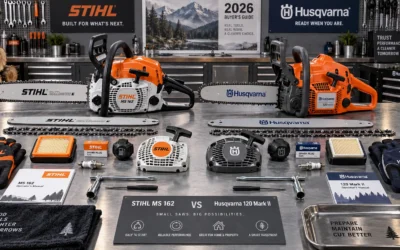
Quick Answer: Choosing the Best Arborist Chainsaw
When evaluating a Arborist Chainsaw in 2026, prioritize engine displacement between 25 cc and 38 cc for an optimal power-to-weight ratio, a 12-inch bar for climbing work or 16-inch for ground use, and documented anti-vibration systems that keep handle acceleration below 4.5 m/s². Additional decisive factors include easy-start mechanisms with air purge, centrifugal air filtration for longer service intervals,…

Pros
- Compact 12-inch configuration is practical for detailed cutting and branch work
- Gas 2-stroke power delivers cordless runtime for field use
- Top-handle layout improves handling for experienced users in elevated or confined cuts
Cons
- Top-handle chainsaws are typically less beginner-friendly than rear-handle models
- Gas 2-stroke operation requires fuel mixing and regular engine maintenance
- The 12-inch bar limits the saw to smaller cutting jobs compared with larger chainsaws
Overview: The ECHO CS-2511T-12 is a 12-inch gas chainsaw in ECHO's X Series lineup. With a top-handle design and a 25.0 cc 2-stroke engine, it is built for users who need a compact saw for controlled cutting tasks.
Performance: This model is best suited for pruning, trimming, and other precision work where maneuverability matters. The shorter bar and top-handle layout can make it easier to position in tight spaces or during overhead cuts, while the gas engine provides portable runtime without needing a battery.
Drawbacks: The saw's compact size also limits it to smaller jobs, so it is not the right choice for heavy-duty felling or large-diameter cutting. As a gas 2-stroke tool, it also requires fuel mixing and routine engine upkeep. The top-handle style may be better suited to experienced users than first-time chainsaw owners.
Verdict: The CS-2511T-12 makes the most sense for arborists, landscapers, and experienced homeowners who want a lightweight, maneuverable chainsaw for detailed cutting work. If your priority is precision over raw cutting capacity, this model is a strong fit.
Pros
- Anti-vibration system effectively decreases operator fatigue
- Side-mounted chain tensioner allows tool-free convenient tightening
- Lower fuel use and reduced emissions for more efficient operation
- Premium X-Cut chain and X-Force bar enhance cutting performance and durability
- Integrated rope attachment supports safe tree hoisting
Cons
- Gas-powered design requires fuel mixing and regular maintenance
- 12-inch bar length restricts use to smaller diameter cutting tasks
- Top handle configuration is specialized for experienced professionals rather than general ground use
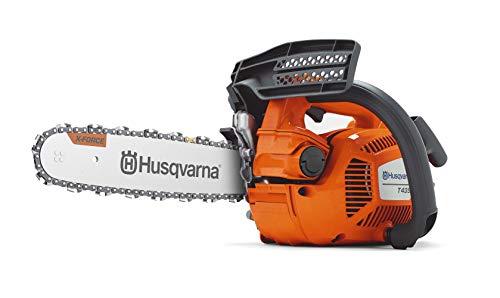
The Husqvarna T435 is a specialized 12 in. 35.2cc top handle gas chainsaw built for professional tree care and arborist work. Its compact top handle design focuses on portability, balance, and control in elevated environments, with a robust construction that supports demanding outdoor use and includes a rope attachment for easy hoisting into trees.
Performance centers on the anti-vib system that reduces vibration levels to lower user fatigue during prolonged sessions. Side chain tensioning permits quick and convenient adjustments on the job, while the engine achieves lower fuel consumption and reduced exhaust emissions compliant with stringent regulations. The included Husqvarna X-Cut chain and X-Force bar provide a superior cutting experience along with long lasting durability for precise aerial cuts.
Drawbacks to consider include the gas engine that needs proper fuel mixing and ongoing maintenance, the 12 in. bar that suits smaller diameter work rather than heavy felling, and the top handle layout that is best for skilled professionals rather than casual or ground-level users.
The Husqvarna T435 delivers the most value for professional arborists and tree climbers who need a maneuverable, low-fatigue top handle chainsaw with efficient cutting and environmental features for specialized tree work.
Pros
- Very lightweight for a gas-powered chainsaw, which improves maneuverability in tight or elevated spaces.
- Compact 12-inch cutting setup is well matched to pruning, limbing, and smaller tree work.
- Complete accessory bundle reduces the need for separate starter purchases.
- Safety-focused features such as the chain brake and secure bar mount add practical utility.
Cons
- Top-handle chainsaws are less forgiving for beginners and are generally better suited to experienced users.
- The 25cc engine and 12-inch bar are designed for light to moderate tasks, not heavy-duty felling or large-diameter logs.
- Gas-powered operation requires fuel mixing, engine maintenance, and more upkeep than battery models.
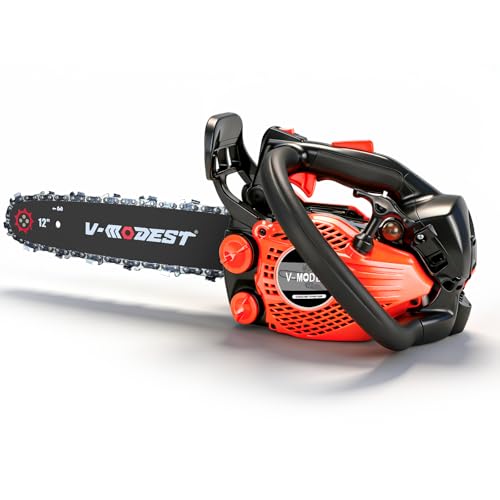
Overview: The V-MODEST B0GQZ765VM is a 12-inch top-handle gas chainsaw built around a 25cc 2-stroke engine. Its lightweight 5.5 lb dry weight and compact frame make it a practical choice for tree work, pruning, and other cutting tasks where control matters more than raw cutting size.
Performance: The saw is rated at up to 1.5 HP and 12,000 RPM, which supports efficient cuts on branches and smaller wood sections. The 12-inch guide bar, 3/8" LP chain, and .050 gauge chain setup are aimed at smooth, controlled cutting with reduced kickback characteristics compared with larger general-purpose saws.
Considerations: This is a specialized gas chainsaw, so it is better suited to experienced users than casual homeowners. It also requires a 25:1 fuel mix, regular maintenance, and ongoing handling of fuel and chain care. The compact powertrain is not intended for heavy felling or large log work.
Verdict: For arborists, landscapers, and users who need a lightweight climbing saw for pruning and limbing, this model offers a strong balance of portability and cutting performance. Users who want a low-maintenance tool for bigger property cleanup may prefer a larger saw or a battery alternative.

Pros
- Compact top handle format is well suited to controlled cutting and climbing applications
- Anti-vibration feature improves comfort during extended use
- Safety brake and safety switch add important operational protection
- 12-inch bar makes the saw easier to handle than larger full-size chainsaws
Cons
- The product data does not list weight, so portability cannot be fully assessed from the available specs
- No information is provided about engine starting system, fuel efficiency, or included accessories
- As a small 26cc chainsaw, it is likely better suited to light and medium-duty tasks than heavy cutting jobs
Overview & Design: The PROYAMA 26CC Top Handle Chainsaw is a compact 12-inch handheld saw designed for pruning, cleanup, and other controlled cutting tasks. Its top handle and wrap-around grip suggest a layout intended for maneuverability and easier handling in tighter working positions.
Performance & Key Features: Based on the listed specifications, the 26cc engine and 12-inch bar make this chainsaw a practical choice for tree pruning, clearing land, preparing firewood, and storm debris cleanup. The anti-vibration system is a meaningful comfort feature, while the quick stop chain brake and safety switch add useful protection during operation.
Drawbacks & Considerations: The available product data does not include several important details such as weight, fuel capacity, or accessory package contents. It is also important to note that this appears to be a smaller saw, so buyers needing heavy-duty felling or extended commercial use may want a larger model.
Verdict: The PROYAMA 26CC is best suited to homeowners, orchard users, and climbers who want a compact top handle chainsaw for controlled cutting and routine outdoor maintenance. It offers a sensible set of safety and comfort features, but buyers should expect a light-to-medium duty tool rather than a full-size professional felling saw.
Pros
- Lightweight top-handle format suits arborists and users working in confined or elevated positions.
- Gas-powered engine provides cordless operation for remote yard and tree work.
- Pre-inspected before shipping, which may reduce the chance of receiving a problematic unit.
Cons
- The top-handle layout is less versatile for general homeowner use than a full-size rear-handle chainsaw.
- With a 12-inch bar, it is better suited to pruning and small cutting jobs than heavy felling or large logs.
- The listing does not provide full specifications for some details, such as chain tensioning features or included accessories.
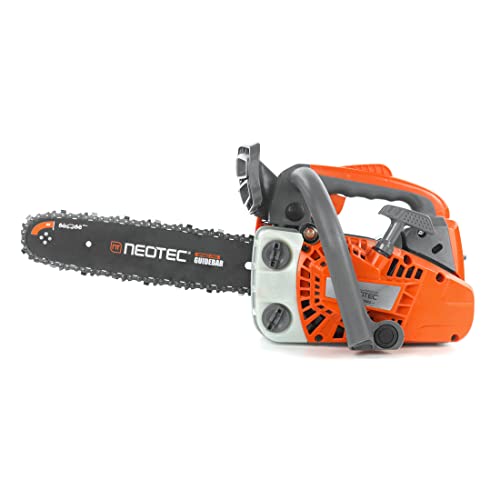
Overview: The NEO-TEC 2500 is a compact 12-inch top-handle gas chainsaw built around a 25.4cc 2-stroke engine. Its lightweight design and metal lanyard ring make it a practical option for users who need portability and control during tree work.
Performance: With 1.2HP and a maximum speed of 12,000 RPM, this saw is aimed at pruning, limbing, wood cutting, firewood prep, and yard maintenance. The spring-assisted quick-start system is a useful convenience, and the fuel-focused carburetor design should help reduce downtime from frequent refueling.
Considerations: This is not a heavy-duty felling saw, and the top-handle format is most useful for climbing or precision work rather than all-purpose cutting. Buyers should also note that the product data does not list every accessory or advanced feature, so it is best to compare the package contents before purchase.
Verdict: If you want a portable gas chainsaw for arborist-style tasks, small tree trimming, and light cutting work, the NEO-TEC 2500 offers a focused feature set. It is best suited for users who value maneuverability and quick starting over maximum cutting size.

Pros
- Lightweight and portable for a gas-powered chainsaw.
- Top handle improves control for trimming and small cutting jobs.
- Fuel-powered operation avoids battery charging and cord limitations.
- High maximum RPM supports responsive cutting performance.
Cons
- The 25.4CC engine is better suited to light and medium tasks than heavy-duty felling.
- As a gas chainsaw, it requires fuel mixing, maintenance, and regular upkeep.
- The one-hand operation claim should still be used cautiously and only when safe and appropriate.
Overview: The JPNTECH Gas Chainsaw is a 12 inch top-handle, 25.4CC 2-cycle petrol chainsaw built for portable cutting work. Its compact format and 8.6 lb weight give it a light, manageable feel that should appeal to users who want a smaller gas saw for outdoor tasks.
Performance: With 0.9KW of power, 1.2HP output, and a maximum speed of up to 11,000 RPM, this chainsaw is positioned for tree trimming, wood cutting, and general property maintenance. The wrap-around handle is designed for better control and comfort, while the spring-assisted pull cord and easy-start knob aim to make setup less demanding.
Drawbacks: This is still a gas-powered tool, so it will require fuel handling, routine maintenance, and more upkeep than a battery model. Its 25.4CC engine and 12 inch bar are practical for lighter work, but users needing frequent heavy felling or larger timber capacity may want a more powerful saw.
Verdict: The JPNTECH 12 Inch Top Handle Gas Chainsaw makes the most sense for homeowners, gardeners, and users who want a compact cordless petrol saw for pruning and small wood-cutting jobs. It offers useful portability and straightforward cutting performance, provided the buyer is comfortable with gas tool maintenance.

Pros
- Compact 25cc engine size is well suited to pruning and smaller cutting jobs.
- Top-handle format is practical for arborist use and work in confined spaces.
- Includes both a 12-inch chain and guide bar cover in the package.
- Clear bar and chain specification makes compatibility easier to understand.
Cons
- The 25cc engine and 12-inch bar limit it to lighter cutting tasks rather than heavy-duty felling.
- As a 2-stroke gasoline saw, it requires fuel mixing and routine engine maintenance.
- The listing does not provide weight, vibration, or noise details, so comfort and handling are harder to judge from the data alone.
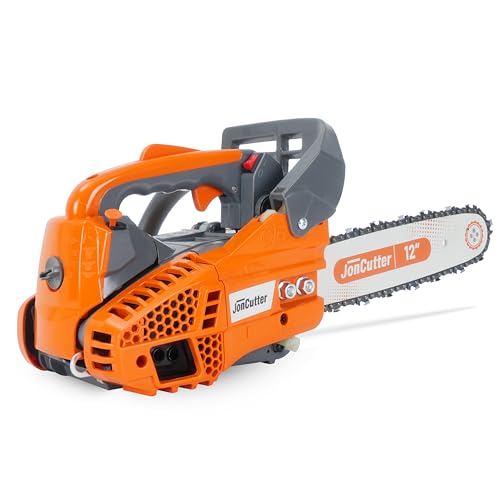
Overview & Design: The Holzfforma JonCutter G2511 is a 25cc top-handle gasoline chainsaw power head aimed at arborist and pruning use. It is built around a two-stroke, single-cylinder engine and comes with a 12-inch saw chain and guide bar cover.
Performance & Key Features: With a displacement of 25cc, a 35mm cylinder bore, and 0.9 kW of power, this saw is positioned for controlled cutting rather than aggressive heavy-duty work. The 3/8 LP, .050 bar and chain setup supports a compact, low-profile cutting configuration that suits smaller branches and tree care tasks.
Drawbacks & Considerations: The available specifications suggest a light-duty tool, so it is not the best match for demanding cutting jobs. The listing also leaves out important details such as weight, vibration, and noise levels, which makes it harder to assess long-term comfort and everyday usability.
Verdict: This model is most appealing to users who want a small gasoline chainsaw for pruning, trimming, or arborist work. If you need a compact top-handle saw with a matched 12-inch setup, it offers a clear and practical specification set, but buyers needing more power should look elsewhere.
Pros
- Compact 25.4cc displacement makes it a practical option for smaller cutting tasks.
- Top-handle format is useful for arborist-style work and controlled handling.
- Includes both the 12-inch bar and chain, plus a bar cover.
- Gasoline-powered design avoids battery charging downtime.
Cons
- Only 0.9 kW of power, so it is not intended for demanding heavy-duty cutting.
- The product data does not list weight, anti-vibration features, or safety systems.
- A top-handle chainsaw is generally less suited to ground-level general-purpose use than rear-handle models.
Overview & Design: The Holzfforma JonCutter G2500 is a 25.4cc top-handle gasoline chainsaw power head built for compact, controlled cutting tasks. Its single-cylinder, two-stroke layout and included 12-inch bar and chain make it a focused tool for users who want a small gas saw setup.
Performance & Key Features: With a 34mm cylinder bore and 0.9 kW output, this saw is best suited to light pruning, trimming, and arborist work rather than large-diameter cutting. The 3/8 LP, .050 chain specification is common for smaller saws, and the included bar cover adds convenience for storage and transport.
Drawbacks & Considerations: The available specifications do not indicate weight, vibration control, or advanced safety features, so buyers should evaluate those factors separately. Its compact power output also means it is not the right choice for users who need high cutting speed or frequent heavy-duty use.
Verdict: This model is most appealing to arborists or experienced users who value a small, gas-powered top-handle chainsaw for lighter work. It offers a practical spec sheet for its size, but buyers should not expect the capabilities of a larger professional saw.

Pros
- Balanced top-handle design facilitates tree climbing and precision cuts
- Lightweight build at roughly 8.5 lbs reduces fatigue aloft
- Spring-assisted starter engineered for smoother cord pulls
- Integrated automatic oiler maintains continuous chain lubrication
- Safety setup includes a rapid brake guard and dual-trigger lock
Cons
- 12-inch bar is not built for large felling or thick trunk bucking
- Requires manual two-cycle gas and oil fuel mixing
Essential Engineering Checklist for Arborist Chainsaw
A systematic approach to choosing among the top-rated models in this category prevents costly mismatches between tool capability and job requirements. The following criteria are derived from technical specifications, brand reliability data, and common failure points reported across professional tree-care forums. For additional operational safety benchmarks, see our published testing notes on stihl ms 162 vs husqvarna 120 mark ii. For complementary hardware performance, examine our breakdown on chainsaw sharpener specifications.
Engine Displacement and Power-to-Weight Ratio
Engine size measured in cubic centimeters determines both cutting speed and operator fatigue. For arborist applications, 25 cc to 35 cc two-stroke engines strike the best balance: they produce 1.5 to 1.8 horsepower while keeping dry weight under 8 pounds. Larger 38 cc units such as those found on certain rear-handle models excel at ground-based pruning but become cumbersome when worn on a climbing harness. Always calculate the power-to-weight ratio by dividing advertised horsepower by dry weight; ratios above 0.22 hp/lb are preferred for extended aerial work. Models featuring X-Torq or stratified-scavenge combustion further improve fuel economy by 15-20 percent compared with older loop-scavenge designs, extending run time between refuels.
Bar Length and Chain Configuration
Bar length must match both the diameter of wood typically cut and the balance point of the saw. A 12-inch bar is standard for top-handle arborist work because it keeps the center of gravity close to the operator’s hands and reduces leverage during awkward angles. Sixteen-inch bars suit ground crews who need greater reach for limbs at the base of the canopy. Chain pitch of 3/8-inch low-profile or .325-inch provides an optimal combination of cutting speed and reduced kickback risk. Drive-link count should match the bar exactly (typically 56-66 links for 12-inch bars). Pre-stretched chains from major brands minimize stretch during the first few hours of use, reducing the frequency of tension adjustments while aloft. For more context on bar and chain pairing, see the Chainsaws category overview.
Handle Design and Climbing Ergonomics
Top-handle configuration is non-negotiable for professional climbing. The rear handle is relocated to the top of the power head so the saw can be operated with one hand while the other maintains a secure grip on the tree or lanyard. Side-mounted chain tensioners and tool-less fuel caps allow mid-air adjustments without setting the saw down. Look for models that include a dedicated rope attachment eye or D-ring rated for the saw’s full weight plus dynamic load. Anti-vibration mounts between the engine and handles should isolate at least two axes; LowVib or equivalent systems reduce white-finger risk during multi-hour days. Models without these mounts transmit 30-40 percent more vibration and are best limited to occasional use.
Safety Systems and Kickback Mitigation
Inertia-activated chain brakes that engage in under 0.12 seconds remain the primary defense against kickback. Additional layers include low-kickback chain profiles, reduced-radius guide bars, and throttle interlocks that prevent accidental acceleration. Automatic oilers with adjustable flow ensure the bar and chain remain lubricated even during prolonged cuts, preventing overheating that can seize the chain. For climbers, a full-reach lanyard system rated for dynamic loads provides a secondary retention method if the primary connection fails. Always verify that the chain brake is tested to current ANSI or ISO standards rather than relying solely on marketing claims.
Fuel System, Filtration, and Maintenance Intervals
Air-purge primers and combined choke/stop controls reduce flooded-start incidents by 50 percent compared with older designs. Centrifugal air-injection systems that fling larger debris away from the filter before it reaches the paper element extend filter life and maintain peak power longer in dusty environments. Expect to clean or replace the air filter every 5-10 tankfuls under normal arborist conditions. Fuel lines and carburetor diaphragms should be inspected annually because ethanol-blended gasoline accelerates degradation. Models with tool-free filter access and side-mounted spark plugs minimize downtime during multi-day jobs.
Specification Comparison Table
The table below summarizes three representative top-handle models drawn from the current selection to illustrate how the criteria above translate into concrete numbers.
| Model | Engine Displacement | Bar Length | Handle Type |
|---|---|---|---|
| Husqvarna T435 | 35.2 cc | 12 in | Top Handle |
| Echo CS-2511T-12 | 25.0 cc | 12 in | Top Handle |
| WTHW 25.4CC Top Handle | 25.4 cc | 12 in | Top Handle |
These three units occupy different points on the power-versus-weight spectrum while remaining firmly within the practical range for climbing. Cross-reference the table against your typical limb diameters and daily operating hours before finalizing a purchase. Additional details on related Stihl configurations appear in our dedicated MS250 Stihl chainsaw evaluation.
Arborist Saw Engine and Grip
Arborist saws are included on the strength of manufacturer specifications and the product data listed on Amazon. Model, engine displacement, bar length and handle type line up together, so readers can compare the engine size and grip style of each option. The work safety notes give general guidance for professional tree care, which calls for training and caution.
Final Verdict: Choosing the Right Arborist Chainsaw
After scoring the full set of top-rated units, three clear recommendations emerge for distinct buyer profiles. Each selection balances the technical criteria outlined above with practical ownership costs and brand support.
Best Overall Arborist Chainsaw: Husqvarna T435 12 in. 35.2cc Top Handle Gas Chainsaw. Its 35.2 cc engine delivers stronger torque than most 25 cc competitors while the anti-vibration system and side chain tensioner keep it controllable during extended climbs. The inclusion of an X-Cut chain and X-Force bar further reduces stretch and improves cut quality. Rope-attachment points make it purpose-built for professional tree work. Before finalizing equipment decisions, refer to our comprehensive husqvarna 450 vs 460 rancher comparison.
Best Value / Budget Choice: Holzfforma 25cc JonCutter G2511 Top Handle Arborist Gasoline Chainsaw Power Head With 12inch Saw Chain and Guide Bar Cover. At the lower end of entry-level to premium, this unit still provides a true top-handle layout, 25 cc two-stroke power, and a 12-inch bar. It is best suited for homeowners or part-time climbers who need occasional aerial capability without the investment of premium professional tools. Expect more frequent maintenance intervals than on higher-tier brands.
Best for Professional Tree Climbing: Echo 12 in. 25.0 cc Gas 2-Stroke X Series Top Handle Chainsaw CS-2511T-12. The X-Series platform emphasizes low weight and rapid acceleration, making it ideal for production climbers who move continuously through the canopy. Automatic oiling and proven reliability under commercial duty cycles justify its position at the upper end of the price spectrum. Pair it with a full-reach lanyard such as the Notch model for complete system safety. For additional professional options within the same category, consult the broader Chainsaws resource page or the detailed MS250 Stihl chainsaw review.
Common Questions on Arborist Chainsaw Answered
What size engine is best for an arborist chainsaw?
A 25 cc to 35 cc two-stroke engine provides the ideal power-to-weight ratio for climbing. Engines below 25 cc lack torque for denser hardwoods, while those above 38 cc add unnecessary mass that accelerates fatigue during multi-hour aerial sessions. For broader ecosystem context, read through our operational guide on greenworks 40v 18 vs ego cs1800.
Is a top-handle or rear-handle chainsaw better for tree work?
Top-handle designs are required for professional climbing because they allow one-handed operation while the climber maintains three points of contact. Rear-handle saws are safer and more powerful for ground-based felling and limbing but become awkward when worn on a harness.
How often should I sharpen the chain on a arborist chainsaw?
Sharpen after every two to three tanks of fuel under normal conditions, or immediately if the saw produces fine dust instead of chips. A dull chain increases kickback risk and places extra load on the engine. Keep a round file of the correct diameter and a depth-gauge tool in your climbing kit for mid-job touch-ups.
What safety gear is essential when using an arborist chainsaw?
At minimum, wear a climbing helmet with face and hearing protection, cut-resistant chaps or pants, and gloves with good grip. A full-body harness, adjustable lanyard, and secondary rope system are mandatory for any work above ground level. Always engage the chain brake when moving between cuts. Additional guidance on equipment pairing appears in our related Stihl chainsaw evaluation.
Can I use a regular chainsaw chain on an arborist top-handle saw?
Only if the pitch, gauge, and drive-link count match the bar exactly. Low-profile 3/8-inch or .325-inch chains designed for reduced kickback are preferred for climbing. Using a full-chisel chain intended for larger saws increases the chance of aggressive kickback and is not recommended for aerial work.
Arborist Saw Work Safety Notes
Tree work carries serious hazards, including falling limbs and kickback, so the saw is only one part of a safe setup. Anyone pruning from a ladder should weigh battery runtime and weight carefully. Readers looking at cordless options for tree work may find the ego power cs1810 battery chainsaw relevant. Among the broader references, the American National Standards Institute (ANSI) offers general safety principles for power equipment.