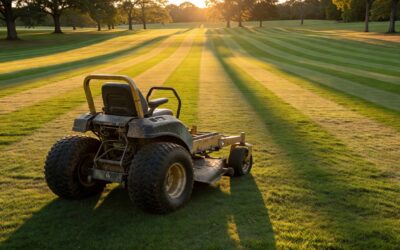
Direct Answer: Which Zero Turn Mower Is the Best?
No single zero turn mower is universally the best. The right choice depends on lawn size, terrain, budget, and usage frequency.
For most residential users with up to 3 acres, a mid-range gas-powered zero turn mower with a 42–54 inch deck, 20–25 HP engine, and lap-bar or steering wheel controls offers the best balance of performance and value. Commercial users or those with larger properties should prioritize higher horsepower (25+ HP), wider cutting decks (60+ inches), and heavy-duty frame construction for durability under sustained workloads.
What Is a Zero Turn Mower and How Does It Work?
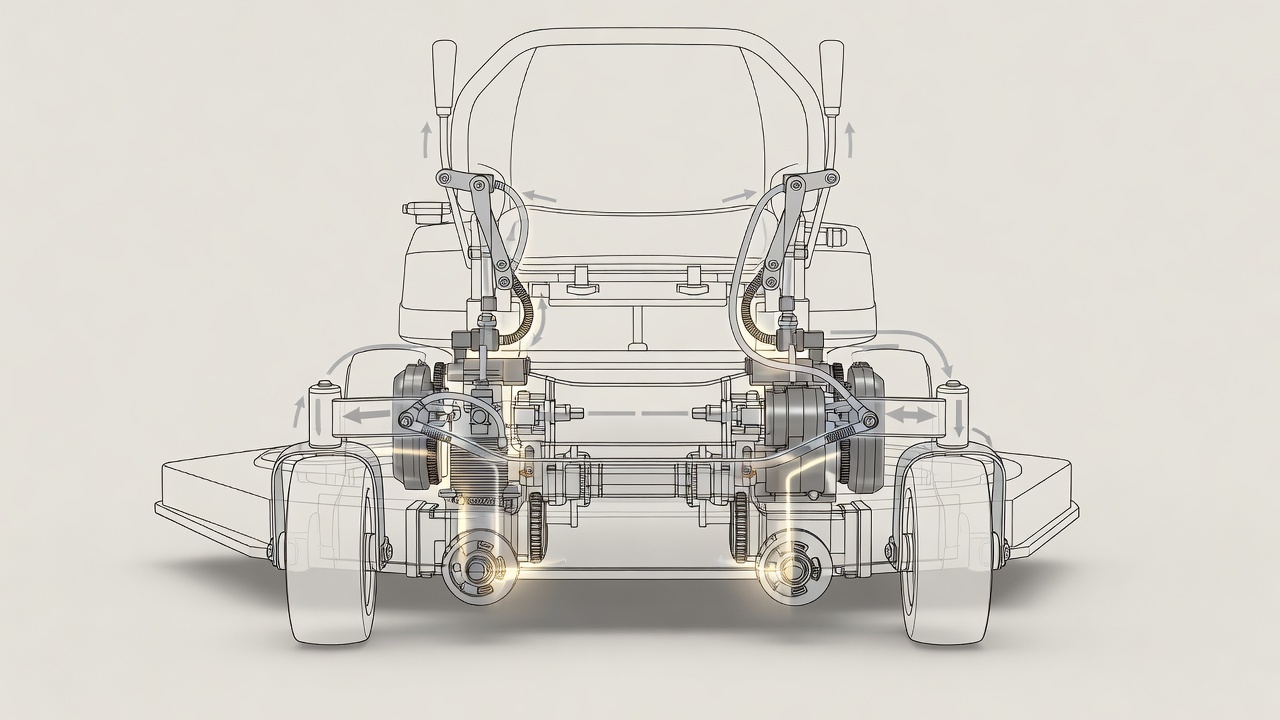
A zero turn mower is a riding mower capable of turning within its own footprint — a zero-radius turn. Unlike traditional lawn tractors that steer via front wheels, zero turn mowers use independent rear-wheel drive. Each rear wheel is powered by its own hydrostatic transmission, controlled by two levers (lap bars) or, on some newer models, a steering wheel linked to the same dual-drive system.
What Makes a Zero Turn Mower Different from a Standard Riding Mower?
- Turning radius: True zero-radius turning vs. 15–30 inch turning radius on lawn tractors
- Speed: Typically 6–10 mph forward speed vs. 4–5.5 mph on tractors
- Maneuverability: Pivots around obstacles (trees, beds) without backing up
- Cut quality: Higher blade tip speeds (18,000–19,000+ ft/min) produce cleaner cuts
How Does the Zero-Radius Turning System Work?
Each rear wheel connects to an independent hydrostatic transmission. Pushing both lap bars forward drives straight; pulling both back reverses. Pushing one bar farther than the other causes that wheel to turn faster, pivoting the mower. Pushing one forward and pulling the other back spins the mower in place — the defining zero-radius turn.
What Are the Main Components That Affect a Zero Turn Mower’s Performance?
| Component | Role in Performance |
|---|---|
| Engine | Horsepower determines cutting power, hill climbing, and attachment capability |
| Transmission | Dual hydrostatic drives enable zero-turn maneuverability and speed control |
| Cutting deck | Width, gauge steel thickness, and spindle quality affect cut quality and durability |
| Frame | Welded tubular steel construction resists flex under load |
| Tires | Wide rear tires distribute weight for traction and reduced turf damage |
| Controls | Lap-bar vs. steering wheel affects learning curve and precision |
Are Zero Turn Mowers Suitable for All Lawn Types?
Zero turn mowers excel on flat to gently rolling lawns (up to 15° slopes) with open areas and moderate obstacles. They struggle on steep slopes (over 20°), very wet terrain, and extremely tight spaces where a walk-behind mower is more practical. For slopes exceeding manufacturer ratings, a walk-behind or slope-rated mower is safer.
What Factors Determine Which Zero Turn Mower Is Best for You?
How Does Lawn Size Affect Which Zero Turn Mower You Should Choose?
| Lawn Size | Recommended Deck Width | Typical Mowing Time (per acre) |
|---|---|---|
| Under 1 acre | 34–42 inches | 30–45 minutes |
| 1–3 acres | 48–54 inches | 45–75 minutes |
| 3–5+ acres | 60–72 inches | 60–90+ minutes |
Larger decks cover more ground per pass but reduce maneuverability around trees and beds. Match deck width to your effective mowing area — subtract flower beds, driveways, and dense tree zones.
Does Terrain Slope or Unevenness Limit Which Models Are Appropriate?
Yes. Most residential zero turn mowers carry a maximum slope rating of 15° (approximately 27% grade). Commercial models may rate to 20°. Exceeding this risks rollover. For uneven ground, look for:
- Floating or suspended decks that follow ground contours
- Wide rear tires (20+ inches) for weight distribution
- Low center of gravity frame design
- Differential lock or traction assist features (on select models)
What Cutting Deck Width Is Best for Residential Versus Commercial Use?
- Residential (under 3 acres): 42–54 inches balances speed and maneuverability
- Prosumer (3–5 acres, frequent use): 54–60 inches with heavier gauge steel
- Commercial (5+ acres, daily use): 60–72 inches, 10-gauge or 7-gauge steel, reinforced spindles
How Important Is Engine Horsepower When Selecting a Zero Turn Mower?
Horsepower must match deck width and workload:
| Deck Width | Minimum HP (Residential) | Recommended HP (Commercial) |
|---|---|---|
| 42 inches | 18–20 HP | 22+ HP |
| 48–54 inches | 22–25 HP | 25–28 HP |
| 60+ inches | 25+ HP | 28–35+ HP |
Underpowered engines bog down in thick grass, reduce blade tip speed, and wear prematurely. Overpowered engines add cost and fuel consumption without proportional benefit.
Should You Choose a Gas-Powered, Battery-Electric, or Diesel Zero Turn Mower?
- Gas: Dominant choice; 2–5 hour run time per tank; wide model selection; established service network
- Battery-electric: 1–2.5 hour run time; 3–8 hour recharge; zero emissions; lower maintenance; higher upfront cost
- Diesel: Commercial only; superior torque and fuel efficiency; 8+ hour run time; significantly higher purchase price
How Does Operator Comfort (Seat, Controls, Vibration) Affect Long-Term Usability?
Comfort determines how long you can mow without fatigue. Key factors:
- Seat: High-back with armrests, suspension springs, and adjustable lumbar support
- Controls: Lap bars offer precision; steering wheel models reduce learning curve
- Vibration: Isolated engine mounts and deck suspension reduce operator fatigue
- Ergonomics: Cup holder, tool storage, USB charging, and clear sightlines to deck edges
Gas vs. Electric Zero Turn Mowers: Which Is Better?
What Are the Performance Advantages of Gas-Powered Zero Turn Mowers?
- Continuous operation — refuel in minutes
- Higher sustained horsepower for thick/wet grass
- Broader model range across all price tiers
- Established parts and service availability
- Better cold-weather starting reliability
Are Battery-Electric Zero Turn Mowers Powerful Enough for Large Lawns?
Current battery-electric models (typically 3–15 kWh packs) handle 1–3 acres per charge depending on grass density and terrain. They match gas mowers in blade tip speed but lack sustained power for continuous heavy cutting. For properties over 3 acres, plan for mid-mow recharging or a second battery pack.
How Do Run Time and Recharge Time Compare to a Full Gas Tank?
| Metric | Gas (Typical 5–7 gal tank) | Battery-Electric (Typical 5–10 kWh) |
|---|---|---|
| Run time | 2.5–5 hours | 1–2.5 hours |
| Refuel/recharge | 2–3 minutes | 3–8 hours (Level 2 charger) |
| Range anxiety | None | Moderate for large properties |
Which Power Source Has Lower Long-Term Maintenance Costs?
Electric mowers eliminate oil changes, spark plugs, air filters, fuel filters, and belt replacements (direct-drive spindles). Typical 5-year maintenance cost:
- Gas: $400–$800 (oil, filters, plugs, belts, carburetor service)
- Electric: $50–$150 (blade sharpening, tire rotation, coolant on some models)
Battery replacement at 7–10 years ($1,500–$3,000) narrows the gap but total cost of ownership often favors electric for residential users.
Is an Electric Zero Turn Mower Better for the Environment and Noise-Sensitive Neighborhoods?
Yes. Electric mowers produce zero tailpipe emissions and operate at 85–95 dB vs. 95–105 dB for gas. This matters for early-morning mowing, HOA communities, and properties near schools or hospitals. Lifecycle emissions depend on your grid’s energy mix.
What Cutting Deck Size Should You Choose?
What Deck Sizes Are Available on Zero Turn Mowers?
Standard widths: 34″, 42″, 48″, 52″, 54″, 60″, 61″, 72″. Residential models cluster at 42–54″; commercial at 60–72″.
Which Deck Width Is Best for Lawns Under 1 Acre?
34–42 inches. Narrower decks navigate gates, narrow side yards, and dense landscaping. A 42″ deck cuts ~1 acre in 35–45 minutes — sufficient for most suburban lots.
What Deck Size Is Recommended for 1–3 Acre Properties?
48–54 inches. This range optimizes the speed/maneuverability trade-off. A 54″ deck cuts ~2 acres per hour on open ground while still fitting through standard 48″ gates (with chute up).
When Does a 60-Inch or Wider Deck Make Sense?
- Properties over 3 acres with predominantly open areas
- Commercial mowing where acres-per-hour drives profitability
- Few obstacles — wide decks struggle around trees, beds, and corners
- Trailer transport — 60″+ decks often require wider trailers
How Do Many Trees, Flower Beds, or Tight Spaces Affect the Ideal Deck Width?
Subtract 6–12 inches from your gate/opening width for chute clearance. If your property has many obstacles, a smaller deck with faster turning often beats a wider deck that requires constant backing up. Effective mowing width = deck width minus overlap needed for obstacles.
How Much Should You Spend on a Zero Turn Mower?
What Is the Typical Price Range for Residential Zero Turn Mowers?
| Tier | Price Range | Typical User |
|---|---|---|
| Entry-level residential | $2,200–$3,500 | 1–2 acres, flat, occasional use |
| Mid-range residential | $3,500–$5,000 | 1–3 acres, varied terrain, weekly use |
| Prosumer / Premium residential | $5,000–$7,500 | 3–5 acres, frequent use, attachments |
| Commercial | $8,000–$15,000+ | Daily use, 5+ acres, fleet operations |
What Separates a $2,000 Entry-Level Model from a $5,000 Prosumer Model?
| Feature | Entry-Level (~$2,500) | Prosumer (~$5,500) |
|---|---|---|
| Frame | Light-gauge steel, bolted | Heavy-gauge welded tubular |
| Transmission | Integrated hydrostatic (non-serviceable) | Dual commercial-grade hydrostatics (serviceable) |
| Deck steel | 12–13 gauge stamped | 10–7 gauge fabricated/welded |
| Spindles | Aluminum housing, sealed bearings | Cast iron/steel, greaseable bearings |
| Engine | Single-cylinder, 18–22 HP | V-twin, 24–28 HP, commercial air filtration |
| Warranty | 2–3 year residential | 4–5 year residential / 2 year commercial |
| Hour meter | Often absent | Standard |
Are Commercial-Grade Zero Turn Mowers Worth the Investment for Homeowners?
Generally no. Commercial mowers are built for 1,000+ hours/year. A homeowner putting 50–100 hours/year on a mower will never realize the durability payback. The stiffer ride, heavier weight, and higher maintenance complexity (grease points, valve adjustments) outweigh benefits for residential use. Exception: Properties over 5 acres with rough terrain where a prosumer model’s frame might fatigue.
What Hidden Costs Should Buyers Factor In?
- Blades: $30–$80/set; replace 1–2× per season
- Oil & filters (gas): $40–$80/year
- Fuel (gas): $50–$150/year depending on acreage
- Battery replacement (electric): $1,500–$3,000 at 7–10 years
- Attachments: Bagger ($300–$700), mulch kit ($150–$300), snow blade ($400–$800)
- Trailer: $1,200–$3,000 if you don’t have one
- Service labor: $100–$200/visit if not DIY
Does a Higher Price Always Mean Better Cut Quality?
Not necessarily. Cut quality depends primarily on blade tip speed (target 18,000–19,000+ ft/min), deck leveling, blade sharpness, and ground speed matching conditions. A well-maintained $3,000 mower with sharp blades at correct speed will outcut a $10,000 mower with dull blades driven too fast. Price buys durability and features, not inherently better cut.
What Features Separate a Good Zero Turn Mower from a Great One?
What Type of Transmission (Hydrostatic vs. Dual Hydro) Performs Best?
Dual hydrostatic (independent left/right transmissions) is the standard for all true zero turn mowers. Avoid single-transmission “zero turn” designs — they lack true zero-radius capability. Within dual hydrostatics, commercial-grade units (e.g., Hydro-Gear ZT-3400/3600/5400) offer:
- Serviceable oil and filter changes
- Higher torque capacity
- Better heat dissipation
- Smoother low-speed control
How Does Blade Tip Speed Affect Cut Quality?
Blade tip speed (feet per minute) = (engine RPM × pulley ratio × blade length in inches × π) / 12. Target: 18,000–19,000+ ft/min. Below 17,000 ft/min, grass tears rather than cuts cleanly, leaving brown tips. Above 20,000 ft/min, safety risks and belt wear increase. Most quality mowers hit 18,500 ft/min at governed engine speed.
What Should You Look for in the Frame and Build Quality?
- Welded tubular steel (not bolted C-channel)
- Engine guard protecting hydrostatic units
- Reinforced deck mounting points — stress cracks here end mower life
- Front caster fork thickness — 3/8″+ plate resists bending on impacts
- Powder coat vs. paint — powder coat resists chips and rust longer
Which Safety Features Are Non-Negotiable on a Zero Turn Mower?
- ROPS (Roll-Over Protection Structure) with seat belt — mandatory for slopes
- Operator presence control — blades stop when operator leaves seat
- Parking brake — engages automatically with lap bars out
- Blade brake clutch — stops blades without killing engine (convenience + safety)
- Slope indicator — visual or audible warning approaching max grade
How Do Steering Wheel Controls Compare to Lap-Bar Controls for Comfort and Precision?
| Aspect | Lap Bars | Steering Wheel |
|---|---|---|
| Learning curve | Moderate (1–2 hours) | Minimal (intuitive) |
| Precision | Superior — independent wheel control | Good — linked control limits tight spins |
| Fatigue | Higher — constant arm tension | Lower — relaxed arm position |
| One-handed operation | Difficult | Possible |
| Market availability | All brands, all tiers | Limited brands (Cub Cadet, Toro, some Ariens) |
Lap bars remain the choice for precision work and commercial operators. Steering wheel models suit homeowners prioritizing comfort and ease of use.
What Mulching, Bagging, and Side-Discharge Options Matter Most?
- Side discharge: Standard on all; best for tall/wet grass
- Mulching kit: Baffles + mulching blades; essential for nutrient recycling; requires frequent mowing (1/3 rule)
- Bagging system: 2–3 bag capacity (6–12 bu); powered vs. passive airflow; check hopper clearance for trailering
- Quick-change: Tool-free deck conversion between modes saves time
Which Zero Turn Mower Is Best for Slopes and Uneven Terrain?
Are Zero Turn Mowers Safe to Use on Hills and Slopes?
Only within manufacturer-rated limits. Zero turn mowers have a higher center of gravity and rear-weight bias compared to lawn tractors, making them more prone to rollover on slopes. The independent rear-wheel drive can also cause downhill wheel spin, leading to uncontrolled slides.
What Maximum Slope Grade Is Generally Considered Safe for Zero Turn Mowers?
- Residential models: 10–15° (17–27% grade)
- Commercial models: 15–20° (27–36% grade)
- CPSC/ANSI B71.4 standard: Requires ROPS and slope rating label
Never mow slopes greater than 15° without ROPS and seat belt engaged. Measure your slope with a digital level or smartphone app — visual estimation is unreliable.
Which Design Features Improve Traction and Stability on Uneven Ground?
- Wide rear tires (20×10–23×10.5): Lower ground pressure, better flotation
- Low center of gravity: Engine mounted low, fuel tank central
- Differential lock / traction assist: Prevents single-wheel spin (select commercial models)
- Suspended seat platform: Isolates operator from chassis roll
- Front caster wheel size: 13″+ pneumatic casters roll over ruts better than 11″ semi-pneumatic
Should You Choose a Zero Turn Mower or a Different Mower Type for Steep Terrain?
For sustained slopes over 15°, consider alternatives:
- Walk-behind hydrostatic mowers: Lower center of gravity, operator weight aids traction
- Slope-rated remote-control mowers: Purpose-built for 30–45° slopes
- Lawn tractors with locking differential: More stable on moderate slopes (10–15°)
- String trimmer / brush cutter: For small steep areas
How Do Wide Rear Tires and Low Center of Gravity Improve Hillside Performance?
Wide tires increase contact patch, reducing ground pressure (psi). This prevents turf tearing and improves lateral grip. A low center of gravity (engine mounted below frame rails, fuel tank centered low) reduces the overturning moment when the mower tilts sideways. Together, they expand the safe operating envelope by 3–5° compared to narrow-tire, high-engine designs.
How to Choose the Best Zero Turn Mower: A Step-by-Step Decision Guide
Step 1: What Is the Total Area and Shape of Your Lawn?
Measure mowable acreage (subtract house, driveway, beds, dense woods). Note narrow passages (<48"), gates, and obstacle density. Sketch a rough map — it reveals deck-width constraints better than acreage alone.
Step 2: What Is Your Terrain Profile — Flat, Rolling, or Steep?
Use a digital level on representative slopes. If any mowable area exceeds 15°, factor in ROPS requirement and consider alternative mower types for those sections. Note wet spots, ruts, and soil type (clay = slippery when wet).
Step 3: What Is Your Realistic Budget Including Ongoing Maintenance?
Set a total 5-year cost target: purchase + estimated fuel/electricity + maintenance + attachments + trailer (if needed) + battery replacement reserve (electric). This prevents sticker-price tunnel vision.
Step 4: How Often Will You Mow and for How Many Hours Per Session?
- Weekly, 1–2 hours: Entry-level to mid-range residential
- Weekly, 3+ hours or bi-weekly heavy growth: Mid-range to prosumer
- Daily or commercial: Commercial grade only
Step 5: Do You Need Commercial Durability or Will Residential Grade Suffice?
Be honest about usage. “Commercial grade” is not “better” for light use — it’s heavier, stiffer, and more expensive to maintain. Residential-grade mowers from reputable brands (properly maintained) last 15–20 years at 50 hours/year.
Step 6: Which Features from Your Checklist Are Must-Haves Versus Nice-to-Haves?
| Must-Have (Dealbreakers) | Nice-to-Have (Preferences) |
|---|---|
| Deck width matching property | Steering wheel vs. lap bars |
| Slope rating exceeding your terrain | LED headlights |
| ROPS + seat belt (if slopes >10°) | USB charging port |
| Engine HP adequate for deck width | Cup holder / tool storage |
| Serviceable dual hydrostatic transmission | Suspension seat upgrade |
| Dealer within 30 miles for warranty service | Bagging system compatibility |
Frequently Asked Questions
What is the average lifespan of a zero turn mower?
A well-maintained residential zero turn mower lasts 1,500–2,500 hours (15–20 years at 100 hours/year). Commercial models reach 3,000–5,000+ hours. Key factors: oil change interval, blade sharpening frequency, deck cleaning, and storage conditions.
Can I use a zero turn mower to pull a lawn cart or aerator?
Yes, within limits. Most residential models rate 250–500 lbs tongue weight. Check the manual — exceeding rated capacity damages the transmission and voids warranty. For heavy towing (over 500 lbs), a lawn tractor or UTV is better suited.
Do zero turn mowers work well on wet grass?
Poorly. Wet grass clumps under the deck, reduces blade tip speed, and causes rear-wheel slip on turns. If you must mow damp grass: raise deck height, slow ground speed, use side discharge (not mulch), and clean deck immediately after. Avoid slopes entirely when wet.
What maintenance does a zero turn mower need every season?
- Change engine oil and filter (gas)
- Replace air filter and fuel filter (gas)
- Sharpen or replace blades (1–2× per season)
- Check/adjust tire pressure
- Grease fittings (spindles, casters, PTO)
- Inspect belts for cracking
- Clean deck top and bottom thoroughly
- Test safety switches (seat, brake, PTO)
- Battery maintenance (charge if stored >30 days)