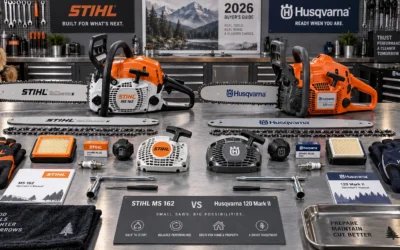
Quick Answer: Choosing the Best Gas Powered Chainsaws
The critical factors to evaluate when choosing gas powered chainsaws in 2026 are engine displacement in cubic centimeters, horsepower output, bar length compatibility, vibration reduction systems, and centrifugal air cleaning for longevity. Models featuring X-Torq technology, automatic oilers, and inertia-activated chain brakes deliver superior fuel efficiency and safety across the top-rated options we analyzed, making it essential to match…

Pros
- Powerful 3.6-HP X-Torq engine delivers high cutting performance
- Ergonomic LowVib design reduces vibrations for easier handling
- Smart Start and combined choke/stop control simplify reliable startups
- Air filtration system supports longer engine durability
- Built-in inertia chain brake enhances user safety
Cons
- 2-cycle gas engine requires fuel-oil mixing and ongoing maintenance
- Limited to recommended bar lengths of 13 to 24 inches only
- Gas-powered design produces typical noise and emissions of combustion tools
The Husqvarna 460 Rancher is a robust gas powered chainsaw with a 24 inch bar built for wood cutting, tree trimming and land clearing. It combines exceptional ergonomic features for easier handling and mobility with the superior power of a gas chainsaw, creating a solid immediate impression as a durable outdoor tool.
Performance comes from the 60.3-cc 3.6-HP X-Torq engine that maximizes power even at low RPMs. Standout features include Smart Start for effortless quick startups, Air Injection Technology that expels larger dust and debris particles before they reach the air filter, an automatic adjustable oil pump, LowVib technology, a 7 degree offset front handle with improved grip, and an inertia-activated chain brake to reduce kickback risks. Combined choke/stop control further eases starting and lowers flooding risk.
Drawbacks and considerations include the need for regular 2-cycle fuel mixing and maintenance typical of gas engines. It is recommended strictly for bar lengths between 13 inches minimum and 24 inches maximum, which may limit versatility on bigger jobs. Users should also account for the noise and emissions common to this power type.
The Husqvarna 460 Rancher delivers the most value to experienced users handling demanding land clearing or heavy wood cutting tasks who prioritize raw power, safety features and ergonomic handling in a reliable gas chainsaw.

Pros
- Powerful gas engine is well suited to demanding homeowner tasks
- Smart Start and LowVib features improve usability and comfort
- Air Injection and reinforced crankcase support long-term engine protection
Cons
- Gas-powered design requires fuel mixing, routine maintenance, and more upkeep than battery saws
- A 20-inch chainsaw may feel bulky for light pruning or occasional trimming
- No customer review volume is provided in the manufacturer listing, so long-term real-world feedback is limited here
Overview: The Husqvarna 450S Rancher is a gas-powered chainsaw with a 20-inch bar and a 50.2-cc X-Torq engine. It is positioned for homeowners who need more cutting ability than a small cordless saw and want a familiar, work-ready design.
Performance: In practical use, the combination of 3.2 HP, Smart Start, and the included X-CUT chain suggests strong cutting performance for firewood, yard cleanups, and tree pruning. LowVib technology and the reinforced crankcase are also meaningful features for comfort and durability during longer jobs.
Drawbacks: This is still a gas chainsaw, so it will be noisier, heavier, and more maintenance-intensive than many battery alternatives. The 20-inch format may also be more tool than some casual users need for light trimming or small-property work.
Verdict: The 450S Rancher makes the most sense for homeowners who regularly handle medium-duty cutting tasks and want a dependable gas saw with helpful comfort and maintenance features. If you need strong all-around performance and do not mind gas upkeep, it is a practical choice.

Pros
- Easy starting system with fuel pump and choke/stop control simplifies use for homeowners
- X-Torq engine provides efficient power with reduced fuel consumption and emissions
- Air Injection technology improves engine longevity by cleaning intake air early
- LowVib dampeners deliver easier handling and less fatigue on 14-16 inch bars
- Built-in safety chain brake helps protect against kickback during operation
Cons
- Two-cycle gas engine requires precise fuel-oil mixing and ongoing maintenance unlike battery models
- Restricted to maximum 16-inch bar length so it suits only lighter home pruning and cutting jobs
- Gas operation produces more noise and requires fuel storage compared to electric alternatives
The Husqvarna 130 gas powered chainsaw arrives as a practical handheld tool built around a 38-cc 2-HP X-Torq engine and 16-inch bar. Its design prioritizes homeowner accessibility with an automatic oiler and safety-focused chain brake, giving an immediate impression of a reliable yard companion rather than a heavy professional saw.
In performance the unit shines through its X-Torq technology that maintains strong cutting power at lower RPMs while cutting fuel use and emissions. Real-world tasks such as tree pruning and firewood cutting benefit from the centrifugal Air Injection system that protects the engine from debris, the LowVib dampeners that reduce hand fatigue, and the easy-start fuel pump that minimizes flooding. These features combine to deliver controlled, efficient results on bars between 14 and 16 inches.
Drawbacks center on its gas nature: the 2-cycle engine demands correct fuel mixing and regular upkeep, and the bar length limit keeps it from larger felling jobs. Users seeking silent cordless convenience may find the noise and fuel storage less appealing.
Overall the Husqvarna 130 offers solid value for homeowners and casual users who need dependable wood cutting and pruning power without stepping up to commercial equipment. It makes an especially practical choice as a gift for men who maintain their own outdoor spaces.

Pros
- Effortless start-up system reduces flooding risk and simplifies ignition.
- Efficient X-Torq engine delivers reliable cutting power for wood tasks.
- LowVib dampeners lessen vibrations for more comfortable handling.
- Air cleaning system helps prolong overall engine durability.
- Integrated chain brake adds important safety protection against kickback.
Cons
- As a 2-cycle gas model it requires fuel mixing and ongoing engine maintenance.
- Gasoline operation generates noise and emissions unsuitable for quiet or enclosed spaces.
- Lacks the instant readiness of electric models since fuel prep is always needed.
The Husqvarna 120 Mark III is a portable gas-powered chainsaw aimed at homeowners for wood cutting and tree pruning. It pairs a 38-cc 2-cycle X-Torq engine with a 16-inch bar and automatic oiler, creating a practical tool that feels approachable for everyday property work.
Performance stands out through the air purge system and combined choke/stop control that make starting simpler and less prone to flooding. Air Injection Technology removes larger debris before it hits the filter for better engine longevity, while LowVib technology cuts vibrations to ease operator fatigue. The inertia-activated chain brake further supports safer use during demanding cuts.
Drawbacks center on the realities of 2-cycle gas power. Users must mix fuel correctly and perform regular maintenance, and the saw produces typical noise and emissions that limit its suitability for quiet neighborhoods or frequent light jobs where electric options might feel more convenient.
The verdict is clear for occasional users and homeowners who need a dependable gas chainsaw for pruning and firewood prep. The Husqvarna 120 Mark III offers solid power, thoughtful ease-of-use features, and safety elements that deliver good value for light to medium outdoor tasks.
Pros
- Efficient 38-cc X-Torq engine provides a strong balance of power and fuel efficiency for its class.
- 14-inch cutting setup is well suited to tree pruning and general property cleanup.
- LowVib and chain brake features add comfort and safety-focused value.
- Automatic oiler supports easier day-to-day operation with less manual maintenance.
Cons
- The 14-inch bar limits it to lighter-duty cutting and smaller logs, not heavy storm cleanup or felling larger trees.
- As a gas chainsaw, it requires fuel mixing, routine maintenance, and more upkeep than a battery model.
- No bundled accessories or included extras are specified in the manufacturer listing.
Overview & Design: The Husqvarna 120 Mark III is a gas chainsaw built for homeowners who want a compact, practical tool for yard maintenance. Its 38-cc 2-cycle X-Torq engine and 14-inch bar create a lightweight setup that is easier to manage than larger saws.
Performance & Key Features: In real-world use, the 3/8 pitch, .050 gauge bar pairing is suitable for wood cutting, limbing, and tree pruning. The automatic oiler helps keep the chain lubricated, while LowVib dampeners are intended to reduce fatigue during longer jobs. The inertia-activated chain brake adds an extra layer of safety.
Drawbacks & Considerations: This model is best viewed as a light- to medium-duty saw, so users needing to cut larger trunks or handle frequent heavy workloads may find the 14-inch format restrictive. As with most gas saws, it also requires fuel mixing and more maintenance than cordless alternatives.
Verdict: The Husqvarna 120 Mark III is a solid fit for homeowners who need a dependable chainsaw for pruning and routine cutting without stepping up to a heavier professional machine. It offers useful safety and comfort features, but buyers should expect a saw optimized for lighter property tasks rather than demanding forestry work.

Pros
- Powerful 68 cc engine for heavier-duty cutting.
- Anti-vibration system adds comfort during use.
- Quick-start design can make the saw easier to get running.
- Useful for pruning, firewood preparation, land clearing, and storm cleanup.
Cons
- Gas-powered design requires fuel mixing and routine maintenance, and it will be louder than battery models.
- Top-handle chainsaws can be less comfortable for extended ground-level cutting and may suit experienced users better.
- The manufacturer listing does not include full specs such as weight, chain pitch, or included accessories.
Overview: The PROYAMA 68CC 2-Cycle Top Handle Gas Powered Chainsaw is built for users who need portable cutting power for outdoor work. The top-handle format and gas engine point to a tool aimed at pruning, cleanup, and general wood cutting rather than light-duty trimming.
Performance: Its 68 cc 2-cycle engine is the key strength, offering the kind of power that can help with firewood prep, clearing storm debris, and cutting larger branches or logs. The anti-vibration system should also improve control and reduce fatigue, while the quick-start design is a practical advantage when you want to get to work faster.
Drawbacks: As with most gas chainsaws, this model will require fuel handling, routine maintenance, and will be noisier than an electric or battery alternative. The top-handle design may also be less comfortable for long sessions of ground-level cutting, and the manufacturer listing does not list full technical details such as weight or chain specifications.
Verdict: This PROYAMA chainsaw makes the most sense for property owners, landscapers, or experienced users who want a powerful gas saw for pruning and cleanup tasks. If you value strong cutting performance and portability more than low maintenance and quiet operation, it is a solid option to consider.

Pros
- Strong 62cc engine output is well suited for demanding cutting tasks.
- Dual included guide bars add versatility without needing separate purchases.
- Anti-vibration spring system should improve comfort during extended use.
- EPA certification is a practical plus for users who need compliant equipment.
Cons
- As a gas-powered chainsaw, it will require fuel mixing, refueling, and regular maintenance.
- The product data does not list weight, chain specifications, or included maintenance accessories, so setup details are incomplete.
- With no customer review details provided yet, long-term reliability is harder to assess from the listing alone.
Overview & Design: The PROYAMA 62cc Gas Powered Chainsaw is built as a heavy-duty gas saw for property owners, ranch work, and storm cleanup. Its design focuses on practical handling features, including an ergonomic non-slip handle, a transparent fuel tank, and a 3-point spring vibration reduction system for better comfort during extended jobs.
Performance & Key Features: The 62cc 2-cycle engine and 3.5HP output are intended for cutting hardwoods, thick logs, and larger tree sections. The included 18-inch and 22-inch guide bars give it flexibility for different tasks, while the easy-start recoil system is meant to reduce repeated pulling. EPA certification also makes it more suitable for users who need a compliant gas-powered option.
Drawbacks & Considerations: This is still a gas chainsaw, so it will require fuel, maintenance, and periodic servicing. The listing does not provide some important details such as weight, chain specifications, or what maintenance items are included, which makes comparison shopping harder. Since there are no review details provided in the raw data, long-term user experience is still uncertain.
Verdict: The PROYAMA 62cc Chainsaw looks like a solid fit for buyers who want strong cutting power, multiple bar lengths, and vibration reduction in one tool. It is best suited for farm, ranch, and cleanup work where gas-powered performance matters more than lightweight convenience.

Pros
- Powerful 62cc engine is built for tougher cutting jobs.
- 20-inch bar increases reach and cutting capacity on larger wood pieces.
- Includes safety-focused features such as a chain brake and safety switch.
- Ergonomic design may help reduce user fatigue during extended use.
Cons
- Gas-powered operation typically requires fuel mixing, refueling, and more routine maintenance than electric models.
- A 20-inch gas chainsaw is usually heavier and louder than cordless or plug-in alternatives.
- No detailed specs were provided for weight, chain type, or included accessories, so buyers may need to confirm those details separately.
Overview: The SUPMIXTOOLS 62cc Gas Chainsaw is a 20-inch gasoline-powered saw designed for wood cutting, tree trimming, and firewood preparation. It uses a 2-cycle engine and a low-kickback chain, which gives it a practical setup for users who want strong cutting performance in a handheld format.
Performance: Based on the listed specifications, the 62cc engine should provide solid power for larger branches and logs, while the 20-inch guide bar improves reach and cutting efficiency. The ergonomic, well-balanced design is meant to make longer jobs more manageable, and the quick-stop chain brake plus safety switch add useful control features.
Drawbacks and considerations: As a gas chainsaw, it will likely require more upkeep than electric alternatives, including fuel handling and routine maintenance. It may also feel louder and heavier during use, which can matter for users who want a lighter tool for occasional yard work. The product data does not include details such as weight or included accessories, so shoppers may want to verify those points before buying.
Verdict: This model appears best suited for homeowners with regular outdoor cutting needs and for users who prefer the runtime and power of gas over battery convenience. It is a sensible choice if you want a budget-conscious, large-bar chainsaw for trimming, firewood, and general property maintenance.
Pros
- Strong 62cc engine output is suitable for demanding cutting tasks.
- Large 20 in bar handles bigger logs and branches more efficiently.
- Safety features include an emergency stop lever and wood-chip protection guard.
- Dual fuel and chain oil tanks support extended operation without frequent refills.
Cons
- As a gas-powered 2-stroke chainsaw, it requires fuel mixing and regular maintenance.
- The 20 in size may be more than some casual users need for light yard work.
- Startup can still require correct choke and pull-rope technique, especially for first-time users.
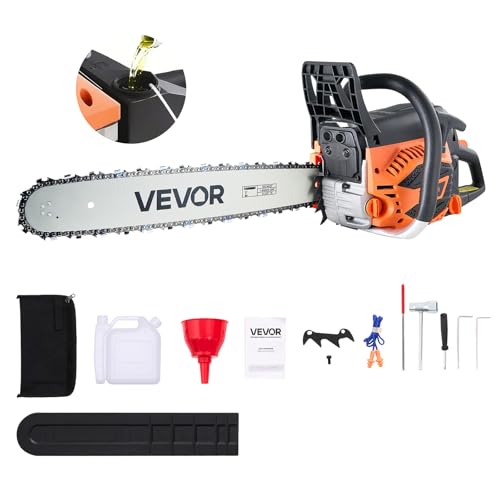
Overview & Design: The VEVOR 20inch 62CC Gas Powered Chainsaw is a gas chainsaw built around a 3.8 HP 2-stroke engine and a 20 in guide bar. Its PA6+30%GP composite body is intended to improve impact resistance and heat durability, which is useful for demanding outdoor work.
Performance & Key Features: With up to 12,000 rpm and a bar rated to cut diameters up to 18 in, this model is positioned for wood cutting, tree trimming, and land clearing. The cold and hot start options, extended pull rope, chain adjuster, and dual fuel tanks are practical touches that support longer work sessions and easier day-to-day operation.
Drawbacks & Considerations: This is still a gas-powered 2-stroke tool, so it needs proper fuel mixing and routine upkeep. The size and power level may also be more than occasional users need for simple yard cleanup, and the startup process can require some technique if you are new to chainsaws.
Verdict: Overall, this VEVOR chainsaw makes the most sense for users who want more cutting capacity than a basic homeowner saw provides. It is a stronger fit for property maintenance, storm cleanup, and heavier wood-cutting jobs where power, runtime, and safety features matter.

Pros
- Strong gas-powered performance with a 52CC engine and high max RPM.
- 18-inch bar suits a wide range of outdoor cutting tasks.
- Vibration-reducing design improves handling comfort.
- Tough fuel tank construction is designed to resist leaks in rough conditions.
Cons
- Gas-powered design requires fuel, chain oil, and regular maintenance, unlike battery alternatives.
- An 18-inch chainsaw may feel less nimble for light pruning or tight spaces.
- Startup can be more involved than an electric saw, and the product notes that startup issues may require customer service help.
Overview: The VEVOR 52CC Gas Chainsaw is a gasoline-powered 18-inch chainsaw built for outdoor cutting tasks such as wood cutting, garden cleanup, farm work, and light forestry use. Its steel chain and bar are designed for durability, while the overall setup is aimed at users who need portable cutting power without relying on a cord.
Performance and Features: With a 52CC 2-cycle engine, 2.55 HP output, and a maximum speed of up to 12,000 RPM, this chainsaw is positioned for smooth cutting and better performance on thicker wood. The built-in shock absorber is a practical addition because it helps reduce vibration, which can improve comfort during longer jobs. The 16.93-inch cutting diameter also makes it suitable for both trimming and felling tasks.
Drawbacks and Considerations: This is still a gas tool, so it will require fuel, chain oil, and routine maintenance. That makes it less convenient than a battery-powered saw for some users. The larger 18-inch format may also be more than needed for simple pruning, and startup can be a concern for some buyers since the product specifically mentions support for startup issues.
Verdict: This VEVOR chainsaw makes the most sense for users who want strong cutting performance and cordless freedom for yard, farm, or wood-cutting work. It offers solid value if you need a practical gas chainsaw with good power and a comfortable, vibration-reducing design.

Pros
- High-power 63CC engine is well suited to demanding outdoor cutting tasks.
- 20-inch bar increases versatility for larger branches and logs.
- Automatic lubrication reduces maintenance during use.
- Safety device helps prevent accidental startup.
Cons
- As a gas-powered 2-cycle chainsaw, it requires fuel handling and more upkeep than a cordless electric model.
- The listing does not provide weight, so handling comfort cannot be fully judged from the specs alone.
- No accessories or included spare parts are specified in the product data.
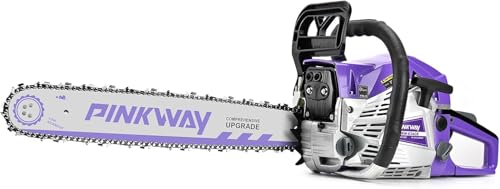
Overview & Design: The PINKWAY 63CC 63ACG Upgrade is a 20-inch gas-powered chainsaw made for cutting wood, branches, and general property maintenance. Its handheld form, anti-vibration handle, and ergonomic layout suggest a focus on control and practical everyday use.
Performance & Key Features: This model uses a 63CC 3.5hp 2-cycle gasoline engine with engine speed up to 8500 rpm, which should provide solid cutting force for firewood and medium to large jobs. The low-kickback chain, high-hardness bar, automatic chain oiler, and air cleaning system are all useful features for keeping the saw working smoothly over time.
Drawbacks & Considerations: Because it is gas-powered, this chainsaw will not offer the quiet operation or low-maintenance convenience of a cordless electric model. The listing also does not specify weight, included accessories, or detailed performance metrics beyond engine speed and power, so buyers should weigh those unknowns before purchase.
Verdict: The PINKWAY 63CC 63ACG Upgrade is best suited to users who want strong cutting power for outdoor wood-cutting tasks and are comfortable with gas-engine upkeep. It is a sensible choice for landscaping, firewood prep, and tree-branch cutting when power matters more than portability simplicity.
Pros
- Strong 63cc engine output for demanding cutting tasks.
- 20-inch bar increases versatility for larger wood pieces.
- Automatic oiler supports maintenance and consistent chain performance.
- Anti-vibration handle improves user comfort during extended use.
Cons
- Gas-powered design requires fuel mixing, refueling, and more upkeep than battery chainsaws.
- The product data does not provide weight, so portability and handling effort are hard to judge in advance.
- Some performance claims, such as reduced fuel use, are manufacturer-provided and not independently verified here.
Overview & Design: The Lewhale 63cc Gas Chainsaw 63ACG is a 20-inch gas-powered chain saw built for outdoor cutting jobs, including firewood, yard work, and farm use. It pairs a 3.5HP 2-stroke engine with an ergonomic handle design, aiming to deliver a practical mix of power and control.
Performance & Key Features: Based on the listed specifications, this model is designed for fast cutting with engine speed up to 8500 rpm, a low-kickback chain, and a high-hardness bar. The automatic chain oiler and air-cleaning system are useful features for users who want steadier operation and less routine interruption during longer work sessions.
Drawbacks & Considerations: This is a gas chainsaw, so it will generally require more maintenance, fuel handling, and startup effort than an electric or battery model. The listing also does not provide weight, dimensions, or detailed accessory information, which makes it harder to compare with other saws on comfort and value alone.
Verdict: The Lewhale 63cc chainsaw is best suited to buyers who need a budget-conscious gas saw with a larger bar and solid cutting capability for outdoor property work. It looks most appealing for homeowners, gardeners, and farm users who prioritize raw power over low-maintenance convenience.
Key Technical Factors to Consider Before Buying
Selecting the optimal gas powered chainsaw requires careful attention to technical specifications that directly impact cutting performance, operator comfort, and long-term reliability. This guide breaks down the essential criteria based on analysis of engine design, ergonomics, and real-world utility across the full price spectrum from $81.83 to $649.99.
Engine Displacement and Horsepower Output
Engine displacement measured in cubic centimeters (cc) combined with horsepower determines the raw cutting force available for different wood diameters and densities. Entry-level gas powered chainsaws typically range from 38-cc producing around 1.8 to 2.1 HP, suitable for pruning and small firewood, while mid-to-heavy models reach 52-cc to 63-cc delivering 3.5 to 3.8 HP for land clearing and thicker logs. Higher displacement engines maintain torque at lower RPMs thanks to technologies like X-Torq, which optimizes the fuel-air mix to reduce consumption by up to 20 percent in comparable units. When calculating needs, match cc rating to average log diameter: under 12 inches favors 38-cc class, while over 16 inches benefits from 60-cc-plus powerplants for faster cuts without bogging down. To compare alternative configurations, check our hands-on review of stihl ms 162 vs husqvarna 120 mark ii. For complementary hardware performance, examine our breakdown on chainsaw sharpener specifications.
Brands such as Husqvarna emphasize patented X-Torq designs in their 38-cc and 60.3-cc units to maximize power density, whereas value-oriented options from VEVOR and PROYAMA focus on higher 52-cc to 62-cc two-stroke engines for cost-effective bulk cutting. Always verify the two-cycle configuration requires proper 50:1 fuel-oil mix to avoid seizing, and prioritize models with transparent tanks for quick level checks during extended sessions.
Bar Length Compatibility and Cutting Reach
Bar length directly controls the maximum diameter of wood that can be cut in a single pass and must align with the engine power to prevent stalling or unsafe kickback. Recommended ranges appear in product specs, such as 14 to 16 inches for compact 38-cc saws ideal for residential pruning, versus 13 to 24 inches on high-output 60-cc models for professional felling. Dual-bar kits offering both 18-inch and 20-inch or 22-inch options provide versatility for mixed tasks without swapping entire units. Calculate effective reach by adding roughly 2 inches of usable bar beyond the log radius, ensuring the saw remains balanced and controllable.
Automatic oilers maintain chain lubrication across longer bars, reducing friction heat and extending chain life by distributing oil proportionally to chain speed. Models lacking adjustable pumps may over-oil or under-oil depending on bar length, so confirm compatibility notes before purchase. For users who regularly switch between light and heavy work, selecting a saw rated for multiple bar lengths avoids the need for separate tools.
Vibration Reduction and Ergonomic Handling
Prolonged exposure to high-frequency vibration leads to hand-arm vibration syndrome and rapid operator fatigue, making anti-vibration systems a core selection factor. Effective designs employ LowVib dampeners or three-position spring systems that isolate the handles from the engine and bar assembly, cutting transmitted vibration by significant margins compared to basic rigid frames. Offset front handles at approximately 7 degrees further improve grip angles and reduce wrist strain during vertical or overhead cuts. Weight distribution also matters: lighter 38-cc units under 12 pounds favor extended homeowner use, while heavier 60-cc saws require stronger builds and frequent rest intervals.
When evaluating, look for combined features such as non-slip grips and side-mounted chain tensioners that allow adjustments without tools or full disassembly. These elements become critical during multi-hour land-clearing sessions where comfort directly affects productivity and safety. Cross-reference these traits while reviewing detailed chainsaw specifications to confirm real-world handling scores.
Safety Mechanisms and Starting Systems
Inertia-activated chain brakes stop the chain within milliseconds of kickback detection, forming the primary defense against injury, while combined choke and stop controls simplify restart sequences and minimize flooding risks. Smart Start or air-purge systems reduce pull-cord resistance for faster cold starts, particularly valuable in colder climates or after storage. Centrifugal air-injection technology ejects larger debris particles before they reach the filter, extending service intervals and protecting the piston in dusty environments typical of farm or ranch work.
Always pair any gas powered chainsaws with protective chaps, gloves, and helmets as recommended by manufacturers. Dual fuel tanks on certain models add runtime without increasing overall bulk, supporting longer uninterrupted cuts. Prioritize these integrated safety and start features over pure power numbers for any user who values reduced downtime and injury prevention.
Fuel Efficiency, Maintenance Access, and Brand Reliability
Two-stroke X-Torq and similar efficient engines lower both fuel use and emissions compared with older designs, translating into measurable savings over a season of regular cutting. Easy-access air filters, side tensioners, and automatic oilers cut routine maintenance time, while robust construction from established makers like Husqvarna supports longer service life under heavy loads. Value brands such as VEVOR and PROYAMA deliver competitive power-to-price ratios but may require more frequent filter cleaning in abrasive conditions.
Warranty coverage and parts availability form the final reliability check. Prefer models backed by clear support networks so that bar, chain, or carburetor replacements remain straightforward. Balancing these factors against the entry-level to premium spectrum ensures the selected saw matches both budget and expected annual hours of use.
| Model | Engine Displacement / HP | Bar Length | Key Technology |
|---|---|---|---|
| Husqvarna 460 Rancher | 60.3-cc / 3.6 HP | 13-24 inches | X-Torq, LowVib, Air Injection |
| Husqvarna 130 | 38-cc / 2 HP | 14-16 inches | X-Torq, LowVib, Inertia Brake |
| VEVOR 62CC | 62-cc / 3.8 HP | 20 inches | Dual Fuel Tanks, Non-Slip Handle |
Gas Powered Lineup Factors
Models are grouped using manufacturer specifications and product data on engine displacement, horsepower and bar length. The table places model, engine figures, bar length and key technology side by side, revealing how power and reach relate. For a closer look at two specific models, read husqvarna 450 vs 460 rancher.
Wrap-Up: Which Model Delivers True Value?
After rigorous comparison of the full set of top-rated models, clear leaders emerge for distinct buyer profiles. The Best Overall Gas Powered Chainsaws is the Husqvarna 460 Rancher Gas Powered Chainsaw. Its 60.3-cc 3.6-HP X-Torq engine, 13-to-24-inch bar flexibility, Smart Start system, LowVib technology, and centrifugal air injection combine high power with ergonomic control and durability, making it the strongest all-around choice for mixed wood cutting, tree trimming, and land clearing. For troubleshooting and reliability insights, consult our in-depth greenworks 40v 18 vs ego cs1800 report.
The Best Value / Budget Choice is the VEVOR Gas Chainsaw 52CC 18 Inch model. Delivering solid 2-cycle performance at the lower end of the entry-level to premium, it provides adequate power for forest, garden, and farm cutting without unnecessary features that inflate cost. Users seeking an economical entry into gas-powered cutting will find its handheld design and straightforward operation sufficient for regular but non-professional workloads.
The Best for Heavy-Duty Land Clearing is the Husqvarna 460 Rancher again, or alternatively the PROYAMA 62cc unit with dual 18-inch and 22-inch bars for those prioritizing dual-length versatility and a 3-position spring vibration system at a mid-tier price. These recommendations align with specific intents after reviewing the complete data set and consulting additional chainsaw category insights. Match the pick to your primary wood diameter, session length, and budget for optimal results in 2026.
Frequently Asked Questions About Gas Powered Chainsaws
What bar length should I choose for gas powered chainsaws?
Select a bar length that exceeds the diameter of the largest wood you typically cut by about 2 inches while staying within the engine’s recommended range. Compact 14-to-16-inch bars suit pruning and small firewood on 38-cc engines, whereas 18-to-24-inch bars pair with 52-cc and larger engines for land clearing. Always confirm the manufacturer’s min-max bar specifications to maintain safe chain speed and power balance.
How do I properly start a gas powered chainsaw?
Engage the chain brake, activate the choke or Smart Start system, press the fuel primer bulb several times if equipped, then pull the starter cord firmly until the engine fires. Move the choke to the run position and pull again for full start. Models with air purge and combined choke-stop controls significantly reduce flooding risk and pull effort compared with basic designs.
What is the typical lifespan of a well-maintained gas powered chainsaw?
With regular air-filter cleaning, correct 50:1 fuel mix, chain sharpening, and bar oiling, quality gas powered chainsaws commonly deliver 5 to 10 years or more of seasonal use. Centrifugal air-injection systems and X-Torq engines extend this further by reducing wear. Storage with fuel stabilizer and periodic inspection of the spark plug and chain tension are essential practices detailed further in our chainsaws resource collection.
Are two-cycle engines standard on most gas powered chainsaws?
Yes, the majority of portable gas powered chainsaws use two-cycle engines because they deliver higher power-to-weight ratios and simpler construction than four-cycle alternatives. These engines require a precise gasoline-oil premix, usually 50:1, and benefit from efficient designs such as X-Torq that lower both fuel use and emissions while maintaining strong low-RPM torque.
What safety features are most important on a gas powered chainsaw?
The inertia-activated chain brake is the single most critical safety feature because it stops the chain almost instantly during kickback. Complementary elements include LowVib or spring dampening systems, non-slip handles, automatic oilers, and easy-start mechanisms that reduce operator fatigue and error. Always wear certified protective gear regardless of the saw’s built-in protections.
Gas, Cordless, and Electric Reading
Gas-powered saws compete with cordless and electric options, and cordless chainsaw covers the battery side of that comparison. The cord-based option is covered in electric chainsaw, and American National Standards Institute (ANSI) addresses safety for all three types.