

A wheeled gas push leaf blower suits property owners clearing sprawling lawns or wide driveways who want massive debris volume moved without bearing engine weight on their backs. The primary trade-off is maneuverability and storage: walk-behind units require wide turning radiuses, smooth paths, and substantial garage space compared to handheld or wearable alternatives.

Pros
- Lightweight 9.4-pound design offers easy handheld maneuvering
- Reduced-resistance recoil system eases engine pull starts
- Translucent fuel tank allows quick monitoring of gas levels
- Cushioned anti-vibration handle helps dampen arm strain
- Capable of up to 380 CFM and 180 MPH airflow
Cons
- Requires mixing 2-cycle gas and oil at a 50:1 ratio
- Modest 380 CFM output is best suited for lighter debris

Pros
- Delivers up to 550 CFM and 230 MPH for moving wet yard debris
- Lightweight 17-pound backpack design with cushioned straps
- Thumb throttle includes cruise control for steady blowing
- 33.8 fl oz fuel tank yields up to 45 minutes of run time
- Operating temperature range spans 14°F to 104°F
Cons
- Requires 2-cycle fuel mixing and engine maintenance
- 550 CFM is modest for a backpack-class gas blower
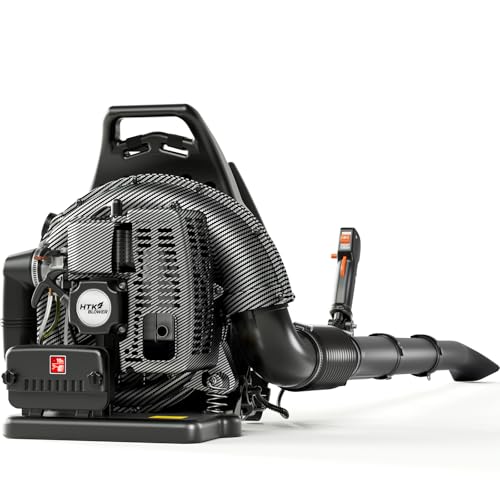
Pros
- 63CC 2-stroke engine provides up to 665 CFM and 205 MPH
- Fully padded ergonomic backpack harness
- Variable-speed throttle with built-in cruise control
- Generous 1.7 L fuel tank for extended yard sessions
Cons
- Requires 2-stroke fuel mixing and gas engine maintenance

Pros
- 4-cycle engine eliminates fuel and oil mixing
- Delivers up to 410 CFM and 125 MPH clearing power
- Automatic compression release for easier pull starts
- Lubricates in all directions without stalling or leaks
Cons
- Not available for purchase or delivery in California
- Requires routine gas engine maintenance and oil checks

Pros
- Push-button electric start eliminates pull cords
- Outputs up to 470 CFM and 175 MPH air performance
- Locking cruise control reduces hand fatigue
- Padded ventilated harness with anti-vibration mount
- Automatic choke for convenient engine starting
Cons
- Weighs 18.5 pounds
- Not available for purchase or shipping to California
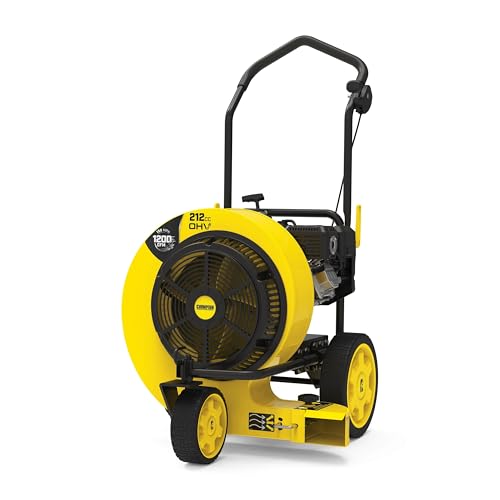
Pros
- Rated for up to 1200 CFM of air volume
- 3-position wind vane plus forward air attachment
- Large 12-inch never-flat rear wheels
- Lockable 360-degree front swivel wheel
- Ergonomic handle features height adjustment
Cons
- Weighs 104 pounds without power propulsion
- Gas engine requires fuel and oil upkeep
- Bulky frame requires ample storage space

Pros
- High-volume clearing with a rated 3000 CFM and 207 MPH
- Electric start eliminates manual pulling effort
- Standard clevis pin hitch connects easily to ATVs and tractors
- Adjustable vertical airflow discharge for directed blowing
- Durable steel frame construction with large wheels
Cons
- Requires a towing vehicle like an ATV or lawn tractor
- Weighs 291 pounds and demands significant storage space

Pros
- 65cc engine delivers a high-volume 850 CFM at 205 MPH
- Includes both fan and concentrator nozzle attachments
- 1.7-liter fuel tank reduces frequent stopping for refills
- Backpack harness features ventilated backrest for comfort
- Variable throttle with cruise control simplifies steady operation
Cons
- Requires 2-stroke fuel mixing and routine engine upkeep
- At 70.8 inches long assembled, storage requires ample space

Pros
- Claims up to 1,110 CFM airflow and 220 MPH air speed
- Generous 1.89-liter fuel tank allows 50 to 60 minutes of runtime
- Padded harness and shock-absorption system reduce vibration
- Cruise control locks throttle for continuous operation
- Includes earmuffs, maintenance tools, and fuel mixing bottle
Cons
- Heavy 26.46-pound total weight can fatigue operators
- Requires mixing 2-cycle gas and oil fuel

Pros
- 51cc 2-cycle engine produces up to 765 CFM and 270 MPH
- Padded harness and hip belt provide balanced load distribution
- Air purge system removes fuel line air for easier starting
- Variable speed throttle includes cruise control functionality
- Proven X-Torq engine technology maintains high clearing force
Cons
- Heavier 22-pound build can cause fatigue on extended jobs
- Requires routine 2-cycle gas and oil fuel maintenance
When a Wheeled Push Blower Outperforms Backpack Models
A wheeled push blower outperforms wearable blowers on large, open surfaces where hours of continuous clearing would otherwise cause physical strain and shoulder fatigue. By resting its heavy motor on a steel chassis, a walk-behind design allows operators to direct substantial air volume across wide swaths of turf without taking on engine vibration and harness weight.
The Champion Power Equipment 212cc 1200 CFM walk-behind blower exemplifies this advantage, delivering an advertised 1200 CFM of airflow directly from a ground-supported platform. While high-capacity backpacks such as the Husqvarna 150BT Gas Backpack Leaf Blower (advertised at 765 CFM and 270 MPH) or the HTK Gas Backpack Leaf Blower, 63CC 2-Stroke (stated at 665 CFM) offer great maneuverability around obstacles, they still require the operator to carry 17 to 20 pounds of equipment for the duration of the job. For clearing open fields, long pathways, or finding the right leaf blower for driveway expanses, rolling the machine eliminates cumulative back fatigue.
However, the limitation of wheeled units is their fixed path. When clearing dense garden borders, terraced flower beds, or steep inclines, pushing a heavy wheeled chassis becomes awkward and impractical compared to wearing a balanced backpack.
Airflow Volume vs. Velocity: Understanding CFM and MPH Ratings
Cubic feet per minute (CFM) measures the overall volume of air a blower displaces, which dictates how wide and deep a leaf pile you can sweep, whereas miles per hour (MPH) indicates air speed, determining your ability to loosen wet, stuck debris.
Walk-behind blowers prioritize massive volume. The Champion Power Equipment 212cc 1200 CFM produces nearly double the air volume of standard handheld units, allowing it to move broad rows of leaves in fewer passes. At the extreme commercial end, the SuperHandy Tow-Behind Leaf Blower utilizes a 15HP engine and an 18-inch metal impeller to deliver an advertised 3000 CFM at 207 MPH. However, that unit weighs 291 pounds and requires an ATV or utility tractor with a pin hitch, positioning it well outside the scope of residential walk-behind setups.
In contrast, backpack and handheld blowers often use narrower nozzle profiles to maximize air velocity. The Thalorus 52cc Gas Backpack Leaf Blower, 550 CFM reaches an advertised 230 MPH, and the Husqvarna 150BT reaches 270 MPH. Higher velocity helps dislodge matted, saturated leaves from wet grass, but the smaller overall air cone requires tighter, more repetitive sweeping motions across wide lawns.
Maneuverability, Swivel Wheels, and Handling Rough Turf
Large rear wheels paired with a front caster wheel determine whether a push blower rolls smoothly over lawn ruts or constantly catches and scalps turf. Because walk-behind machines lack the unrestricted reach of a handheld tube, the wheel configuration acts as your primary steering control.
The Champion Power Equipment 212cc 1200 CFM addresses rolling resistance by using 12-inch never-flat rear wheels alongside a front wheel capable of locking forward or swiveling 360 degrees. This setup helps users navigate sweeping curves around landscape islands while maintaining stability across uneven ground. Additionally, its three-position adjustable wind vane alters airflow 15 degrees up or down, letting you direct air beneath deep leaf piles rather than simply pushing over the top.
The trade-off lies in ground clearance and traction. On wet, muddy inclines or heavily rooted woodland paths, pushing a wheeled frame requires substantial upper-body effort. In those environments, a compact handheld like the Getell 26cc Gas Leaf Blower or a wearable backpack model avoids getting stuck in muddy depressions entirely.
Four-Cycle Engines vs. Two-Cycle Fuel Mixing Demands
Choosing a four-cycle engine eliminates the need to measure and mix two-cycle oil with gasoline, simplifying refueling and reducing unburned hydrocarbon exhaust at the cost of added engine weight.
The Champion 212cc walk-behind model features a standard four-cycle small engine that accepts straight unleaded gasoline, avoiding the pre-mix routines required by two-stroke equipment. A similar no-mix benefit appears in handheld tools like the SENIX 4QL 26.5cc 4-Cycle Handheld Gas Leaf Blower, which uses patented 4QL technology to provide 410 CFM and low emissions without requiring mixed fuel. Note that the SENIX model is not available for sale in California due to regional emissions restrictions.
By comparison, two-cycle blowers—including the LawnMaster No-Pull Backpack Leaf Blower 31cc, the HTK 63CC, and the Getell 26cc (which uses a 50:1 ratio)—are lighter and mechanically simpler, but require separate fuel containers and precise oil measurement. Using an incorrect fuel mixture in a two-cycle engine risks seizing the piston, creating an extra maintenance step before every yard session.
Frequently Asked Questions About Gas Push Leaf Blowers
Can a gas push leaf blower handle wet, matted leaves effectively?
Yes, high-output walk-behind blowers move wet leaves primarily through high air volume (CFM) combined with adjustable directional vanes. The Champion 212cc blower features an adjustable wind vane that tilts airflow 15 degrees downward, allowing the 1200 CFM stream to lift heavy debris directly from the turf surface.
How does a walk-behind push blower compare to an electric push-start backpack?
A walk-behind push blower rolls on the ground to clear large open yards without operator weight strain, but it requires manual pull-starting and substantial garage storage. In contrast, units like the LawnMaster No-Pull Backpack Leaf Blower 31cc feature push-button electric starting via a rechargeable 7.2V battery and wear on your shoulders, offering better agility in confined garden beds.
Are gas push leaf blowers difficult to steer on hilly properties?
Wheeled blowers can be challenging to manage on steep slopes because you must manually push and stabilize the machine's entire weight against gravity. For properties with steep grades, terraced lawns, or tight retaining walls, a backpack blower such as the Husqvarna 150BT provides significantly safer footing and superior directional control.
Matching the Right Gas Blower Setup to Your Property
Selecting the best blower configuration comes down to measuring your open acreage against your storage capacity and physical endurance. High-output push machines excel at sweeping massive flat areas, but their physical footprint makes them cumbersome for tight suburban plots.
If you are exploring what leaf blower is the best match for large flat lawns, commercial parking areas, or lengthy driveways, the Champion Power Equipment 212cc 1200 CFM walk-behind blower is the top recommendation. Its ground-supported wheels and 1200 CFM output eliminate back strain during extended cleanups. However, its main limitation is its bulky size, heavy footprint, and higher $579.00 price tag, which makes it awkward on steep slopes and tight garden borders. For buyers needing nimble navigation around tight trees and landscaping, the Husqvarna 150BT Gas Backpack Leaf Blower serves as an agile, high-velocity wearable alternative, while the LawnMaster No-Pull Backpack Leaf Blower 31cc provides push-button starting convenience at a significantly lower initial cost.


