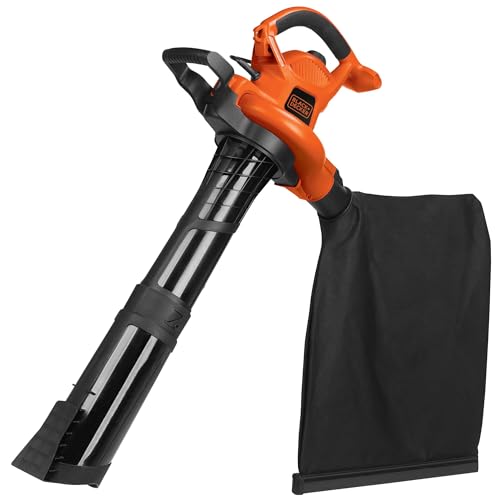
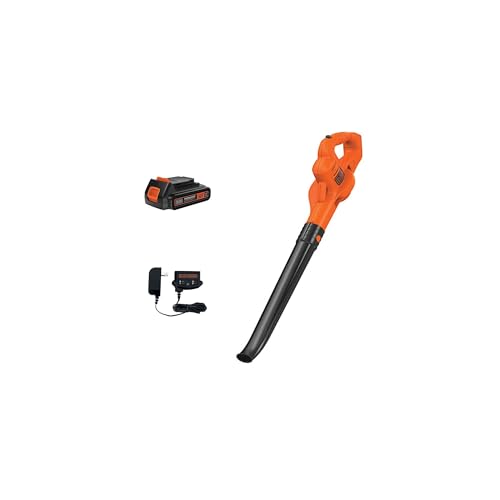
A high-output backpack gasoline blower suits homeowners with large lots and dense wet debris, though it adds significant bulk and requires dedicated storage space. For quick driveway sweeps or tight garden beds, a lighter handheld model offers easier control at the cost of maximum clearing volume.

Pros
- Lightweight 9.4-pound design offers easy handheld maneuvering
- Reduced-resistance recoil system eases engine pull starts
- Translucent fuel tank allows quick monitoring of gas levels
- Cushioned anti-vibration handle helps dampen arm strain
- Capable of up to 380 CFM and 180 MPH airflow
Cons
- Requires mixing 2-cycle gas and oil at a 50:1 ratio
- Modest 380 CFM output is best suited for lighter debris

Pros
- Delivers up to 550 CFM and 230 MPH for moving wet yard debris
- Lightweight 17-pound backpack design with cushioned straps
- Thumb throttle includes cruise control for steady blowing
- 33.8 fl oz fuel tank yields up to 45 minutes of run time
- Operating temperature range spans 14°F to 104°F
Cons
- Requires 2-cycle fuel mixing and engine maintenance
- 550 CFM is modest for a backpack-class gas blower

Pros
- 4-cycle engine eliminates fuel and oil mixing
- Delivers up to 410 CFM and 125 MPH clearing power
- Automatic compression release for easier pull starts
- Lubricates in all directions without stalling or leaks
Cons
- Not available for purchase or delivery in California
- Requires routine gas engine maintenance and oil checks

Pros
- 63cc 2-cycle engine produces 665 CFM and 205 MPH
- 1.7-liter fuel tank enables extended sessions between refills
- Cruise control locks in throttle to reduce hand strain
- Padded harness and vibration reduction improve carry comfort
- Tool-free access simplifies two-stage air filter maintenance
Cons
- Substantial 21-pound dry weight requires physical stamina
- Requires ongoing 2-stroke oil and gasoline mixing

Pros
- 2.7kW 63cc two-stroke engine delivers up to 6,800 RPM
- Multi-directional air outlet adjusts vertically and horizontally
- 0.47-gallon fuel tank enables long runs between top-offs
- Constant speed switch holds chosen throttle effortlessly
- Backpack harness features heat-insulating back padding
Cons
- Substantial 22-pound dry weight adds strain on long sessions
- Requires manual two-stroke oil and gasoline mixing

Pros
- 28cc 1.1-HP 2-stroke gas engine
- Rated up to 280 MPH and 490 CFM
- Quick-start ignition mechanism
- 0.65-liter translucent fuel tank
- Lightweight 9.5-pound bare tool weight
Cons
- Requires 2-cycle gas and oil mixing
- Produces engine noise and emissions
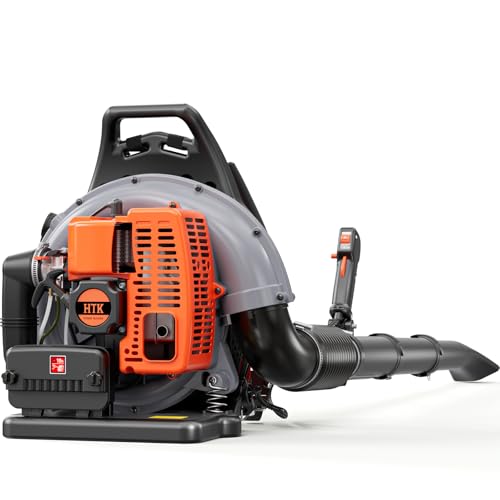
Pros
- 63cc 2-stroke engine delivers 665 CFM and 205 MPH airspeed
- Padded ergonomic backpack harness balances weight across shoulders
- Cruise control locks throttle to relieve trigger finger strain
- Generous 1.7L fuel tank supports extended property maintenance
- Manufacturer-rated sound level of 71 dB for quieter operation
Cons
- Requires ongoing two-cycle oil-to-gasoline fuel mixing
- Bulkier footprint demands sufficient garage or shed storage

Pros
- 28cc 2-stroke engine up to 200 MPH
- Rated air volume up to 475 CFM
- Weighs under 10 pounds for one-hand use
- Variable speed trigger provides adjustable output
- Durable plastic and metal construction
Cons
- Requires ongoing gas and oil mixing
- Produces standard small-engine emissions

Pros
- Claims up to 1,110 CFM airflow and 220 MPH air speed
- Generous 1.89-liter fuel tank allows 50 to 60 minutes of runtime
- Padded harness and shock-absorption system reduce vibration
- Cruise control locks throttle for continuous operation
- Includes earmuffs, maintenance tools, and fuel mixing bottle
Cons
- Heavy 26.46-pound total weight can fatigue operators
- Requires mixing 2-cycle gas and oil fuel

Pros
- 51cc 2-cycle engine produces up to 765 CFM and 270 MPH
- Padded harness and hip belt provide balanced load distribution
- Air purge system removes fuel line air for easier starting
- Variable speed throttle includes cruise control functionality
- Proven X-Torq engine technology maintains high clearing force
Cons
- Heavier 22-pound build can cause fatigue on extended jobs
- Requires routine 2-cycle gas and oil fuel maintenance
Should You Choose a Handheld or Backpack Gasoline Blower?
Handheld gasoline blowers deliver immediate maneuverability for spot-clearing sidewalks, patios, and flower beds, whereas backpack models transfer engine weight to your torso to handle larger acreage without fatiguing your arms. The trade-off centers on carrying convenience versus maximum output.
Compact units like the 28 CC Gas Leaf Blower, 490 CFM 280 MPH weigh just 9.5 pounds, allowing easy single-handed directional control around delicate landscaping. In contrast, heavier platforms such as the 21-pound Getell 63CC Gas Backpack Leaf Blower rely on padded shoulder straps and cooling ventilation back pads. While backpack units provide larger displacement engines, they are bulkier to store and more cumbersome to don for rapid, two-minute cleanup chores.
Comparing 2-Cycle Versus 4-Cycle Gasoline Blower Engines
Two-cycle engines provide high power output relative to their displacement and footprint, but they require a manual fuel-to-oil mix; four-cycle engines take straight pump gas, reducing preparation hassle while adding mechanical parts.
The vast majority of gas blowers, including the Getell 26cc Gas Leaf Blower and HTK Gas Backpack Leaf Blower, 63CC 2-Stroke, utilize 2-stroke motors. These units require mixing gasoline and specialized oil—typically at a 50:1 ratio—which risks engine damage if measured incorrectly. On the other hand, the SENIX 4QL 26.5cc 4-Cycle Handheld Gas Leaf Blower features a 4-cycle full-crank engine that takes regular gasoline without mixing, running clean and quiet. However, it delivers a manufacturer-rated 125 MPH, which is lower than the velocity figures claimed by comparable 2-cycle handhelds.
Assessing Clearing Power: CFM Versus Airspeed Ratings
Cubic feet per minute (CFM) dictates the total volume of air pushed, which determines how wide a swath of debris moves at once, while miles per hour (MPH) measures air velocity, which helps break loose wet, matting leaves.
High-end backpack units emphasize massive air movement. The Husqvarna 150BT Gas Backpack Leaf Blower lists a manufacturer-advertised 765 CFM and 270 MPH from its 51-cc engine, generating up to 22 N of blowing force to dislodge heavy buildup. Similarly, the VEVOR 63CC Gas Backpack Leaf Blower claims up to 1110 CFM and 220 MPH for moving expansive piles. Handheld units like the 28CC Gas Leaf Blower, 495 CFM 200 MPH Handheld offer lower total air displacement (475 to 495 CFM), making them effective for routine dry sweeps but slower across vast leaf-covered lawns.
Evaluating Weight and Harness Comfort for Longer Sessions
A capable harness system with cruise control makes long-duration leaf blowing manageable by spreading the load and eliminating trigger finger strain, though total working weight remains substantial.
Backpack platforms such as the Thalorus 52cc Gas Backpack Leaf Blower, 550 CFM weigh around 17 pounds dry, relying on wide, cushioned shoulder straps and integrated throttle locks to keep operator fatigue low during its advertised 45-minute tank cycle. Budget-focused heavy units, including the 19.7-pound Backpack Gas Powered Leaf Blower, pair a 1.8-liter fuel tank with heat-isolating backrests. While cruise control locks help maintain throttle, lifting and maneuvering 20 or more pounds of fueled equipment across uneven ground still demands moderate physical effort.
Gasoline Blower Frequently Asked Questions
Do all gasoline leaf blowers require mixing gas and oil?
No. Two-stroke (2-cycle) blowers require you to mix gasoline and 2-cycle oil at specific ratios (like 50:1), whereas 4-cycle engines, such as the SENIX 4QL 26.5cc 4-Cycle Handheld Gas Leaf Blower, feature separate oil and fuel systems, eliminating the need to premix fuel.
Are the advertised CFM and MPH ratings independently verified?
The air volume (CFM) and velocity (MPH) figures provided are manufacturer-advertised specifications rather than independently tested lab benchmarks. While higher advertised numbers generally reflect stronger output, real-world clearing performance also depends on nozzle design and operating technique.
Can gasoline blowers be shipped to all states?
Not necessarily. Certain models, including the SENIX 4QL 26.5cc 4-Cycle Handheld Gas Leaf Blower, are explicitly noted by the manufacturer as unavailable for sale in California due to local regional emissions regulations.
Final Decision: Choosing the Right Gasoline Blower for Your Yard
Matching your tool to your yard size ensures you get sufficient blowing force without hauling unnecessary hardware. Property layout, surface type, and personal endurance determine whether a nimble handheld or an industrial-style backpack engine serves you best. If your tasks primarily involve driveways, you may also consult our leaf blower for driveway guide for broader context.
For sweeping expansive lawns laden with damp autumn leaves, the Husqvarna 150BT Gas Backpack Leaf Blower stands out for its balanced load-management harness and robust 51-cc X-Torq engine, though its higher retail price tag represents a significant investment. Buyers needing an easy-starting, affordable tool for routine driveway sweeping and sidewalk clearing will prefer the SENIX 4QL 26.5cc 4-Cycle Handheld Gas Leaf Blower, which bypasses fuel-mixing hassles despite offering lower total blowing velocity.