Quick Answer: Most Honda walk-behind mowers take 0.58 qt (18.6 oz / 550 ml) of SAE 10W-30 oil. GCV190 and GCV200 engines take slightly more — about 0.61 qt (580 ml). Honda riding mowers with GXV530 or GXV690 engines require 1.16–1.5 qt. Always verify against your engine’s operator manual and confirm the level on the dipstick after filling.
Quick-Reference: Honda Mower Engine Oil Capacity by Model
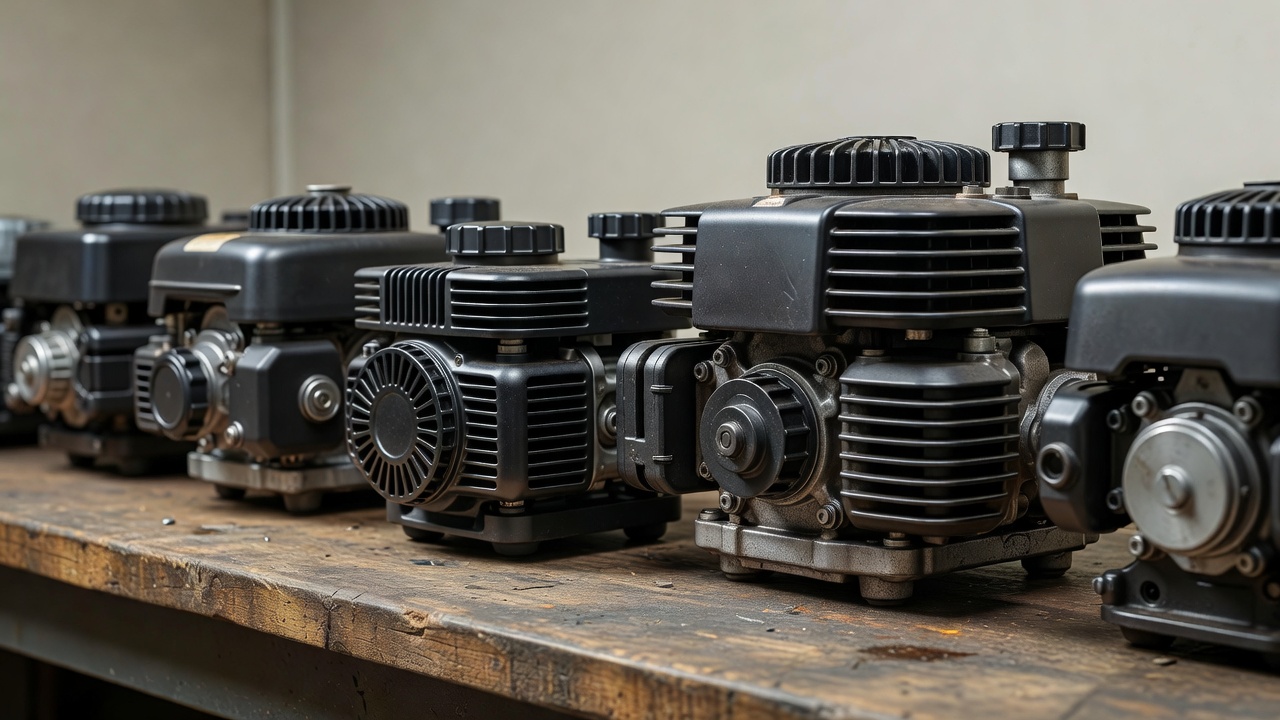
Find your engine model code on the crankcase label (explained in the next section), then match it to the table below. All capacities apply to a full drain-and-refill; a top-up requires less.
| Engine Model | Common Mower Models | Oil Capacity (qt) | Oil Capacity (oz / ml) | Recommended Viscosity |
|---|---|---|---|---|
| GCV160 | HRR216, HRN216, HRS216 | 0.58 qt | 18.6 oz / 550 ml | SAE 10W-30 |
| GCV170 | HRR216VKA (select years) | 0.58 qt | 18.6 oz / 550 ml | SAE 10W-30 |
| GCV190 | HRX217, HRN216VKU | 0.61 qt | 19.6 oz / 580 ml | SAE 10W-30 |
| GCV200 | HRX217 (select years) | 0.61 qt | 19.6 oz / 580 ml | SAE 10W-30 |
| GXV160 | Commercial walk-behinds | 0.58 qt | 18.6 oz / 550 ml | SAE 10W-30 |
| GXV530 | HF2417, HF2620, select riders | 1.16 qt | 37.1 oz / 1,100 ml | SAE 10W-30 |
| GXV690 | Commercial / zero-turn | 1.5 qt | 48 oz / 1,420 ml | SAE 10W-30 |
Note: Capacities sourced from Honda engine operator manuals for GCV160, GCV190, GCV200, and GXV530 series. Always confirm with your specific serial-number manual at Honda Engines or the U.S. equivalent at engines.honda.com.
What Type of Oil Does a Honda Lawn Mower Use?
Honda recommends SAE 10W-30 as the standard viscosity for all GCV and GXV small engines operating above 0°F (−18°C). This grade works across the widest temperature range and suits most homeowners in North America year-round.
When to Use SAE 30
SAE 30 is acceptable when ambient temperatures stay consistently above 50°F (10°C) — typical for warm-climate mowing seasons. It offers slightly better film strength at high operating temperatures but becomes too thick to flow properly during cold starts. If your mowing season spans spring through fall across a range of temperatures, stay with 10W-30.
Synthetic vs. Conventional Oil
Honda does not prohibit synthetic oil in GCV or GXV engines. A full-synthetic or synthetic-blend SAE 10W-30 meeting API SJ or later service classification is compatible. Synthetic oil does not extend drain intervals beyond Honda’s published schedule — the mechanical wear and combustion byproducts that accumulate still require regular changes. Do not mix synthetic and conventional oil; drain completely before switching types.
Does Honda Recommend a Specific Brand?
Honda does not mandate a proprietary oil brand for consumer mower engines. Any SAE 10W-30 motor oil meeting API SJ or later service rating is acceptable. Honda does sell its own branded small-engine oil (Honda Genuine Motor Oil), but third-party oils meeting the same spec perform identically.
How to Find Your Honda Mower Engine Model
The oil capacity table above is only useful if you know your engine code. Honda stamps the engine model and serial number on a label affixed to the crankcase — the main engine block, typically on the side facing the operator or toward the air-filter side.
Where to Look
- Walk-behind mowers (HRR, HRX, HRN series): Check the left or right side of the engine block, below the air filter housing. The label reads “GCV160,” “GCV190,” etc., followed by a serial number.
- Riding mowers (HF, HRD series): The engine label is on the engine block under or near the hood, visible when the hood is raised.
- Operator manual: The engine model is printed on the manual cover and in the spec table at the front.
- Honda’s engine lookup tool: Visit engines.honda.com, enter the serial number from the crankcase label to pull the exact spec sheet.
GCV vs. GXV — What the Designation Means
GCV engines are overhead-cam, designed for consumer walk-behind mowers. The number that follows (160, 190, 200) represents approximate engine displacement in cubic centimeters. GXV engines are overhead-valve commercial-grade units built for higher-hour applications. GXV engines generally have larger oil capacities and longer service intervals under sustained load. A GXV160 powers lighter commercial walk-behinds; GXV530 and GXV690 power riding mowers and zero-turns.
How to Check and Add Oil to a Honda Lawn Mower
Check the oil level before every mowing session. Honda engines are not equipped with low-oil shutdown on all models — running low causes rapid bearing wear and potential seizure.
Step-by-Step: Checking Oil Level
- Park on a flat, level surface. An uneven surface gives a false dipstick reading.
- Let the engine cool for at least 5 minutes after use. Hot oil reads higher and is harder to assess accurately.
- Locate the oil fill cap/dipstick. On GCV-series engines it sits on the front or side of the engine block, usually a yellow or black cap marked with an oil-can icon.
- Remove the cap and wipe the dipstick clean with a lint-free cloth.
- Re-insert the dipstick fully (thread it in all the way if it has threads, or seat it fully if it just rests in the tube), then remove it again.
- Read the oil level. The film of oil on the dipstick should fall between the MIN and MAX markers. If it is at or below MIN, add oil.
Step-by-Step: Adding Oil
- Use a small funnel in the oil fill port to avoid spills on the engine.
- Add oil in small increments — about 2–3 oz at a time — to avoid overfilling.
- Re-check the dipstick after each addition.
- Stop when the dipstick reads between MIN and MAX, ideally near MAX.
- Reinstall the oil fill cap firmly before starting.
Overfill Risk
Overfilling a Honda mower engine forces excess oil into the crankcase breather tube and from there into the combustion chamber. Symptoms include white or blue smoke from the exhaust, fouled spark plugs, and rough running. If you overfill, drain oil through the drain plug until the dipstick reads correctly — do not simply run the engine hoping excess oil burns off, as this risks plug fouling and catalytic damage on compliant models.
How to Change the Oil on a Honda Lawn Mower (Step-by-Step)
Honda specifies an oil change interval of every 50 operating hours or once per mowing season, whichever comes first, with the first change at 20 hours on new engines. For a typical homeowner mowing one acre weekly, 50 hours equals roughly one full season.
What You Need
- Correct oil type and quantity (see table above)
- Oil drain pan
- Wrench for drain plug (if equipped) or access to drain tube
- Funnel
- Lint-free rags
- Sealable container for used oil disposal
Drain Plug vs. Drain Tube
GCV160 and GCV170 engines typically use a drain plug on the bottom of the crankcase, requiring a wrench (usually 17 mm). GCV190 and GCV200 engines on HRX217 mowers are often equipped with a plastic drain tube routed to the side of the engine deck — no tools required, just unscrew the cap and direct the tube into a drain pan. Check your operator manual to confirm which system your engine uses before starting.
Full Oil Change Procedure
- Warm up the engine for 2–3 minutes. Warm oil flows faster and carries more suspended contaminants out of the crankcase. Do not run until hot — warm is sufficient.
- Shut the engine off and allow 2 minutes for oil to settle back into the crankcase.
- Disconnect the spark plug wire to prevent accidental starting.
- Position the drain pan under the drain plug or at the end of the drain tube.
- Remove the drain plug with the correct wrench (or open the drain tube cap). Allow all oil to drain — typically 3–5 minutes.
- Reinstall the drain plug and torque to Honda’s specification: 18 N·m (13 lb·ft) for most GCV-series drain plugs. Do not overtighten — the crankcase threads are aluminum. Replace the drain plug washer if it shows deformation.
- Reconnect the spark plug wire.
- Add fresh oil via the fill port using the quantities in the table above. Use a funnel.
- Check the dipstick and top up to MAX if needed.
- Run the engine for 30 seconds, shut off, wait 1 minute, and re-check the dipstick. The oil level drops slightly once it circulates into galleries and the filter area.
- Inspect for leaks around the drain plug before returning the mower to service.
Used Oil Disposal
Used motor oil is a regulated waste. Pour it into a sealed plastic container and take it to a participating auto-parts store (AutoZone, O’Reilly, Advance Auto Parts) or a municipal household hazardous waste site — all accept used motor oil at no charge. Do not pour used oil into drains, soil, or trash.
Honda Riding Mower Oil Capacity (HF, HRD, and GXV-Series Engines)
Riding mowers use substantially more oil than walk-behinds. Filling a riding mower engine with a walk-behind quantity (0.58 qt) results in severe underfilling and rapid engine damage.
| Engine | Typical Rider Model | Oil Capacity (qt) | Oil Capacity (oz / ml) | Recommended Viscosity |
|---|---|---|---|---|
| GXV530 | HF2417, HF2620 | 1.16 qt | 37.1 oz / 1,100 ml | SAE 10W-30 |
| GXV690 | Commercial zero-turn platforms | 1.5 qt | 48 oz / 1,420 ml | SAE 10W-30 |
GXV530-powered riders also feature a replaceable oil filter — account for the filter volume when refilling after a drain. Prime the new filter with a thin coat of fresh oil on the gasket before installation and hand-tighten only. Check the dipstick after the first start; you may need to add 1–2 oz to compensate for filter fill.
Oil change interval for GXV530 riding mower engines: every 100 hours or annually, with the first change at 20 hours. Confirm the interval in your specific model’s operator manual, as commercial applications may shorten it.
Frequently Asked Questions
How much oil does a Honda GCV160 take?
The GCV160 holds 0.58 qt (18.6 oz / 550 ml) of oil. This is the capacity for a full drain-and-refill. Use SAE 10W-30 meeting API SJ or later. Confirm on the dipstick after filling — the oil level must fall between MIN and MAX.
Can I use synthetic oil in my Honda lawn mower?
Yes. Honda permits full-synthetic or synthetic-blend SAE 10W-30 in GCV and GXV engines. The oil must meet API SJ or a later service classification. Synthetic oil does not extend Honda’s 50-hour oil change interval — change it on schedule regardless of oil type.
What happens if I overfill the oil in a Honda mower?
Overfilling pushes oil through the crankcase breather and into the combustion chamber. This produces white or blue exhaust smoke, fouls the spark plug, and can cause the engine to run roughly or stall. Fix it by draining oil to the correct level via the drain plug — do not run the engine to burn it off.
How often should I change the oil in a Honda lawn mower?
Honda specifies every 50 operating hours or once per season for walk-behind GCV engines, with the first change at 20 hours on a new engine. GXV530 riding mower engines follow a 100-hour or annual interval. If you store the mower over winter, change the oil before storage — used oil contains acidic combustion byproducts that corrode internal surfaces during long storage periods.