

Quick Answer: Honda Lawn Mower Oil Capacity
Most Honda walk-behind mowers with GCV160, GCV170, or GCV190 engines hold 0.58 qt (18.6 oz / 550 ml) of oil. The GCV200 engine holds 0.62 qt (20 oz / 590 ml). Commercial GX160 and GX200 engines each hold 0.63 qt (600 ml). Honda recommends SAE 10W-30 motor oil (API service rating SJ or later) for most operating conditions. Always use the dipstick to confirm the final fill level — stated capacity figures are guides, not substitutes for a dipstick check.

Pros
- Large-size design named in product title
- Sharpening and balancing functions listed
- Listed as a new upgraded version

Pros
- Adjustable 15-to-45-degree range in title
- Sharpening and balancing functions listed

Pros
- Sharpener and balancer functions in title
- 15-to-45-degree adjustable setting listed
- Built for lawn mower blade maintenance
Pros
- Includes replacement gaskets and a 98079-55846 spark plug
- Matches Honda HRR216 and HRS216 lawn mower models
- Designed around the 16100-Z8B-901 carburetor specification
Cons
- Restricted to select Honda GCV160 mower applications
- Installation requires basic mechanical tools and skills
Honda Lawn Mower Oil Capacity by Engine Model (Quick-Reference Table)
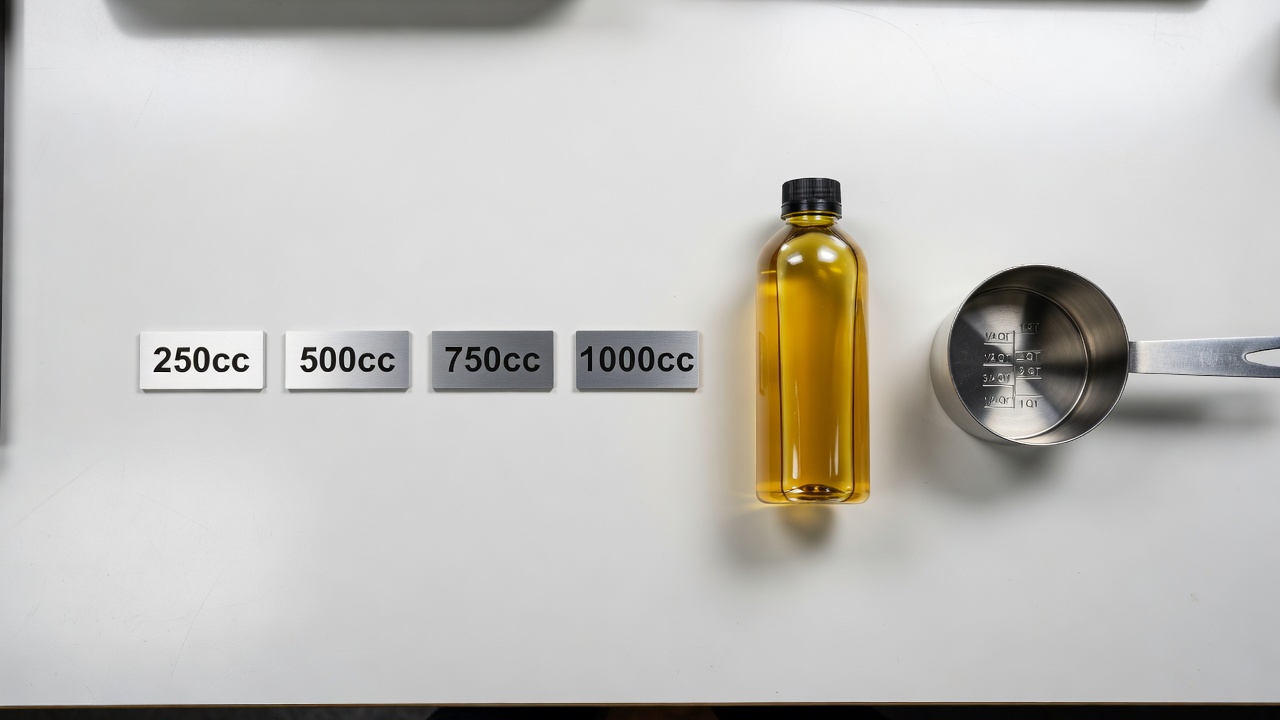
The table below covers the most common Honda mower engines. Locate your engine model on the engine shroud (see the next section if you’re unsure where to find it), then read across for your crankcase capacity.
| Engine Model | Quarts (qt) | Fluid Ounces (oz) | Milliliters (ml) | Common Mower Models |
|---|---|---|---|---|
| GCV160 | 0.58 qt | 18.6 oz | 550 ml | HRS216, HRR216, HRN216 |
| GCV170 | 0.58 qt | 18.6 oz | 550 ml | Select HRN / HRS series |
| GCV190 | 0.58 qt | 18.6 oz | 550 ml | HRX217, HRN216VKA |
| GCV200 | 0.62 qt | 20 oz | 590 ml | HRX217 (newer variants) |
| GX160 | 0.63 qt | ~21 oz | 600 ml | Commercial / GX-series equipment |
| GX200 | 0.63 qt | ~21 oz | 600 ml | Commercial / GX-series equipment |
Important: These figures represent total crankcase capacity for a dry fill (complete oil change). When topping up, add oil in small increments — roughly 1–2 oz at a time — and recheck the dipstick after each addition. Overfilling is a real risk and can damage the engine (see the FAQ section below). For troubleshooting and reliability insights, consult our in-depth jbl partybox club 120 vs sony srs xv500 report. For complementary hardware performance, examine our breakdown on riding lawn mower.
How to Find Your Honda Mower Engine Model Before Checking Oil Capacity
Using the wrong capacity figure because you misidentified your engine is the most common mistake. Here’s how to confirm your engine model in under a minute. For troubleshooting and reliability insights, consult our in-depth jbl partybox club 120 vs sony srs xv500 report.
Where the Engine Model Number Is Located
- Engine shroud (top cover): On most GCV-series engines, the model number is molded or printed on the plastic shroud that covers the top of the engine. Look for a string starting with “GCV” followed by numbers (e.g., GCV190).
- Crankcase / engine block: A metal tag or stamped number on the crankcase body lists both the engine model and the serial number. The model number appears first.
- Owner’s manual cover or spec page: If you have the original manual, the engine model is listed in the specifications table.
How to Read the Engine Code
Honda engine codes follow a consistent pattern. For GCV190: “G” = general-purpose engine, “C” = overhead cam, “V” = vertical shaft (for walk-behind mowers), “190” = approximate displacement in cubic centimeters. A larger displacement number generally means a slightly larger oil capacity, which is why the GCV200 holds slightly more than the GCV160/170/190. Readers comparing setup options can review our technical analysis on z890 vs x870e motherboard.
Common Honda Mower Models and Their Engine Pairings
- Honda HRX217 — typically paired with the GCV190 or GCV200 engine depending on production year. Check the engine shroud to confirm.
- Honda HRN216 — typically uses the GCV170 or GCV190 engine.
- Honda HRS216 — typically uses the GCV160 engine.
- Honda HRR216 — typically uses the GCV160 engine.
Because Honda updates engine pairings across model years, always verify the engine model directly on the engine rather than relying solely on the mower model number.
What Type of Oil Does a Honda Lawn Mower Use?
Knowing the capacity matters less if you’re filling with the wrong oil. Honda’s recommendations are straightforward. For complementary field maintenance guidelines, examine our breakdown of marshall stanmore iii vs harman kardon onyx studio 8.
Recommended Oil Grade
SAE 10W-30 is Honda’s standard recommendation for most walk-behind mower engines across most operating temperatures. It provides reliable cold-start performance and adequate viscosity once the engine reaches operating temperature. The required API service rating is SJ or later (SL, SM, SN, and SP all qualify). Readers comparing setup options can review our technical analysis on z890 vs x870e motherboard.
When to Use Alternative Viscosities
- SAE 30: Acceptable when ambient temperatures consistently remain above 50°F (10°C). Slightly better film strength in sustained heat but harder to start in cold conditions.
- 5W-30: Acceptable for cold-weather operation when temperatures drop below 32°F (0°C). Easier cold starts, maintains adequate lubrication at low temperatures.
- 10W-30 synthetic: Honda permits the use of synthetic oil in GCV-series engines, provided the API rating meets SJ or later. Synthetic does not change the oil capacity or the change interval — Honda’s maintenance schedule still applies.
Oil Honda Does Not Recommend
- Oils with additives marketed as “oil treatments” or “engine restorers” — Honda explicitly advises against these in GCV-series manuals.
- Non-detergent or low-quality oils below API SJ rating.
How to Check and Fill Oil on a Honda Lawn Mower (Step-by-Step)
The dipstick is the final authority on oil level — not the volume you poured in. Follow this process for both an oil change and a routine top-up.
What You Need
- SAE 10W-30 motor oil (API SJ or later)
- Clean rag or paper towel
- Small funnel (optional but reduces spill risk)
- Oil drain pan (for full oil change)
Step-by-Step Process
- Park on level ground. An uneven surface causes a false dipstick reading. A difference of even a few degrees of slope can make the oil appear higher or lower than it actually is.
- Let the engine cool. Check oil when the engine is cold (before starting) or after letting it sit for at least 5 minutes after shutdown. Hot oil expands and can give a slightly elevated reading.
- Clean around the oil fill cap / dipstick. Wipe away any grass clippings, dirt, or debris before opening. Contamination entering the crankcase is a leading cause of premature engine wear.
- Remove the dipstick cap and wipe it clean. On Honda GCV-series engines, the oil fill cap and dipstick are combined into one unit. Unscrew it fully, pull it out, and wipe the dipstick rod clean with a rag.
- Reinsert the dipstick without screwing it in. Rest it on the threads without threading it down. Pull it out and read the oil level against the MIN and MAX marks on the dipstick.
- Add oil in small increments if needed. If the level is below or near MIN, add oil in 1 oz increments. Recheck the dipstick after each addition. Stop when the level reaches — but does not exceed — the MAX mark.
- Replace and tighten the dipstick cap securely. A loose cap allows oil to spray onto the engine and creates a fire and smoke hazard.
How Often to Change the Oil
- First oil change: After the first 5 hours of operation on a new engine, per Honda’s break-in maintenance schedule. This flushes metal particles from the initial engine wear-in period.
- Subsequent changes: Every 50 hours of operation or once per season, whichever comes first — per Honda’s maintenance schedule for GCV-series engines.
- More frequent changes: If you mow in dusty conditions or under heavy load (thick grass, slopes), shorten the interval to every 25 hours.
Walk-Behind vs. Honda Riding Mower Oil Capacity: Key Differences
The capacities in the table above apply to Honda walk-behind mower engines. Honda riding mowers use entirely different, larger-displacement engines with significantly higher oil capacities. Applying walk-behind figures to a riding mower risks severe underfilling. For complementary field maintenance guidelines, examine our breakdown of marshall stanmore iii vs harman kardon onyx studio 8.
Honda Riding Mower Engine Oil Capacity (Representative Figures)
| Riding Mower / Engine Series | Engine Type | Approximate Oil Capacity |
|---|---|---|
| Honda HF2417 / HF2620 | iGX V-twin | ~1.06–1.16 qt (1,000–1,100 ml) |
| Honda iGX700 / iGX800 (twin-cylinder) | iGX V-twin | ~1.47 qt (1,390 ml) |
For any Honda riding mower, locate the engine model on the engine block and cross-reference with the model-specific operator’s manual. Do not use walk-behind capacity figures for riding mower engines under any circumstances.
Zero-Turn Mowers
Honda does not currently manufacture a branded zero-turn mower for residential consumers under the Honda Power Equipment line. Zero-turn equipment using Honda GX commercial engines should follow the GX-series capacity figures in the table above and confirm via the equipment manufacturer’s manual. To evaluate matched hardware tolerances, consult our detailed overview of dyson v8 cyclone vs bissell featherweight stick.
Frequently Asked Questions About How Much Oil In Honda Lawn Mower
What happens if I overfill oil in a Honda lawn mower?
Overfilling the crankcase causes the excess oil to be pushed into the combustion chamber, producing blue-white smoke from the exhaust. It can foul the spark plug, cause the engine to run roughly, and in severe cases damage internal seals and the catalytic converter (on mowers equipped with one). If you overfill, drain the excess until the dipstick reads at or below MAX — do not run the engine in an overfilled state.
Do Honda lawn mowers have a low-oil shutoff?
Yes. Honda GCV-series engines include the Oil Alert system, a low-oil shutoff that automatically cuts engine power before oil pressure drops to a level that would cause damage. The Oil Alert indicator light (on models equipped with one) illuminates before shutdown. Oil Alert is a protection system, not a substitute for regular oil level checks — by the time it activates, oil is already dangerously low. When planning workspace deployment, consider the engineering criteria outlined in our bissell crosswave hydrosteam vs shark stainforce guide.
Can I use car oil in my Honda lawn mower?
Yes, provided it meets the specification: SAE 10W-30, API SJ or later. Standard passenger-car motor oil sold at any auto parts store in this grade is appropriate. Avoid oils with high levels of friction-modifier additives (some “energy conserving” oils) as these are formulated for car transmissions and can reduce lubrication effectiveness in small air-cooled engines.
Should I warm up my Honda mower engine before draining the oil?
Run the engine for 2–3 minutes before an oil change. Warm oil flows faster and carries more suspended contaminants out of the crankcase than cold oil, resulting in a more complete drain. Do not drain immediately after extended operation — let the engine cool for 5 minutes so the oil isn’t hot enough to cause burns during handling.
For more hands-on benchmarks and buying recommendations, consult our guides on heavy-duty chainsaw buyer guide, as well as high-CFM commercial leaf blower guide, as well as durable ride-on lawn tractor guide.
Mechanical safety standards, operational tolerances, and protective gear guidelines align with benchmark specifications established by the American National Standards Institute (ANSI).









