Direct Answer: How to Change a Lawn Mower Tire
To change a lawn mower tire, first disconnect the spark plug wires to prevent accidental starting. Lift the mower safely on level ground, remove the wheel using an appropriate wrench, and assess your tire type. For pneumatic (air-filled) tires on push mowers, use a tire lever to pry off the old tire, install the new one by hand, and inflate to the manufacturer’s recommended PSI. For solid rubber tires or riding mowers, specialized equipment is typically required, and professional service is often the safer option.
Pneumatic vs. Solid Tires: Identify Your Mower Type
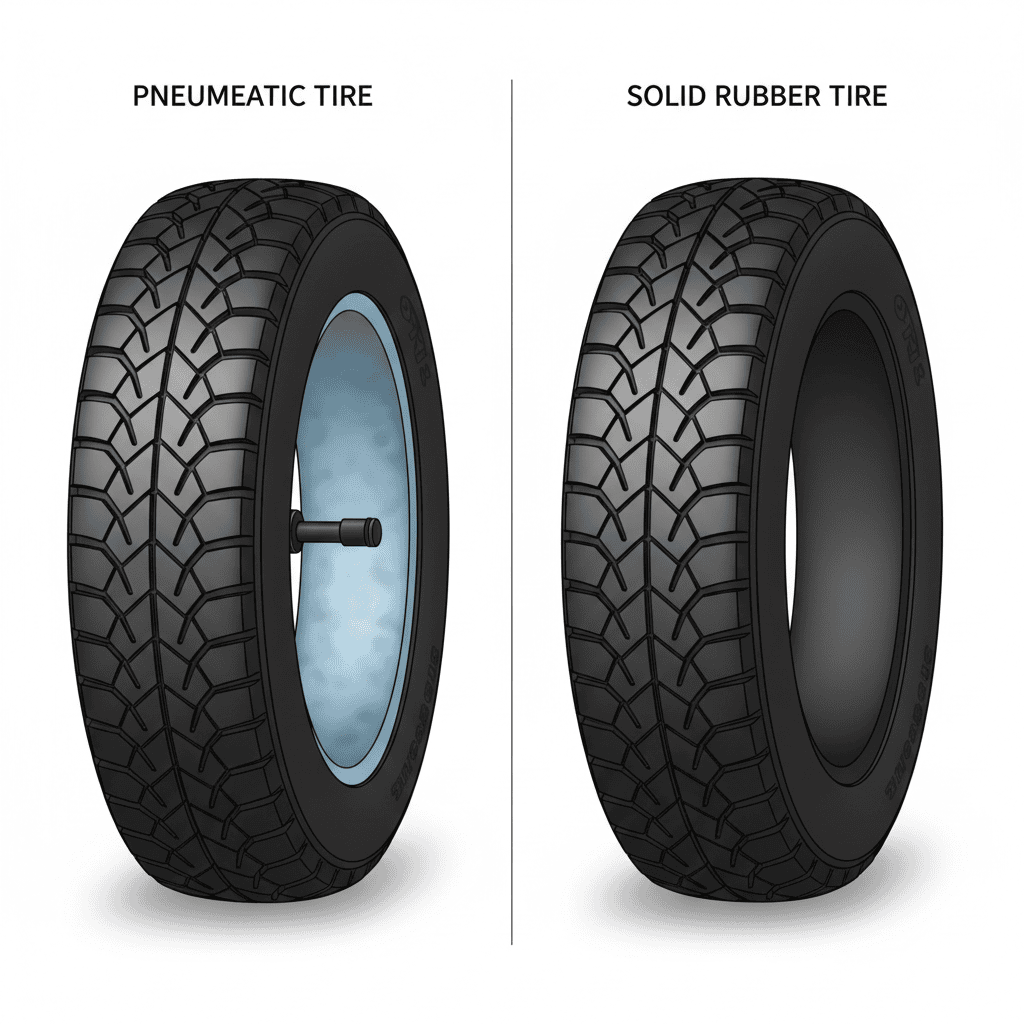
Before you begin, determine what type of tire your mower has. This decision affects your entire approach.
- Pneumatic tires are air-filled rubber tires that look and feel like car tires. They have visible treads and flex slightly when pressed. Most push mowers and some riding mowers use pneumatic tires.
- Solid rubber tires are made from solid rubber compounds with no air inside. They don’t deflate but are harder to replace because they’re permanently bonded to the wheel rim. Many commercial mowers and some residential models use solid tires.
Check your mower’s manual or look at the tire itself. Pneumatic tires typically have a valve stem visible on the rim where you inflate them. Solid tires won’t have this feature.
Tools and Safety Requirements
Gather these items before you start:
- Appropriate wrenches or sockets (typically 3/8″, 1/2″, or 9/16″ depending on your mower)
- Tire lever or flat pry bar
- Replacement tire (correct size for your mower model)
- Air pump with PSI gauge (for pneumatic tires)
- Work gloves and safety glasses
- Level, stable work surface
- Blocks or jack stands (never rely on a jack alone)
Safety First: Always disconnect the spark plug wires before working on your mower. This prevents accidental engine start-up. Work on a flat, level surface and use jack stands or blocks to support the mower—never crawl under equipment supported only by a jack. Wear gloves to protect your hands from sharp tire edges and metal burrs.
Step-by-Step: Replacing a Pneumatic Tire on a Push Mower
This is the most common lawn mower tire replacement scenario. Follow these steps carefully:
Step 1: Prepare the Mower
- Disconnect both spark plug wires by grasping the boot (not the wire) and pulling straight off.
- Move the mower to a flat, level work area with plenty of space.
- Ensure the engine is cool to the touch.
Step 2: Lift the Mower Safely
- For push mowers, use a jack or lift placed under the frame (never under plastic or thin metal components).
- Lift the wheel that needs replacement about 12 inches off the ground.
- Place jack stands or sturdy blocks under the frame to support the mower’s weight.
- Verify the mower is stable before proceeding.
Step 3: Remove the Wheel
- Locate the axle bolt or fastener holding the wheel on. Most push mowers use a single bolt through the center.
- Use the appropriate wrench to loosen the bolt by turning counterclockwise. Some bolts are reverse-threaded on one side—if the bolt won’t budge, try clockwise.
- Once loose, unscrew by hand and set the bolt and any washers aside in a safe place.
- Pull the wheel straight toward you to remove it from the axle.
Step 4: Remove the Old Tire
- Inspect the tire for the damage. If it’s repairable (small puncture, less than 1/4″ diameter), consider a plug repair kit instead of full replacement.
- Use a tire lever to pry the tire bead (edge) away from the rim. Start at one point and work your way around.
- Once the tire is loose, pull it off the rim by hand. It may require significant effort—don’t be afraid to use force.
- Remove the inner tube if present (some tires are tubeless).
Step 5: Install the New Tire
- Check that the new tire matches your mower’s specifications for size and load rating.
- If the new tire comes with an inner tube, install the tube first, making sure it sits evenly inside the tire.
- Begin pushing the tire onto the rim by hand, working it around gradually rather than forcing one section on at a time.
- Use the tire lever if needed, but be careful not to pinch the inner tube.
- Once fully seated, the tire bead should sit evenly on the rim all the way around.
Step 6: Inflate to the Correct Pressure
- Check your mower’s manual or the sidewall of the tire for the recommended PSI (pounds per square inch).
- Typical push mower tires range from 12 to 20 PSI, but this varies by model.
- Use an air pump with a pressure gauge to inflate slowly and carefully.
- Stop frequently to check pressure, as over-inflation can damage the tire or inner tube.
- Verify pressure once more with the gauge before removing the pump.
Step 7: Reinstall the Wheel
- Slide the wheel back onto the axle, aligning the hole with the axle bolt.
- Insert the bolt and any washers in the correct order (check your manual if unsure).
- Tighten the bolt by turning clockwise. Tighten firmly but don’t over-torque—hand-tight plus a quarter turn is usually sufficient.
- Lower the mower safely to the ground by removing the jack stands and slowly lowering the jack.
Step 8: Test and Inspect
- Reconnect the spark plug wires, ensuring they’re fully seated.
- Start the mower and listen for any unusual sounds.
- Check that the wheel spins freely and the tire doesn’t rub against the frame.
- Mow a small test area to verify normal operation.
Replacing Solid Rubber Tires and Riding Mower Tires
Solid rubber tires require specialized equipment to remove and install. The tire is typically glued or pressed onto the rim, making removal nearly impossible without industrial tire machines. Similarly, riding mower tires are often larger and require different tools and techniques than push mower tires.
When to Call a Professional: If your mower has solid tires, uses a two-piece wheel assembly, or is a riding mower, professional tire service is recommended. Tire shops and lawn mower dealers have the equipment to remove and install these tires safely. The cost (typically $50–$150 per tire for labor) is justified by avoiding equipment damage and personal injury.
Tire Maintenance to Prevent Future Problems
Extend your mower tire’s lifespan with these preventive measures:
- Check pressure monthly: Under-inflated tires wear faster and reduce mowing efficiency. Over-inflated tires can burst unexpectedly.
- Inspect for damage: Small punctures can be repaired with a plug kit before they require full replacement.
- Avoid obstacles: Rocks, sticks, and debris can puncture tires. Clear your lawn before mowing.
- Rotate tires seasonally: If both tires wear unevenly, swap them side-to-side to extend life.
- Store properly: If storing your mower for winter, inflate tires to manufacturer specs to prevent flat spots.
- Clean the tires: Remove grass buildup and debris, which can trap moisture and cause premature wear.
Tire Repair vs. Replacement: When to Choose Each
Not every tire damage requires replacement. Use this guide to decide:
| Damage Type | Size/Severity | Recommendation |
|---|---|---|
| Puncture | Smaller than 1/4″ | Plug repair (cost: $5–$15) |
| Puncture | Larger than 1/4″ | Full replacement |
| Sidewall damage | Any size | Full replacement (not repairable) |
| Flat spot (from storage) | Any size | Usually resolves after a few hours of use |
| Tread wear | Minimal tread remaining | Full replacement |
| Bulge or blister | Any size | Full replacement immediately (safety hazard) |
Frequently Asked Questions
How often do lawn mower tires need replacement?
Most pneumatic lawn mower tires last 3–5 years or 100–150 operating hours, whichever comes first. Factors affecting lifespan include storage conditions, pressure maintenance, and terrain. Solid tires typically last longer (5–10 years) due to their durable construction. Check your tires annually for visible wear, cracks, or damage.
Can I replace just one tire, or do I need to replace both?
You can replace a single tire if only one is damaged. However, if both tires are close in age and wear, replacing both ensures balanced weight distribution and even cutting height on your mower. Mismatched tires can cause the mower to pull to one side during operation.
What’s the correct PSI for my lawn mower tires?
Check your mower’s manual or look for a sticker on the wheel rim or frame—it will list the manufacturer’s recommended PSI. Most push mower tires range from 12 to 20 PSI. Never guess or use the PSI from another mower, as over or under-inflation affects cutting performance and can damage the tire. When in doubt, call the mower manufacturer’s customer service line.
Do I need a jack to change a lawn mower tire?
A jack helps lift the mower, but you must use jack stands or blocks to support the weight. Never rely on a jack alone—if it fails, the mower can crush your hand or foot. A simple hydraulic floor jack ($30–$50) and a pair of jack stands ($15–$25) are worth the investment for safety.
How do I know if my mower tire is under-inflated?
Signs of under-inflation include the tire looking visibly flat or wrinkled, uneven cutting height (one side of the lawn looks shorter), and reduced fuel efficiency. Check pressure with a gauge rather than relying on appearance, as it’s difficult to judge PSI by eye alone.